

These Bandmate Romances Shaped Rock History
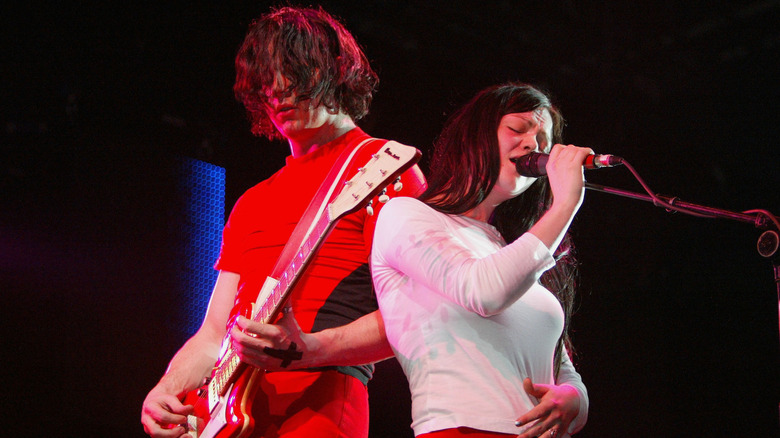
Many of the bands that defined a musical era or advanced rock music itself were centered around a romantic partnership. Whether the relationships developed after the band had formed — lovers brought together by the close quarters of a common workplace and a major mutual interest — or if the band was a product of the relationship, the personal and professional have collided in the pursuit of musical art time and again throughout rock history. Whatever the circumstances, real-life love and other strong emotions have often fueled the creation of some passionate, important, and resonant music.
These inter-band relationships faced the same issues and fates as non-musical ones, with some lasting while others ultimately fizzled out. Nevertheless, many former flames or spouses continued to perform and create together, while others had to shut the act down when the personal passion fell off. Here are some of the most notable band romances that changed the face of rock.
Sonny and Cher (and Gregg Allman)
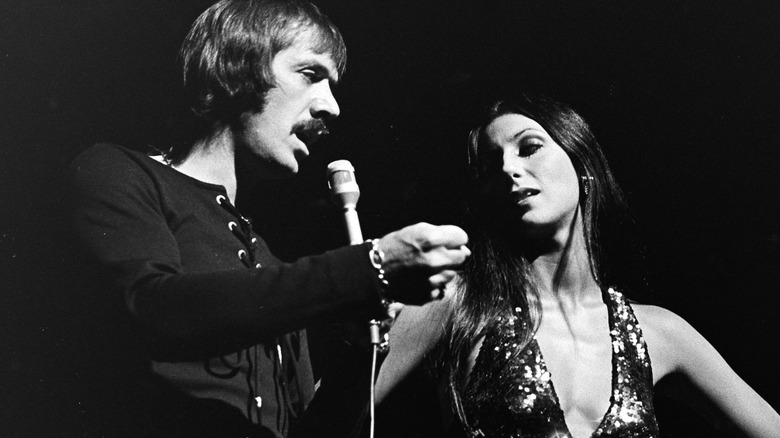
Having quit high school to pursue a career in entertainment in Los Angeles, Cher encountered Sonny Bono at a 1962 party and then moved into his apartment next door to hers because she was broke. The relationship progressed from roommates to romance, and in 1964, when both were working on the fringes of the recording business, they held an unofficial wedding (not getting hitched for real until 1969).
The duo act known as Sonny & Cher debuted in 1965, and shortly thereafter, the couple's No. 1 hit "I Got You Babe" became an iconic '60s love song that went gold. Nine more Top 40 hits followed, as did "The Sonny and Cher Comedy Hour" variety program, but by the mid-70's their relationship had become strained. In 1975, Bono and Cher completed their divorce.
By that point, Cher had launched a successful, chart-topping solo career and had moved on romantically. Quickly, too, as on June 30, 1975, soon after Cher's divorce from Bone, she married Gregg Allman of the Allman Brothers Band. The marriage came close to lasting only nine days, as that's how long it took for Cher to move to legally end it over Allman's substance misuse issues, though they managed to work their differences out and later had a child together. The marriage lasted long enough to result in a collaborative LP, "Two the Hard Way," which was credited as "Allman and Woman," but didn't even make the U.S. album chart.
Grace Slick and Paul Kantner
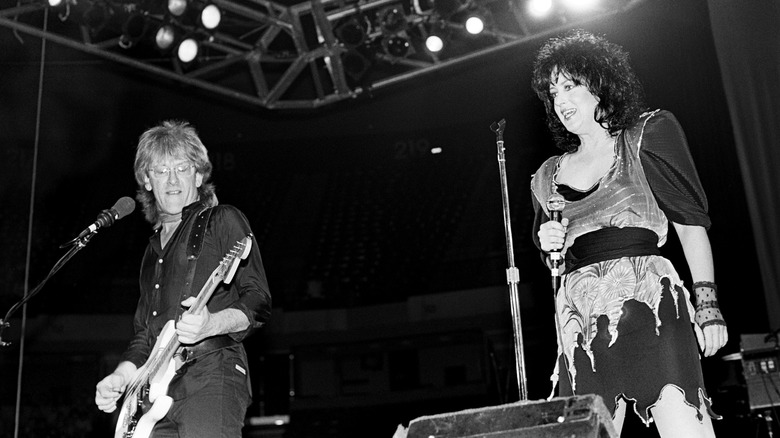
Jefferson Airplane was among the most confrontational and druggy of all the late '60s confrontational hippie countercultural psychedelic bands, foisting "Somebody to Love" and "White Rabbit" onto the world. By 1970, the band's direction had fallen fully under the control of guitarist and songwriter Paul Kantner and main vocalist Grace Slick. Off-stage, the collaborators were an unmarried romantic couple.
In the mid-1970s, Kantner and Slick split up, with the former marrying their band's publicist and the latter marrying the group's lighting organizer. They still made music together, although by that point Jefferson Airplane had lost members Jack Casady and Jorma Kaukonen to Hot Tuna and rebranded as Jefferson Starship, inspired by Kantner's progressive rock-leaning, sci-fi-themed album "Blows Against the Empire." A professionally and musically unhappy Kantner departed the band in 1984 just as it was transitioning into Starship, a radio-friendly commercial outfit responsible for "We Built This City," one of the worst No. 1 hits of the 1980s.
Relationships involving two Beatles
When the Beatles broke up in 1970, distraught fans blamed modern artist Yoko Ono for the demise of one of the most important rock bands of the 1960s, an unfair accusation that would stick to Ono for decades. Lennon later cited the 1967 death of the band's manager and advocate Brian Epstein as the event that actually began to undo the band, as it led to Paul McCartney seizing control of the Beatles, adding tension to a rudderless situation. After Lennon attended an Ono art show in 1966, the pair quickly fell in love, and they married in 1969. Once the Beatles were no more, Lennon and Ono concentrated on a new group, the Plastic Ono Band, which was co-credited on Lennon's first solo LP, and their collaboration led to the No. 2 hit "Woman."
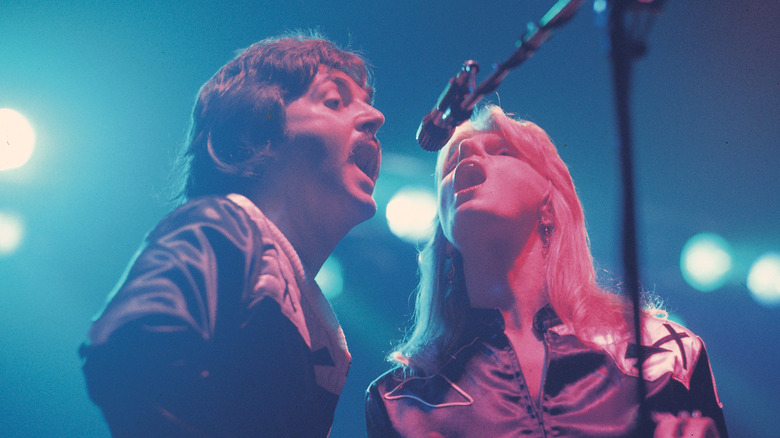
Lennon's bandmate Paul McCartney similarly collaborated with his spouse after he was no longer tethered to the Beatles. His second album of the '70s, "Ram," is credited to Paul and Linda McCartney. Both McCartneys then formed the core lineup for the band Wings, on which Paul primarily sang and played bass guitar, while Linda played the keyboards.
Everyone in Fleetwood Mac
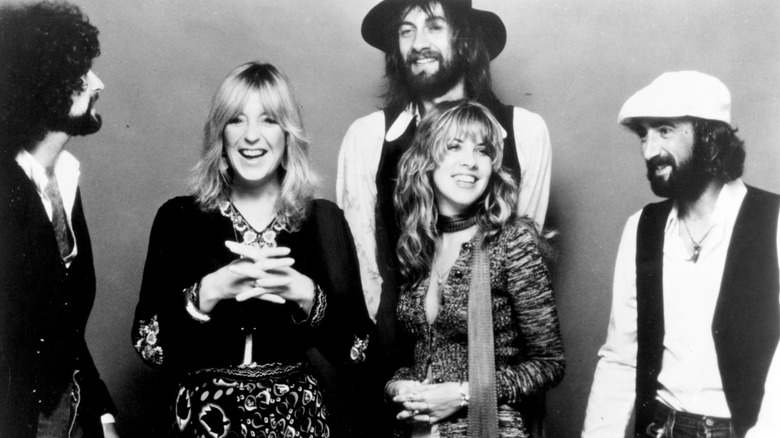
After emerging as an electric blues band in the late '60s, Fleetwood Mac adopted a smooth rock sound in the '70s. The transition began when the former Christine Perfect, late of the band Chicken Shack, joined in 1970, not long after marrying Fleetwood Mac bassist John McVie. Christine McVie sang and wrote Fleetwood Mac's first-ever Top 20 U.S. hit, "Over My Head," from its self-titled 1975 album.
The mid-'70s also marked the in-band debut of romantic and musical partners Lindsey Buckingham and Stevie Nicks, who had recorded one album together as Buckingham Nicks. Buckingham and Nicks were individually skilled singers and songwriters, and their pieces helped send Fleetwood Mac to new heights of commercial success. The "Fleetwood Mac" LP would eventually sell 9 million copies, and that's not even the band's most popular record.
Both the McVies' marriage and the Buckingham-Nicks romance came to painful ends in 1976. Fleetwood Mac as a whole turned the pain and processing into art with the 1977 album "Rumours." The band's three songwriters came up with numerous breakup songs and post-relationship laments inspired by other people in the group. For example, "You Make Loving Fun" is about Christine McVie's post-divorce rebound relationship, while Buckingham and Nicks wrote "Go Your Own Way" and "Dreams," respectively, about one another. The passion channeled into the album was palpable and irresistible: "Rumours" went on to sell 21 million copies and won the Grammy Award for album of the year.
Tina Weymouth and Chris Frantz
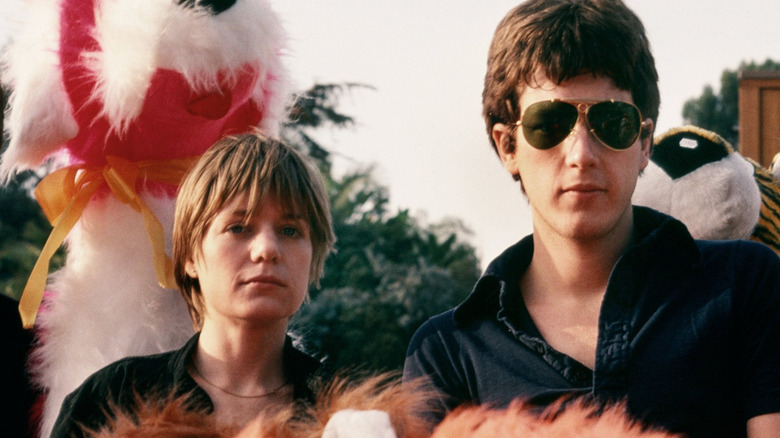
Chris Frantz and Tina Weymouth first encountered one another in 1971, when both were students at the Rhode Island School of Design. They became an official couple in 1972, and after teaming up with another musically minded RISD attendee named David Byrne, created Talking Heads and headed to New York in 1974. One of the first bands to break through in the new wave movement, the artsy, literate group released its first album, "Talking Heads: 77" in 1977. That same year, Frantz and Weymouth, the band's drummer and bassist, respectively, got married. The couple provided the rhythm section for Talking Heads on all of its hits, including "Burning Down the House" and "Psycho Killer," up until the band split up in the early 1990s.
Meanwhile, Frantz and Weymouth had also started a dance-pop side project called the Tom Tom Club. Created in 1981, the group is best known for "Genius of Love," a mere No. 31 hit in 1982 that went on to be extensively sampled by R&B and hip-hop artists, notably on smash hits like Mariah Carey's "Fantasy" and Mark Morrison's "Return of the Mack."
Debbie Harry and Chris Stein
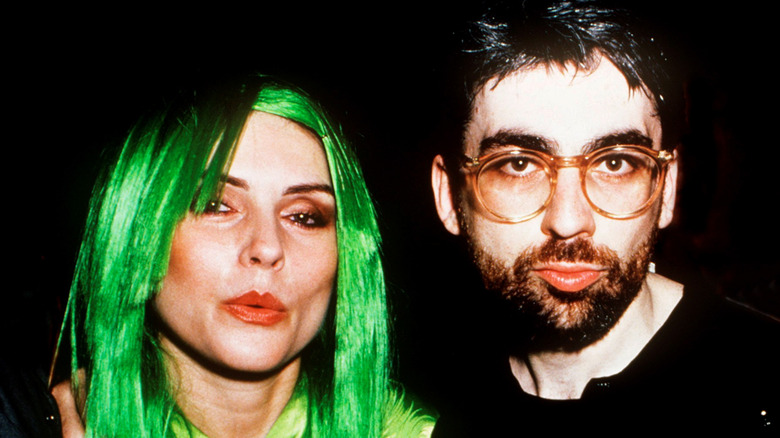
Capable of disco, new wave, punk, reggae, and more, the versatile Blondie was among the biggest American bands of the late 1970s and early 1980s. The band's four No. 1 hits, including "Rapture" and "Heart of Glass," may sound very little like one another, but all bear the creative architecture set in place by the band's founders and leaders: singer Debbie Harry and guitarist Chris Stein. They met in 1973, when Harry was a member of the New York band the Stilettos, and Stein was so impressed that he found his way into the band. A year later, they moved on to form their own band: Blondie.
Harry and Stein stayed together through the ups and downs of Blondie, including the dues-paying and international superstardom. The group split up in 1982 in major part because of Harry and Stein, but not because their romance fizzled out. Prior to a tour, Stein became very sick and his condition worsened on the road, his weight dropping to just over 100 pounds. Blondie decided to end the tour and Stein received a diagnosis of pemphigus vulgaris, an autoimmune disease. Harry cared for Stein and helped him recover; they ended their personal relationship in 1987.
Stephen Morris and Gillian Gilbert

With a sound as glum and ominous as it was crisp and punchy, Joy Division nailed the late 1970s British post-punk vibe, and it certainly inspired the goth rock and alternative rock of the 1980s. The tragic real-life story of Joy Division ended in May 1980 when singer Ian Curtis died by suicide. The surviving members immediately decided to continue on as a band, making good on a pact they'd once made to do so, but under a different name: New Order, with Bernard Sumner as the new singer. To bolster the sound and unburden Sumner of some of his on-stage duties, the band brought in a fourth member to play keyboards and guitar: Gillian Gilbert, the romantic partner of drummer Stephen Morris.
New Order's first single was the electronic-leaning "Ceremony," which Curtis had worked on before he died. New Order then embraced a full mix of rock and synths, becoming one of the definitive bands of the 1980s and early 1990s. In 1994, Morris and Gilbert made their long relationship official and got married.
If you or someone you know is struggling or in crisis, help is available. Call or text 988 or chat 988lifeline.org
Pat Benatar and Neil Giraldo
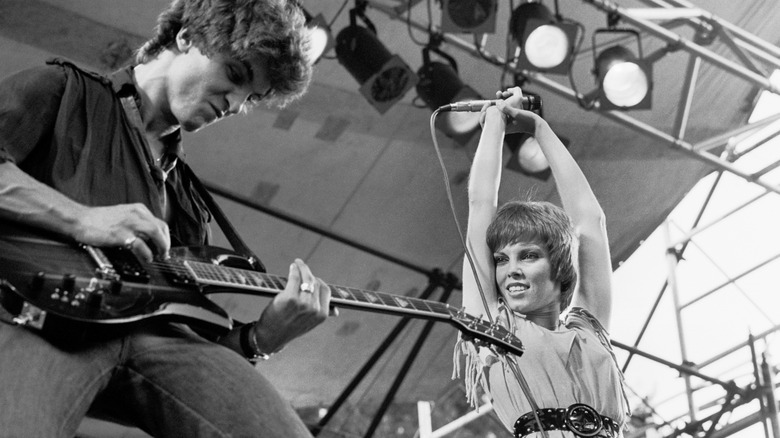
A hard rock icon, routine '80s hitmaker, and MTV star, Pat Benatar was inducted into the controversial Rock and Roll Hall of Fame in 2022. But while it was just her name on the album sleeves, video credits, and Billboard chart placements, Benatar's Rock and Roll Hall of Fame documentation presents her as half of a duo, alongside Neil Giraldo. He's been one of Benatar's primary songwriting partners, as well as her studio and touring guitarist, since her 1979 debut album, "In the Heat of the Night." His shredding paired well with Benatar's high-register, almost operatic vocals, and they've been working together ever since a collaboration that sent songs like "Hit Me With Your Best Shot," "Love is a Battlefield," and "Shadows of the Night" to the top of the charts and into the classic rock canon.
The relationship is as personal as it is creative and professional. In 1982, the same year that the musicians released their fourth collaborative album, "Get Nervous," Benatar and Giraldo got married.
Boy George and Jon Moss

Boy George put Culture Club together in London in 1981, phoning drummer Jon Moss to audition after he spotted a photo of him in a magazine editor's office. The bandleader fell in love with Moss the first time he saw him, and Moss was also attracted to Boy George, in what was his first same-sex romantic relationship. They were essentially a couple after the first rehearsal for the band that would become Culture Club.
Culture Club impacted the sound, image, and social dynamics of '80s music. Lead singer Boy George wore a look not usually sported by male rock stars, with feminine attire and lots of makeup, which was quite provocative in that era. That signature image, when combined with the band's splashy, cinematic music videos, made early MTV stars out of Culture Club, while the wordy, complicated, and at turns melancholic and romantic songs of the band — like "Karma Chameleon" and "Do You Really Want to Hurt Me" — took it up the charts.
However, the environment of Culture Club was one of such hostility that the group broke up for the first time in 1986. Much of the tension and inspiration alike stemmed from Boy George and Moss's romance. "Our love, however diseased, was the creative force behind Culture Club," Boy George wrote in his memoir "Take It Like a Man." "I wanted fame badly but without Jon Culture Club would have meant very little to me."
Bruce Springsteen and Patti Scialfa
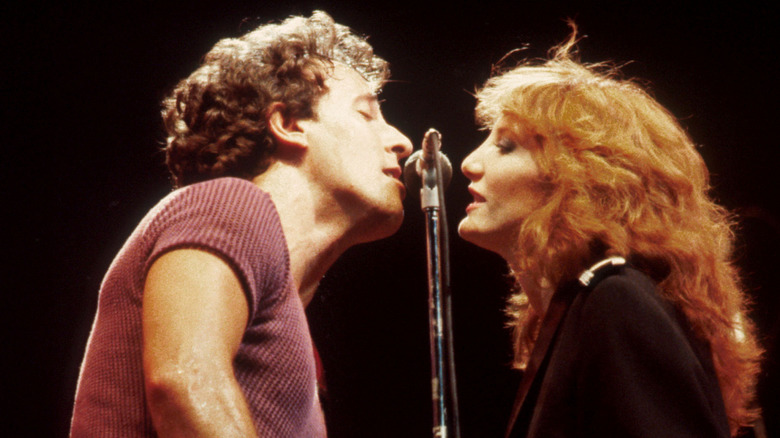
Bruce Springsteen's "Born in the USA" was absolutely huge. The 1984 album generated seven Top 10 hits and sold 17 million copies. Then Springsteen and his long-serving troupe of backing musicians, the E Street Band, hit the road for a globe-trotting tour — which became one of the most lucrative of the '80s at the time, making $90 million — in support of the album. Just before the quest, the E Street Band welcomed a crucial new addition: backing vocalist Patti Scialfa.
At the time, Springsteen was in a relationship with actor Julianne Phillips; the couple married in 1985. Simultaneously, Springsteen and Scialfa were developing feelings for one another while performing side by side on stage most nights. Soon after photographers captured photos of the two musicians snuggling publicly, Springsteen and Phillips separated, followed by a divorce filing that was finalized a year later. Free to pursue his relationship with Scialfa, Springsteen married his bandmate in 1991, a year after they had their first child together.
Gwen Stefani and Tony Kanal

No Doubt took its postmodern mixture of pop, alternative rock, and ska to become one of the most dominant mainstream rock bands of the '90s. It's edgier, faster singles from the 10-million-selling "Tragic Kingdom" LP, like "Just a Girl" and "Spiderwebs," were all over the radio, but the stark, anguished, breakup ballad "Don't Speak" was a juggernaut. For 16 weeks in 1996 and 1997, it was No. 1 on the Billboard Hot 100, and it was written by one band member's heartache over another.
No Doubt was formed in 1986 by John Spence and siblings Eric and Gwen Stefani. After Spence died by suicide in 1987, Stefani was promoted from backing to lead vocalist, while bassist Tony Kanal joined the band. Kanal and Gwen entered into a romantic relationship, but seven years later, Kanal ended things. When recording on "Tragic Kingdom" began, Gwen Stefani and Eric Stefani (who left No Doubt before production completed) contributed "Don't Speak," which channeled Gwen and Kanal's painful breakup: The song went on to become a massive hit.
"We were on tour for 'Tragic Kingdom' for 28 months," Kanal told The Guardian. "We were going through the breakup, and in every interview we were talking about it so we were opening this wound on an hourly basis. It was so brutal but I don't know how we made it through."
Jack White and Meg White

The return of gritty, loose, straightforward rock in the early 2000s was largely initiated by the White Stripes. The two-person act from Detroit originally earned a cult following with a few independent releases, but then blew up to a nationally known act with the widely distributed 2001 LP "White Blood Cells," featuring the single "Fell in Love with a Girl." The White Stripes — consisting of singer and multi-instrumentalist Jack White and drummer Meg White — was presented to the world as if its members were a brother-and-sister act, a bit that was ultimately exposed as a bit of wry marketing and image-building.
In 2001, the band's hometown newspaper, the Detroit Free Press, delivered the scoop that the hot band wasn't made up of siblings, but rather a formerly married couple. Back in 1996, Megan White married John Gillis, who took his new wife's last name to create the latter half of his stage name. Media outlets discovered and ran the marriage certificate, and later on, the divorce certificate, the latter being issued in 2000. The Whites continued on past their romantic split to make music together, and scored a number of hits until 2011, when the White Stripes disbanded.