

5 Barry Manilow Songs That Prove 1978 Was The Best Year Of His Career
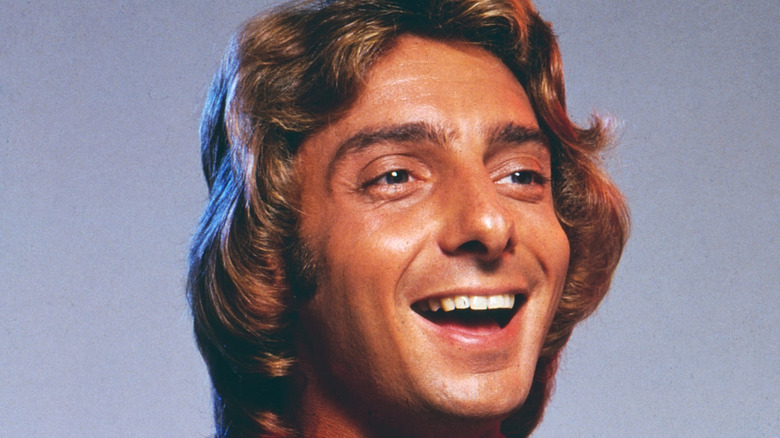
While he dominated light pop throughout the 1970s and the early 1980s, Barry Manilow enjoyed his career peak in 1978 — the songs he released that year were just that good. After starting his professional life writing and performing catchy commercial jingles, Manilow became a prolific provider of hit songs that were very much of their time. From the mid-'70s until the mid-'80s, mainstream pop and soft rock adherents couldn't get enough sweetly sung, piano-driven tunes about the more mature and world-weary aspects of love. Manilow could access universal feelings, and he parlayed them into a string of smashes.
The midpoint of that era, 1978, found Manilow at his best, as well as his most creative and successful. That year, Manilow tooled around with both ballads and faster songs, sad songs and optimistic ones, and he scored memorable hits and since-overlooked gems. During those 12 months, Manilow released five Top 20 hits — the full Barry is 1978 Barry, and it's when he gave the world some of the best Manilow songs that aren't "Mandy." Here's a trip to when Barry Manilow briefly ruled the world with the power of soft rock: all the way back to 1978.
Can't Smile Without You
While primarily known for his slow, contemplative songs that reflect on a previously broken heart or one about to break, Barry Manilow got slightly more upbeat on "Can't Smile Without You." A mid-tempo number that starts with its chorus and only gets more anthemic from there, "Can't Smile Without You" finds Manilow, or the character whose point of view he adopts, admitting that his life is unhappy without his beloved. Manilow stuck his proverbial claws into listeners and they were helpless to resist, what with its insidious ear-worm of a melody, repeated over and over with just a few slight note changes but still falling into the realm of slightly minor-key, never totally resolved chord progressions. The lyrics are inviting, too, reaching out to anyone who has ever been undone by a romantic split.
Wildly successful, "Can't Smile Without You" set the tone of 1978 for Manilow. His first studio-recorded single after another breakup song, "Looks Like We Made It," went gold and hit No. 1 in 1977, Manilow was in proactive New Year mode with "Can't Smile Without You," which, after premiering on the Hot 100 in February 1978, shot up to No. 3 by April. Around that time, this single was also RIAA certified for sales of half a million copies.
Even Now
In 1978, Barry Manilow presented "Even Now," his fifth studio album and highest-charting non-live release to that point. The album made it up to No. 3 in April and spent more than a year on the Billboard 200. The LP would earn Manilow significant acclaim, too, recognized as one of the best of 1978 with an album of the year nomination at the 21st Annual Grammy Awards. The title track of any album is special to the artist, and the song "Even Now" performed admirably, peaking at No. 19 on the Hot 100 and spending three weeks at No. 1 on the adult contemporary chart.
There's a lot about "Even Now" for Manilow to celebrate, but the track was one of his most bittersweet works. Even the title suggests one foot in the present and one in the past. Manilow's fans came to expect a sense of unease in his music, and "Even Now" delivers. The lyrics tell of a person wondering what could've been with a former flame, even though their present life is ostensibly going very well, and even though they haven't let go of all that pain.
Copacabana (At the Copa)
Barry Manilow had serious doubts about "Copacabana (At the Copa)," but he needn't have worried about how his fans would receive the song. It's surprising that a musician who plied his trade as an ad jingle creator and performer for so long would have so few hits that are similarly uptempo and loaded with hooks. But "Copacabana" never stops moving, as it's a propulsive dance number, Manilow's only truly major attempt at disco, and also his most successful non-ballad, peaking at No. 8 on the Hot 100 in August 1978.
"Copacabana (At the Copa)" is hardly a bit of cynical trend-chasing, though. Manilow is a clever songwriter, and this song, tailor-made to play in the disco-spinning nightclubs of the late 1970s, draws parallels to the nightclubs of yesteryear. That's because "Copacabana" is a story song. Manilow's songs are usually poetic, emotions-probing musical monologues, but "Copacabana" tells the harrowing story of a nightclub performer in the 1940s or '50s who toiled at the titular legendary establishment. But then that old Manilow magic surfaces, meaning the tune takes a heartbreaking twist when showgirl Lola gets involved in a love triangle with a body count.
Ready to Take a Chance Again
How hot was Barry Manilow in 1978? So many of his songs were resonating with listeners and music shoppers that he landed the plum gig of performing the theme song for a high-profile Hollywood summer blockbuster. "Foul Play," an action romantic comedy pairing Chevy Chase and Goldie Hawn, opened in July 1978, and it featured two Manilow songs. The pre-existing hit "Copacabana (At the Copa)" played in one scene, while the sweeping, sweet, and triumphant romantic ballad "Ready to Take a Chance Again," written for Manilow by veteran film and TV composers Charles Fox and Norman Gimbel, soundtracked the end credits.
Manilow's star power helped promote the film, while the film promoted "Ready to Take a Chance Again." Released as a standalone, non-album single, "Ready to Take a Chance Again" climbed to No. 11 on the pop chart by November 1978, and then it earned an Academy Award nomination for best original song.
Somewhere in the Night
At the tail end of a very banner 1978, Barry Manilow reflected on his success with two major professional moves: He released his first "Greatest Hits" compilation, and then he issued the fourth and final single from the "Even Now" LP. "Somewhere in the Night" debuted on the Hot 100 in December 1978 and would eventually sneak into the Top 10. It's something of a lost Manilow hit, as it doesn't get nearly as many contemporary spins as the other smashes from "Even Now," such as "Copacabana (At the Copa)," "Can't Smile Without You," or the title cut.
But in its time, "Somewhere in the Night" was massive, as it delivered what, by the conclusion of 1978, was the tried-and-true Manilow formula of slow adoration delivered with a smile but also an emotional weight. "Somewhere in the Night" is a love song that takes place after the love has, well, happened. Manilow's narrator reflects on his luck and overwhelming feelings of love as he stares at his partner while she sleeps, just so very pleased they finally gave in to fate and connected.