

The Unexpected Jobs These Rock Stars Held Before Their Careers Exploded
Before many rock stars became icons of pop culture, they held down odd jobs to pay the bills. In a 2026 interview with The Guardian, Iron Maiden frontman Bruce Dickinson admitted that, in the early 1980s, life with the band felt like a "golden cage," and he gave serious consideration to "packing it in to become a fencing teacher." While Iron Maiden shared their fair share of ups and downs, so many would-be singers, songwriters, and musicians would give anything to be in Dickinson's famous boots. Millions of us spend hours at office desks, at cash registers, or on factory production lines, dreaming about the day we finally hit the big time.
And some of the music industry's most famous figures did just that — held down regular jobs before fame came a-knocking. Joe Strummer worked as a gravedigger in Wales in 1973, three years before the Clash was a glint in anyone's eye, Rob Zombie was a self-confessed unhappy bike messenger, and — in an example of life imitating art – Ozzy Osbourne toiled in a slaughterhouse before fronting Black Sabbath. As fascinating as all those roles are, some rock stars had even more quirky jobs before they became famous.
Adam Jones — Visual effects artist

For most creatives, the thought of seeing Steven Spielberg at their place of work is one of a million daydreams, but for Tool guitarist Adam Jones, it was a reality. During the late 1980s, he was carving out a career as a visual effects designer, with credits including "Jurassic Park," "Dances with Wolves," and "Terminator 2: Judgment Day." Jones said: "I could do mechanics, I could make molds, I could run a polyphone, I could paint, I could apply makeups ... and I could sculpt" (via Ultimate Guitar.)
It was fulfilling work and, as he explained in 2008, music was little more than a sideline. "I thought, 'Here's my job working on special effects for movies, and there's my hobby playing guitar'" (via Louder). Jones had already formed a band with Tom Morello, of future Rage Against the Machine fame, but an encounter with Tool frontman Maynard James Keenan in the late 1980s – who himself worked in set design – would prove pivotal.
Keenan was introduced to the Green Jello creative group, and it wasn't long before he and Jones started jamming. Swiftly joined by Paul D'Amour and Danny Carey, the original Tool line-up was born. People were surprised at his choice, but he clearly has no regrets. In 2025, more than 30 years after leaving, Jones posted on Instagram about his time at Stan Winston Studios, dubbing them "Good times."
Tony Iommi — Sheet metal worker

At the time of writing, Tommy Iommi is among the oldest heavy metal icons still alive today, but had it not been for quirk of fate, the rock landscape could have been very different. In 1965 Birmingham in the United Kingdom, Iommi and the other founding members of Black Sabbath took industrial jobs to make ends meet. For the would-be guitarist, his last day as a welder in a sheet metal factory was a fateful one.
He told Loudwire's Ryan J. Downey in 2017 how he stepped in for another employee on a "giant, huge" guillotine-type press and explained: "I don't know what happened, I must have pushed my hand in. Bang! It came down." The accident cut off the tips of his fingers, and at the hospital, Iommi thought the worst. He told the BBC in 2017: "I'm finished, I'll never be able to do what I wanted to do." While Iommi was distraught, his boss made him listen to a Django Reinhardt record, as Reinhardt had suffered a similar fate but still managed to become a legendary jazz guitarist.
Inspired, Iommi began working on a plastic thimble, covered in leather, that would allow him to play guitar, though it was still a challenge. Unable to feel the strings properly or bend them as easily as before, he made a groundbreaking move. According to bassist Geezer Butler, Iommi tuned his guitar down so the strings were more flexible, forcing him to follow suit. In one move, Iommi had created Black Sabbath's iconic, heavy sound.
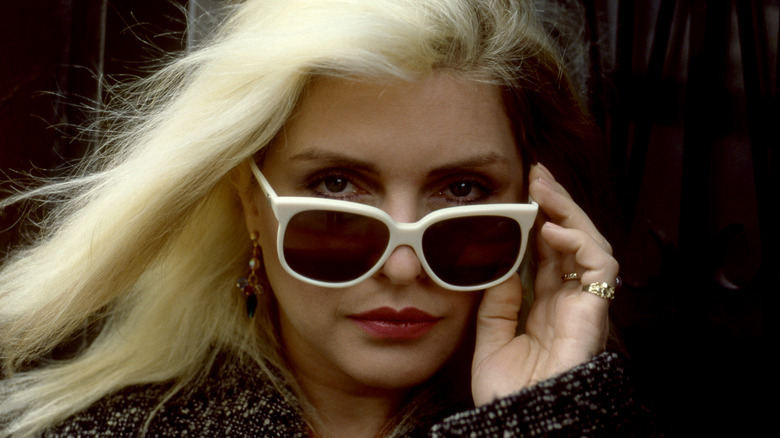
Debbie Harry — Playboy bunny

There are many tragic details in Debbie Harry's life, but this iconic queen of the punk rock scene has proved more than once that she's made of stern stuff. In the days before Blondie was formed in 1974, Harry held down several jobs, including modeling (her head infamously appeared on the cover of 1971 novel, "The Franchise Affair"), and a stint at the BBC, which she described in a 1982 BBC Radio 4 interview as her "longest job, except for Blondie." But arguably her quirkiest role was being a Playboy Bunny.
Harry said she needed a job, so she gave being a Playboy Bunny a try for around nine months. When asked about how she approached the work, Harry said: "I like to dress up, so it didn't really bother me. I probably did much crazier or funnier things to myself over the years," per Far Out. She stressed that the club owners looked after the Bunnies, who were high-end cocktail waitresses but were also regarded as performers. "We were important to them. We were important to the business."
Not that being a Playboy Bunny was all play and no work. In 1977, she told Mike Greenblatt: "Being a Playboy Bunny seems glamorous, but it's extremely hard work, and those girls really earn their money." She later doffed her cap to the "career" Bunnies, who stuck to the job and made a good living from it. A generation of music lovers are delighted that Harry wasn't one of them.