

Bands That Quit Just As They Were Making It Big
Breaking up is hard to do, but it's even harder to time, especially for a band nipping at the possibility of fame. Give up too late, and you've wasted time and patience on a project that wasn't going to make you all stars; give up too soon, and you'll never know if one more year or even one more month of the grind could have made you the next big thing.
Some bands manage to snag the weird distinction of breaking up near the top of their game, calling it quits just as, or right before, mainstream success and the money and perks that come with it come knocking. Sometimes the cruel economics of the music business make the situation unworkable, sometimes big personalities clash in the pressure cooker of the recording studio, and sometimes a group (or the person fronting it) looks around and simply says, "You know what, we're good." From Cream's implosion to an abrupt career change for the New Radicals' front man, whatever the cause, these breakups at the crest of fame captivate fans, particularly those of us who still hope against hope for another Fugees album.
Sunny Day Real Estate
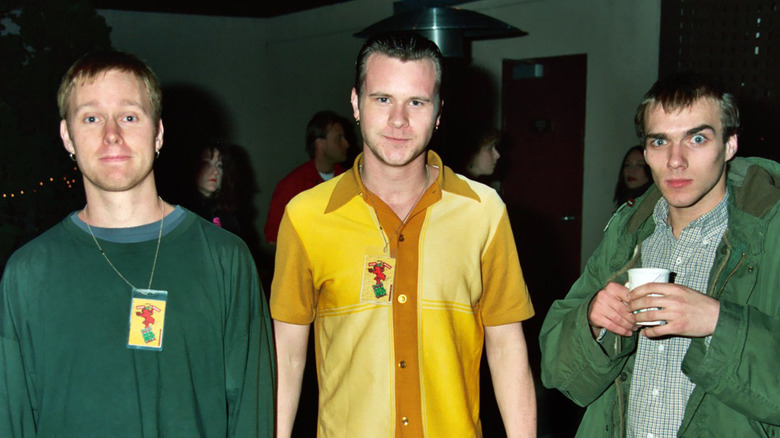
Whether you love it or hate it, emo music has a bizarre history and was definitely how the mid-'90s sounded for a lot of music fans, and Seattle's Sunny Day Real Estate were among the sensitive boys of the emocalypse. Despite the success of its first album, bless their Gen X hearts, when these musicians got tired of being a band, they gave right up.
The members phoned in the lyrics for their second album, generally called "LP2" or "The Pink Album," and supplied the disc with a minimalist cover of mere tiny text on a soft rose background. It's elegant, it's distinctive, and it really shows how over it the band's members were by that point. Indeed, the album's postmortem appreciation by fans may have surprised them. Reportedly, they'd decided to split up even before their first U.S. tour but followed through on the commitment as a presumably contractually mandated swan song.
After the split, Sunny Day's members scattered: Drummer William Goldsmith and bassist Nate Mendel decided to fight Foos with Dave Grohl, while guitarist Dan Hoerner went off to live on a farm. The band has reunited intermittently since then, even putting out two more studio albums, but Mendel generally stuck with the Foo Fighters through subsequent projects and didn't reunite with his old bandmates. Material for a fifth Sunny Day album allegedly molders in Grohl's archives; time will tell if it sees the light.
Jane's Addiction
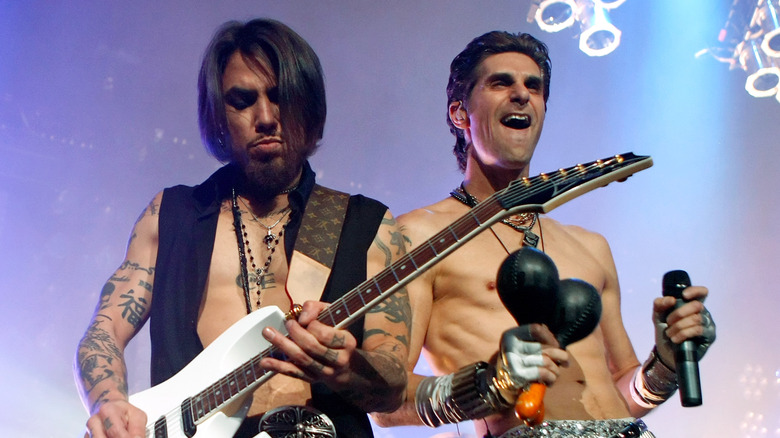
Jane's Addiction stuck it out long enough to taste real commercial success: 1990's "Ritual de lo Habitual," its third album, flew off shelves and eventually hit double-platinum status. The band went on an extended tour of North America and Europe in support of the album, but even in interviews on the road, band members were dropping very, very heavy hints that they might be ready to peace out after their third-time's-the-charm success, noting that they had other projects they'd like to do and musing that the group may have run its course. Record execs, smelling money, were more sanguine and tried to brush off the band members' own words as rumors.
Nevertheless, Jane's Addiction split in 1991. And after reuniting in 2001, they split again in 2004, with the announcement coming via a post on Dave Navarro's website that led to public recriminations from singer Perry Farrell against his bandmates. They briefly got back together again in 2009 to tour with Nine Inch Nails, but it didn't stick. A 2024 reunion was the least successful of all, with a tour ending prematurely after an onstage scrap between Navarro and Farrell. The band split along familiar Farrell-versus-everyone-else lines, and a December 2025 statement indicated that the band was again broken up, but gave viewers hope that the lawsuits would at least be dropped.
4 Non Blondes
If you think you've never heard anything by 4 Non Blondes, you're probably wrong: It was the one-hit wonder with potential for more that gifted the world the stoner cheer-up anthem "What's Up?," which a lot of people think is called "What's Goin' On?" (It's a triumph of cruelty to write a song about getting high with a title that's hard to remember even when sober.) But the album on which "What's Up?" appears, 1992's "Bigger, Better, Faster, More!," would be the group's only one.
In 2024, singer and songwriter Linda Perry told People that she hadn't enjoyed her startling rise to success with 4 Non Blondes, leading her to leave the band in 1994, ending the project. She added that she seldom spoke to her old colleagues in the band, though she was careful not to blame them for her discontent.
Well, someone somewhere must have screamed at the top of their lungs, "Hey, I'd like to manifest a 4 Non Blondes reunion," because by late 2025 the band was again performing together, and with plans to release a second album in 2026, a mere 34 years after its first. A Perry solo album was also announced as part of the deal, giving fans of the band, as well as the world's brunettes and redheads, their biggest dose of non-blonde energy in a generation.
Fugees
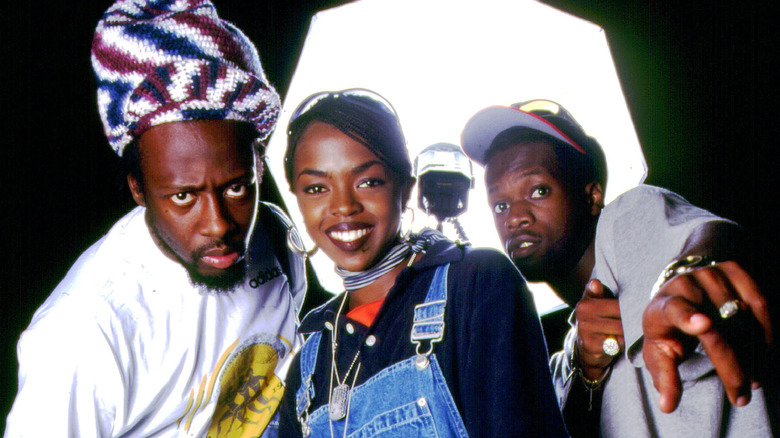
It's both sad and amusing to imagine a very young person finding out about the Fugees. "Lauryn Hill and Wyclef Jean were in a band? With Pras? Why didn't that last forever?" And then you have to look this child in the eyes and give them the latest in the chain of hard lessons called growing up and say, "Well, you see, Lauryn and Wyclef were together, and she got pregnant, and then it turned out that Wyclef wasn't the father but she lied and said he was, even though the real father was Bob Marley's son Rohan. But anyway, Pras called Wyclef a cancer in a different interview, so clearly it wasn't all down to the affair."
Once you calm down, you can explain that the Fugees' 1996 album, "The Score," was a Grammy-winning slice of perfection that not only tackled anti-Haitian prejudice and critiqued U.S. immigration policy but also included the rare jewel of a cover that surpassed the original. The only person in the world to sing "Killing Me Softly" better than the almost-peerless Roberta Flack was Hill.
"The Score" spent four weeks at No.1 on the Billboard Hot 200 and later went platinum seven times. And since we can't have nice things, the band broke up after releasing it, so "The Score" was the last Fugees album. Let the young person slip out of the room quietly as you continue to weep.
The Smiths
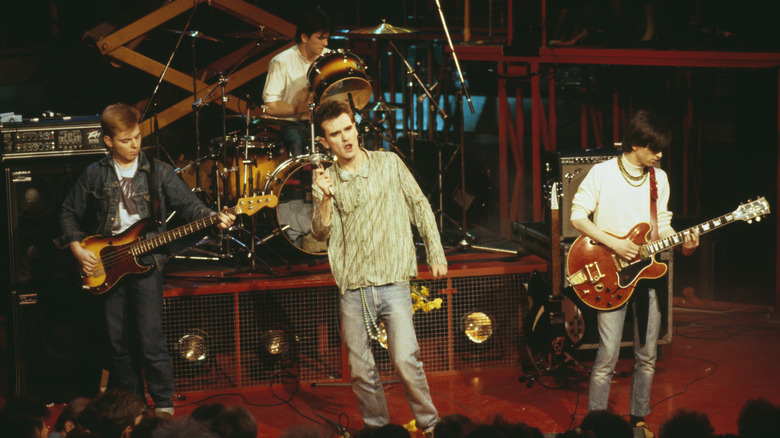
Trash-talking Morrissey, who has said and done plenty of messed-up things to deserve it, has become a popular sport: It's neither unhealthy nor physically strenuous, and it combines the moral virtue of punching up with the ease of punching down. So while it's easy to lick your lips and assume that Morrissey is the reason The Smiths broke up even as its fame continued to rise, it wasn't entirely his fault, at least not per the official story.
Though The Smiths was doing quite well, it hadn't yet cracked the charts' Top Ten with a single, which apparently felt like a problem to a bunch of people who were in a successful band in their early 20s. There were tensions between guitarist Johnny Marr and Morrissey over Marr's gigging with other acts and Morrissey's desire to cover an awful lot of '60s pop, but the true death blow was that no one was really managing the group. After a string of fired managers, the band inexplicably resorted to 23-year-old Marr. Eventually, worn out from writing, performing, touring, and managing, an exhausted Marr left in the summer of 1987, the band folding in the wake of that decision.
Cream
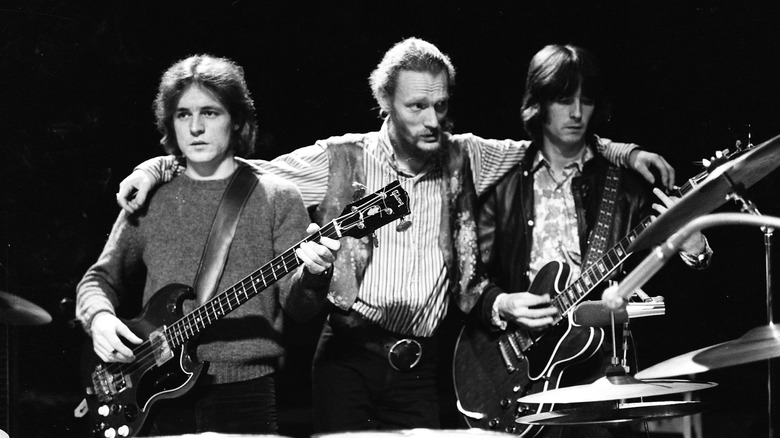
There's an awful lot to dislike about Eric Clapton, but in the late 1960s, much of his public racism, spousal abuse, and COVID-19 vaccine skepticism were ahead of him, and he was "merely" an excellent guitarist in the supergroup Cream. However, the egos of the other, less-famous members of the trio were striking sparks, with drummer Ginger Baker and bassist Jack Bruce fighting all the time. A so-good-it-should-be-true anecdote reports that Baker and Bruce were once so invested in an onstage argument that neither noticed when Clapton simply walked away.
When Cream hit the skids, Clapton had the talent and star power to tuck and roll out of this unhappy situation, so after giving it as much thought as he was capable of, Clapton unilaterally announced that Cream was a dead band walking in July 1968. Clapton, Baker, and Bruce managed to play nice long enough to give the band an almost-dignified sendoff: They recorded some final tracks to complete work on their final album (titled "Goodbye") and gave some farewell performances, with the last one going out on the BBC in early 1969. Cream released one album a year from 1966 to 1969, probably setting a record for influence per year, but it was fated to be a relatively brief collaboration.
The Zombies
Sometimes good things happen to dead people. The British band The Zombies spent the mid-to-late '60s almost making it, notching a couple of hit singles but struggling to get backing to record a full-length album. Finally, the musicians spent the last of their money and energy on the synth-heavy album "Odessey and Oracle," but its singles hit the U.K. charts like underdone pasta on a wall, bouncing into oblivion without even leaving a wet patch. The Zombies accepted defeat before the album's release and disbanded in 1967.
However, CBS executive Al Kooper happened upon the album on a trip to the United Kingdom and loved it. He tried to buy the rights only to find, in what must have been a hilarious exchange, that CBS already held them. Kooper bullied the company into releasing the album in the States after the company's original reluctance, and The Zombies shambled into U.S. stores and airwaves in 1968. After the success of the album and its single, "Time of the Season," CBS tried to resurrect the Zombies, but the members had moved on, only reuniting far down the road after "Odessey and Oracle" had graduated to icon status.
New Radicals
If you've ever been broken up with via a text or fired by email, it could be worse, or at least more impersonal: New Radicals fans found out the band was kaput through a press release. Front man Gregg Alexander was criticized for this decision, as the band had only put out one album and had notched a hit single with "You Get What You Give," but Alexander had had his fun. His two earlier solo albums hadn't broken through, but after tasting real success with a band, he realized that being the face of a project wasn't for him. Instead, he wanted to be a producer, a perfectly valid career path that sounds less fun than being a star, but was where Alexander's heart apparently lay.
Alexander fundamentally wasn't social enough to be a pop act, citing "schmoozing" as something he would just as well avoid, but he's kept working offstage since "You Get What You Give" rampaged across the airwaves. He worked on Sophie Ellis-Bextor's "Murder on the Dance Floor" and has collaborated frequently with Lana del Rey — not bad for an alleged one-hit wonder.
And hey, if Alexander's recent comments are to be believed, the band might be making a full comeback in the near future.
The Power Station
The Power Station was always going to be a weird project. Its members were all already famous: Guitarist Andy Taylor and bassist John Taylor, unrelated by blood but both of Duran Duran, took advantage of an off-season from their main band to do something different, joining up with Chic drummer Tony Thompson and, eventually, solo act Robert Palmer to string together a supergroup. The name came from its recording studio, New York's Power Station, and its energy came from the confidence of four dudes who already knew they had what it took to make it.
If that sounds like a lethal dose of self-assurance for a joint project, congratulations: You're a keen student of human nature. The band had a good cover in the chamber with a revamp of T. Rex's "Get It On (Bang a Gong)," Palmer's audition piece for the group, but introducing a project with a cover felt weak, so The Power Station cranked out an original song. It came up with 1985's "Some Like It Hot," a sexy and sweltering number that peaked at No. 6 on the charts and gave the band its only real hit before the terminal diagnosis.
The Power Station finished an album, but before the supporting tour began, Palmer self-yeeted to work on his own solo stuff. He even ganked Thompson to drum on "Addicted to Love," a song far better remembered than The Power Station's output is now. It may have been the right move, but it wasn't classy.
The Police
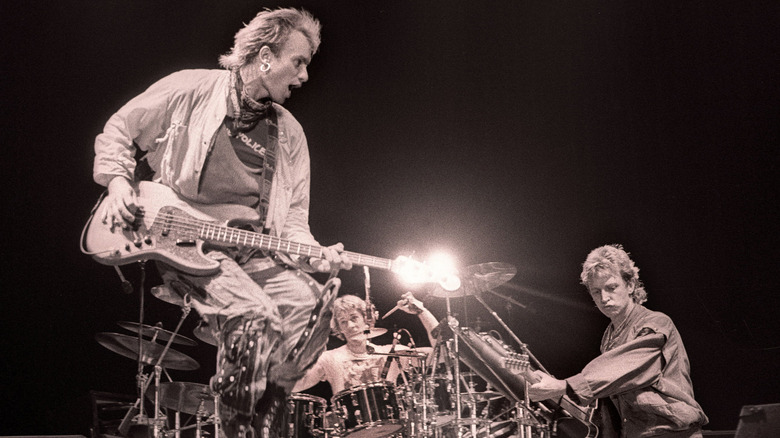
The Police coalesced as a trio in 1977, and the lineup of Stewart Copeland, Andy Summers, and Sting (aka Gordon Sumner) was a killer group for the next seven years. The band banked hit single after hit single, but ultimately, two things were wrong with Sting, at least as far as band longevity went: He had strong thought on aging musicians.
Sting thought being in a touring band was for young people who could keep up the stamina, a pointed barb at the near-decade-older guitarist Summers. He even mocked the idea of performing in a rock band at 70, although as of mid-2026, he's comfortably past that milestone and still on the road. Sting also shouldered the majority of the songwriting, and you can believe who you wish about why: Summers and Copeland thought Sting wouldn't share the work, and Sting thought that what Summers and Copeland were writing was subpar.
Both could well be true, but with those internal tensions, the band couldn't proceed indefinitely. In 1984, it hit the end of a long tour in support of its album "Synchronicity" and called it quits, even as it still had the power to continue to top the charts.
Rage Against the Machine
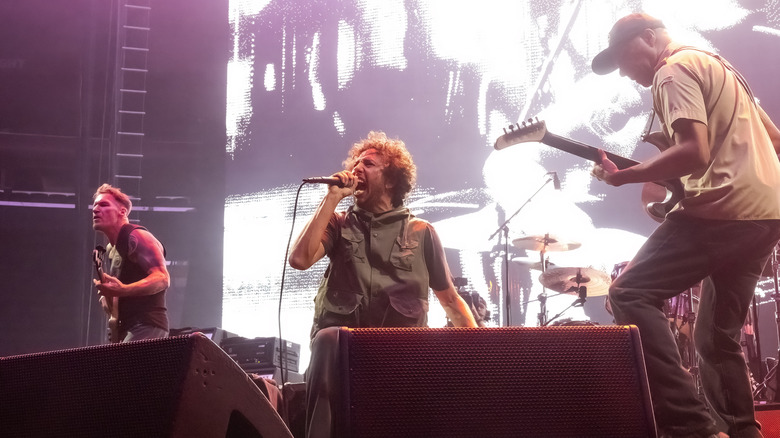
You've got to rage against something, and it might as well be the machine. The members of anti-establishment band Rage Against the Machine, for all their justifiable and chart-topping rage against the sinister systems of '90s America, also reserved a bit of their titular ire for one another. That internal strife led to the band breaking up three times.
The initial split, the one that really cut them off when they were getting big, came in the fall of 2000. (They would have had so much to rage against in the next few years, such as the oft-nonsensical Iraq War, if they had hung together.) Singer Zack de la Rocha tapped out in October, and while everyone made nice publicly, the longstanding rumors of internal tensions, along with bassist Tim Commerford's recent weird antics, hinted that more was going on. (Commerford had climbed a fake palm tree at the MTV Music Awards because he was mad that Limp Bizkit had won an award.)
The band members tried again in 2007 and 2022, but neither reunion took. A torn Achilles tendon (de la Rocha's) and apparent disagreements on whether to accept induction into the Rock & Roll Hall of Fame left the band announcing its third breakup in the early days of 2024, apologetically but unambiguously declaring that it would not tour or perform again.