

5 One-Hit Wonder Songs From The '70s That Have Earned Respect - From Younger Generations
The '70s were a rich time for one-hit wonders, as many bands made bold stylistic gambles while attempting to find their niche in the rapidly changing rock landscape. It's an era caught between the psychedelia of the late '60s and the glam metal that would have its moment in the '80s, with disco, yacht rock, and Motown blending in between.
Unsurprisingly, the '70s saw its share of bands release a smash hit only to be lost in the shifting tides of genre trends. Some, however, found a second life for their singular triumphs decades later, as younger generations' tastes came back around. Here, we've collected five of those lost and rediscovered hits, specifically from the '70s and specifically from one-hit wonders like Nazareth, Harry Chapin, the Buggles, and Gloria Gaynor. Songs from these artists may not have made them as iconic as groups like Fleetwood Mac or the Eagles, but at least they had one song that many people can still sing five decades later.
Love Hurts — Nazareth
Though "Love Hurts" was first released by the Everly Brothers in 1960, it's Nazareth's 1974 version that has best endured the cultural weather. The tender ballad reached No. 8 on the Billboard Hot 100, and though no other Nazareth song ever came close to that level of success, "Love Hurts" has been enough to introduce the band to new generations. Likely the biggest reason that the song has remained so familiar is its repeated inclusion in movie and TV soundtracks. Over the years, it's been used often enough to become a de facto backdrop to the "all is lost" moment in stories, alongside perhaps its greatest rival, R.E.M.'s "Everybody Hurts."
"Love Hurts" has a slew of different versions, including covers by Roy Orbison and Cher. But it's the Nazareth version that shows up in media the most, likely owing to its power-ballad style and especially lead singer Dan McCafferty's pained, cracking vocals. After McCafferty's 2013 retirement, the band continued playing the song, and that probably isn't going to change. "Whenever I hear ["Love Hurts"], regardless of the vocalist, in my head I still hear Dan singing it," bass player Pete Agnew told Classic Rock. "But it would be impossible to drop 'Love Hurts.' Without it there probably wouldn't be a Nazareth. ... It became such a big hit that Nazareth has lasted forever."
Video Killed the Radio Star -- The Buggles
In terms of raw numbers, British synth-pop band the Buggles might be one of the purest one-hit wonders in modern music history. The group's 1979 debut single "Video Killed the Radio Star" was a truly meteoric hit, topping the charts in 16 different countries. Meanwhile, the handful of other singles the Buggles released in as many years all failed to recapture any significant portion of its success, and the act disbanded within only five years of forming. Nonetheless, "Video Killed the Radio Star" quickly earned the band a place in music history — one that continues to prove its momentousness to this day.
When MTV first switched on in 1981, the very first video the network aired was "Video Killed the Radio Star," and in 2025, when the company made the move to shutter the majority of its 24/7 music channels and MTV UK, the last video the channel played was "Video Killed the Radio Star." In the former case, the song's upbeat tone and theme of technological advancement seemed forward-thinking and hopeful (if perhaps arrogant). In the latter case, its message seems more ironic and analogous to modern times, an indictment of how modern technology has made music television obsolete. In either case, a song that could have otherwise been dismissed as a quirky, kitschy pop throwaway instead became an anthem to an entire music medium and an oddly prescient social commentary.
Cat's in the Cradle — Harry Chapin
Harry Chapin only had one No. 1 hit, but because it was "Cat's in the Cradle," his name will live on for a long time (he'll also be remembered for his selfless and extensive charitable efforts to combat world hunger). There is a lot that can be said in praise of the song, like its Grammy nomination and status as a modern folk standard leading to some high-profile covers. But really, "Cat's in the Cradle" has survived through younger and younger generations for basically one reason: It's unequivocally the one song most associated with father and son relationships, which also happen to be an enduring Hollywood staple.
If nothing else, you can count on seeing "Cat's in the Cradle" referenced or even outright sung in one popular sitcom or another, always during a father-son relationship storyline. In "The Office," it's sung to guilt a working father into abandoning his work in favor of seeing his son. In "How I Met Your Mother," a character belts out the song while lamenting his fatherless childhood. In "The Goldbergs," a son sings the tune in order to emotionally manipulate their father. In "King of the Hill," the track plays as a character meets his long-lost son. The examples could continue on and on, and that speaks to the reason that "Cat's in the Cradle" and Chapin, who died in 1981, are still so relevant today.
I Will Survive — Gloria Gaynor
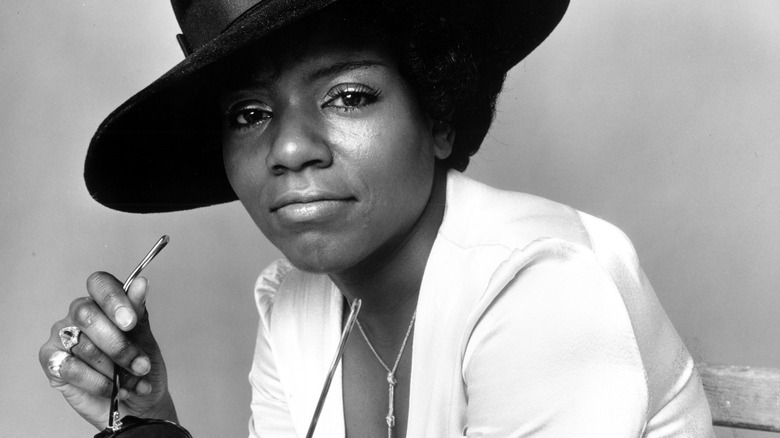
Very few songs have ever defined disco more than Gloria Gaynor's 1978 mega-hit "I Will Survive." Sure, she had other tracks that topped alternative charts like Billboard's defunct Dance Club Songs. But "I Will Survive" is Gaynor's only No. 1 hit on the Hot 100 and her biggest success by a mile (or 10) due more to its staggering popularity than any other song's failure. The tune is a crossover hit and anthem across generations and lifestyles, one with almost too many achievements and disparate cultural significances to count.
The single sold more than 15 million copies worldwide, and part of that broad appeal is its central theme of perseverance, one adaptable enough to become both a breakup and LGBTQ+ anthem. Maybe the single most ironclad bit of proof of the enduring popularity of "I Will Survive," though, is that, even 50-ish years later, it's still a near-necessity on any dance or party playlist. Not a modern remix or hip-hop sample, but simply Gaynor and her one massive hit, loved and respected, generation through generation.
Come and Get Your Love — Redbone
In 2014, auteur and music aficionado James Gunn chose Redbone's "Come and Get Your Love" to open up his first big superhero epic, "Guardians of the Galaxy." Just a year later, comedian Bill Burr chose the song as the theme to his new animated comedy "F Is for Family." With a sudden surge in exposure, the song's simple, infectious rhythm and blatant joy made it an instant hit with a young generation hearing it for the first time. That second wind came almost exactly 40 years after the first, when "Come and Get Your Love" reached No. 5 on the Billboard Hot 100 in 1974. Even during those many half-forgotten years, the tune carried with it a unique cultural importance.
"Come and Get Your Love" was the first single by an all Native American/Chicano band to chart on the Billboard Top 10, and it didn't do so by hiding its heritage in any way. The members of Redbone were always proud of their culture and willing to place it front and center, like when they began their famous performance on "The Midnight Special" with a traditional Native dance. The song itself was also meant as a message of love — and not just romantic love. As Pat Vegas, the band's bass player and the producer of "Come and Get Your Love," explained to The Wall Street Journal, "Many think the song is just about a man singing to a woman. It is, but it's also about the coming together of different peoples." Redbone's 1971 release, "The Witch Queen of New Orleans," charted at No. 25 in the U.K., but the song was never released in the U.S.