

1969 Changed Rock Forever — Woodstock Was Just The Headline
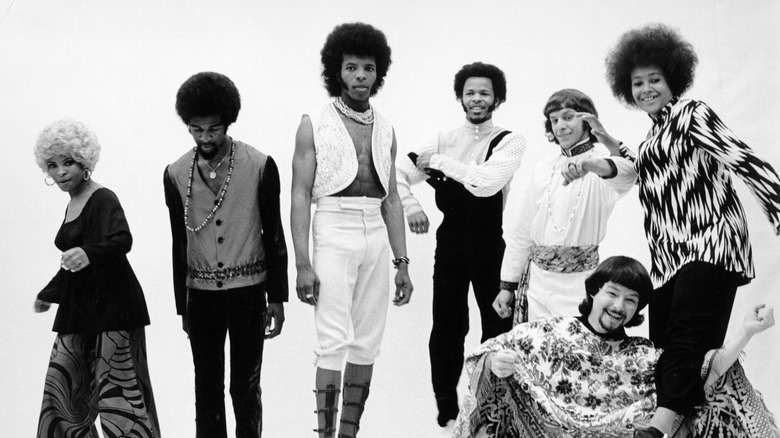
As the 1960s drew to a close, popular music had evolved immeasurably during the course of that tumultuous decade. That was evident in the extraordinary lineup of performers who played at Woodstock in August 1969, a three-day music festival that demonstrated the ascendancy of the counterculture when a massive crowd estimated at 400,000 showed up — and that wasn't the only significant event that shook up rock history that took place that year.
Those Woodstock numbers showed the entire world that — to paraphrase a Bob Dylan classic — the times, they were a changin'. From a rock music perspective, those changes had been ongoing ever since the Beatles conquered America in 1964. That preceded the so-called British invasion that swept through America like a wildfire, with "swingin' London" becoming the epicenter of all things cool. Meanwhile, the Beatles' bold studio experimentation played a key role in pushing rock music in a variety of exciting new directions, with other artists picking up on those ideas and taking them down paths that were even more unexpected.
As the decade wore on, psychedelia was all the rage, with scores of young people taking the advice of LSD guru Dr. Timothy Leary to "turn on, tune in, drop out." By 1969, political, cultural and social upheaval was in full swing, and that was certainly reflected in the music that served as the soundtrack to that turbulent time. That year, in fact, would prove to be a pivotal one in music history, and in retrospect it's become clear that 1969 changed rock forever — Woodstock was just the headline.
Woodstock made history with '3 days of peace and music'
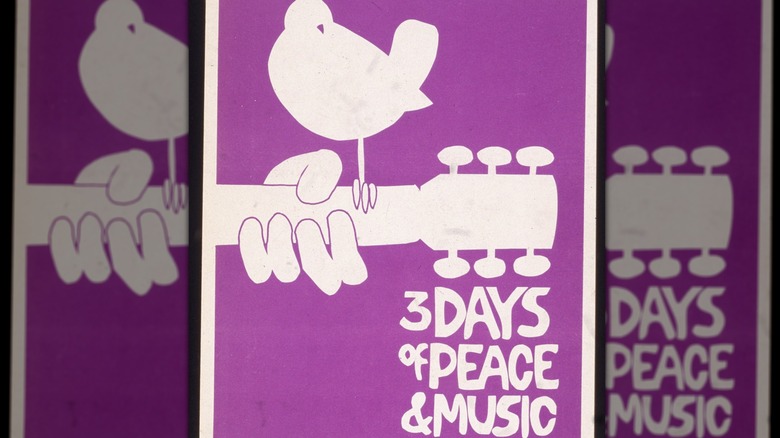
The Woodstock Arts and Music Fair was billed as an "aquarian exposition," held within "three days of peace and music" during an August weekend in 1969. Organizers lined up a now-iconic roster of acts consisting of the biggest rock stars of that era, ranging from Janis Joplin to Jimi Hendrix to Santana, to The Who — and dozens more.
Yet the festival didn't actually occur in the upstate New York community of Woodstock, which is among the false things that people believe about Woodstock. Instead, it took place on land owned by dairy farmer Max Yasgur, situated in nearby Bethel. Based on ticket sales, organizers expected about 50,000 attendees, yet more than eight times that many showed up, a vast audience whose immense and unanticipated size created chaos on various fronts.
Thanks in part to the subsequent documentary/concert film shot during the festival, Woodstock has come to be seen as a defining moment in history — and not just for the legendary performances that took place on the stage. "The important thing was it's the moment when all of that generation of hippies looked at each other and said, 'Wait a minute, we're not a fringe element. There's millions of us! We're what's happening here!'" David Crosby, who'd performed at Woodstock as one-quarter of Crosby, Stills, Nash & Young, told PBS docuseries "Frontline." "It was that self-awareness, you know, that, up to that point, it really hadn't happened ..."
The debut of Led Zeppelin laid the groundwork for heavy metal
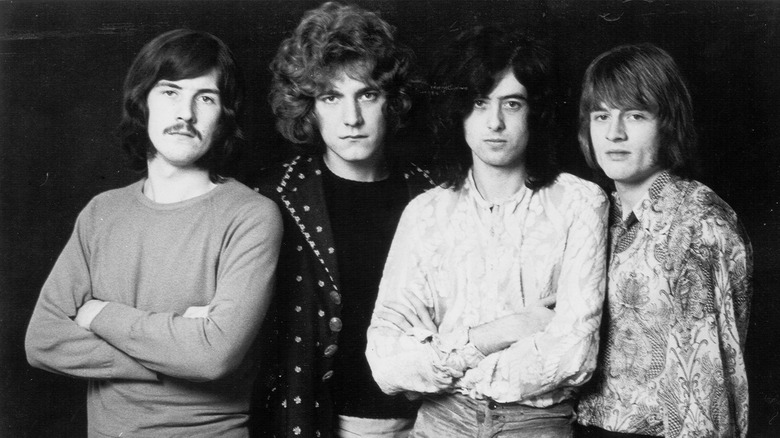
A key moment in the untold truth of Led Zeppelin was the January 1969 release of the band's self-titled debut album, a watershed achievement in rock history that influenced what would later be called heavy metal. Zeppelin was the creation of accomplished studio guitarist Jimmy Page, who'd played on such diverse tracks as Shirley Bassey's theme for 007 flick "Goldfinger" and Petula Clark's "Downtown." Page stepped back from session work in 1966 to join the Yardbirds. When the band imploded a few years later, Page assembled a group — initially dubbed the New Yardbirds before renamed Led Zeppelin — by recruiting fellow session musician John Paul Jones on bass, Robert Plant on vocals, and John Bonham on drums.
The band's first album set the template for metal, evident from the moment the needle dropped on the opening track and Page's slashing guitar riff kicks off "Good Times, Bad Times." "It was the sound of a new world being born," opined critic Jack Hamilton, writing for Slate, "and the louder sound of an old world being destroyed."
The band released its second album, "Led Zeppelin II," later that same year. Expanding the heaviness of their first LP, Led Zeppelin would go on to become one of the biggest bands of the 1970s, with the influence of Page's raunchy, riff-driven guitar and Plant's banshee-shriek vocals seen in pioneering metal bands such as from Black Sabbath and Judas Priest.
Prog rock became a genre unto itself
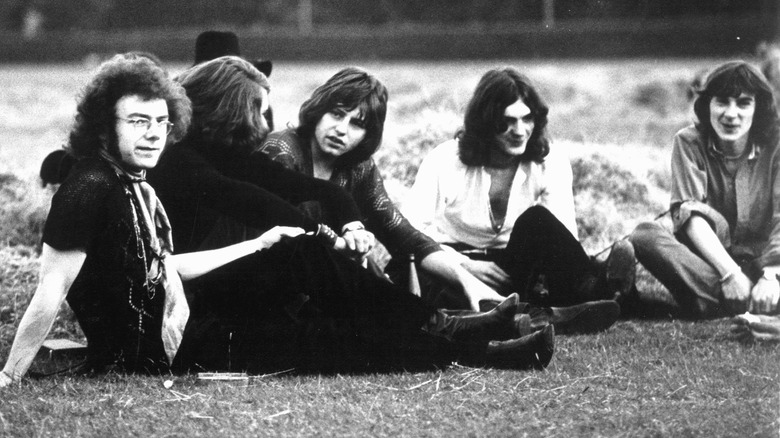
While Led Zeppelin was busy transforming Delta blues into bone-crunching arena rock, other British bands were moving the musical needle in a very different direction. Incorporating jazz, folk, and classical music, a new genre emerged that came to become known as progressive rock. Chief among these prog pioneers was King Crimson. Led by guitarist Robert Fripp, King Crimson released its debut album, "In The Court of the Crimson King," in 1969. Not everyone got it ("ersatz s***," wrote rock critic Robert Cristgau), but some did ("They have combined aspects of many musical forms to create a surreal work of force and originality," wrote John Morthland with admiration for Rolling Stone). In hindsight, King Crimson's debut is now seen as a trailblazing accomplishment that almost singlehandedly kick-started progressive rock during what is now considered to be the genre's birth year.
King Crimson wasn't alone in traveling down that particular musical path. That same year, Genesis unveiled its debut album, and although "From Genesis to Revelation" wasn't nearly as prog as the albums that followed (the Bee Gees were a strong influence on this early LP), the songs were bursting with biblical references and lyrical pretentiousness that would come to define the genre. Another proto-prog album released in 1969 was the self-titled debut of Yes, while other groups released albums that, if not strictly prog, were at least prog-adjacent, including Jethro Tull, Soft Machine, Pink Floyd, and the Moody Blues.
Bob Dylan and The Flying Burrito Brothers introduced country to rock
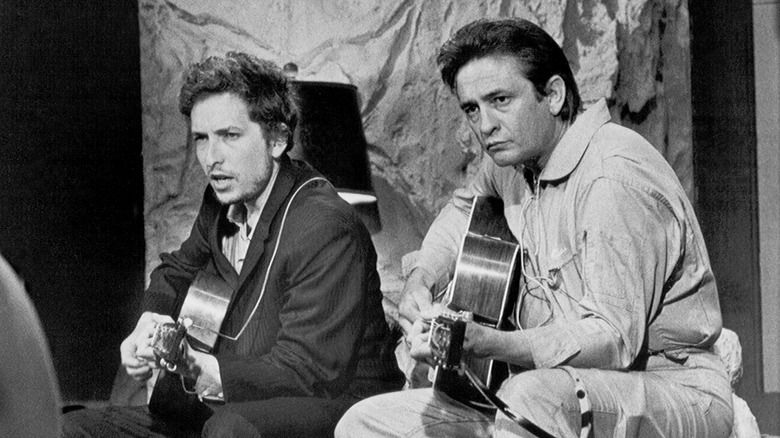
Bob Dylan got into a serious motorcycle accident during the summer of 1966, and spent the next few years laying low while recovering at his upstate New York home in Woodstock. It wouldn't be until 1969 that Dylan would return to the public eye with "Nashville Skyline," his first studio album since 1967's "John Wesley Harding." As the title suggests, Dylan had recorded the album in Music City, representing his first foray into the country music genre.
Not only did the album represent a stylistic departure, "Nashville Skyline" also featured a voice that was markedly different than in any album before or after, with Dylan's nasally rasp replaced by a tone that was thinner, smoother, and less gravelly — reportedly the result of his briefly quitting smoking. That year, Dylan made a rare TV appearance as a guest on pal Johnny Cash's TV show for a live performance of their "Nashville Skyline" duet, "Girl from the North Country," which is among the best Johnny Cash collaborations of all time. Later in 1969, Dylan headlined the Isle of Wight Festival.
Meanwhile, country music had also inspired the Flying Burrito Brothers, who released their first album in '69. Founded by former Byrds Gram Parsons and Chris Hillman, the Brothers' debut, "The Gilded Palace of Sin," blended Nashville twang with a flower-power hippie sensibility. Combined, "Nashville Skyline" and "The Gilded Palace of Sin" can be seen as cracking open the door for the country rock avalanche of the early 1970s.
The debut albums of MC5 and The Stooges set the template for punk rock
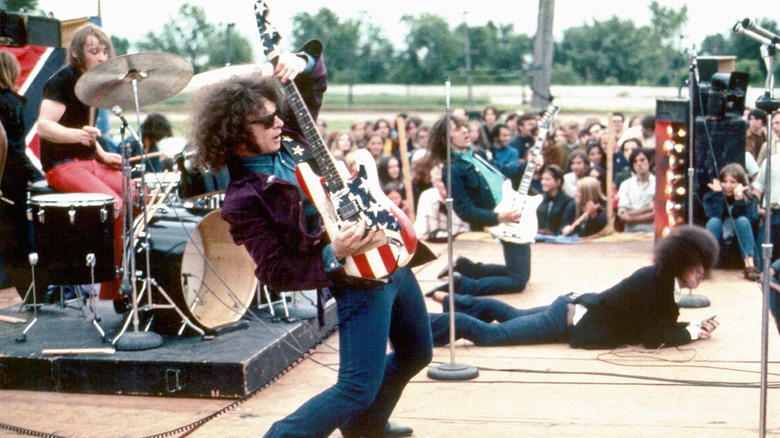
In the late 1960s, two bands from Detroit had been taking rock in some dangerous new directions, building on the garage-band ethos of groups like the Troggs and Count Five. In February 1969, the MC5 (shortened from the Motor City Five) released its debut, a live album titled "Kick Out the Jams" that had been recorded at Detroit's Grande Ballroom. The clear highlight of the album is the title track, one of those classic rock songs that deserved to go to No. 1, but never did (largely because radio refused to play it due to the prominent and repeated f-bombs). Brash and political, the MC5's music grabbed listeners by the throat, a sonic refutation of the peace-and-love hippie bands in vogue at the time.
Later that same year came the self-titled debut from the Stooges, which dropped that August. Raw, loud, and ragged, the album introduced the world to front man Iggy Pop, and the proto-punk classic "I Wanna Be Your Dog" — one of five Iggy Pop songs that transformed rock's DNA. "I said to somebody once, 'It's like going to a pet store and there's four puppies all fighting for your attention,'" Pop told Tidal of the Stooges' frantic sound. Those two albums are now seen as seminal influences in what would later be labeled punk rock; decades later, Pop has retained the nickname "the Godfather of Punk."
Sly and the Family Stone merged rock with funk and created a whole new genre
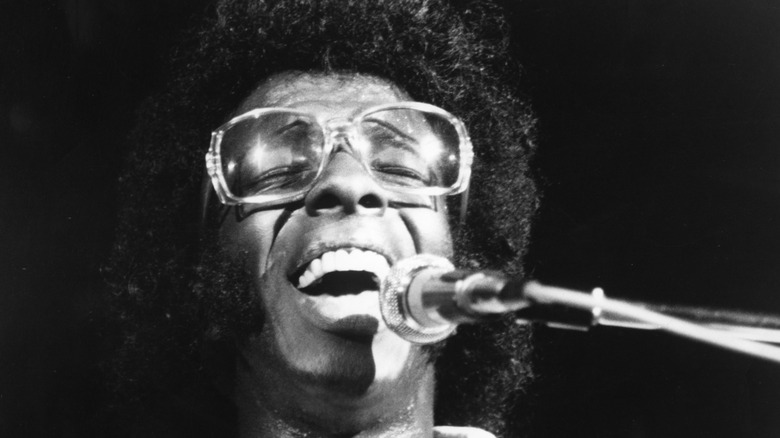
Building on the soul stylings of artists like Otis Redding and James Brown, Sylvester "Sly" Stewart formed Sly & the Family Stone in 1966, merging R&B with psychedelic rock and whatever else struck his fancy. The group's success grew, but it truly exploded in 1969 when "Everyday People" spent four weeks in the top spot in Billboard's Hot 100, granting Sly & the Family Stone their first No. 1 single. Then came the May 1969 release of the album hosting that single, "Stand!" That summer, Sly & the Family Stone delivered an incendiary performance at Woodstock, with "I Want to Take You Higher" becoming a highlight of the subsequent concert movie.
Both "Stand!" and the band's Woodstock gig have made the band a pillar of rock history, with the group's seamless blending of funk, soul, R&B, and rock influencing numerous artists that came after. In fact, a direct line can be drawn from Sly to Parliament/Funkadelic to Prince to Michael Jackson to the Black Eyed Peas, while the group's music has become a hip-hop staple, sampled by the likes of Snoop Dogg and the Beastie Boys.
Sly & the Family Stone was also an inspiration to a trailblazing rap group. As Public Enemy's Chuck D told Rolling Stone, "They always seemed to never repeat themselves. Whatever they came out with, it was totally different, and that had an influence on Public Enemy, too."
The addition of Mick Taylor kicked off the Rolling Stones' most acclaimed and successful decade
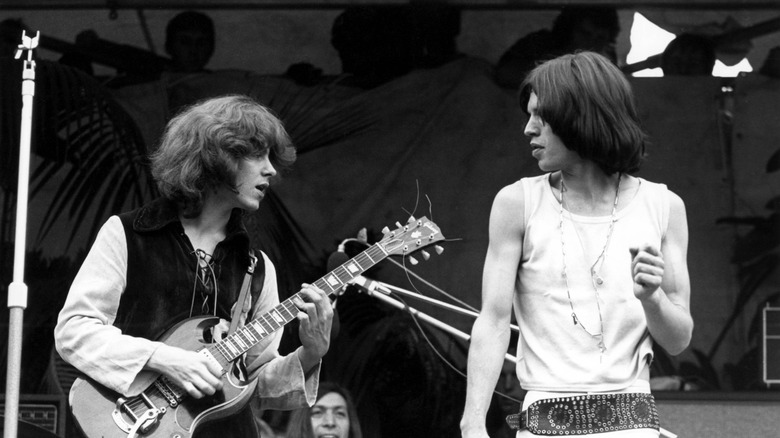
When pondering the Rolling Stones, it's impossible to ignore that the band's onetime leader and guitarist, Brian Jones, was in a sad downward spiral by the final year of the 1960s. His deterioration had become apparent; not only did he rarely show up for recording sessions, when he did, he could barely function as a musician. His bandmates began seeing him as an albatross around the group's collective neck, and in June 1969, Jones was kicked out. Mick Taylor, who'd distinguished himself as a melodic and inventive guitarist with John Mayall & the Bluesbreakers, joined as his replacement. Just a few weeks later, Jones was dead, having drowned in his swimming pool.
The 20-year-old Taylor made his debut with the Stones two days later, at a free concert in London's Hyde Park — which, due to Jones' tragic death, had morphed into a memorial show paying tribute to the late musician. Taylor's addition caused a seismic shift within the band, and, ultimately, in the fabric of rock history with what are regarded as two of the Stones' all-time best albums, 1971's "Sticky Fingers," and 1972's "Exile on Main Street." "Some people think that's the best version of the band that existed," Jagger told Rolling Stone of Taylor's relatively brief tenure with the group before quitting in 1974.
The Who introduced the first rock opera with Tommy
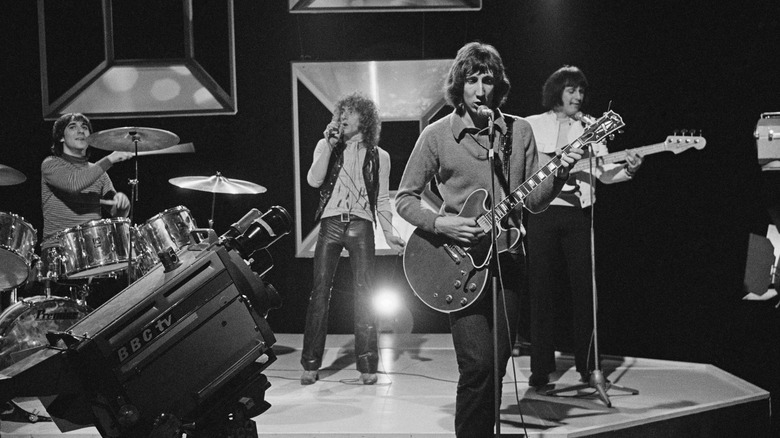
There's no question that rock music during the latter half of the 1960s experienced a stunning creative renaissance, pushing the genre in exciting and often unforeseen directions. Yet from an industry perspective, little had changed; hit singles — or the lack thereof — could make or break a career. That model began to erode with the release of The Who's 1969 double album "Tommy." The brainchild of the guitarist Pete Townshend, "Tommy" was more than a mere concept album. This was the first rock opera, complete with overture, recounting the story of how the titular character — who could neither speak, see, nor hear — became a "Pinball Wizard" and, ultimately, an inadvertent cult leader. Meanwhile, there are dark themes at play throughout the album.
Not only did "Tommy" up the ante for the potential of the humble record album, the double LP changed the face of rock concerts when The Who began performing the album in its entirety, from beginning to end. Speaking with Rolling Stone shortly after the album's release, Townshend dismissed much of the band's earlier output as "gimmick-laden advertising schmatter," declaring, "This is working toward a far more unified project."
The Who set the template, and other acts would experiment with their own rock operas, ranging from Pink Floyd's "The Wall" to Meat Loaf's "Bat Out of Hell." Beyond that, the legacy of "Tommy" has also included a star-studded 1975 movie and a hit Broadway musical.
The Laurel Canyon scene hit the charts via Crosby, Stills & Nash, Joni Mitchell and more
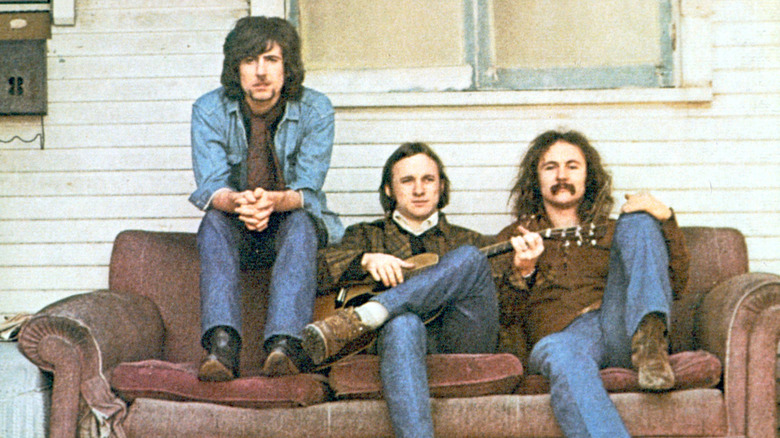
Just a short drive from the fabled Sunset Strip, L.A.'s Laurel Canyon neighborhood was the place to be for both aspiring and established rock stars during the late 1960s. At the center of the scene was "Mama" Cass Elliot, who'd hit it big with the then-defunct Mamas and the Papas. "Cass' house was kind of a central point for a huge amount of very bright and very colorful people," Graham Nash recalled in an interview with Music Connection.
According to legend, it was during one of Elliot's Laurel Canyon soirees when she encouraged Nash (who'd just left the Hollies), Stephen Stills (ex of the Buffalo Springfield), and David Crosby (who'd recently been ousted from the Byrds) to sing together. When their three voices blended, the lush harmonies stunned everyone who heard them. "Something magical had happened, and we all knew it," Nash wrote in his memoir, "Wild Tales: A Rock & Roll Life," recalling the moment that led to the formation of Crosby, Stills & Nash, whose 1969 debut album became a blockbuster.
Joni Mitchell, whose second album, "Clouds", came out that same year, was also an integral part of the Laurel Canyon scene (and still owns a house there). All that musical cross-pollination in Laurel Canyon would ultimately lay the foundation for the soft-rock sound popularized in the early 1970s, including Jackson Browne, Linda Ronstadt, James Taylor, the Eagles, and others.
The Beatles hit the roof for their final live performance
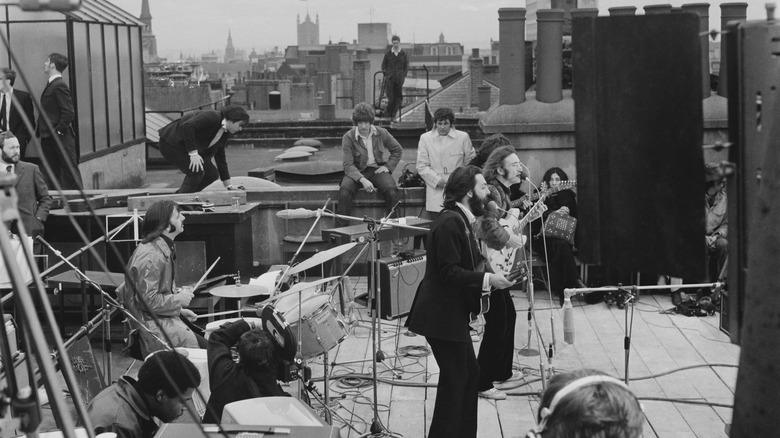
On January 30, 1969, the Beatles caused a commotion when the four musicians assembled on the roof of their Apple Corps building on London's Savile Row to perform a brief concert. The band had previously been ensconced in a soundstage at Twickenham Film Studios, where they were being filmed for a documentary. The purpose: to come up with new material for what was initially to be a far more ambitious concert, with plans for a worldwide TV broadcast from a storied venue (the pyramids in Giza were considered at one point). Of course, that never happened, and instead they performed on the roof, playing a few takes of several songs that would appear on what would be their swan-song album, 1970's "Let It Be."
The Beatles' rooftop performance is now seen as legendary. In Peter Jackson's documentary series "Get Back," the group's longtime producer George Martin is seen listening to the tapes of the Fab Four's stripped-down performance, joined on keyboards by Billy Preston. "This is a very good dry run for something else," Martin observed, via the Associated Press.
Sadly, there would be no "something else," and that show proved to be historic on two fronts. Not only was it the first time the Beatles played together live since their final tour date in 1966, it was also the last time that all four men would ever play together in public again. The following year, the Beatles broke up.
The Stones' Altamont concert was a dark and deadly counterpoint to Woodstock's flower power
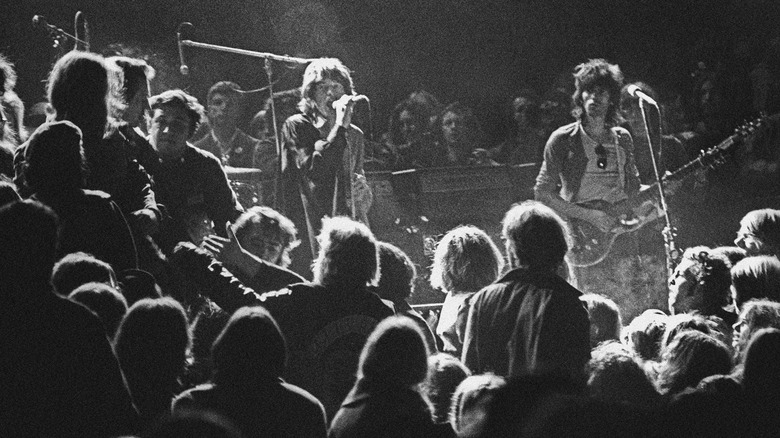
As the 1960s drew to a close, the Rolling Stones cemented plans for their own version of Woodstock in San Francisco, which evolved into a free concert at the Altamont Speedway in December 1969. The audience was enormous — more than 300,000 people attended — yet the spectacle ended in tragedy. On the advice of the Grateful Dead's manager, the Stones enlisted members of the Hell's Angels motorcycle club to handle security. That turned horrific when several of the bikers savagely beat a young Black man, 18-year-old Meredith Hunter, near the front of the stage in full view of the band while they performed; Hunter was stabbed to death.
That effectively dropped the curtain on the hippie dream, ending the decade on an exceptionally dark and deadly note. That was cemented by a subsequent documentary about the concert, "Gimme Shelter," and an expansive piece in Rolling Stone detailing how it all went down. "[Mick] Jagger was very, very shattered ... When they knew about the murder — it shook them," a source close to the band told the magazine.
"Woodstock was the peace, love, and joy of the 1960s, and Altamont was the dark underbelly," Porter Bibb, producer of "Gimme Shelter," opined in an interview with Deadline. "The 1960s was much more like Altamont in real life. I always looked on Altamont as the real side of the 1960s; it was a very difficult decade for this country."