

How Losing An Album Handed Green Day Their Career-Defining Moment
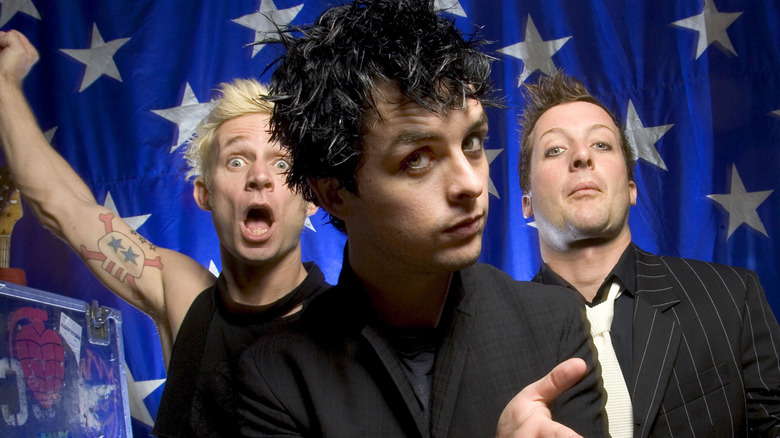
Green Day's rise from the Bay Area punk scene to become one of the world's best-selling rock bands was unlikely, but the trio learned what it was truly made of when it lost a finished album in the early 2000s. Following four consecutive major-label LPs that sold well but in decreasing fashion — 1994's "Dookie" moved 20 million copies; 2000's "Warning" sold about half a million — the story of Green Day earned a new chapter when, after recording, mixing, and mastering another album in its typical pop-punk milieu, the group found itself with nothing to release. The master tapes had gone missing from Green Day's Oakland studios. It was a devastating and frustrating blow for sure, although the theft or disappearance (the mystery still hasn't been solved) also put Green Day in a potentially productive quandary: how to move forward from that creative and professional loss.
Ultimately, Green Day, one of the most important rock bands of the 1990s, soldiered on and changed tactics. Being stripped of one record led Billie Joe Armstrong, Mike Dirnt, and Tré Cool to attempt the most ambitious, experimental — and wildly successful — project of their lives. Here's how Green Day changed everything with "American Idiot."
The master tapes for a Green Day album disappeared
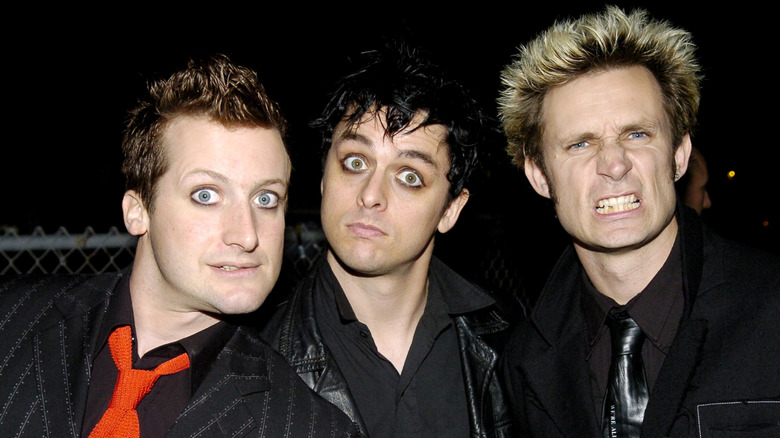
Following the release of the 2000 album "Warning" and the 2002 rarities compilation "Shenanigans," Green Day and its favored producer, Rob Cavallo, began production on a new studio LP. "Cigarettes and Valentines" was slated for release in 2003, and the band recorded and tracked all of the songs to the point where the master tapes were finished and ready to be sent to the record label for mass production. And then, it was gone — the full collection of 20 songs disappeared from Green Day's recording studio in Oakland, California, in November 2002. The tapes were presumed stolen, and even more than 20 years later, they've never resurfaced.
"Cigarettes and Valentines" was a pop-punk record in line with what Green Day was recording at the time, as evidenced by a couple of tracks captured around the same time and placed on a 2001 greatest hits album. Green Day was also the subject of speculation and rumor-mongering suggesting that, while the trio likely did record an album called "Cigarettes and Valentines," they may have just scrapped it because it wasn't good enough to release, or because the musicians didn't like it. According to these naysayers, the story that the master tapes were stolen was a mystique-building marketing ruse.
Green Day decided to scrap the project entirely
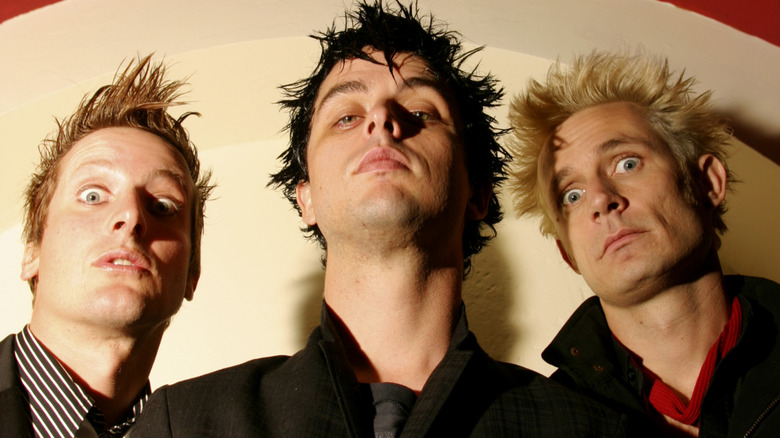
While it's certainly catastrophic to lose the master recordings for a long-awaited studio album poised to generate millions of dollars, it's not like there weren't solutions. Green Day spent a lot of time on "Cigarettes and Valentines," so it had recordings in various states of completion. The band and its production team could've pieced together earlier versions of tracks and remastered them, or even re-recorded what had gone missing.
Instead, Green Day approached the disappearance of "Cigarettes and Valentines" as a professional turning point, because the group was already in jeopardy. "Breaking up was an option. We were arguing a lot and we were miserable," bassist Mike Dirnt told Rolling Stone of the state of Green Day in the early 2000s. "We needed to shift directions." Around the same time, frontman Billie Joe Armstrong struggled with the dissonance of being a wealthy punk.
Finally, Green Day decided to abandon the record in favor of something more creatively fulfilling, following a sobering talk with "Cigarettes and Valentines" producer Rob Cavallo. "There was definitely a conversation at one point where I looked at the guys and said, 'Tell me the God's honest truth — did you really kill yourselves to make [the missing LP]?'" Cavallo recalled to Spin. "And they said, 'No.'"
Green Day went into therapy
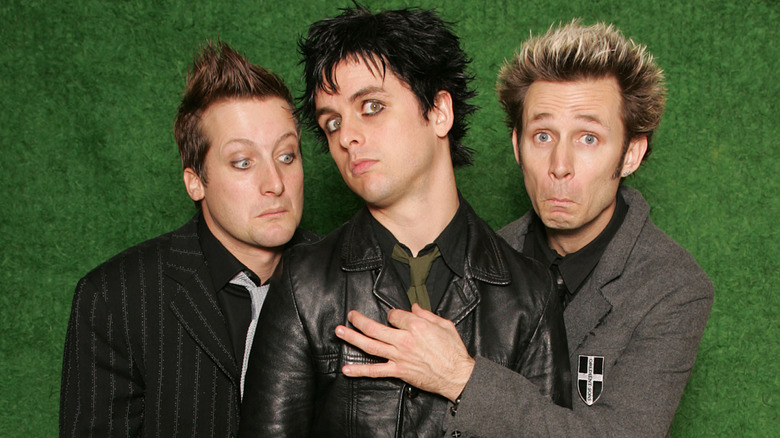
Before a new project would take shape, the members of Green Day had to grieve the loss of "Cigarettes and Valentines" and get themselves to a state where they could be more creative than ever — and able to work together in a healthy and collaborative way again. After the loss of the master tapes, the first step for lead singer and guitarist Billie Joe Armstrong was to get out of California and away from both his band and his family to go on what amounted to a month-long binge-drinking session in New York City. "I was searching for something. I'm not sure it was the most successful trip," Armstrong told Rolling Stone of the period when he consumed "a lot of red wine and vodka tonics." "He was really questioning what he was doing. It was scary, because where he had to go to get this record wasn't a place I'm sure I wanted him to be," added Armstrong's wife, Adrienne Armstrong.
And then, before the music could flow freely, Green Day instituted weekly group conversations to go along with daily rehearsals, at Armstrong's insistence. "We bared our souls to one another," bassist Mike Dirnt said. "Admitting that we cared for each other was a big thing," explained drummer Tré Cool. "We didn't hold anything back." That helped create an environment where the musicians could share honest feedback about the songs they were writing without personal animosity.
American Idiot started with the song American Idiot
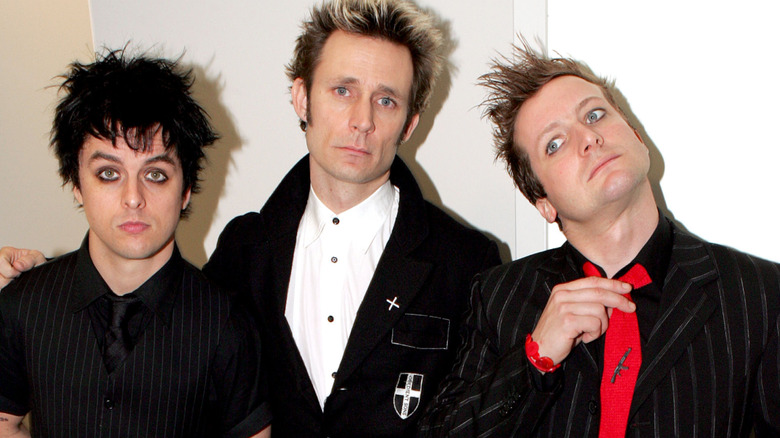
"American Idiot" helped Green Day progress creatively because it was partially about complex social and political topics. In 2003, the U.S. military led an international cohort that invaded Iraq for the stated purpose of looking for weapons of mass destruction. Pointed anger over what looked like suspect political machinations that played out on television is what Billie Joe Armstrong initially wanted to write about. On lengthy walks, Armstrong came up with the foundations of a song called "American Idiot," a tirade against "one nation controlled by the media" and living in an "information age of hysteria."
While "American Idiot" was the first song from the album to get the demo treatment, the band worked through an idea that Armstrong had reluctantly discussed in their group therapy sessions: He wanted to make a version of Queen's epic and storied "Bohemian Rhapsody" for the 21st century, or something akin to "A Quick One," The Who's 1966 suite of songs that conveyed a narrative love story. "I decided I'd love to write a song that felt like a mini-opera," Armstrong told Rolling Stone. "We had a studio that we could work everything out at and experiment, and Mike, Tré, and I had been coming up with little 30-second vignettes and trying to connect them in the studio." Those experiments led to the multi-part opuses "Jesus of Suburbia" and "Homecoming," which supplied the basic plot of the "American Idiot" album.
It's about George W. Bush but also Jesus of Suburbia and Whatsername
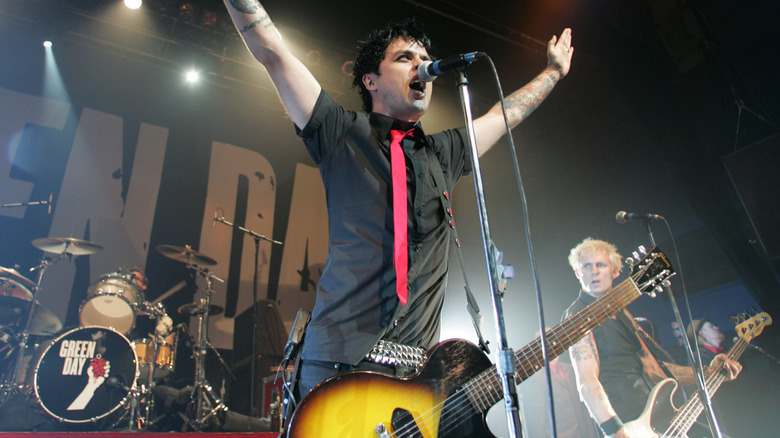
Some of Green Day's experiments with complex structure coalesced into "Jesus of Suburbia," a multipart, nine-minute opus that lent a plot and characters to the "American Idiot" album. The through line: Youthful and disaffected Jesus of Suburbia wanders into a city and gets mixed up with the dangerous punk imp St. Jimmy and the enigmatic Whatsername. "Whatsername," the song and character, are based on a woman named Amanda that Armstrong dated in his late teens. "I learned a lot about feminism through her. She gave me an education that I think was very timely for me," he explained to Rolling Stone.
"American Idiot" had a lot to say about the presidency of George W. Bush after the start of military operations in Iraq. Besides the title track, the most vitriolic cut is "Holiday." When Green Day played it live in 2005, according to Rolling Stone, Billie Joe Armstrong introduced it as an "anti-war" song and "a big f***-you to the American government."
Later, Armstrong explained that "Holiday" had deeper meaning. "This song was just about trying to find our own voice and your own individuality and questioning everything that you see on television, in politics, school, family, and religion," he told Rolling Stone. Nevertheless, the song's bridge features a snotty, sarcastic chant — "Sieg Heil to the President Gasman" — suggesting the Iraq War was about oil and likening Bush to Nazi Germany leaders.
It was a response to a scene in decline
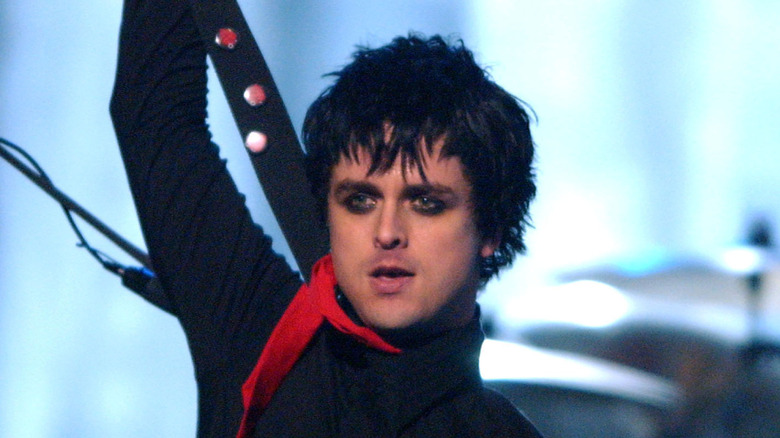
With "American Idiot," Green Day realized it no longer wanted to make the kind of music it had been making for the previous decade and a half. It had been largely responsible for the mainstreaming of punk rock in the 1990s and early 2000s. Green Day inspired plenty of other bands that also went on to sell millions of records, but frontman Billie Joe Armstrong felt that something got lost along the way — a message or inherent anti-establishment tone had fallen away. "It just became, like, commercial on purpose," Armstrong told Billboard of the millennium-era scene that sent bands like Sum 41 and Blink-182 up the charts. "It seemed really generic, and I didn't really like it all. The subject matter was just really shallow. It felt paint by numbers."
At the same time Green Day was reinventing itself, a new scene of grittier, underground alternative rock bands emerged from New York. That indicated to Green Day that it ought to try a little harder. "The New York stuff that was going on, where it was the Yeah Yeah Yeahs and the Strokes and Interpol, felt very real to me — because it felt like a scene, and it felt like people were very serious about making music," Armstrong said.
American Idiot includes the saddest Green Day song ever
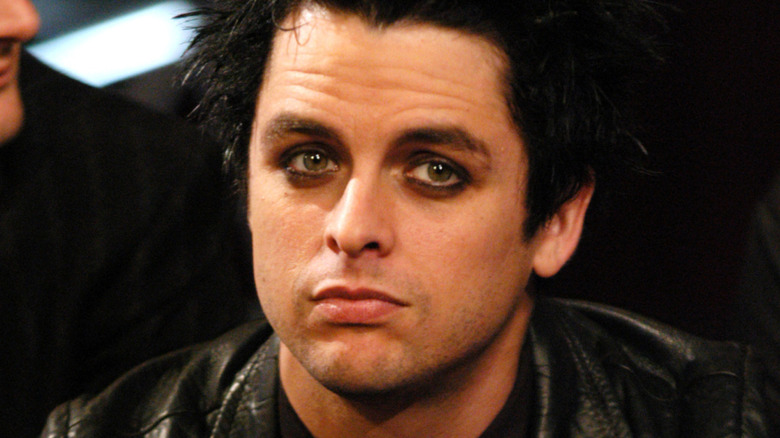
The "American Idiot" album isn't all about politics and punk culture. Toward the end of the record sits the ballad "Wake Me Up When September Ends." The title, refrain, and content come straight from the Green Day frontman's childhood. In September 1982, Andrew Armstrong died of cancer of the esophagus, leaving 10-year-old Billie Joe Armstrong and his five siblings fatherless. Young Billie Joe suffered tremendous grief and depression. "When kids were looking at me, it was almost like I had a ghost over my shoulder," he wrote in his audio memoir, "Welcome to My Panic." "It was almost like my life started at zero again." He refused to come out of his bedroom during that time, and when asked to join the family, he'd tell his mother, "Wake me up when September ends."
After more than 20 years of coping with those feelings, Armstrong finally got the nerve to write about them, and his father's death. "I kind of avoided writing about him for many years and then finally having a breakthrough like that ... felt good," Armstrong said on "The Howard Stern Show. Because "Wake Me Up When September Ends" was released as a single about four years after the terrorist attacks of September 11, 2001, the song was appropriated as a memorial song for that wider horrific tragedy. It also provided the music for an online-circulated video recollecting the devastation of the September-adjacent Hurricane Katrina.
American Idiot made Green Day a critical darling
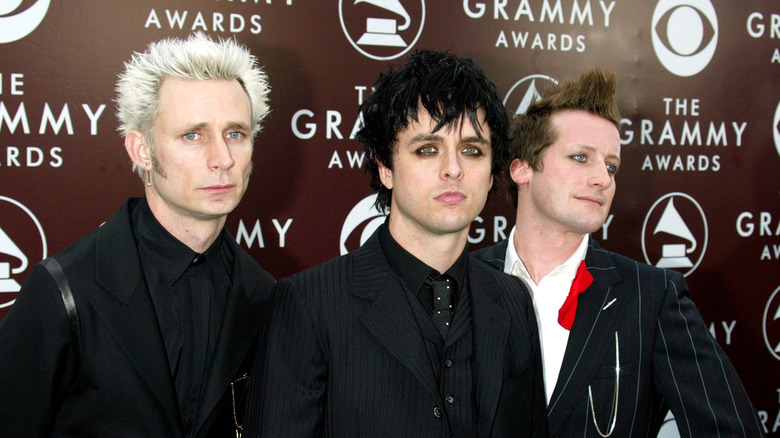
Green Day attempted many changes all at once with "American Idiot," introducing politics, earnest and personal ballads, and '70s-style storytelling in the album format. The end product could have been a mess that was reviled by critics and scorned by the band's millions of fans, but that's not what happened at all. "American Idiot" was the comeback the trio needed. It earned the best reviews and highest plaudits of Green Day's career, to that point and also since. It was cited as one the year's ten best albums by the Village Voice, Kerrang!, All Music Guide, the Los Angeles Times, Rolling Stone, Spin, Classic Rock, Billboard, and E! Online, making it one of the most critically praised albums of 2004.
Having only one Grammy to its name, for best alternative music performance for its 1994 breakthrough "Dookie," Green Day landed five major nominations at the 47th Annual Grammy Awards. In a Grammy decision that is still controversial to this day, "American Idiot" and its title track lost the prizes for album of the year and record of the year, but the LP took home the prize for best rock album. Fans, listeners, and record buyers felt the love, too. By the end of 2004, "American Idiot" had sold a million copies, and as of 2026, it's been certified for sales of 6 million units, making the members of Green Day all worth a lot of money.
It made rock operas and concept albums cool again
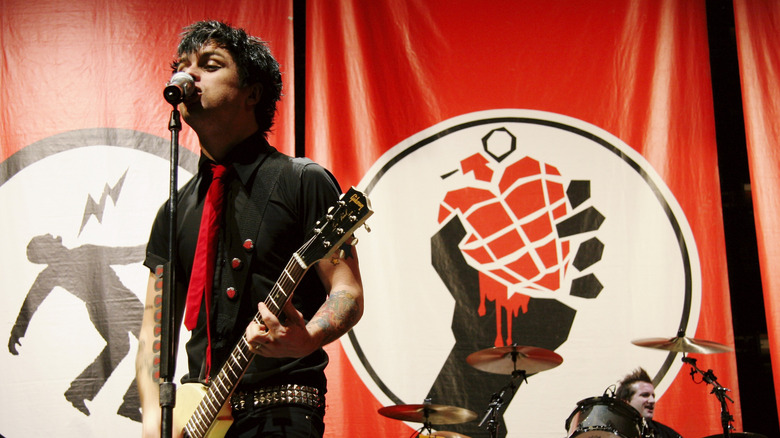
With a politically and musically progressive album, Green Day took what was becoming a stale pop-punk sound and transformed it into something fresh and vital. Ironically, Green Day took itself into the future by looking to the past, and to two distinctly 1970s musical phenomena: politically-minded punk rock, and concept albums. "American Idiot" attempted to speak truth to power and to call out the perceived absurdity and bad behavior of federal actors. That harkened back to politically outspoken punk acts of the 1970s, when, in the U.K. and U.S., they heavily criticized the policies of Prime Minister Margaret Thatcher and President Ronald Reagan. With "American Idiot," Green Day aligned itself with historically relevant acts like the Clash, the Sex Pistols, and the Dead Kennedys.
Punk was at the opposite of the 1970s cultural spectrum as concept albums. Generally the domain of progressive rock groups and bombastic, self-serious arena acts, such LPs presented rock operas and musical narratives. That approach, used by artists such as Meat Loaf, Pink Floyd, and Styx, had fallen out of favor years before "American Idiot" made it briefly viable once more.
American Idiot: Live on Broadway
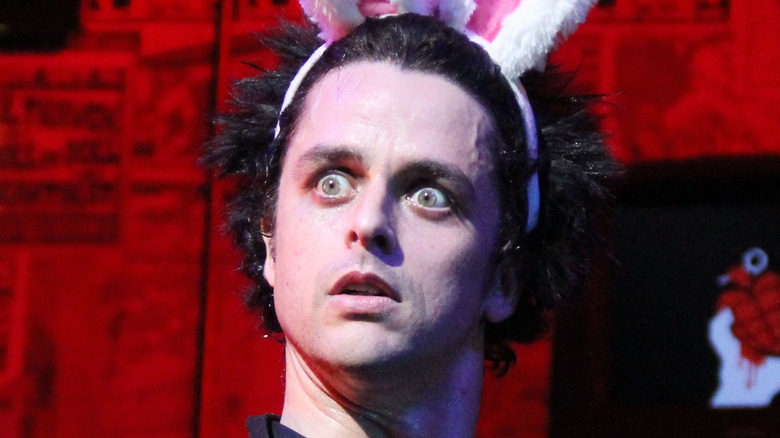
There aren't very many major punk-based concept albums — it's basically just Hüsker Dü's "Zen Arcade" and Green Day's "American Idiot." Nor are there all that many stage musicals that were adapted from concept albums. In 2010, "American Idiot" became an unlikely entry in the club populated by the likes of "Evita," "Tommy" by The Who," and "Jesus Christ Superstar," a Broadway musical that began its life as an LP. Not a complete translation from CD to stage, the live version's story concerns three friends from the suburbs who each set off on differing life paths in a world made uneasy after 9/11. The main character, Johnny, is also Jesus of Suburbia, who heads into a dark and seedy big city looking for adventure.
In what could be considered an unusual rock star side hustle, particularly for one with musically professed opposition to large and profitable institutions, Billie Joe Armstrong became a Broadway star singing the melodies and acting out lyrics that he wrote. In 2010 and early 2011, Armstrong joined the New York production of "American Idiot" for several weeks of performances. He played the crucial supporting role of the mysterious figure St. Jimmy.
American Idiot is still agitating more than 20 years later
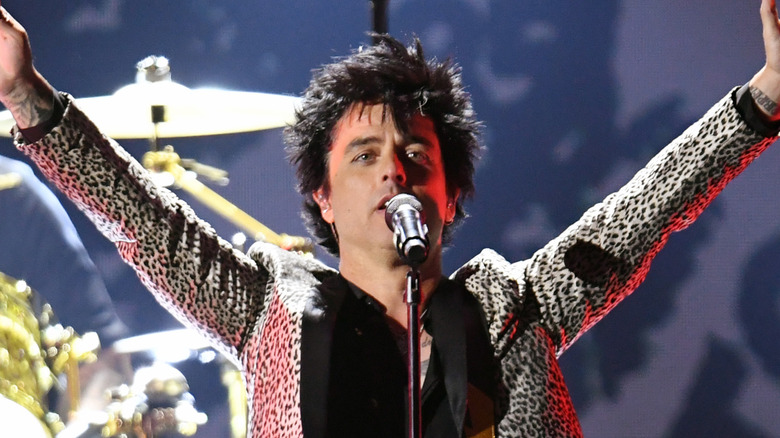
Years after its release, rise, and career-shifting trajectory played out, Green Day still holds "American Idiot" dear and certainly appreciates its impact on pop culture and the band's own history. In 2015, the "American Idiot" making-of documentary "Heart Like a Hand Grenade" (referencing the LP's cover art) received a theatrical release. To celebrate the 20th anniversary of the album's release in 2024, Green Day produced a "Super Deluxe Box Set" edition of "American Idiot," which included demos, live cuts, B-sides, concert footage, a mini-book, and a red tie just like the ones the band wore in the mid-2000s. Also among the anniversary festivities, Green Day performed "American Idiot" in its entirety in some live shows.
And while Green Day obviously finds "American Idiot" to be precious, it's not precious about it. In keeping with the politically agitating punk rock spirit that drove the creation and direction of the project in the first place, Green Day has changed some lyrics on occasion to comment on more recent political situations. When rolling out the title hit, initially a screed against President George W. Bush, live at the 2019 iHeartRadio Music Festival, Billie Joe Armstrong subbed out the line "I'm not a part of a redneck agenda" for "I'm not a part of a MAGA agenda," clearly directed at President Donald Trump and his followers (according to the Los Angeles Times). Armstrong made the switch again during "Dick Clark's New Year's Rockin' Eve with Ryan Seacrest 2024."