

This Cat Stevens Song Debuted In A Box Office Flop — It Became A Beloved Classic Anyway
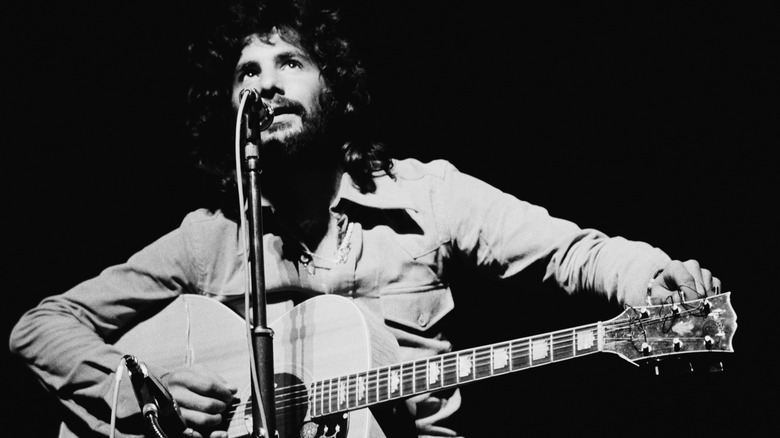
While initially a bomb, "Harold and Maude" became a treasured classic film, and it's responsible for exposing the world to an even more treasured piece of media: Cat Stevens' "If You Want to Sing Out, Sing Out." Barely released in movie theaters in 1971, "Harold and Maude" earned less than $2,000 at the box office, but it was played in so many second-run, revival, and cult movie houses that by 1983, it was an acclaimed, well-known film that had earned back its budget.
Concerning the nontraditional friendship-meets-romance between a death-fixated young man (Bud Cort) and a much older death-embracing woman (Ruth Gordon) who truly learn to live, "Harold and Maude" featured a bundle of songs by Cat Stevens. Along with cuts from some of his earlier albums, the thematically aligned anthem of positivity and self-expression, "If You Want to Sing Out, Sing Out," is one of the best of Stevens that isn't "Wild World," and one that bolsters 1971 as being the best year of Stevens' career.
Here's how a previously unreleased tune, which few people had ever heard, made its way into a movie that almost nobody saw the first time around, only to become a signature song and fan favorite of one of the '70s' best singer-songwriters, Cat Stevens.
If You Want to Sing Out, Sing Out was very hard to find
Director Hal Ashby's "Harold and Maude" quickly came and went from U.S. movie theaters in 1971, despite an assist from one of the most popular musicians of the day, singer-songwriter Cat Stevens. The soundtrack is full of selections from his albums "Mona Bone Jakon" and "Tea for the Tillerman," along with new music, such as the tune "If You Want to Sing Out, Sing Out," an emphatic and encouraging uptempo piece about living out one's authentic truth. Despite its connection with an ignored film, it very well could've been a smash on the pop chart, but "If You Want to Sing Out, Sing Out" wasn't a hit even during Stevens' commercial peak of the first half of the 1970s, simply because the song wasn't released as a single.
Not until 1984 could the public purchase the single version of "If You Want to Sing Out, Sing Out," which was released along with an accompanying music video. Not even an encompassing "Harold and Maude" soundtrack was issued in the '70s or '80s, at least not in the U.S. The only release of such a compilation was for the Japanese market in 1972 — and it didn't include "If You Want to Sing Out, Sing Out."
If You Want to Sing Out, Sing Out was re-discovered in the 2000s
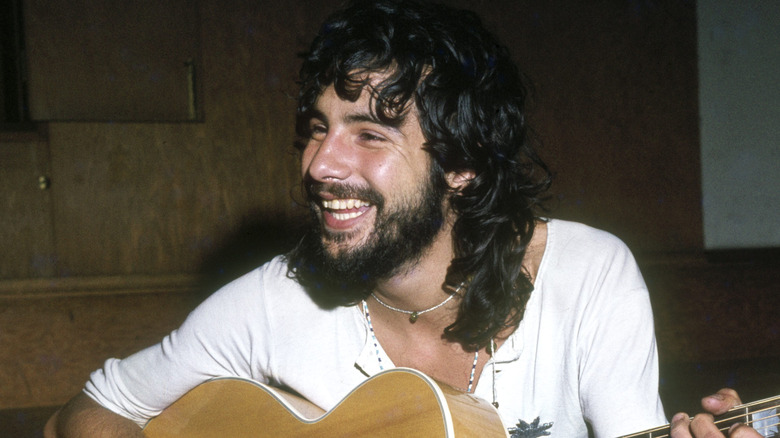
In 2007, the "Harold and Maude" soundtrack was finally pressed in the U.S., and in an expanded edition, no less. By that time, the 36-year-old movie had attained cult-favorite status, as had the elusive Stevens song heard in the film. With that package, Stevens fans could listen to four versions of "If You Want to Sing Out, Sing Out": the familiar one, plus an instrumental, a banjo-forward option, and an alternative version.
That coincided with other soundtrack supervisors discovering and licensing the lost gem. In the 21st century, "If You Want to Sing Out, Sing Out" became one of many banger rock songs that got a second life in commercials and other media. It has figured prominently in ads for T-Mobile and Jeeps, as well as on the soundtracks of movies and TV series, including "Charlie Bartlett," "Dark Matter," "My Name is Earl," and "Ray Donovan." Significant cover versions include takes by Amanda Palmer and the cast of the 2021 animated movie "The Boss Baby: Family Business."