

How Often Should You Replace Drumsticks?
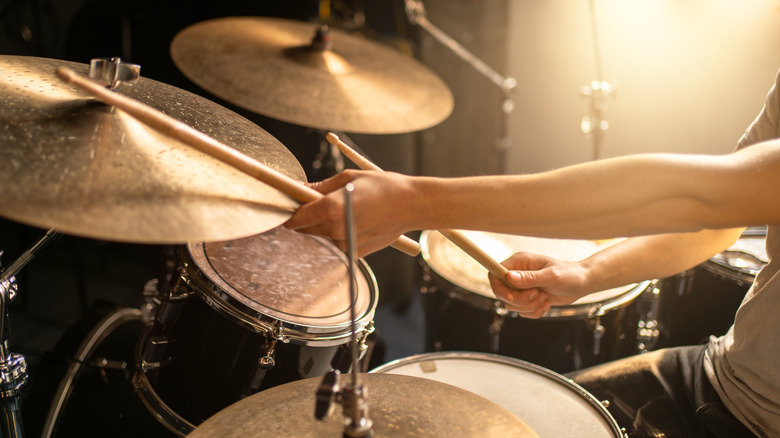
While most instruments can last for years in well-behaved hands, drumsticks are an ephemeral exception, lasting for a few weeks in rare cases. How often you should replace them depends on what your drumsticks are made of, how often they're used, and your style of play. Due to so many possible factors, there is no single time frame that works for all drummers, but there are signs when it's time to get new ones.
While drumsticks made from synthetic material exist, they can damage your drumheads and don't elicit the sound most drummers are going for. The sticks drummers typically use are made of wood. The most popular are lightweight maple, which allows a thicker stick without heaviness, and hickory, a harder wood that can withstand more intense use, making it ideal for many genres, including rock. Oak and birch are the heaviest, though the latter is the least common of the four. Although drumsticks are categorized either A (light) or B (heavy), choosing the right wood and weight for the kind of music you want to play will affect how often you should change them.
Obviously an occasional or hobbyist drummer won't need to replace their sticks as often as someone who spends hours practicing Led Zeppelin's "Moby Dick," one of those classic drum solos that always gives us chills, but how you play them matters too. Hitting a lot of rim shots and crashes will shorten the lifespan of your sticks, no matter what they're made of. Even if you don't, there are several warning signs that can indicate it's time to change your sticks. They include: missing or broken tips, they're full of splinters, have a thinning neck, they rebound unevenly, and — probably most importantly — your sticks feel or sound different.
Ways to extend the lifespan of your drum sticks

Drummers are often the, ahem, beating heart of many a band, and their sticks are essential to creating that beat. While sticks tend to last a while for most non-professional players, there are ways to keep them in good shape so they last as long as possible, starting with your kit set-up. If you don't already have them, switch out your triple-flanged hoops for S or diecast types to reduce the impact of rim shots, and nudge down your hi-hat and tilt your crashes further toward you to change the strike angles.
Technique can be another reason why your drumsticks aren't going the distance. Gripping the stick too hard or chopping your hi-hat will always degrade your sticks. Don't be tempted to repair a damaged or broken drumstick either, as it can alter how they feel and play. You could also consider slowly altering your grip to ensure the smooth transfer of energy from your arm and hand to the drums. Veterans may struggle with this one, but if you're burning through sticks, it can be a big help.
Another thing to consider is changing the weight of your sticks. Has your drumming style evolved? Are you maybe hitting harder than you did? Switching from an A to a B stick, or going the whole hog and swapping your hickory for some oak sticks could give your sticks a longer life, kind of how these classic rock drummers stretched their careers after leaving their original groups to join mega-famous bands.