

5 Legendary Rock Acts You Didn't Know Clive Davis Was Behind
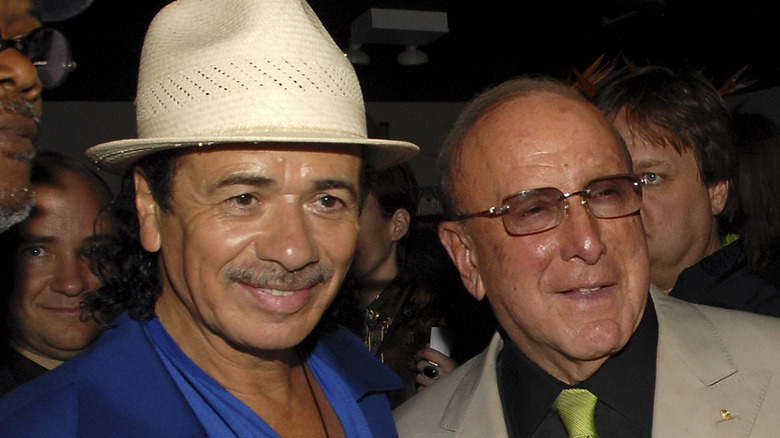
Legendary record label executive and power player Clive Davis was partially responsible for some of the most famous music of the 20th century, and he personally guided the careers of multiple important rock acts. Named the president of major label Columbia Records in 1966, Davis bolstered the label with superstar rock and pop talent only to be fired in the mid-1970s amidst scandal, moving on to create another significant company in Arista Records. He wound down his career in the 2000s with another bespoke label, J Records, where he further built up a roster of blockbuster acts, and then helped run Sony Music Entertainment.
Davis died at age 94 on June 22, 2026, as one of the longest-serving, longest-lasting, and most influential record company figures in modern music. He had an ear for good material, could spot potentially enduring and/or lucrative talent, and the records he was associated with sold millions of copies. The bands and solo artists Davis discovered are among the most notable names in music history; here are five rock acts that might not have made it without Davis's intervention and advocacy.
Aerosmith
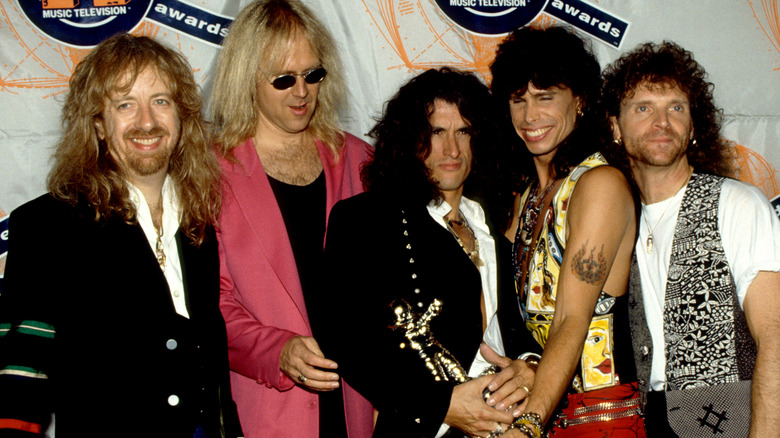
With hits like "Dream On," "Sweet Emotion," and "Walk This Way," Aerosmith made some of the most perfect '70s rock songs, and they may have never been released had Clive Davis not taken on the band. Formed by guitarist Joe Perry, bassist Tom Hamilton, drummer Joey Kramer, and frontman Steven Tyler in 1970, Aerosmith plugged away and honed their chops by relentlessly gigging around Boston, primarily. But on the evening of August 5, 1972, the group appeared on the bill at the iconic and influential Max's Kansas City club in New York, paying for the stage time rather than being hired as performers. It was important to do so because Clive Davis, president of Columbia Records, gave word that he'd responded to an invitation to see Aerosmith perform.
Davis was impressed and pursued the bluesy band. By the end of 1972, Aerosmith had joined Davis's growing collection of rock acts at Columbia Records, agreeing to a $125,000 contract. And that's the label where Aerosmith recorded LPs for more than a decade, including its debut, self-titled album, released in 1973.
Bruce Springsteen
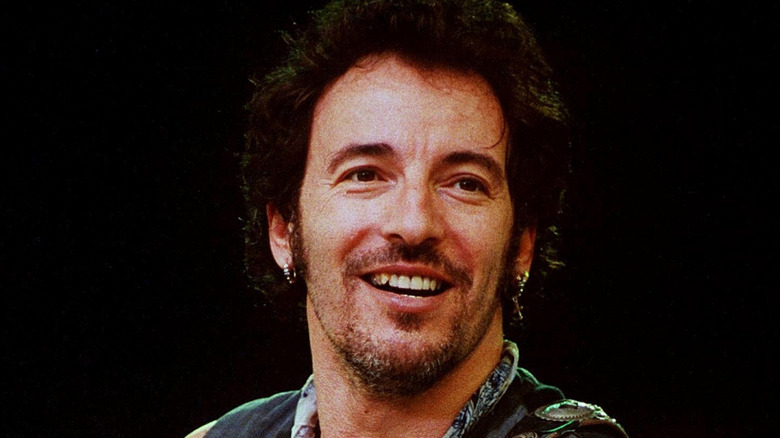
While Bruce Springsteen had played plenty of shows in front of gigantic crowds on the East Coast, he didn't have a record deal as of May 1972. That's when his manager landed him a tryout with one of the most consequential people in the music business: Columbia Records artists and repertoire leader and new talent seeker John Hammond.
After Springsteen played a handful of tunes in Hammond's office that showed off his hard-charging, rock 'n' roll style and prowess for lyrically detailed, character-rich story songs, the executive put together a public showcase and a recording session for Springsteen, where they collaborated on some demo tapes that Hammond delivered to his Columbia Records boss, Clive Davis.
"Clive loved what he heard on the tape. He said, 'You know, John, he's very amusing, isn't he?' I said, 'He's more than that, Clive. He's fantastic,'" Hammond recalled in "Born to Run: The Bruce Springsteen Story." Just over a month after his audition, Springsteen signed his contract to record for Davis' label. His first two LPs for the brand, "Greetings from Asbury Park, N.J.," and "The Wild, the Innocent & the E Street Shuffle," were released in 1973.
Billy Joel
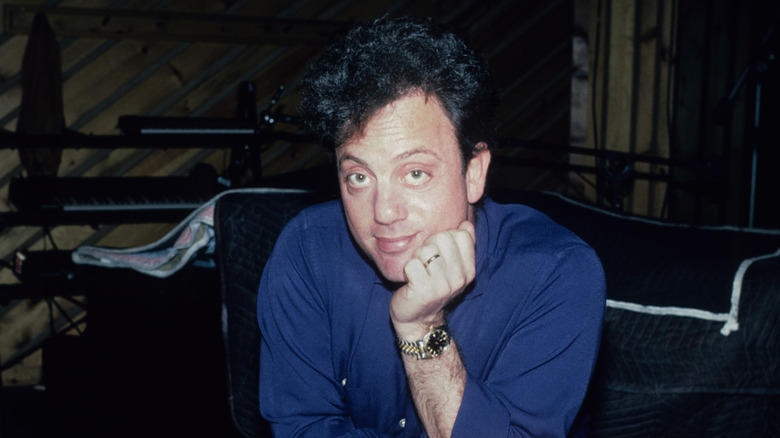
After the release of "Cold Spring Harbor," a 1971 album produced at a woefully incorrect playback speed and leading to a spat with his record label Family Productions Records, Joel played a show for contest winners staged by Philadelphia radio station WMMR. During the concert, he performed the vicious anti-drug song "Captain Jack," which he'd written but hadn't yet recorded. The live track became a smash at WMMR and then on New York radio, too. Joel's label head, Artie Ripp, so relentlessly talked up his signee that he invited Columbia Records executives to come and see Joel do this thing.
During the show, Davis was impressed with Joel's singing, piano playing, and songwriting, and endeavored to set him free of his FPR contract to get him on Columbia. Atlantic Records was also interested in signing Joel, but he responded to Davis's overtures because the executive was the head of the legacy label of one of his idols, Bob Dylan. In 1973, Davis's Columbia Records issued Joel's "Piano Man," an LP populated by many of the songs the musician had performed the night Davis discovered him, including the titular epic story track, which would mark Joel's first Top 40 single (of 33) and become a classic rock song from the '70s worth a head-turning amount of money.
Patti Smith
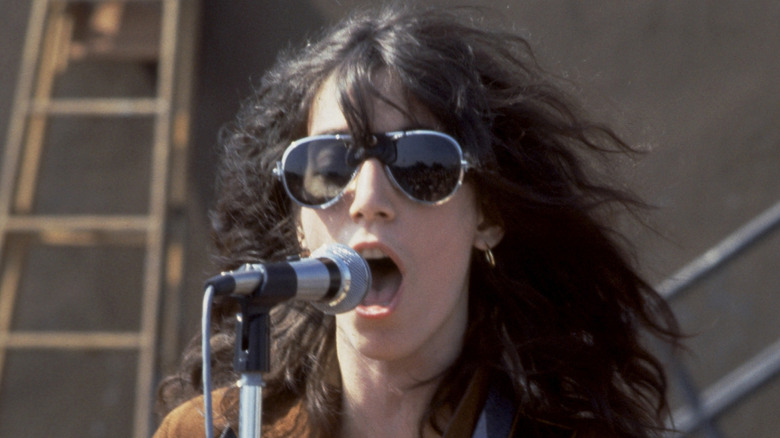
Clive Davis's storied tenure at Columbia Records came to an ignominious end in 1973. Accused of improper use of company money and plying musicians and radio personalities with drugs, Davis departed one label and started another, Arista Records, in 1974. The newly established company's first success: Barry Manilow's No. 1 hit "Mandy." Not long after, Davis signed an act who was just about the complete opposite of the soft rock balladeer: Patti Smith, of the Patti Smith Group, the purveyor of punk rock laced with poetry, including "Gloria," a song from 1975 that defines rock history.
In March and April of that year, Smith and her band played every weekend at New York's CBGB rock club, putting on electrifying and singular performances. Word of mouth led to Davis checking out the show, and he so wanted the musician to be a part of the growing Arista family that he agreed to a contract not only worth a fortune, but that didn't allow for label creative interference. Davis earned $750,000 for the seven-LP deal, and by the end of 1975, the artsy, punky "Horses" was in stores. A Top 50 entry on the Billboard 200, it established Smith as a formidable musical force and served as a prophecy of the punk rock sound that was about to explode.
Santana
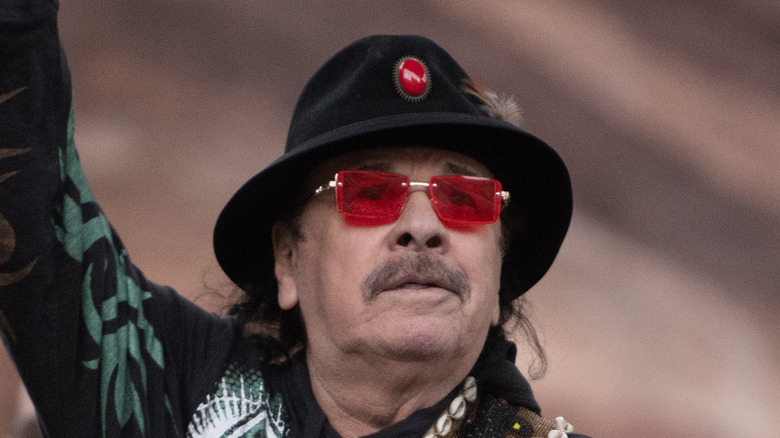
There are two distinct superstar eras in the decades-spanning career of guitarist Carlos Santana, frontman of the evolving musical collective Santana. Both were significantly engineered by Clive Davis. Santana's first record label was Columbia Records, which he joined so he could be in the same artistic space as Miles Davis and Bob Dylan. Label head Clive Davis traveled from Los Angeles to San Francisco to see an early iteration of the Santana band at the Fillmore West venue, beating out Atlantic Records in signing the act. Starting in 1969, and under Davis's eye, Santana laid down a slew of jazzy, psychedelic Latin rock albums and scored hits like "Evil Ways," "Oye Como Va," and "Black Magic Woman." "Clive Davis is my guardian angel. He sees me and hears me in ways others don't," Carlos Santana once told Ultimate Classic Rock.
After multiple flops in the 1980s and early 1990s, Columbia and Santana parted ways. The guitarist stopped recording music, but just before the end of the '90s, he found himself inspired anew and sought out the help of Davis, by then entrenched at Arista Records. Davis took charge of a project ultimately titled "Supernatural," a collaborative album released in 1999 starring Santana's incredible guitar work with the vocals of promising young stars of the time period. "Smooth," featuring Rob Thomas of Matchbox Twenty, spent 12 weeks at No. 1; "Supernatural" moved 15 million copies.