

Riffs That Still Rip: ZZ Top's La Grange And Other Classics Released 53 Years Ago This Week
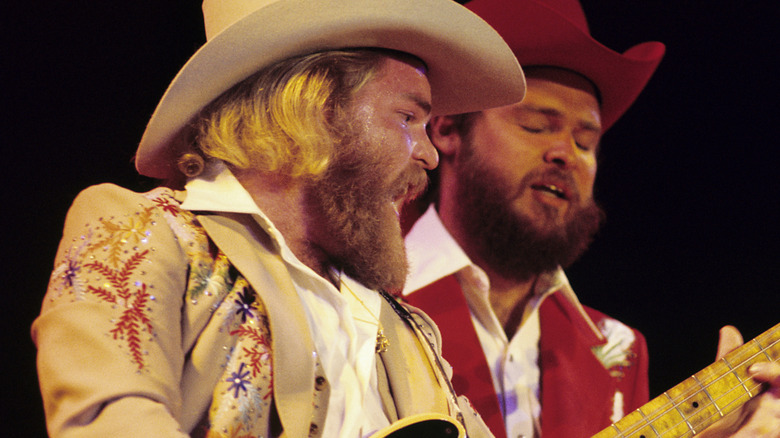
It's wild to consider that many songs that today we consider "classic rock" were at one point brand new — and several happened to be made available for public consumption for the first time 53 years ago this week. While it feels like these frequently aired and streamed essentials have been around forever, they're only so old, and a few in particular date back to the week of July 26 to August 1, 1973. Another thing they have in common: They all still hold up in that their riffs are solid, their lyrics remain clever and audacious, and their melodies are as future-forward now as they were way back when.
It was during this seven-day span more than 50 years ago that these staples were brand-new curiosities to rock fans. But they'd develop into contemporary rock standards and even signature songs for major acts like ZZ Top, the New York Dolls, Joe Walsh, and Steely Dan. Some are instantly recognizable; others are lost gems or not as big of hits as they should've been or were assumed to be, and they all still rock so hard that they deserve another spin on a turntable, 8-track, or streamer these 56 years later.
La Grange – ZZ Top
On July 26, 1973, ZZ Top's third studio album arrived in U.S. record stores: "Tres Hombres." Just a few years removed from doing illegal things and officially forming, ZZ Top's breakout LP was their first record to sell half a million copies, and it's also the source of ZZ Top's most successful single to that point. "La Grange" eventually made it up to No. 41 on the Hot 100.
It would be tough to name a band that more expertly brought old-fashioned American blues into modern times and the age of hard rock than ZZ Top. The powerful trio never needed more than a few instruments to crank out classic blues-guitar licks made louder and heavier than ever but staying authentic, and "La Grange" is a mission statement and proof of concept. There aren't many lyrics to "La Grange" besides some half-spoken mumbles about a rundown house of ill repute somewhere in ZZ Top's home state of Texas, but the band doesn't need a lot of words to get the point across. They came to rock, piling on the electric riffs that are as easy to sing along to as the lyrics.
Rocky Mountain Way – Joe Walsh
Following the release of "Live in Concert" in 1971, guitar shredder and idiosyncratic vocalist Joe Walsh departed the James Gang, responsible for some rock songs you've definitely heard but probably can't name. His second solo LP, "The Smoker You Drink, the Player You Get," hit record stores in the summer of 1973, and in late July, the promotional single "Rocky Mountain Way" followed. That tune marked the first time that Walsh's solo work graced the Hot 100, as "Rocky Mountain Way" climbed to a peak of No. 23. In the decades since, "Rocky Mountain Way" also became Walsh's most frequently performed live tune and the theme song of the Colorado Rockies of Major League Baseball.
It was the last song Walsh finished for the LP, having completed a languid, easy-going, and slide guitar-powered, blues-informed instrumental jam that just needed lyrics and a title. While mowing the lawn of a house in Colorado, he glanced up, saw the Rocky Mountains, and the lyrics entered his brain. "I ran inside to write it down before I forgot it," Walsh told Classic Rock.
Personality Crisis – New York Dolls
A fiery, boisterous, and irresistible hard-rocking classic that walks right up to the line that separates proto-punk raucousness from sheer chaos, "Personality Crisis" is among the songs from 1973 that define rock history. It's a standout on the debut, self-titled album by the New York Dolls, a group that mixed elements of early rock with later-breaking offshoots like glam, garage, metal, and what would soon evolve into punk. While there's a lot of noise going on, particularly some pounding piano and expert guitar work from Johnny Thunders, lead vocalist David Johansen steals the show, behaving like an over-the-top arena rock frontman while also performatively making fun of the idea as he sings, shrieks, screams, and growls his way through messy lyrics about identity issues and inscrutable friends.
The New York Dolls' album was released on July 27, 1973, but not many people purchased it immediately, or ever, really. It didn't appear on the Billboard album chart until September, and then peaked at a fairly low No. 116 in October. But "Personality Crisis" proved extremely influential. Critics rank it among the greatest songs of the 1970s and called the album that launched it one of the best LPs of the decade.
Show Biz Kids – Steely Dan
Just after the smash hit singles "Do it Again" and "Reeling in the Years," Steely Dan issued its second studio album, "Countdown to Ecstasy". On July 27, 1973, 45s of that LP's showcase single, "Show Biz Kids," arrived in record stores around the United States. But "Show Biz Kids" was not a rousing success, peaking at just No. 61 on the Hot 100. While those other songs were groovy and poppy, respectively, "Show Biz Kids" gave a much stronger idea of what Steely Dan and its small army of studio musicians would generate in the years to come: amusing satire paired with precision instrumentation and studio perfection.
Apart from a hypnotic and pervasive group of voices musically quipping "Lost Wages," a joke nickname for the gambling mecca, Las Vegas, coined by comic Lenny Bruce, "Show Biz Kids" pokes fun at the superficial, materialistic, hard-partying, and hip young denizens of Hollywood running wild in the early 1970s. "They got the booze they need / all that money can buy / they got the shapely bods / they got the Steely Dan T-shirt," so go the wry lyrics. Musically, it's one of the more complicated Steely Dan songs, notable for a repeated motif dominated by bass and piano.