

The No. 1 Song On August 2, 1978 Sounds Even More Sultry Today
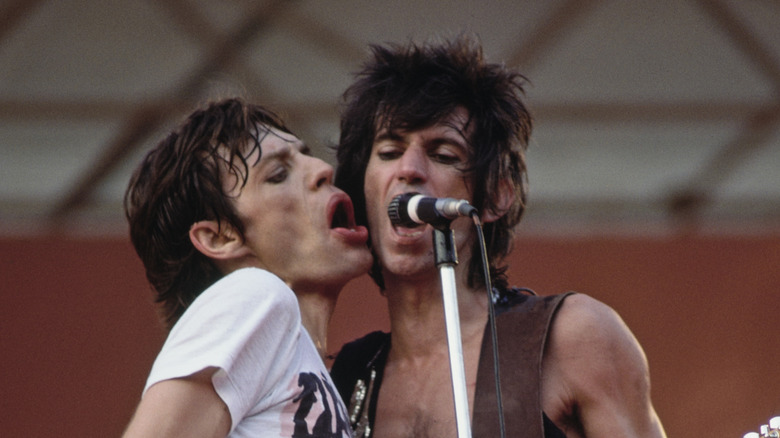
At the very beginning of August 1978, one of the most sensual and pleasantly hypnotic songs that the Rolling Stones ever recorded hit No. 1 on the pop chart — and "Miss You" is still ahead of its time more than 45 years after the fact. The Rolling Stones are perhaps the only British Invasion band that could rival the Beatles in popularity, and they also outlasted virtually all other '60s bands.
That's in part because the Rolling Stones aggressively experimented and evolved, starting out as an R&B cover band, then evolving into a more straight-ahead rock group that dabbled in psychedelia, moody pop, and Americana before becoming one of the few rock acts who tried '70s disco. Their best and most successful attempt was "Miss You," a compact package consisting of vulnerable lyrics about a man desperately and painfully aware of his partner's absence, a chugging but subtle drum beat, a preposterously funky bass line, and lyrical blues guitar. Nearly five decades since its release, "Miss You" still imbues a sultry sound that today's music doesn't quite match.
The song is one of the best Rolling Stones songs that isn't "Gimme Shelter" or "Paint It, Black," and on August 2, 1978, it was the No. 1 song in the U.S. Here's how the Rolling Stones captured the disco zeitgeist and wound up making one of its biggest hits ever.
The Rolling Stones staged a major comeback with Miss You
By the summer of 1978, the Rolling Stones hadn't seen the Top 10 in about five years, not since "Angie" hit No. 1 in late 1973. Stuck in a singles slump and with the rock press losing interest and running out of nice things to say, the Rolling Stones of the late '70s faced personal problems. Guitarist Keith Richards was jailed in Toronto for drug possession, and singer Mick Jagger left his wife for model Jerry Hall. But when the band hit the studio to record the "Some Girls" LP, Jagger and Richards presented "Miss You," a disco song for rock instruments. Credited to Richards and Jagger, it's about the latter's heartache suffered during time apart from Hall. "Mick told me that he wrote 'Miss You' for me but he probably told a lot of girls that," Hall said in "The Rolling Stones – All the Songs: The Story Behind Every Track." "Miss You" also benefited from guest personnel. Harmonica player Sugar Blue, Faces keyboardist Ian McLagan, and King Crimson saxophonist Mel Collins all provided notable help.
Chasing the disco trend seemingly reminded the world of the Rolling Stones' innate rock excellence. In August 1978, "Miss You" became the group's eighth — and final — No. 1 hit. But it was the beginning of a new era for the Rolling Stones, who landed big hits into the 1980s, such as "Emotional Rescue," "Start Me Up," and "Undercover of the Night."