

How Long Do Vinyl Record Players Last?
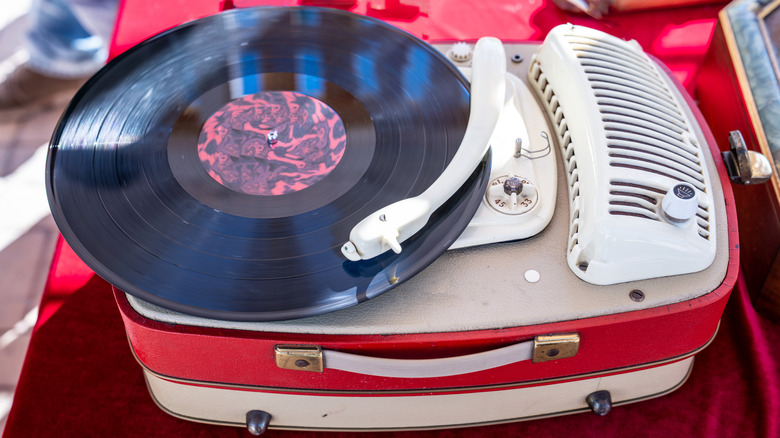
"Typically somewhere between [one] week and half a century," quipped one Redditor in response to a query about how long a turntable should last. It may sound like an off-the-cuff answer, but it's not far off from the truth. Just as with the duration of guitar amps, the lifespan of a vinyl record player can be years, depending on how old it is, how often it's used, the conditions it's kept in, and whether it gets any kind of regular maintenance beyond keeping the drop-down lid free of dust.
Talk to any record player enthusiast about care or maintenance, and the first thing they will likely mention is the stylus. There are five main types: conical, elliptical, microlinear, Shibata, and line contact. This tiny needle plays a key role in your player's sound quality, and keeping it clean (while handling it as little as possible) is paramount. You can expect between 300 to 1,000 hours on average from a stylus, depending on its type, quality, level of use, and the state of the vinyl records it plays.
Turntables driven by a belt can last anywhere from one to five years, again depending on how often they are used. Check the tension regularly, and if your vinyl records start to play too fast or slow, it's an indication the belt may need replacing. It's not an expensive or difficult job, but if you're not confident in doing it yourself, take your record player to a certified repair shop. If your vinyl record player has classical platter bearings or inverted bearings, it's important to make sure they stay lubricated to keep your turntable in tip-top condition. Add a few drops of oil to the axle every three years or so to prevent any damage.
Record player technology has leapt forward, but you still need to clean your vinyl
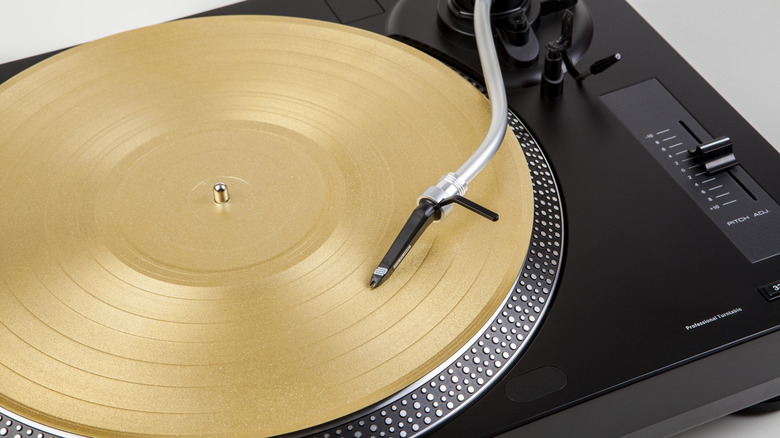
Modern turntables make use of all kinds of digital and wireless tech, but they're the sum of many iterations, each moving the needle (pardon the pun) on sound quality. Emile Berliner's 1887 gramophone patent paved the way for vinyl record players, while the 1920s saw electric motors, which, combined with magnetic cartridges, enhanced the listening experience. The arrival of high-fidelity and stereo sound in the 1950s and '60s (just in time for the birth of rock 'n' roll), led to a boom in record player sales worldwide before innovative DJs in the 1980s used them to make music rather than just listen to it.
With every technological leap forward, whether it's the shift from idler wheels to direct drives or the tweaking of tonearms to limit tracking distortion, vinyl record players have become more complex and, in some cases, a lot more valuable over the years. However, that investment can reap years of listening rewards — if your machine is taken care of correctly.
Scrupulously cleaning your records extends their lifespan and that of your player, but where your kit is stored can be important, too. Keeping your record player anywhere dusty or too humid won't do it any favors, and don't sleep on our tips for how to store your precious vinyls either. If you're the proud possessor of an older model, it's worth keeping track of whether you can get your hands on replacement components for your record player, such as styluses or cartridges, should the need arise. In the meantime, turn the volume up to 11, kick back, and enjoy the music!