

The 5 Best Rock Songs With Eclipse In The Title
It's very rare that we celebrate astronomic events as a planet, but the 2026 total solar eclipse on August 12 became a cross-continental spectacle. Not dissimilar to the eclipse from early 2024, it also resulted in a surge of plays for songs related to the cosmic occurrence. To mark the occasion, we're going to take a look at five of the best songs with the word "eclipse" in the title.
In an interview with Euro News, the senior editor at Spotify, Shannon Carragher, explained how "Cultural phenomena like the solar eclipse naturally bring people together, and we instinctively look for the perfect soundtrack to share that moment." A natural pick was Bonnie Taylor's 1983 No. 1 hit "Total Eclipse Of The Heart," with streams of the ballad increasing by 14% worldwide during the event. Other titles took a more descriptive approach, with 1994's "Black Hole Sun" by the thunderous but tragic band Soundgarden also making its way onto some pre-eclipse playlists.
Rather than sticking to references to an eclipse, this list takes a more literal approach, bringing together a mix of contemporary and classic rock tracks where the cosmic occurrence is featured in the title. Although several songs share the same name, their eras, lyrics, and narrative progression prevent one from fully eclipsing the other.
Brain Damage/Eclipse – Pink Floyd
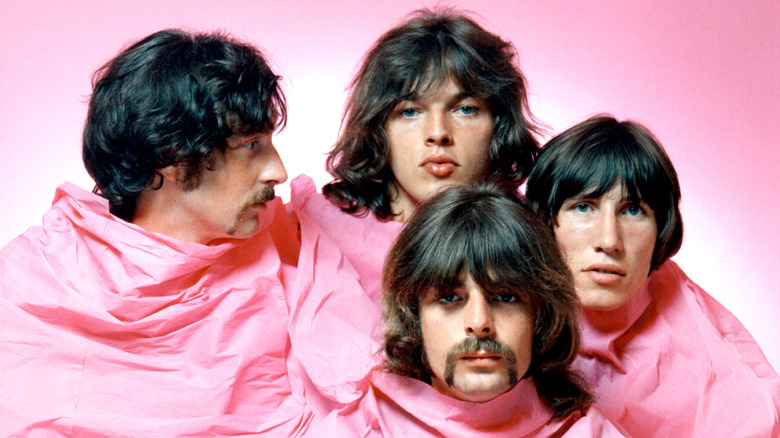
Pink Floyd's iconic 1973 album "Dark Side of the Moon" would be a very fitting record to play all the way through, but the last two tracks, "Brain Damage" and "Eclipse," embody the cosmic phenomenon.
While technically separate, the entire album features phenomenal transitions between tracks that help turn the record into a musical experience. The repeated promise of "I'll see you on the dark side of the moon" in "Brain Damage" helps to build up anticipation, with swelling choruses imitating the warmth of sunrays. Almost as though the sun reaches its peak moments before its obfuscation, the last 30 seconds take a synthy turn as it transitions into the breakdown at the beginning of "Eclipse." Listing out "All that you touch / And all that you see / All that you taste / All you feel," with the repetition of "all" throughout the entirety of the song, the suspense continues to build until ultimately "... everything under the sun is in tune / But the sun is eclipsed by the moon," finally provides some relief as the tension dissipates.
With the final sentiment of "There is no dark side in the moon really / Matter of fact, it's all dark," it perfectly encapsulates the feeling of stillness as the moon assumes its position and day turns into night for a fleeting moment. A masterclass in sonic storytelling, these tracks come together like the moon and the sun referenced in the title.
Moon Eclipsed The Sun – Evolfo
Off their 2017 EP "Last Of The Acid Cowboys," New York rock band Evolfo's song "Moon Eclipsed The Sun" saw a 1,251% increase in streams during the August 12 eclipse. It's unsurprising why, as distorted guitar riffs and brass instruments help create an unsettling momentum with a distinctive rock flair.
Almost as if the sun is the singer's muse, "When the moon eclipse the sun / Then my baby is long gone," drawing a comparison to the total sensation of the event. The organs in the intro also nod back to the familiar chords in several classic rock songs across the '60s and '70s, making the track feel like an homage to the band's rock heritage, as well as the rise in the occult and cosmos during the era.
The breakdown is the perfect momentum for a countdown to the event and serves as the unifying force of music that undoubtedly helped electrify viewers who came together to experience the eclipse. Not particularly trying to emulate the impact of the transit itself, Evolfo turns instead to the Pagan traditions that bring together communities under the same sky.
Eclipse – Los Dug Dug's
The mid-20th century was a rich time for music distribution, as newly invented vinyl records were easily distributed across borders, influencing an international soundscape like never before. Although Mexican psych-rock band Los Dug Dug's didn't need to wait for the music movement to travel across oceans, their 1971 debut album — containing their song "Eclipse" – is regarded as the first rock album of their nation to be recorded with English lyrics.
The melodic progression of the chorus appears as a nod to the Beatles or the Beach Boys, with more consuming guitar solos commemorating the late and great Jimi Hendrix. The lyrics of "Eclipse" are incredibly literal, opening with "The sky is turning color black / The moon is covering the sun / The lights are going away." As the song continues to break down, other elements of nature, such as the sea, sky, and cliffs, are evoked, as well as the sense of surrealism. Dizzying in the best way, the progression of the guitar and the lyrical reminder that "The lights are going away" feels like an ever-approaching climax.
In a 2024 interview with Psychedelic Baby Magazine, frontman Armando Nava shared how the track was originally recorded in New York in 1968 at Allegro Sound Studio but would later be re-recorded and distributed under RCA following their breakout debut at Avándaro Rock Music Festival. Although they couldn't quite compete with the canonization of their contemporaries, recent festival appearances and performances are helping to bring them the recognition they deserve.
Eclipse – Wooden Shjips
While the eclipse can do a lot of heavy work on the basis of lyrics alone, its impact on a song can even be felt through instrumentals. "Eclipse," by the Wooden Shjips, off of their 2018 work "V.," is most definitely a marriage of both and serves as the opener for the contemporary psychrock band's fifth studio album.
While it was a coincidence that the 2026 solar eclipse happened to fall during the summer, the season is integral to the spirit of the song itself. Inspired by guitarist and singer Ripley Johnson's experience writing the record during a 2017 summer wildfire in Portland, the track is equal parts sunshine as it is chaos — light and dark coming together in electric and soaring harmony. Lyrics such as "When all the light is gone / I'll be down to go and blaze a path to glory" feel triumphant, acknowledging the interdependent nature of both cosmic elements. The eclipse is further enmeshed with magic with the line "Staring at the sun / Moon's shadow cast its spell on everybody."
The lyrics reflect a suspension of self as well as their position within long stretches of solos, synthesizers, and reverb. It shows peace within the chaos of nature, as if the constant noise is just a background hum as we look inward and find a stable connection to self.
Total Eclipse – Iron Maiden
While classic and psychrock are likely genres to find dealing with solar eclipse imagery, Iron Maiden made sure that the event had its place in heavy metal with their 1982 song "Total Eclipse." Released as the B-side for their single "Run to the Hills" ahead of their iconic album "The Number of the Beast," fans and even Steve Harris himself agree that the solar-inspired track would have fit perfectly into the completed work.
Personifying the event as "Mother Nature's black revenge on those who waste her life," the eclipse becomes a symbol for hell on earth in this environmentally devastated dystopia. With the chorus asserting how "Sunrise has gone / Freezing up the fires / Sunrise has gone / Numbing our desires," the sentiment of both drastic climate change and the consequential apathy forming around it can't help but feel painfully accurate. Especially following year after year of "hottest ever" recorded temperatures increasing, "Total Eclipse" seems almost prophetic of what 40 years down the line would be written off as a new normal, creating tension as we struggle between finding comfort and facilitating it for our futures.
Performative lyric delivery, guitar-hero-worthy riffs, and its electric energy make the track worthy of any eclipse-viewing playlist, with a solo starting at 2:39 that would sync perfectly with the two cosmic bodies meeting. Ultimately, however, this song manages to transform its imagery into a warning for our near-doomsday reality.