

Quote Of The Day By Neil Young: 'Steve Jobs Was A Digital Pioneer, But ...'
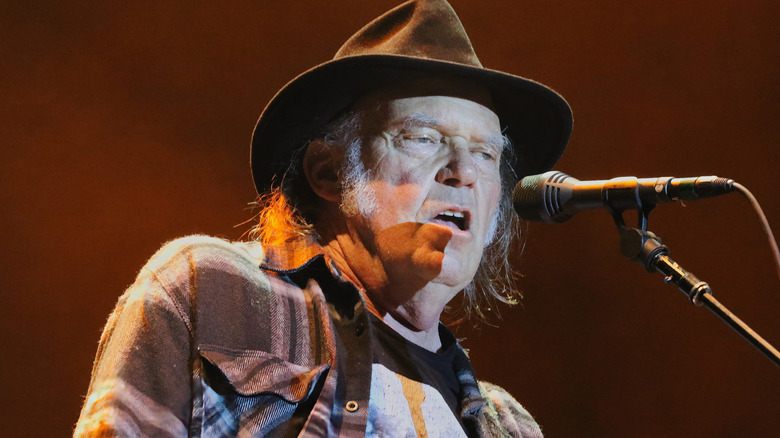
Born in Canada in 1945 and a prominent rocker in the U.S. by the late 1960s, Neil Young recorded some of the most important folk and hard rock of his generation (including albums that define heartland rock). Young is worth a lot more than one would think, likely due to his iconoclastic status and because a major principle recurring throughout his work, on tape and not, is integrity. He was a member of the bands Crosby, Stills, Nash & Young and Buffalo Springfield, both well-known for their protest songs. In his lengthy solo career, he's repeatedly put out anti-establishment and anti-corporate screeds like "Rockin' in the Free World" and "This Note's for You."
While participating in ongoing charitable drives like Farm Aid and the Bridge School Benefit Concert, Young has also found time to stand up for what he sees as a huge problem: A decline in the quality and sonic fidelity of recorded music. For calling attention to issues surrounding how we consume, store, and thereby value musical art, Young is the expert source for today's quote of the day.
Quote of the Day by Neil Young
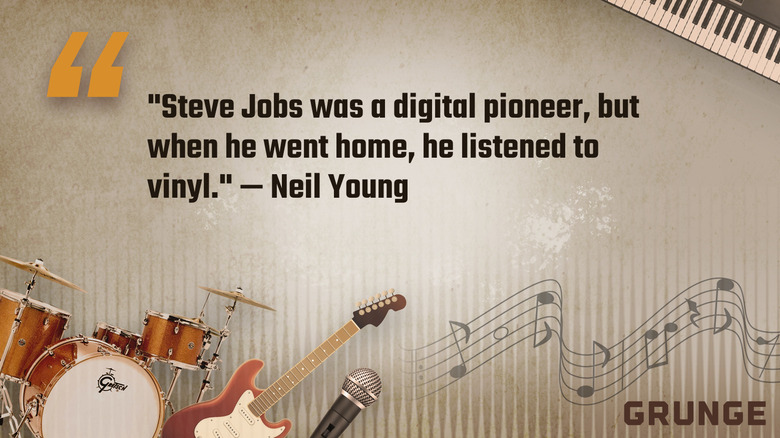
"Steve Jobs was a digital pioneer, but when he went home, he listened to vinyl."
In January 2012, as reported by Wired, Neil Young was a featured speaker in a discussion about digitally distributed music at the "D: Dive Into Media" industry gathering. He spoke about the limitations of platforms like iTunes, which compressed and diminished digital music files in order to make them more easily downloadable and transferrable. Young delivered this quip and brought up the then-recently deceased Steve Jobs, head of iTunes creator Apple, to illuminate the point that while digital music is convenient, it's ultimately subpar to vinyl.
Deeper Meaning of Neil Young's Quote — The New Ways Aren't Necessarily Better
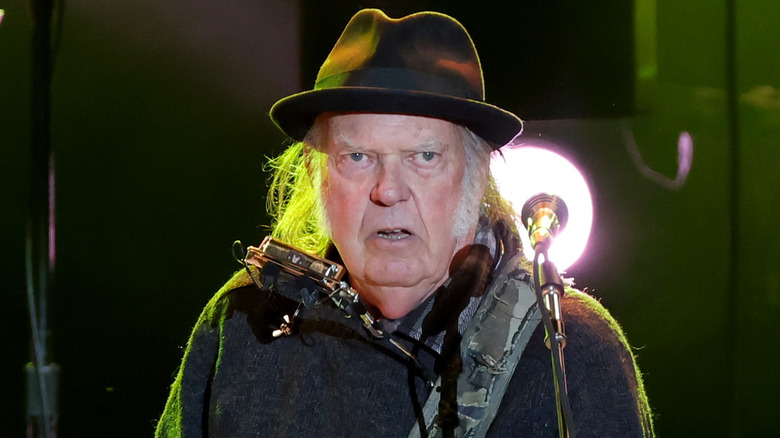
At the "D: Dive Into Media" conference, Neil Young spoke on behalf of many musicians who were less than enthusiastic about digital downloads becoming the format of the choice in the early 21st century. "My goal is to try and rescue the art form that I've been practicing for the past 50 years," he said (via Wired). "We live in the digital age, and unfortunately it's degrading our music, not improving." At the time, songs sold on iTunes were encoded at an average of 256 kbps, a quality-affecting fraction of the rate used to record compact discs. In turn, CDs allow for just 15% of all the audio materials captured on master recordings.
Prior to Job's death, Young had raised his concerns with the Apple leader and had discussed developing the machinery to allow for more authentic digital music files that bear the same fidelity as vinyl records. According to the singer, diehards, perhaps even Jobs himself, would always prefer this option. After Jobs died, Young's Apple project didn't go any further, so he independently developed and released Pono, an iPod-like digital music gadget that could be filled with extremely high-quality files from an online store. That project wasn't commercially successful, leaving vinyl the choice for Neil Young diehards.
More Quotes from Neil Young
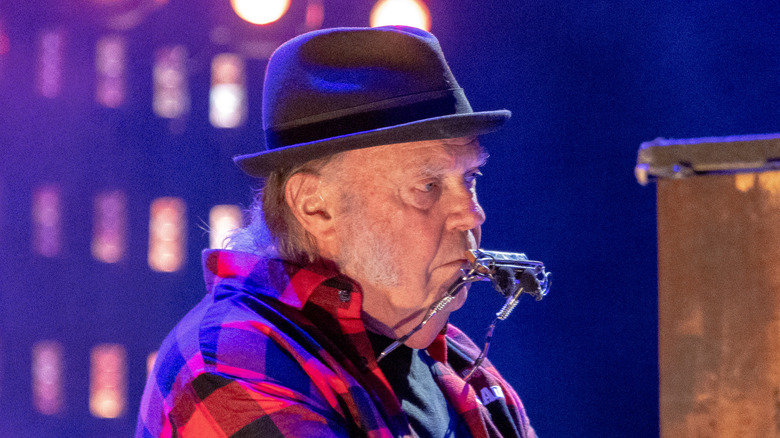
• "Give a hippie too much money and anything can happen."
• "A job is never truly finished. It just reaches a stage where it can be left on its own for a while."
• "Being a musician enables a person to bend the notes and express things that are inside you, no matter what."
• "I totally have no other talent, and I would be totally out of work if I did anything else."
• "I'm convinced that what sells and what I do are two completely different things. If they meet, it's coincidence."