

Classic Rock Songs Inspired By Children's Books
Rock music: It's often mature, sophisticated, emotionally complex, and lurid, and other times it explores the plots and themes set forth by well-known kids' books. The idea for a song can come from anywhere, including the author's thoughts or life experiences, history, or the world around them. Plenty of rock songs are based on books, and many other tunes are derived from classic literature. Still, others owe their existence to monumental works of juvenile literature, like the ones we're highlighting here. Children's books are often far more fantastical, imaginative, and weird than novels written for adults. Across the 1960s, '70s, and '80s, rock stars and singer-songwriters alike have been able to tap into those worlds and find inspiration or content for their music, crafting tunes that became part of the classic rock canon.
Let's take a look at these memorable and enduringly popular songs from Creedence Clearwater Revival, Jefferson Airplane, Donovan, the Nitty Gritty Dirt Band, and the Cure that are essentially musical book reports of literary works for youthful audiences.
Lookin' Out My Back Door
A massively successful No. 2 hit in the fall of 1970, "Lookin' Out My Back Door" by swamp rockers Creedence Clearwater Revival is full of wild things and bizarre imagery. Singer John Fogerty musically and incredulously relates the tale of hanging out on his rear porch and witnessing a parade of oddities including a cartwheeling giant, dancing critters, magical illusions, elephants playing instruments, and a rideable airborne spoon. All of that stuff must have been drug-related or drug-referencing, according to then Vice President Spiro Agnew, who publicly decried the hit.
The origins of "Lookin' Out My Back Door" are far more mundane and earnest. At the time that he wrote the song, Fogerty was looking to delight and entertain his 3-year-old son, Josh. So, he wrote a piece loosely based on Dr. Seuss's 1937 fantastical parade storybook, "And to Think That I Saw It on Mulberry Street." According to "Bad Moon Rising: The Unauthorized History of Creedence Clearwater Revival," Fogerty said, "To a youngster, a parade is very exciting, goofy, and bizarre in a kid kind of way. Elephants beating on drums, giraffes, and a monkey playing a xylophone, imagined as only a kid can."
White Rabbit
The surreal and unsettling world of Lewis Carroll collided and coalesced perfectly with the psychedelic rock of the late 1960s. On its 1967 album "Surrealistic Pillow," Jefferson Airplane recorded the creepy and foreboding "White Rabbit," a song filled with as many dark flights of musical fancy as explicit and direct references to Carroll's 1865 bizarre children's adventure novel "Alice's Adventures in Wonderland."
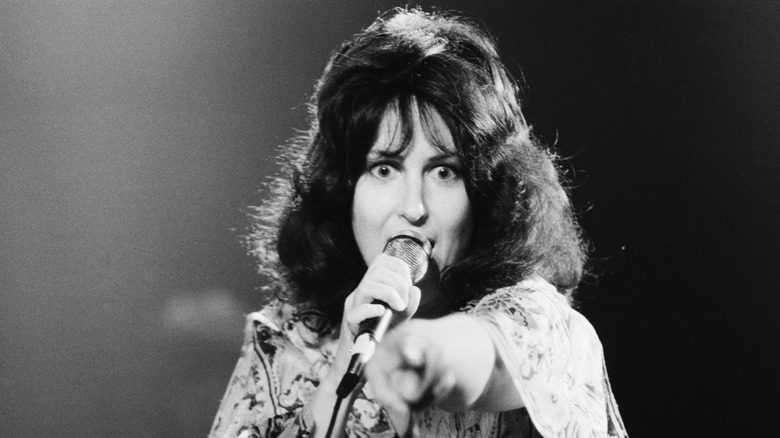
The link between the strange events of young Alice on her harrowing journey through Wonderland and psychedelic rock's open embrace of mind-expanding drugs isn't difficult to make. Singer Grace Slick warbles about how different pills affect one's reality and physical form, just like Alice experiences. Slick also calls out a "hookah smoking caterpillar," the Dormouse, the enigmatic White Knight, and the violent Red Queen. One of Jefferson's Airplane's two Top 40 hits, "White Rabbit" climbed to No. 8 on the pop chart in the summer of 1967.
House at Pooh Corner
For their 1970 album "Uncle Charlie & His Dog Teddy," country rock group the Nitty Gritty Dirt Band recorded a couple of songs contributed by outside songwriter Kenny Loggins, just before he'd launch his performance career with the folk-rock duo Loggins & Messina. One of those tracks was "House at Pooh Corner," named after "The House at Pooh Corner," a book of stories by A.A. Milne originally published in 1928. It was the second collection about Winnie-the-Pooh and the other friendly animal residents of the Hundred Acre Wood.
Loggins had written the song when he was in high school and reflecting on the disappearance of his childhood through a lens of appreciating Milne's popular characters, made even more beloved through Disney animated adaptations. The lyrics refer to Winnie-the-Pooh and his friends Owl, Eeyore, and Christopher Robin by name as they wander around the forest. The Nitty Gritty Dirt Band's version was released as a single, and it peaked at No. 53 on the pop chart in 1971.
Charlotte Sometimes
Before the Cure adopted its iconic look and as it was transitioning from a sparse, post-punk outfit into a lush, synth-driven goth rock collective, the band issued the 1981 single "Charlotte Sometimes." As is the case in many Cure songs, the lyrics are cryptic and deal with dark themes and question reality, while "Charlotte Sometimes" specifically reflects the ideas and events from a children's novel of the same name.
Originally published in 1969 and launching a series, Penelope Farmer's "Charlotte Sometimes" is a bewildering novel about time travel and identity displacement. It concerns a pair of boarding school students named Clare and Charlotte who magically trade places every night despite a 40-year difference between their timelines. Charlotte is thus Clare sometimes, and sometimes she's herself, giving the book the title and theme that would be commemorated by the Cure in song. "Something's strange with Charlotte Sometimes," go the lyrics. "She was crying and crying for a girl / who died so many years before." A minor, No. 44 hit on the U.K. pop chart, "Charlotte Sometimes" missed the American Hot 100 entirely.