

This Remorseful 1982 No. 1, Featuring Only Two Chicago Members, Soared To The Top 44 Years Ago Today
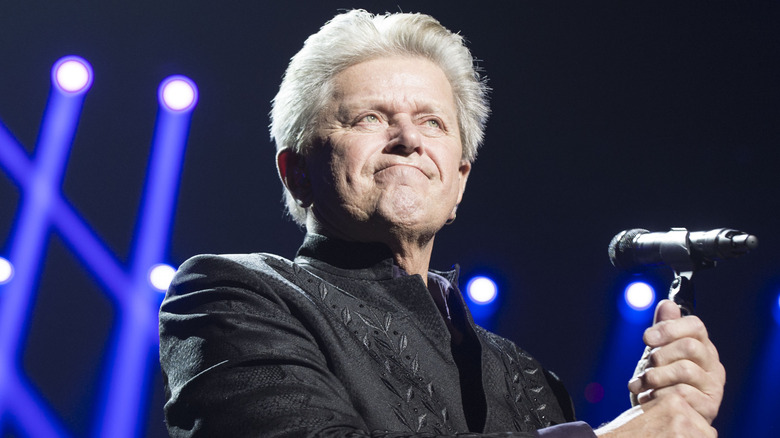
On September 8, 1982, the band Chicago was enjoying their first week atop the Billboard Hot 100 with "Hard to Say I'm Sorry," a song of honest and earnest apology that's also about how difficult it is to apologize. Millions of listeners today could relate to and be inspired by the gently rocking smash in their own complicated relationships.
The hard-hitting yet human lyrics of "Hard to Say I'm Sorry" tell the story of the aftermath of a romantic spat. While it's never explicitly stated what the narrator did to cause his partner to suggest a trial separation, singer Peter Cetera's character wrestles with an apology. Instead, he focuses on persuading his lover not to throw away years of happy memories and experiences because of one misstep or dark patch. While he never actually says "I'm sorry," he does swear to make things right, if he could just get the chance to do so.
Chicago once ranked among the rock bands that scored the most Billboard hits of the '70s before falling into a fallow period. Not only did the soaring power ballad bring a fading music career back to life, "Hard to Say I'm Sorry" also unapologetically launched a whole new creative and commercial era for Chicago.
Hard to Say I'm Sorry was the first song for a new Chicago
After the unexpected death of '70s musician and Chicago guitarist Terry Kath, Chicago's sales declined to the point where Columbia Records jettisoned the band in 1981. In 1982, a Warner Bros. Records-affiliated and rebooted Chicago emerged. Gone for the most part were Chicago's horns, and in came synthesizers, studio musicians, hired songwriters, and a glitzy sheen, all provided by producer David Foster. Peter Cetera became Chicago's primary vocalist, and with Foster he wrote the soaring "Hard to Say I'm Sorry," used on the soundtrack for the 1982 dramedy "Summer Lovers." The movie flopped, but the song was massive.
"Hard to Say I'm Sorry" spent two weeks at No. 1 in September 1982, Chicago's first chart-topper since 1976's "If You Leave Me Now," and their first Top 40 hit of the 1980s, in advance of major, soundalike successes like "Hard Habit to Break" and "You're the Inspiration." Indeed, the song's popularity, along with other hits, laid out the trajectory Chicago should follow if they wanted to stay relevant: Make big, emotional Cetera-fronted ballads with artificial instrumentation about mature romantic issues.
Chicago did self-consciously throw a proverbial bone to its old fans, however. On the LP "Chicago 16," "Hard to Say I'm Sorry" segues into a hard-charging, horns-driven instrumental piece called "Get Away," which was packaged with the main song and sometimes followed it on the radio.