

'60s Rock Icons That Tarnished Their Own Legacy
When rock 'n' roll matured and got a little bit scandalous in the 1960s, it also gave the world the archetypal personalities that other musicians have been emulating ever since. These first rock stars remain the most iconic — equal parts troubadour, sex symbol, and idol that filled records and arenas with their primal wailing. But while many — if not most — of those rock stars still enjoy a great reputation today, they're not as lauded and adored as they could've been because of their own errors. They went and damaged their own credibility, integrity, and charisma-laden sheen with some massive mistakes.
A big part of the rock star mystique is bad behavior, and these musicians kept that up for decades. But while doing dangerous, illegal, or immoral things only seemed to make them more popular, their careers were permanently damaged by verbal outbursts, odd creative choices, and questionable legal proceedings. Here's why '60s rock stars like the Rolling Stones, Bob Dylan, Jefferson Airplane, and Mike Love aren't as respected as they could be — and it's their own fault.
The Rolling Stones didn't pay much in taxes
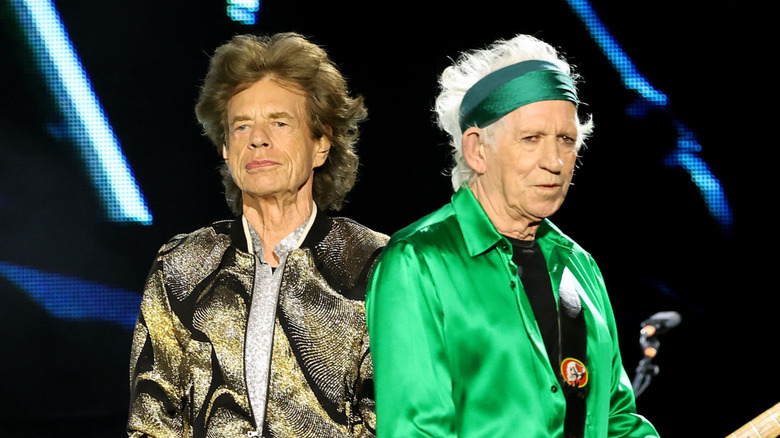
Keith Richards narrowly avoided prison time in the late 1970s for possession of a controlled substance. That plays into the influential Rolling Stones guitarist and songwriter's reputation as a musician who partied way too hard – but setting up an elaborate system to avoid paying taxes on his substantial earnings doesn't. After he fell from a tree and required brain surgery in 2006, the Rolling Stones set up a will on behalf of their members, including Richards. Part of that involved a newly created charitable foundation registered in the Netherlands, where the law requires full public disclosure of the money involved.
That arrangement showed that the Rolling Stones had been conducting its financial affairs in that country for three decades, where — through various skirts and dodges — the band had surrendered £3.9 million in tax payments on £242 million in earnings, far less than it would've paid in the United Kingdom or the United States. Avoiding giving governments their share is a big part of the reason why the Rolling Stones are among the rock stars who live unbelievably lavish lives.
Bob Dylan keeps trying to be an actor
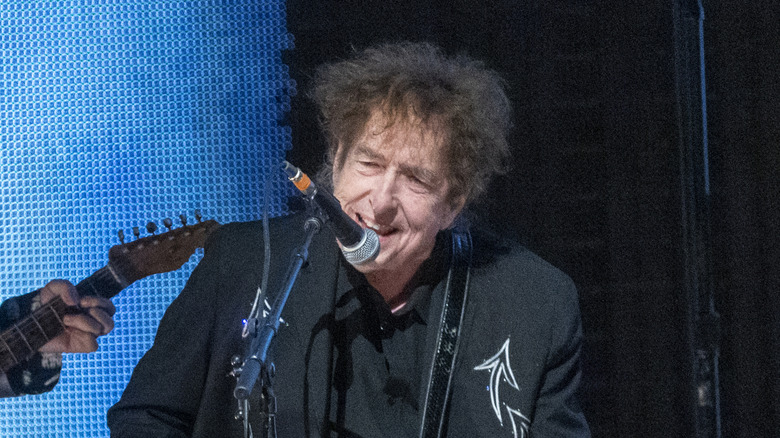
Folk-rocker Bob Dylan's songs became anthems for boomers, and he won the Nobel Prize for Literature in 2016. But every so often, Dylan poked holes in his own legend through his pursuit of an acting career. In 1978, Dylan wrote, directed, and starred in the nearly four-hour "Renaldo and Clara." Intercut with concert footage from a 1975 tour — wherein Dylan donned white makeup and masks — are scenes of the singer portraying Renaldo, opposite his then-spouse Sara Dylan as Clara. Also making appearances are "The Masked Tortilla" (Bob Neuwirth), "Woman in White" (Joan Baez), and "Bob Dylan" (Ronnie Hawkins), plus found footage and dance sequences.
After a poor theatrical performance and abysmal reviews, the film was permanently removed from distribution. Dylan received a Stinkers Bad Movie Award for "Worst Sense of Direction" for his efforts on a project that Film Threat once called "the very, very, very worst thing ever made."
In the late 1990s, Dylan enlisted the help of "Seinfeld" writer Larry Charles on a comedy project in which the musician could live out his fantasy of behaving like Jerry Lewis or Buster Keaton. However, Dylan decided that he'd lost interest before the show concept found its legs. A few years later, Dylan sang in and skulked around in a TV ad for, of all things, women's lingerie chain Victoria's Secret. It seems that the star should just stick to what he's good at.
Jefferson Airplane turned into Starship
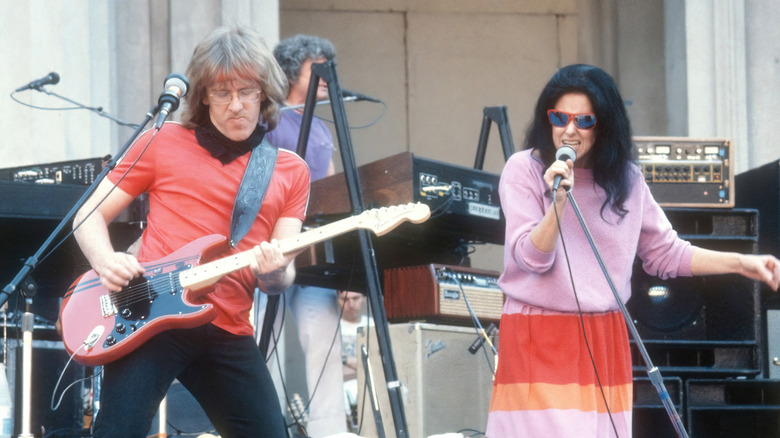
Jefferson Airplane flew above all of the other challenging and aggressive psychedelic bands of the late 1960s. But as their audience aged, the band evolved — and not necessarily for the better, casting a pall on their '60s artistic achievements. After members Jack Casady and Jorma Kaukonen decided to focus on their other band, Hot Tuna, in the '70s, Paul Kantner and Grace Slick stayed behind and turned Jefferson Airplane into Jefferson Starship, a name taken from the cover of Kantner's 1970 sci-fi concept album "Blows Against the Empire."
In the '80s, the group adopted a more mainstream, heavily produced and pop-friendly sound, which Kantner so hated that in 1984, he ran off with the master tapes to the LP "Nuclear Furniture" and quit the band. He strong-armed those who remained into taking on a new name to differentiate between the earlier work done under his lead. Following a lawsuit, a judge ordered the band to pick a new name — and they picked Starship. Heading inevitably into the future that Kantner predicted, Starship recorded lightweight synth-pop far from the Jefferson Airplane canon, up to and including the No. 1 hits "Nothing's Gonna Stop Us Now" and "We Built This City," the latter of which could go down in history as the worst song of the '80s.
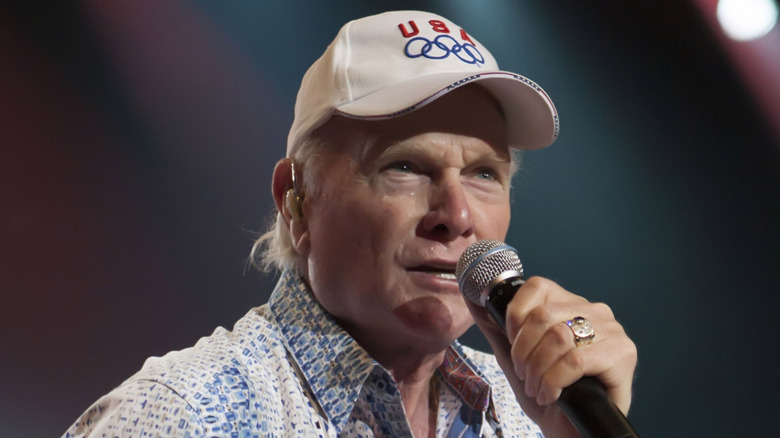
Mike Love made himself hard to love
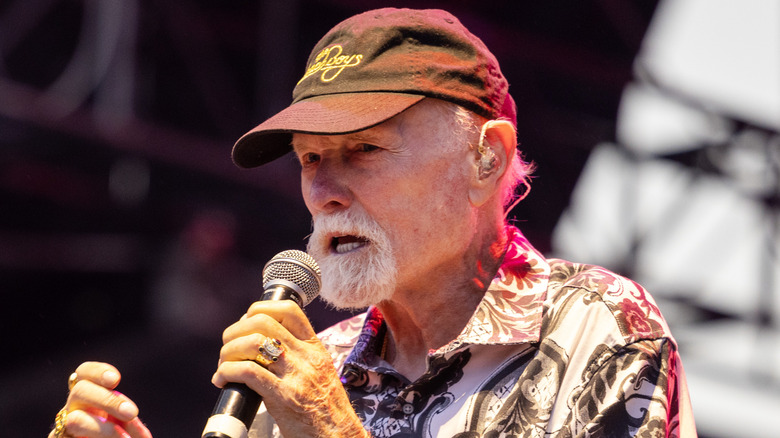
The Beach Boys were inducted into the Rock 'n' Roll Hall of Fame in 1988. During their acceptance speeches, member and frequent singer Mike Love attempted to provoke some of his '60s rock contemporaries, but he only made himself look bad. "The Beach Boys did about 180 performances last year. I'd like to see the Mop Tops match that," he called out, referring to the Beatles. "I'd like to see Mick Jagger get out on this stage and do 'I Get Around' versus 'Jumpin' Jack Flash' any day now." He went on to suggest that the Rolling Stones' Jagger was actually too afraid to jam with the Beach Boys, or rather that he'd "always been [too] chicken**** to get onstage with the Beach Boys."
A few years later, Love turned his ire on his own band, suing to gain credit (and royalties) on early Beach Boys songs. Alleging that he'd helped compose "California Girls," "I Get Around," and "Wouldn't It Be Nice," among others, he stated that he had been illegally left out by the band's early manager. Love won that suit, as well as the first strike in a years-long legal matter with former bandmate Al Jardine. After Jardine toured a show attributed to "Beach Boys Family and Friends," Love, holder of the Beach Boys trademark and name, filed papers to prevent that from happening, and the ruling in his favor was upheld upon appeal.