

The 5 Longest Albums In Rock History Are Worth Taking The Time To Hear
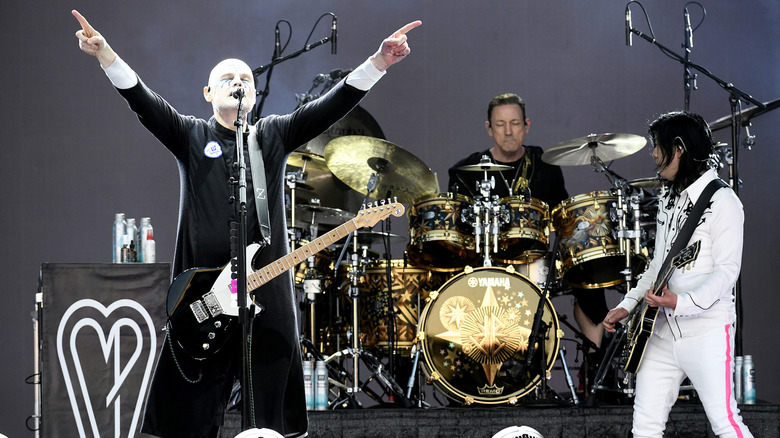
Since each side of a vinyl record runs roughly 22 minutes, most rock albums are about 40 to 45 minutes, with many classics closer to a half hour. But there's never been a limit, and throughout rock history, some musicians have pushed the envelope. Eclipsing even sprawling double albums like the Beatles' self-titled (White Album), which runs 93 minutes, are rock albums that take several hours to listen all the way through. These are marathon listening experiences, not sprints. Yet, as any long-distance runner would tell you, nothing beats the feeling of making it to the finish line.
As the long play record replaced the single as the dominant format for music in the late '60s, albums started to swell in length. Iconic '70s double LPs like Genesis's "The Lamb Lies Down on Broadway" — an album that defines prog rock — or George Harrison's "All Things Must Pass" are expansive, but it wasn't until the '80s and '90s that rock albums got super-long. The Clash cracked the two-hour mark with "Sandinista!" in 1980, and an impressive range of rockers have followed suit. Albums from avant-garde experimentalists Sun City Girls to grunge superstars the Smashing Pumpkins take listeners on hours-long journeys.
Undoubtedly, these aren't for the more casual fan: perhaps better suited for rainy days or road trips than parties. But even if they may be CDs or vinyls only a diehard would already own, even if they take real commitment and even grit to get through, you won't regret checking out every minute.
Sandinista! – The Clash
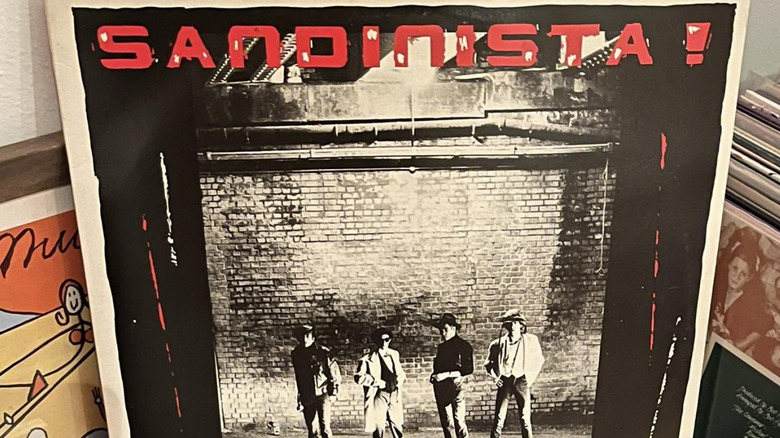
As a rule, punk music gets right to the point; it tends to be fast and loud and fit within three minutes, preferably fewer. First wave punks stood against the excesses of '70s stadium rock. Yet punk's also about subverting norms, including its own. The Clash had already put out a double-LP in "London Calling," so "Sandinista!," and its two-hour and 24-minute run-time, became the logical next step. "I don't care about all the artistic reasons," singer Joe Strummer told Rolling Stone, "... Springsteen put out 'The River' as a double. So we thought, 'Right, Bruce. Suck on this!'"
We're not sure what the Boss thought about it, but the band's longest album is so varied, eclectic, and creative, it might be their best. It's like they were throwing their favorite genres at a wall and seeing what stuck; most of it did. Anthemic political punk tunes like "Somebody Got Murdered" and "Police On My Back" pogo with the dub-inflected "The Crooked Beat," the funk of "Ivan Meets G.I. Joe," and the rockabilly flair of "The Leader." "Let's Go Crazy!" is a frenetic blast of calypso jazz, and "Hitsville U.K." is full-on gospel.
As it's the Clash, the politics cut through. "Sandinista!" refers to members of the guerrilla socialist organization that overthrew U.S.-backed leadership in Nicaragua in 1979. But in the dawn of the Reagan era, the album — three LPs that the band ensured were sold at the price of one — became their biggest U.S. hit to that point. In 1981, it reached No. 24 on the Billboard 200 album chart.
Soundtracks For The Blind – Swans
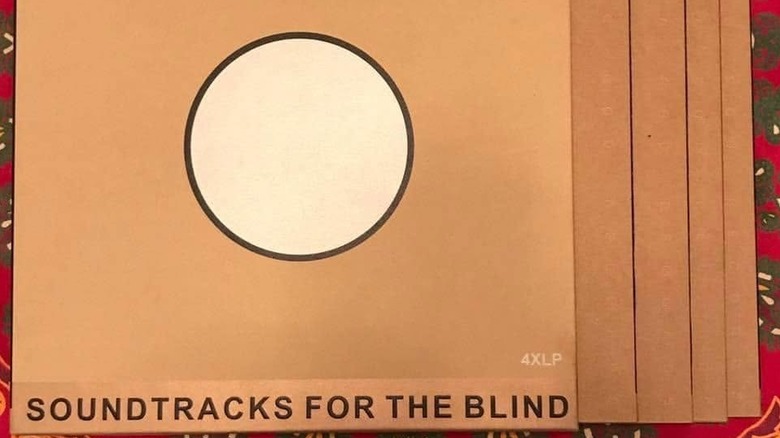
"Soundtracks For The Blind" was intended to be Swans' final flight. Following its release in 1996, the New York-based experimental rock band's leader Michael Gira announced that the tour supporting it would be their last (though they'd eventually re-form in 2010). With a run-time of two hours and 21 minutes, the album is one hell of an exclamation point to a 15-year career spent shocking, beguiling, and transfixing the alternative and indie rock worlds. Eerie and dark, it propels the listener through a shifting, surreal dream or even hellscape. Horrifying and haunting in parts, sublimely beautiful in others, it's all worth getting lost in.
Swans relied on an expansive bag of tricks to build the soundscapes of "Soundtracks For The Blind." Layers of guitars, synthesizers waving and warbling, repeated percussive phrases, sampled voices, and noise crash into the occasional traditional song structure. Sudden heavy, distorted guitars blast through an atmospheric sonic collage with robotic spoken word on "All Lined Up." On the disturbing "How They Suffer," synthesizer and orchestral phrases are intercut with interviews with people about their health ailments. Long-time Swans member Jarbo sings a serene tune set to accordion and videogame-like synths on "Red Velvet Wound," before it's all consumed by atonal distortion.
"We still tend to be thought of only as dark, brooding, ugly, whatever, and it's just so limiting," Gira told Lollipop Magazine in 1997. That may be so, but "dark," "brooding," and the rest do describe "Soundtracks For The Blind"; it's what makes the album so remarkable from cover to cover.
Mellon Collie And The Infinite Sadness – The Smashing Pumpkins
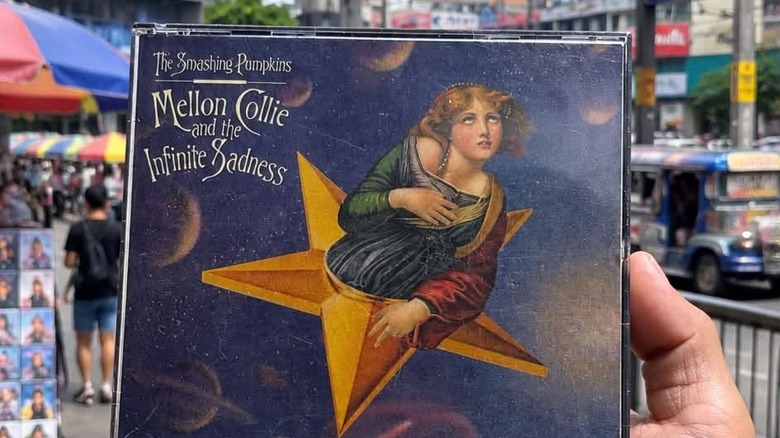
Among super-long albums, "Melon Collie And The Infinite Sadness" is the only one to hit No. 1 on the Billboard 200 charts. The Smashing Pumpkins' biggest album is also their longest. Clocking in at just over two hours, it's considered the legendary alternative band's creative high-water mark and proves that 1995 was the best year of their career. In Rolling Stone, critic Jim DeRogatis speculated that Billy Corgan "wanted to make an album that teenage fans could obsess over, getting comfortably numb listening on headphones in their bedrooms."
The singles sketch out the sonic territory on this sprawling, eclectic album. There's the cool and detached, shoegaze groove of "1979," the orchestral flourishes of "Tonight, Tonight," and the anthemic chorus of "Bullet With Butterfly Wings": "Despite all my rage, I am still just a rat in a cage." But of course, "Mellon Collie" is so much more; there are hidden gems along the way and surprising turns. "An Ode To No One" is heavy and aggressive, while "Thirty-Three" is intimate, driven by acoustic picked guitar and piano. Few albums so eclectically live up to their title.
Music producers Flood and Alan Moulder of My Bloody Valentine were recruited to produce the album, and on it, the band embraced a more collaborative process based on live performances. It's more of a band album than others, which are mainly driven by Corgan's songwriting. Perhaps that's why, DeRogatis noted in his review, "the album retains the rough edge and intimate vibe of old friends (and sometimes enemies) playing together in their rehearsal space."
69 Love Songs – The Magnetic Fields
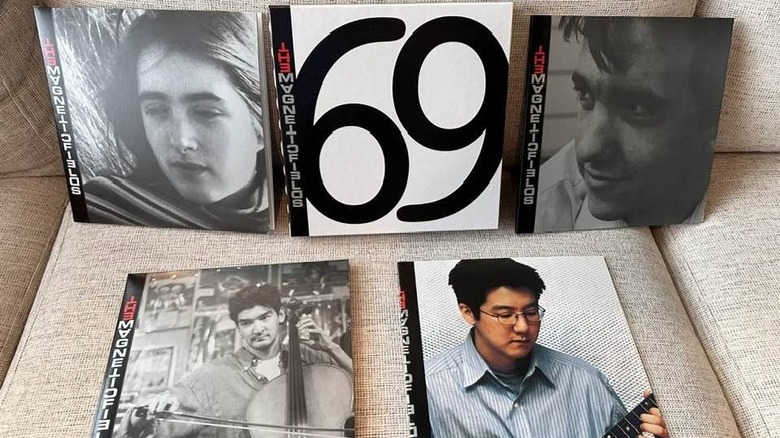
The Magnetic Fields' "69 Love Songs" runs about two hours and 45 minutes, yet it never loses its singular focus. Released in 1999, it's the sound of indie musician Stephen Merritt's exploring the many facets of the biggest of themes. "I decided I'd write 100 love songs as a way of introducing myself to the world," he told The San Francisco Bay Guardian. "Then I realized how long that would be. So I settled on 69." The album slides from maudlin chamber pop to jazzy show tunes, driving lo-fi indie, folk, and country. It moves through musical styles as it evokes the moods, tears, laughs, and memories that love stirs in us.
Though mostly recorded in Merritt's apartment in the East Village of Manhattan, "69 Love Songs" sounds expansive and full. Bright arrangements are scaffolding for some of the most essential but under-the-radar love songs of all time. "The Luckiest Guy On The Lower East Side" expresses unrequited love and longing, while the neo-psychedelic "Parades Go By" paints a portrait of a long-term relationship continuing to blossom. To shed tears, try the luminous, heartbroken "Boa Constrictor," featuring Shirley on vocals. Then there's "The Book of Love," which undercuts the notion of romantic love only to rebuild it and declare it more fully. "The book of love is long and boring / No one can lift the damn thing," in the verse, resolves into the chorus: "But I love it when you read to me / And you, you can read me anything." They get us every time.
Box Of Chameleons – Sun City Girls
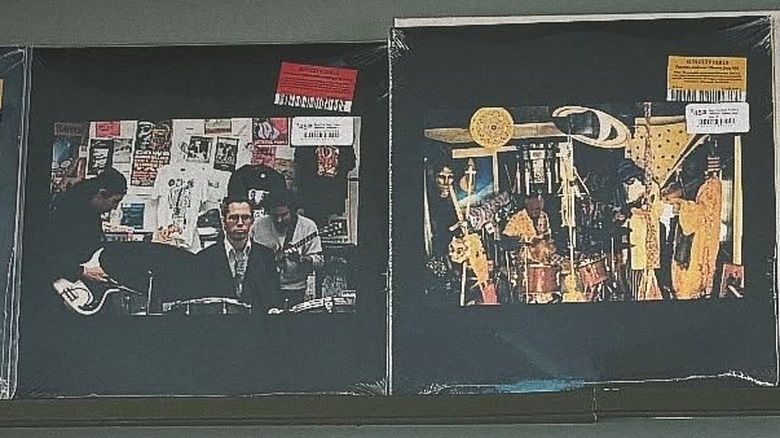
Few bands shattered the rules and structures of rock music more than Sun City Girls, and even fewer were as prolific. It's hard to get a precise count — they released several hard-to-track short-run tapes and CDs — but by their reckoning, the band put out over 50 albums during their run from 1982 to 2007. Each dances the line between art, jazz, and rock, but with a run-time of more than three hours and 20 minutes, 1996's "Box of Chameleons" stands out in terms of sheer ambition and audacity.
You'd think an album this long would feature longer songs, but only one is over three minutes: "Mood Bazaar," which is three minutes and five seconds. The shortest, "Is It Stroked?," clocks in at just 15 seconds. With an astonishing 128 tracks, the album is a sonic collage. It stitches together minimalist guitar lines, peals of sax, accordion, children's instruments, absurdist songs, solo acoustic guitar phrases, clanging concrete music, pseudo-psychedelia, flashes of poetry, and moans and soundscapes. The Minutemen-like spoken word of "Coffee With Eyelash" is straight-ish, but then tracks like "Surfin' The Cardboard Stretcher" bowl over with jagged bass and yelling.
Sun City Girls are for the brave listener; their music is allergic to the pop charts or even most traditional song structures. "We released stuff that no band in their right mind would ever consider releasing," Richard Bishop remarked in 2009. "It was a beautiful thing" (via Pitchfork). "Box of Chameleons" constantly shifts mood and color; more road trip than daily commute, it's worth every minute.