

1962 Pop No. 1, Penned In 15 Minutes By Its Keyboardist, Topped The Charts 64 Years Ago Today
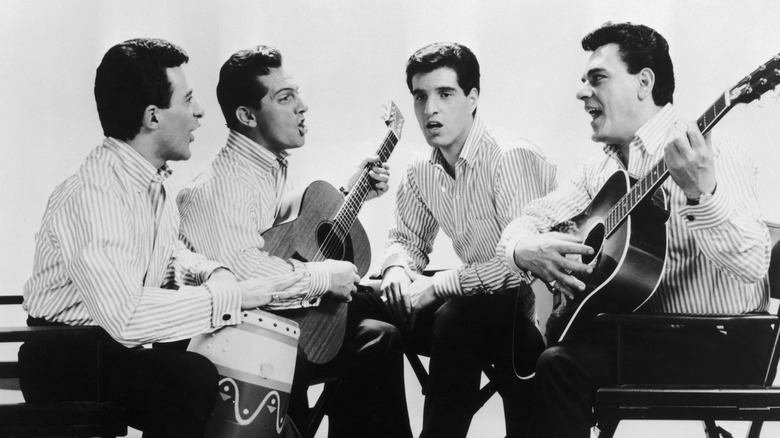
When Billboard released its September 22, 1962 issue, the No. 1 song on the all-genre Hot 100 pop chart was "Sherry" by the Four Seasons, and for the second week in a row. A bright, shiny love song about an earnest request to take out the titular subject on a dancing date, it took only a few minutes for its keyboardist songwriter to perfect. It also established a hot new act, one which combined the tricks of street corner-style vocal groups and rudimentary rock 'n' roll.
The Four Seasons were a singing collective as well as a band. And in those early years of the 1960s, before the cultural and musical shifts brought on by the British Invasion and the American bands that chased that sound, the Four Seasons were one of the biggest acts on the scene. Between late 1962 and the summer of 1964, the Four Seasons saw the Top 40 with another 13 songs, including four No. 1 hits, including the July 1964 chart-topper "Rag Doll."
With only their second single ever, the Four Seasons topped the Hot 100 and stayed there for quite a while with "Sherry."
One member of the Four Seasons wrote Sherry in almost no time at all
"Sherry" begins with all kinds of hooks: first some layered percussion, and then the vocals via the ascending wailing of Frankie Valli. On stage and on vinyl, the Four Seasons were unmistakably led by singer Valli, who possessed a sweet, naturally high voice suitable for songs of young romance, and who could turn on a raspy, alien falsetto when the song required. And they often did, the way that the Four Seasons' keyboardist and main composer, Bob Gaudio, wrote them.
Gaudio is the sole credited songwriter for "Sherry," which he started and finished with tremendous efficiency. On his way to a band practice session, he decided to fiddle around on his piano for a moment, and the foundational melody of "Sherry," as he said in Fred Bronson's "The Billboard Book of Number 1 Hits," "just came out." Using some basic lyrics he thought up on the spot to commit the melody to memory, Gaudio presented it at a rehearsal later that day, and his impromptu placeholder lines were unexpectedly well received.
In September and October 1962, "Sherry" peaked at No. 1 on the pop chart, spending five weeks as the top song in the United States. Shortly thereafter, "Big Girls Don't Cry" followed it into the No. 1 slot.