

The 3 Longest-Held Vocal Notes In Rock History Have Us Gasping For Air
There are many fine ways to impress your friends the next time karaoke night rolls around, but you don't have to resort to belting out the hits at full volume or with great verve and maybe a good stage move or two. Instead, you might just stand out for holding a really, really long note. Then again, unless you've got some serious musical training or natural ability, perhaps this is an exploit best left to the professionals. Some of the longest sustained notes in rock history could well leave you taking an awkward gulp of air before the song can come to a close. Not only that, but some of the best examples of this feat make it clear that doing it well requires masterful breath control and real artistry.
Still think you can do it? Okay, start with listening to "All Out of Love," that staple of '80s soft rock cheese, which caps the track with a 16.2-second note. It once set a decent record for vocal endurance on a hit, but has since been eclipsed by singers of other rock subgenres (and other genres in general; one of the longest-held notes on a recorded track, an utterly dizzying 20.2 seconds, was achieved by synth-pop vocalist Morten Harket of A-ha on "Summer Moved On"). Even the shorter sustained notes will have you wondering just how the singers have managed such a feat of breath control and pure vocal power.
All Out of Love — Air Supply
While some may dismiss Air Supply as artistically sterile '80s soft rock and a mostly forgotten act of the era, there's one fact that even ardent naysayers have to admit: Russell Hitchcock has a heck of a voice. If you listen all the way through Air Supply's 1980 hit, "All Out of Love," you'll know it by the time he finishes holding a 16.2-second-long note that, at the time, set records. The single and its album, "Lost in Love," did very nicely in the U.S. market, hitting No. 2 on the Billboard Hot 100 in 1980.
Hitchcock has also become known for his especially clear tenor and strong breath control, with some fans arguing he still has the ability to deliver melodies and hit high notes with strength and clarity well into his 70s. It's not for nothing that Air Supply also have excellent solos on their other soft rock tracks and the original duo, consisting of Hitchcock and guitarist-songwriter Graham Russell, is still touring as of 2026.
Curiously, the version of "All Out of Love" that became a hit in the U.S. wasn't quite the same as the track that had been a hit in Australia. Line changes included modifying the original "I'm all out of love / I want to arrest you," which was meant by songwriter Graham Russell to simply mean getting someone's attention. Record exec Clive Davis argued that American audiences would interpret it very differently. Russell has since admitted to Songfacts that the line was weird even in Australia and that Davis made the right call, earning the songwriting credit he got on the American release.
When I'm With You — Sheriff
You'd be forgiven for wondering just who or what Sheriff is, as the Canadian soft rock group only released one album, their self-titled 1982 debut. But that included "When I'm With You," an ultra-sensitive ballad written by keyboardist Arnold Lanni for his girlfriend. It's pure soft rock cheese, which he even initially dismissed it as "kind of a wimpy song" when the band was discussing possible tracks for their album (via Stereogum). Others must have been impressed, though, because "When I'm With You" eventually hit No. 1 in the U.S. in February 1989, making it quite the year for power ballads.
"When I'm With You" was a true one-hit wonder '80s love song that might have faded away into the soft-focus background if it weren't for lead singer Freddy Curci's 19.3-second sustained falsetto note at the end of the track. It's so long that it currently holds the Guinness World Record for longest-held vocal note in a U.S. hit single. Just try belting out a note that long and see how far you get (and how you feel afterward).
But Curci's ability to sing for a really, really long time on a single breath wasn't quite enough to keep Sheriff together. The band broke up in 1985 ... but, wait, their single hit No. 1 four years later. What happened? That's a bit of a musical mystery. We know that it picked up popularity again after radio DJs gave it airtime, but who did it first and in what market is murky.
The Grudge — Tool
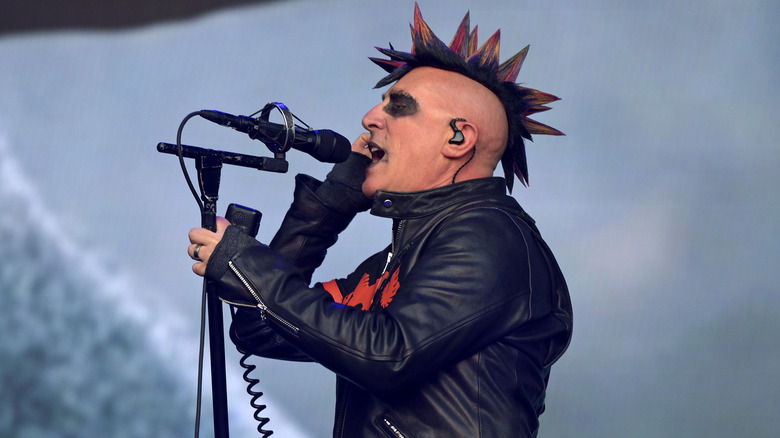
Maynard James Keenan (often abbreviated to MJK by fans) is well-known for his complex and daring singing abilities, not to mention having a bit of an unusual side hustle. Are his vocals always beautiful? Well, not exactly, but this is the lead singer of Tool we're talking about. While MJK can sing melodiously, it's the scream he releases on "The Grudge" that really gets attention — not least because it's a dizzying 25 seconds long in the studio version. While some argue that studio effects have given the famous scream an extra few seconds, it's also true that MJK has been recorded achieving a 20-second scream live in 2001 and a 15-second one in 2022 that would still challenge many vocalists.
Lest you think this is just tuneless wailing, the many vocal coaches posting to YouTube will set you right. This is artistic screaming, for one, with a melodic through-line that's used to great effect in a song all about the pain of holding onto resentment and the necessity of letting go. MJK has an impressive vocal range, too, paired with a powerful understanding of just how a well-placed inflection can change a whole phrase. The scream of "The Grudge" speaks to that artistic and technical ability, requiring extraordinary breath control and truly dialed-in technique that's vital to protect one's precious vocal cords. Just the fact that MJK can still perform a scream of any length for "The Grudge" is testament to that fact.