

The Top 5 Disco Hits That Took Over 1978
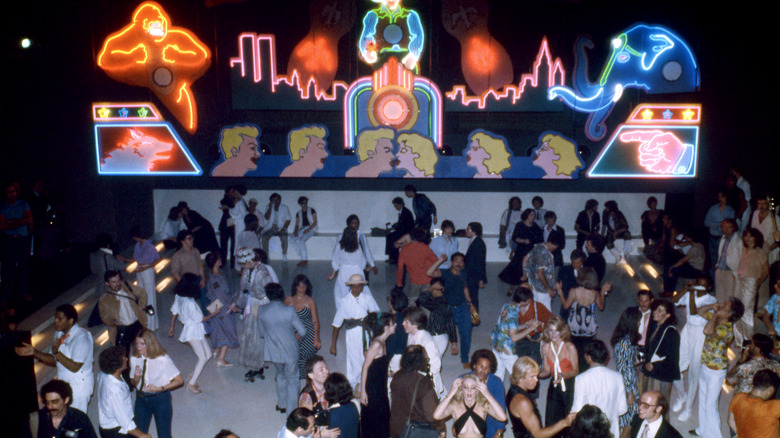
1978 was a terrific year for culture obsessives. At the movies, "Grease" and "Superman" dominated the box office. Our TV sets gave us the memorable debuts of The Blues Brothers and Mork from Ork. And, with the release of "Saturday Night Fever" in December of 1977, there was seemingly no stopping the disco craze.
While the biggest success story of the previous year was the Bee Gees' numerous contributions to the hit John Travolta film about a hard-luck disco dancer in New York City — just part of the ways they crafted essential songs for dancing — 1978 featured qualified takeovers of Billboard's dance chart by all kinds of disco acts, from big-voiced belters to fresh dance bands. In fact, these five favorites from that year are responsible for a total of 21 weeks' worth of No. 1s on the magazine's National Disco Action Top 40. That's quite a non-stop dance party, so lace up your shoes and get ready to get down to these disco greats from '78.
A Taste of Honey - Boogie Oogie Oogie
One of 1978's biggest all-around hits, A Taste of Honey's "Boogie Oogie Oogie" is one of the defining examples of disco. Built around the vocal harmonies of Janice Marie Johnson (who's also laying down a killer bass groove) and Hazel Payne (who's keeping a fine guitar rhythm at the same time), "Boogie" is one of those songs that'll get anyone from a certain generation out on the dance floor. By the fall of 1978, it reached No. 1 on Billboard's Hot 100.
With stats like those, you'd think the group never had a problem making anyone dance — but an unresponsive live audience is actually what inspired the song to begin with. Johnson explained to Fred Bronson in "The Billboard Book of Number One Hits" that they conceived the song after a disastrous performance at an Air Force base. "We were knocking ourselves out, but getting no response from the crowd," she said. "In fact, they seemed to have contempt for two women who thought they could front a band." A Taste of Honey may not have had the last boogie, but they certainly got the last laugh.
Sylvester — You Make Me Feel (Mighty Real)
One of the most kinetic and feel-good songs of disco's peak era, "You Make Me Feel (Mighty Real)" was a triumph for Sylvester, a genre-bending, San Francisco-based singer whose powerful high voice cut through the dance floor like a laser. Initially conceived as a gospel ballad, reflecting the Pentecostal Church environment in which he was raised, Sylvester and co-producer Harvey Fuqua (a doo-wop legend who helped discover Marvin Gaye) crafted it into a fierce dance track for '78.
More than most, "Mighty Real" remains a beloved track from the entire disco movement. It's been cited in lists of greatest dance songs by Billboard and VH1, and was even selected for the Library of Congress' National Recording Registry. Its reception is, in many ways, a celebration of Sylvester himself: an unapologetic queer icon who lived his too-short life on his own terms and inspired future generations to do the same.
Dan Hartman — Instant Replay
One of disco's unlikeliest success stories, Dan Hartman first rose to prominence as a member of the Edgar Winter Group, where he wrote and sang their hard-rocking hit "Free Ride." (Hartman helped establish Winter's band as one of several that launched a host of successful solo careers.) But after his solo debut "Images" failed to chart in 1976, Hartman decided to try his hand at a different genre, crafting a sparkling, catchy number that all but invited listeners to shake it on the dance floor, especially with that opening countdown at the top of the song.
Amazingly, Hartman played nearly every instrument on the track himself, referring to it as a demo when he gave the song to legendary disco engineer Tom Moulton to mix it. "If that wasn't for real, it was the next closest thing," Moulton said in the liner notes to a reissue of the "Instant Replay" album (via Discogs). "I'd heard a lot of demos by then, and his were symphonic masterpieces compared to most!" The song was so catchy, Hartman was asked to record a whole album of disco material — and the entire LP topped Billboard's list of top dance songs for a week in 1978.
Donna Summer — MacArthur Park Suite
By the end of 1978, Donna Summer was a clear contender for the title of Queen of Disco. Since signing to the Casablanca label in 1975, almost all of her singles — including the sensuous pop hits "Love to Love You Baby" and "I Feel Love" — reached the Top 5 of Billboard's dance club songs chart. But it was the fourth and final side of her double album "Live and More" that propelled her to even higher heights. Listeners were treated to an epic, almost 18-minute version of the Jimmy Webb-written ballad "MacArthur Park." Summer's longtime producer Giorgio Moroder heard the song while driving around Hollywood and felt it would be perfect for her, even buying an 8-track player to study the song after he was given a copy of Richard Harris' original hit version on the format.
Besides transforming the tune into an even more dramatic version, complete with delirious brass runs and wild vocal acrobatics from Summer as the song switches from ballad to banger, "MacArthur Park Suite" also included two additional, original songs bookended by versions of the title tune. "One of a Kind" is a funky little number that gives way to an unlikely, fast-paced break-up ballad, "Heaven Knows." Summer got two hits for the price of one here: "MacArthur Park" became her first to top the Billboard Hot 100, and "Heaven Knows" also became a Top 5 smash.
Chic — I Want Your Love
1978 was the year that made Chic disco legends, thanks in part to "Le Freak," an anthem that still puts us in the mood for dancing to this day. But if "Le Freak" finally got them in the door at Studio 54, "I Want Your Love" would ensure that they'd be VIPs there for as long as the club was open. Once again, Chic writers/producers Nile Rodgers and Bernard Edwards concocted a guaranteed dance-floor filler, featuring a hook propelled by tubular bells and blaring horns as well as a bridge garnished with a swirling string section. Along with "Le Freak," it became 1978's last dance club songs chart-topper in October, though it didn't make the Billboard Hot 100 until 1979.
Rodgers is fond of identifying the "deep hidden meaning" of the many hit songs that he writes, and "I Want Your Love" is no exception. In his memoir "Le Freak: An Upside Down Story of Family, Disco, and Destiny" (as excerpted by GQ), he admits the track came to him in a dream — a very strange one. "I'd soon break up with my wonderful girlfriend Nefertiti, after I'd fallen hook, line, and sinker for her best friend, Michelle," Rodgers wrote. "I even dreamt the entire Chic song 'I Want Your Love' while [pursuing] Michelle in my slumber." It may not have been a great night's rest for Rodgers, but it was a dream come true for disco fans.