

Quote Of The Day By Bill Wyman: 'Unknown To Me At The Time, I Built The First ...'
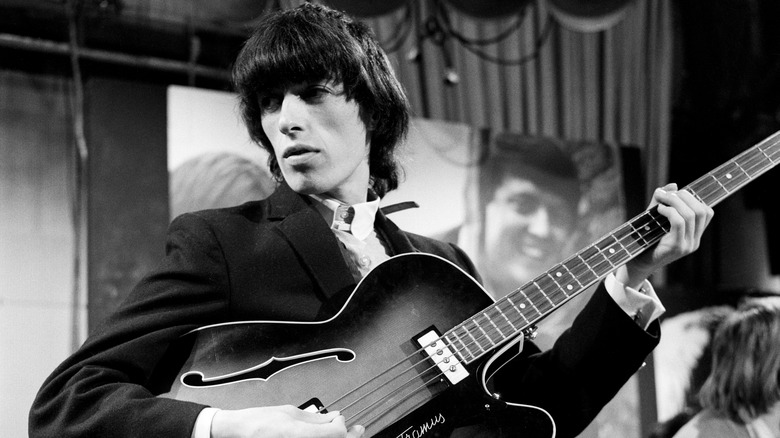
The bass is a backbone of rock music, and the Rolling Stones' bassist, Bill Wyman, did more than just support Mick Jagger's iconic vocals. Born on October 24, 1936, in London, his inaugural instrument was the piano at age 9, but rock 'n' roll truly captured his attention after hearing a Les Paul & Mary Ford record at around age 13. After listening to the radio during his deployment with the Royal Air Force inspired him to buy his first guitar, he started playing skiffle music with a small group before switching over to the bass in 1961. One year later, he became a member of the Rolling Stones, and the rest is rock history.
Throughout his time with the Rolling Stones, Wyman released several notable solo projects. His 1974 album "Monkey Grip" shone a light on his own songwriting capabilities, and he experimented with different genres on his 1976 album "Stone Alone." He broke into the U.K.'s Top 20 chart with his song "(Si Si) Je Suis Un Rock Star" in 1981, but scarcely charted as well as his primary group. He also performed with Stephen Stills' supergroup, Manassas, in the early '70s, establishing a widespread and diverse portfolio across the music industry.
Although Wyman left the Rolling Stones in 1993, he started a new band called Bill Wyman's Rhythm Kings in 1997, releasing music with them along with several solo albums. His contribution to the foundation of rock 'n' roll extends from the technical to the spiritual, and that's why he is today's quote of the day.
Quote of the Day by Bill Wyman
"And, unknown to me at the time, I built the first fretless bass. Invented it, so I'm told, about five years before they came out."
In a 2024 Classic Rock interview, Bill Wyman described his life beyond the Rolling Stones, from fleeing to the countryside during World War II to his love of the blues and his metal detecting hobby. While the musician clearly had plenty to be proud of over his long and accomplished life, this quote in particular formed part of his answer to why he ultimately switched to being a bassist — one of the most consequential decisions of his career.
Wyman was known to describe his role as "not to get in the way, not to be noticed," which may have been the case for many other bass players. However, in tangent with the Stones' success, this simple tweak may have brought him into a greater spotlight than he ever dreamed.
Deeper Meaning of Wyman's Quote — Necessity Breeds Ingenuity
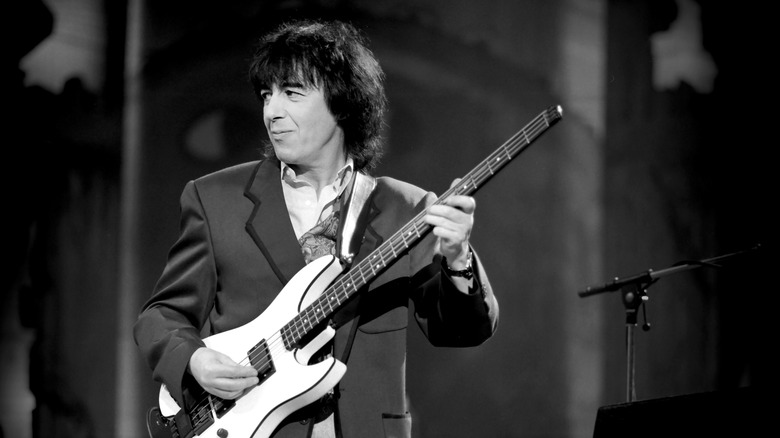
In the interview with Classic Rock, Bill Wyman explained how his switch to the bass was actually born more out of necessity than passion. None of the other guitarists in his old band, the Cliftons, were up for the switch, forcing the then-budget-conscious musician to get crafty and create his own prototype.
As he described in an interview with Todd Longwell, "I used to tune the bottom strings down and play a Chuck Berry riff. That sufficed as a bass guitar, really, or a bass sound. Before I joined the Stones I'd gotten hold of something you'd call a bass guitar which I completely rebuilt and made." It's also often cited that Wyman's ticket into the Rolling Stones was his ownership of a couple of amplifiers, which he clarified were also a DIY product of his own ingenuity. It seems that everything the bassist touched was made of gold; his 1969 Fender Mustang Bass sold in 2020 for a record-breaking $384,000, and his original Vox AC30 sold for over $100,000.
It can be intimidating to start anything when the tools for entry seem out of budget or out of reach. Wyman's example teaches us that it's not about what we have, but what we make of it. A challenge turns into a growth opportunity, which can ultimately shape the rest of your life for the better. What matters most is the will to show up and try, even if you're learning as you go.
More Quotes From Wyman
-
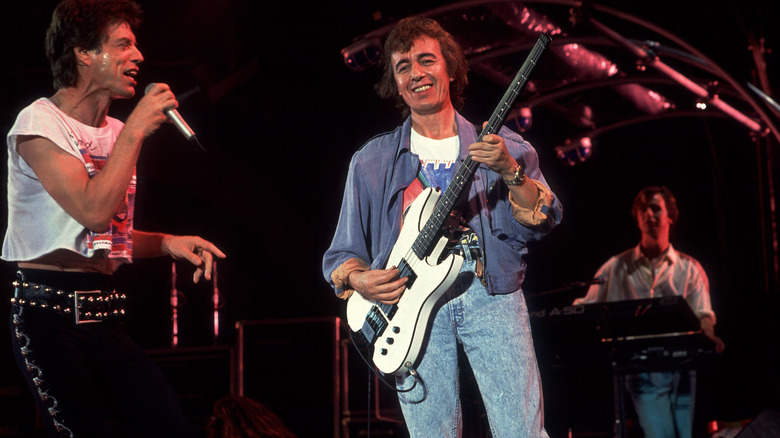
"I'm proud of a lot, because I did things on the bass that a bass player wouldn't normally do."
-
"I can't go to a church and sing hundred-year-old hymns, it doesn't do it for me. My spirit's in nature. Always has been."
-
"I believe in clear expository writing. I believe in the intelligent and curious but disinterested reader."
-
"[The war] made me realize how much we depend on other people and how to be nice to everybody because if you weren't, in the wartime, you suffered. You had to be friends with everybody, and you always were."
-
"I wouldn't [perform] if it wasn't so much fun and so wonderful to play to these small audiences close up in the theatres and concert halls, have such a good time and see the response we get."