

The 5 Best Live Albums In Classic Pop History
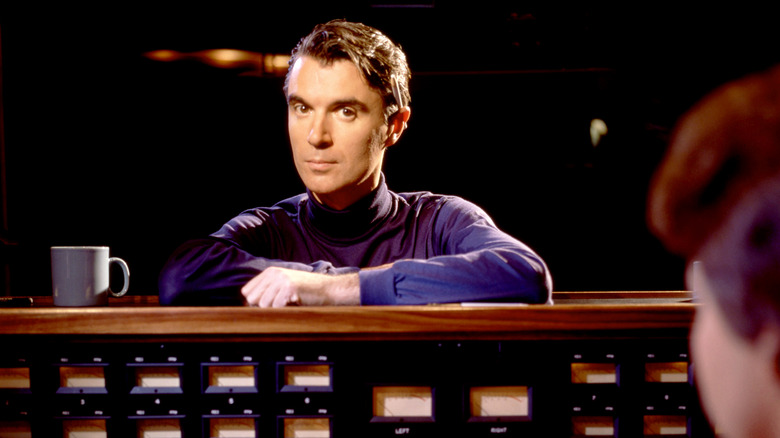
At worst, a live album is a chopped-up and rehashed cash grab. At best, it's a luminous snapshot of a lightning-in-a-bottle moment that can never happen again, one that reveals a musician's greatest qualities. Our musical history is full of such albums, including classics that cross genres and are beloved by many.
But first: a few provisos about our choices. The nifty thing about the "pop" moniker is that it encompasses everything from soul to early rock 'n' roll to classic rock, all of which were pop music at some point — right down to the Beatles. We've stuck to mainstream choices here, as they are, by definition, "popular" music. We've decided to omit defined outsider genres like punk or jazz fusion.
As for the albums themselves, we want choices that reflect superlative musical merit — the best of the best. But because so many legendary live albums also had some historical function in art and contemporary culture, like Johnny Cash's "At Folsom Prison" (not too many prison concerts in the '60s), we're keeping such considerations in mind, too. Cash's album is one obvious choice, as are some of the rest of our choices. So let's take a stroll through some of the best live albums in pop music history.
The James Brown Show (Live At The Apollo) — James Brown
Woo, wow, hey, ho, are you ready to feel good? Sadly, that most iconic of James Brown songs — "I Got You (I Feel Good)" — isn't on 1963's "The James Brown Show (Live At The Apollo)." But that's okay, because "The James Brown Show (Live At The Apollo)" remains one of the best live albums in classic pop history, not just for its musical merits, but its historical ones.
By 1962, James Brown & the Famous Flames had generated multiple hits since their 1958 debut album, "Please, Please, Please." In '62, Brown released "Good, Good, Twistin' With James Brown," an album meant to capitalize on Chubby Checker's wildly popular song that went to No. 1 in 1960 on the Billboard Hot 100. But even amidst such money-making doings, James Brown turned his justifiable moniker, "The Hardest-Working Man in Show Business," towards a fairly personal performance at the nigh-mythical Apollo Theater in Harlem. So it was that a crowd of 1,500 in 1962 bore witness to a show that produced what is still widely regarded as the best live soul album, ever.
When "The James Brown Show (Live At The Apollo)" was released in 1963, it rocked the music world. It stayed on the Billboard 200 for 66 weeks, presaged Brown's future legendary status as the Godfather of Soul, and cemented the Apollo's status as an historically important music venue all in one. Brown went on to have a bonkers 90 Billboard Hot 100 songs, the highest ranking of which all came after his Apollo show. This makes "Live At The Apollo" a true landmark album. But even without its history, its small, 31-minute runtime overflows with soul.
At Folsom Prison — Johnny Cash
"But I shot a man in Reno just to watch him die / When I hear that whistle blowin', I hang my head and cry," Johnny Cash sang from "Folsom Prison Blues" to the incarcerated men at Folsom State Prison in Folsom, California. Such a gutsy, yet sympathetic act was practically unheard of in 1968 when Cash released "At Folsom Prison." This wasn't Cash's first performance for inmates — he had played at San Quentin as early as 1958 — but turning a prison concert into a major live album was still an unusual and audacious move for the time. He'd perform over 30 prison concerts across his career.
Cash had released "Folsom Prison Blues" on his 1957 debut, "With His Hot And Blue Guitar," a classic vinyl from the '50s that's more than worth owning. Cash had partly based his song on the 1951 movie, "Inside the Walls of Folsom Prison," simply because he liked the movie. It was something of a happy coincidence that years later, in the midst of a career low and Cash's own substance abuse problems, plus Cash's inability to plan for studio sessions, Cash's bandmates suggested they do an actual show at Folsom. The subsequent album reinvigorated Cash's career, amplified his growing mythos, and set Cash on a path of lifelong advocacy for prison reform.
But it's Cash for-real audience connection that helps make "At Folsom Prison" one of the best live albums of all time, period, right down to prisoners' laughter throughout the comedic "Dirty Old Egg-Suckin' Dog." You can take that laughter as genuine, as Folsom's inmates could no doubt smell BS a mile away. This speaks volumes of Cash himself, who once said, "You have to be what you are."
Live Killers — Queen
Queen performing "Killer Queen" on 1979's live album, "Live Killers:" that's a lot of queens, killers, and live. But that's exactly what's in store for you on "Live Killers," easily one of the best live pop albums of all time. The album is essentially a live version of Queen's 1981 "Greatest Hits" – a vinyl that every classic rock fan ought to own – plus 30 minutes more material and unique takes on Queen classics. This includes the album opener, a rockier version of "We Will Rock You."
Rather than a single recording of one show, "Live Killers" is a compilation of live tracks from various shows. Specifically, the tracks come from Queen's European Tour, from January to March, 1979. But the album doesn't feel disjointed as a result. The tracks flow together as one event, even when they're clearly not from the same show (though some are). Some tracks like "Killer Queen" and "Bicycle Race" get the abbreviated medley treatment, while others like "Brighton Rock" are expanded from five minutes to 12 minutes. This makes the album feel like a true, unpredictable live performance. Fans will love the various takes on Queen favorites, and newcomers will appreciate the sheer glee of unabashed rock 'n' roll, which this album arguably does better than any other.
"Live Killers" made it to No. 16 on the Billboard 200 at the high end of Queen's chart history. Some folks considered it a typical, unnecessary live release that bands tend to churn out between record cycles. But in retrospect, nearly 50 years later, it demonstrates precisely how much of an energetic, raw, out-of-the-studio band that Queen were.
The Concert in Central Park — Simon & Garfunkel
Take everything beautiful, thoughtful, and inviting about Simon & Garfunkel, stir it into their most accessible, universal, up-tempo form (even bordering on rock at times), and you've got 1982's "The Concert in Central Park." Much like Queen's "Live Killers," this album doubles up as a greatest hits album, with live variations of colossal hits like "Mrs. Robinson," "The Sounds of Silence," and "Scarborough Fair." But it also captures one of the most celebrated reunions of a duo with a surprisingly acrimonious history.
By the time "The Concert in Central Park" was recorded in 1981, Simon & Garfunkel's career together was over. Their last album, "Bridge Over Troubled Water," had been released over a decade earlier in 1970 (their highest-selling original album). But, so powerful was Simon & Garfunkel's music and the impression it left on the public, that over 500,000 people showed up to the free concert in Central Park in Manhattan in 1981 to listen to the pair sing and play. The resulting monumental album reached No. 6 on the Billboard 200 and sold 4.2 million copies.
This isn't why "The Concert in Central Park" is one of history's best live pop albums, though. It's quite possible that this album sports the best, most immediate, and energetic versions of staple Simon & Garfunkel tracks. Songs like "Mrs. Robinson" are straight-up boppy bangers, and "The Sounds of Silence" comes across as truly impassioned, right down to uncharacteristically aggressive strumming and on-beat audience claps. This album captures folk-pop at its finest, as though the listener were right there in Central Park in 1981.
Stop Making Sense — Talking Heads
How perfect is it that, in the age of MTV and video supplanting radio, Talking Heads' live masterwork, "Stop Making Sense," was a movie before it was an album? Recorded over four nights at Pantages Theatre in Hollywood in 1983, and later stitched together into a movie and album released the following year, "Stop Making Sense" is the greatest live concert recording ever made — yes, we said it. Its quality boils down to pure musical talent combined with David Byrne-led stage performance, culminating in his donning of his famous, oversized Big Suit for "Girlfriend is Better." Even the audio version of "Stop Making Sense" gets across the show's unmatched, volcanic energy and magic.
Talking Heads were coasting at the apex of their career by the time the mid-'80s rolled around. They kicked off the '80s with their singular, sui generis fusion of art pop, rock-lite, and new wave on 1980's "Remain in Light," a superb album that every '80s vinyl collector should already own. In part, they wanted to make "Stop Making Sense" in opposition to typical behind-the-scenes, documentary-style concert films; they wanted to focus solely on the performance. They did precisely this, thanks to some handy directing from Jonathan Demme. Meanwhile, the album has an extremely crisp, up-front quality that communicates each track's musical details in the clearest way possible, right down to Byrne's opening acoustic rendition of "Psycho Killer."
Readers may be aware that A24 Studios remastered the original video of "Stop Making Sense" in 4K and released it in 2023. See the film if you can, or just listen to the album like usual, same as it ever was.