

Unforgettable TV Moments Set To One-Hit Wonders
Whether it's the score or standalone songs, music can punctuate dramatic moments, heighten comedy, or elicit an emotional reaction when effectively used in a TV show. Sometimes a television program's soundtrack supervisor picks the perfect song to really sell a scene, or they secure the rights to use a tune that the writers or producers had in mind, and the entire setup hinges on that pre-existing, well-known, and successful tune. While rock songs often make TV scenes pop, it's rare when the selection at hand is a one-hit wonder. But just because the artist behind the song couldn't repeat the feat, it doesn't mean their work is any less impactful when used to make memorable television.
Here are some one-hit wonders who deserved more than their 15 minutes of fame, as their only career Top 40 hit became a part of TV history as well as music's. Joey Scarbury, the Proclaimers, Jennifer Holliday, Iron Butterfly, and the Buggles all helped make impressive TV moments even more unforgettable.
Seinfeld and Joey Scarbury
When TV composer Mike Post was called upon to write the theme song for "The Greatest American Hero," an action dramedy about an awkward superhero, he called upon a young singer he'd recorded with named Joey Scarbury. It's his voice that opened episodes of the 1981 to 1983 TV series with a mid-tempo, synth-powered, string-laden soft rocking tune. Scarbury's rendition became so popular that an extended version was released as a single. Titled "Greatest American Hero (Believe It or Not)," it soared to No. 2 in 1981. "America's Greatest Hero," a whole album of Scarbury-sung songs featured on "The Greatest American Hero" followed, but none of those made it to the Top 40, nor did anything else Scarbury recorded.
14 years after the series was canceled, that theme song re-emerged on "Seinfeld." On the February 1997 episode "The Susie," George (Jason Alexander) thinks he can skirt an inevitable breakup by avoiding his partner. So, he stays at home and screens his phone calls, letting an answering machine pick up and allowing him to hear if it's someone favorable. His outgoing message, which seems designed to alienate, is a recording of himself singing a rendition of "Greatest American Hero (Believe It or Not)." "Believe it or not George isn't at home / please leave a message at the beep," he sings. "I must be out or I'd pick up the phone / where could I be? Believe it or not, I'm not home."
How I Met Your Mother and the Proclaimers
"How I Met Your Mother," CBS's sitcom about an unreliable narrator telling his children the labyrinthine story of their origin, was presented almost entirely in flashbacks. Inside of the episode that aired in February 2007 titled "Arrivederci, Fiero," the group of friends honors the demise of the durable car owned by Marshall (Jason Segel), and they flash back inside of the flashback to recall their best memories of the automobile. One such sequence finds Ted (Josh Radnor) riding alongside Marshall on a road trip during their freshman year of college. Viewers may notice a song playing softly in the background, emanating from the car speakers: "I'm Gonna Be (500 Miles)," a march-like folk-rock love song by Scottish twin duo the Proclaimers. A montage follows of Ted and Marshall alternately loving and hating the song, sometimes singing along and sometimes driven to revulsion. But they have little choice — "tape's been stuck in the player for like two years," explains Marshall.
"I'm Gonna Be (500 Miles)" was likely extremely familiar to the "How I Met Your Mother" target audience of grown-up '90s kids. That song was an inescapable smash in the summer of 1993, landing at No. 3 — the sole entry on the Hot 100 for the Proclaimers.
The Larry Sanders Show and Jennifer Holliday
By the early 1980s, hit songs that originated as show tunes were rare, but "And I Am Telling You I'm Not Going" by Jennifer Holliday was too undeniable to miss. The song came from the 1981 Broadway musical "Dreamgirls," a show about a '60s "girl group" that eerily resembled the Supremes. Holliday was part of the original cast, portraying singer Effie White. She's eventually dismissed from the Dreams, and in an emotionally devastating and show-stopping moment, Holliday, as Effie, powerfully belts out this song of dignity and defiance about refusing to disappear. Holliday won a Tony Award for her performance just before the single issue of the musical number started climbing the pop chart, where it eventually peaked at No. 22.
Throughout her lengthy career, Holliday never again reached the same chart heights, but "And I Am Telling You I'm Not Going" became a modern standard. Its grandeur was satirized and its message was embraced on HBO's mid-'90s late night talk show-set comedy "The Larry Sanders Show." Airing in May 1998, "Flip" was the second-to-last episode of "The Larry Sanders Show," and on the show-within-a-show, Sanders (Garry Shandling) welcomed comic actor Jim Carrey. Playing a heightened version of himself, Carrey musically begs Sanders to reconsider retirement, delivering a bravura take on "And I Am Telling You I'm Not Going" with lyrics occasionally changed to suit the occasion.
The Simpsons and Iron Butterfly
A classic and definitive example of late '60s psychedelic rock, Iron Butterfly's "In-A-Gadda-Da-Vida" is one of the heaviest, loudest, and most bewildering songs to ever become a pop hit. In its original version, it ran 17 minutes and featured a lengthy and ambitious keyboard solo. The slurred lyrics compare a romantic connection to visiting the biblical Garden of Eden, hence the phonetic title. A radio version less than three minutes long helped "In-A-Gadda-Da-Vida" reached No. 30 in 1968, and thus it was Iron Butterfly's only Top 40 hit.
Decades later, in "Bart Sells His Soul," an October 1995 episode of "The Simpsons," "In-A-Gadda-Da-Vida" sets the plot in motion. Bart Simpson comes to regret selling his soul to best friend Milhouse during an after-church chore session — Bart landed them the punishment after passing out phony hymn sheets at that day's worship service. Inverting Iron Butterfly's alteration, Bart's papers hold the lyrics for "In the Garden of Eden" (which Reverend Lovejoy attributes to composer "I. Ron Butterfly." A chyron lets viewers know that 17 minutes pass while the song is performed and sung in full by an increasingly exhausted crowd. The elderly church organist slumps over, possibly dead, after taking on the epic keyboard solo, while Homer and Marge giggle over the memory of how they "used to make out to this hymn."
MTV and Buggles
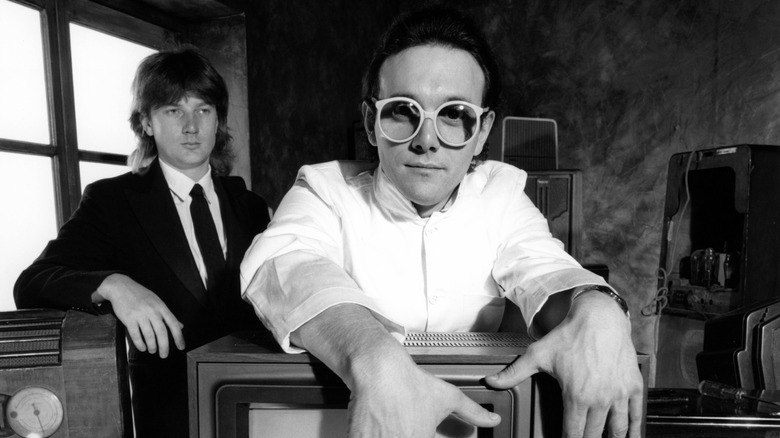
One strange thing from the early days of MTV you may now know is that the upstart cable channel that launched with a lineup of wall-to-wall music videos didn't initially have a deep reservoir of content. The service's library consisted of about 250 videos, and most of them were low-quality or came from obscure and European acts. One such clip was for "Video Killed the Radio Star," by U.K. synth-rock band Buggles. Characterized by cheap costumes and sets to emphasize a futuristic, science-fiction theme, the video told the story of the song, about how an old time radio icon saw their career end due to the march of new media that made them and their venue obsolete. It was the first ever single by Buggles, and while it reached No. 1 in Britain in 1979, it just barely qualified as a hit in the U.S., peaking at No. 40.
By the time MTV hit the air on August 1, 1981, "Video Killed the Radio Star" was a passé piece of goofy new wave, and by virtue of its moderate success, probably mostly forgotten by potential viewers of the new network. Nevertheless, the song's themes were so on the nose with MTV's aims that executives selected the video to be the first one they ever broadcast.