

The Best Album Cover From Every Year Of The '70s
There was no shortage of intriguing album cover art during the '70s. Every year brought more inventive artistry in the form of illustration, graphic design, and photography, with the most exciting covers coming from some of the biggest bands in the industry. But even smaller acts ended up contributing some of the best '70s album covers with each passing year within the decade.
A catalog of fantastic LP covers, the best of each year's offerings, reveals how thoughtful the minds behind album cover design were in the '70s. Our picks for the best ones feature images that make you think a bit and view the world a little differently. While many showcase an element of the music the covers represent, others are standalone creations that are more attention-getting than explanatory of the band or their songs. But each one is a masterpiece that enriches the decade's gallery of album cover art.
1970: Funkadelic — Funkadelic
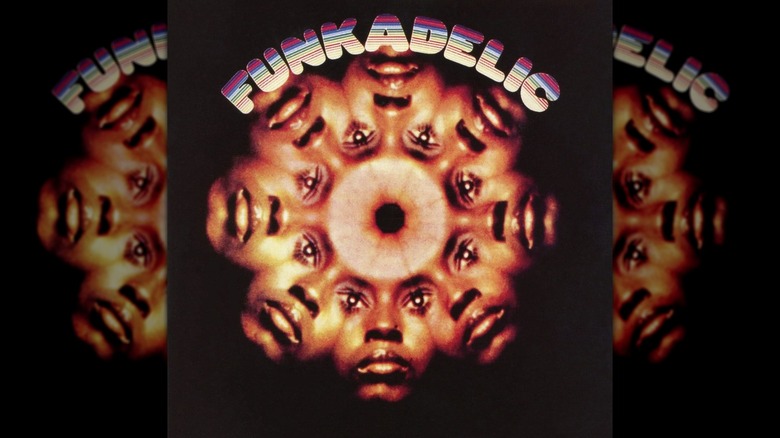
If you're going to announce your album as a mind-blowing slab of psychedelic funk, conjuring a mandala made of faces like Funkadelic did on their self-titled debut album is the way to do it. This cover is slightly upsetting yet wildly intriguing and tells you everything you need to know about the musical head trip waiting inside the sleeve. The groovy 1970 photo kaleidoscope is just the thing for portraying the open-minded soul this groundbreaking band was tapping into.
1971: In Search of Space — Hawkwind
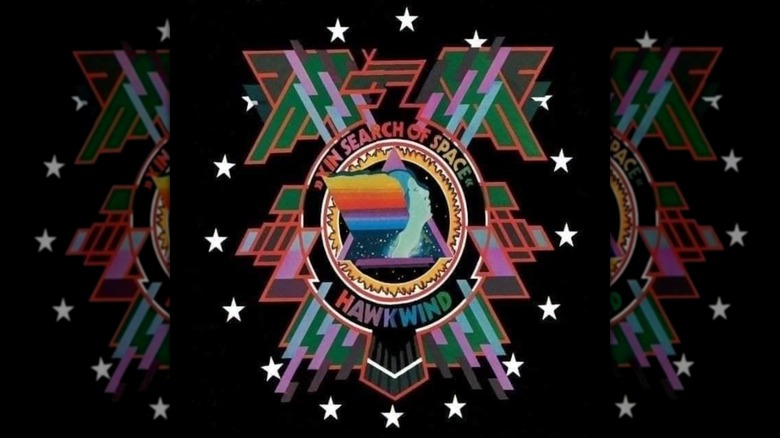
The graphic precision and engaging structure of the cover illustration on "In Search of Space" by progressive hard rock act Hawkwind is a study in how a crisp, clean image can elevate an album cover. Executed by designer Barney Bubbles, the 1971 frontispiece is die cut on the LP version, with two gatefold halves that interlock seamlessly at the center. It combines space-age cosmic wonder with classic-era art deco impressions and compact linear composition, becoming an art piece unto itself.
1972: Pure Prairie League — Pure Prairie League
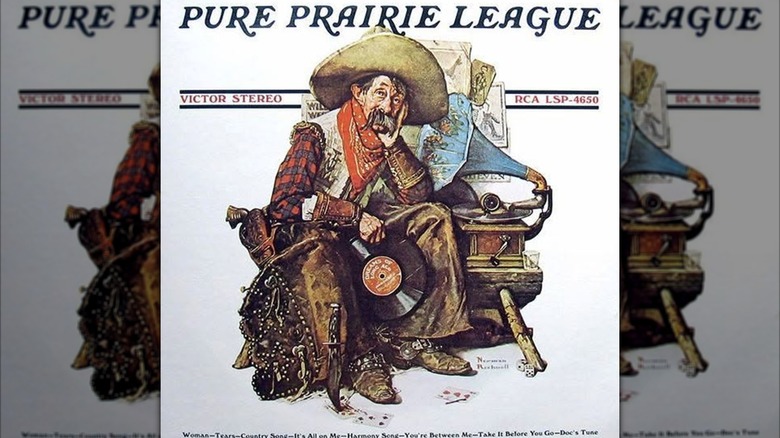
For a country rock-defining band steeped in down-home Americana like Pure Prairie League, pairing an actual Norman Rockwell image with the Saturday Evening Post font was supreme marketing in 1972. Everything in the image announced the band's spirit: nostalgic country comfort with a cozy whiff of early 20th century charm, with a cowboy in full costume blissing out to his phonograph records. Seeing this cover tells you all you need to know about the band and its sonic aesthetic.
1973: Rock & Roll — Foghat
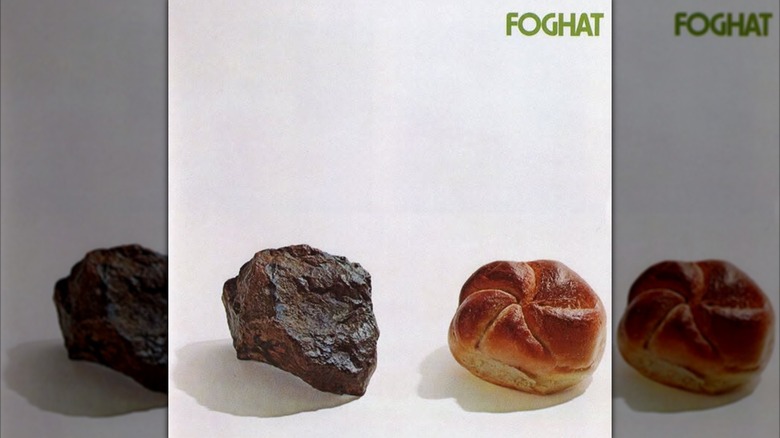
Okay, so the cover of the album known as "Rock & Roll" by Foghat is a visual pun — a photo of a rock next to a roll — that has no verbal clarification. But that's the sort of cheeky marketing fun and artistic novelty that makes record buyers stop and take notice for longer than they would with more obvious cover concepts. In the few seconds it takes to work out what the image means and that it also serves as the title of the 1973 album, your curiosity has been piqued.
1974: Relayer — Yes
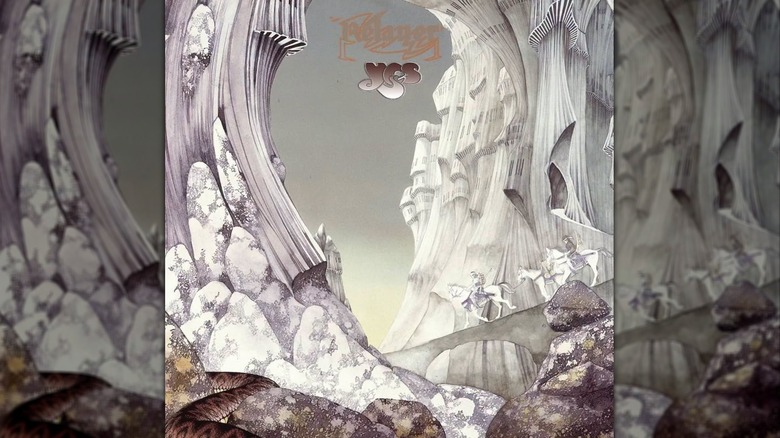
Yes had an apt partner in Roger Dean, the artist who helped create the band's visual identity. Dean designed otherworldly landscapes like the one for the "Relayer" cover that gave dimensional reality to the band's prog-rock creations. The sandstone structures and horseback figures in this illustration are standalone art that make the coolest album cover of 1974, hands down. There would be many more images on Yes albums to come, as well as other bands Dean and his brother, Martyn, worked on as their hallmark style became associated with the prog rock scene.
1975: Toys in the Attic — Aerosmith
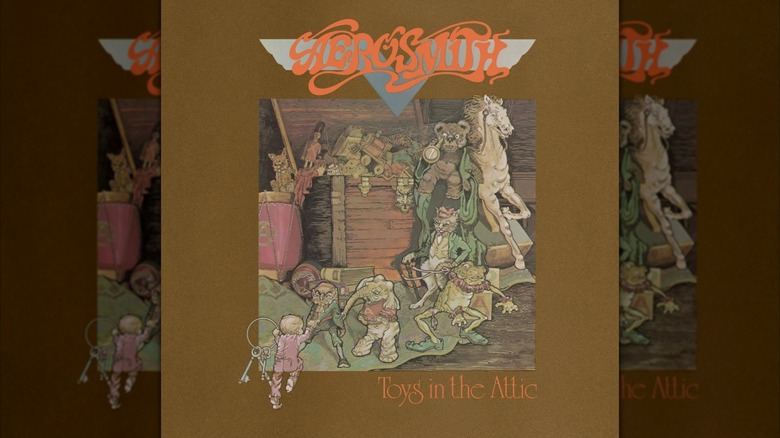
It may feel a bit too on the nose, but the cover of Aerosmith's 1975 album "Toys in the Attic" is a work of illustrational brilliance, thanks to the art of Ingrid Haenke. The storybook feel of sinister playtime figures making their escape adds even more darkness to the Maurice Sendak-like characters and gives art and music fans much detail to gaze upon. It may seem counterintuitive for a hard-rocking band like the one Steven Tyler and guitar great Joe Perry led, but it was representative of the 1975 rock album spirit, and it distinguishes this LP from those with less imaginative cover art.
1976: Presence — Led Zeppelin
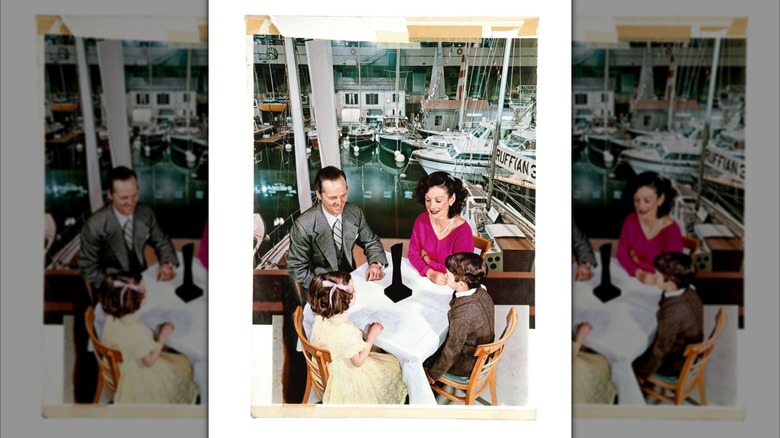
With the cover art for "Presence," Led Zeppelin brought their fantastical sensibilities into the modern world using an anonymous nuclear family from the 1950s. Its members are seated around a table near a window view of a harbor filled with sailboats, but their collective gaze is centered on a mini monolith resembling the black obelisk from Stanley Kubrick's landmark film "2001: A Space Odyssey." It's a conversation starter that stands entirely separate from the music on the record, and a masterwork of creepy curiosity that gave 1976 a killer album cover.
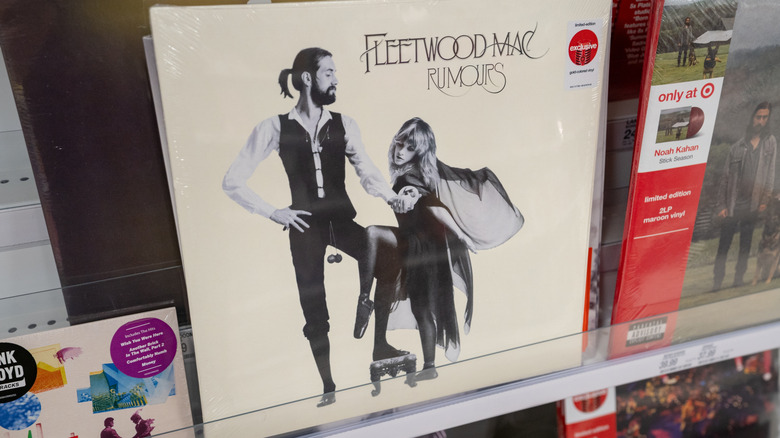
1977: Rumours — Fleetwood Mac
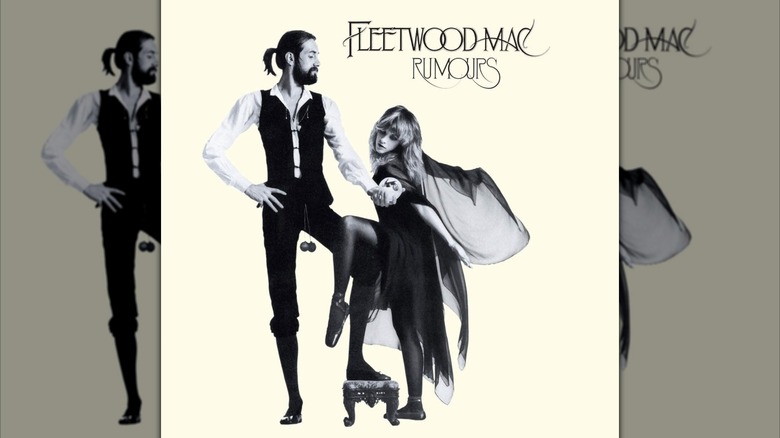
The eerie mystique of Stevie Nicks dancing for a statuesque Mick Fleetwood gives "Rumours" one of Fleetwood Mac's most iconic cover images. The chronicle of romantic anguish contained within the songs isn't even hinted at; the chiaroscuro photo feels simultaneously gothic, pagan, and regal. A soon-to-be-skyrocketing band at the onset of their turbulent allure picked a time-honored winner with this 1977 set-up. The evocative figures still captivate decades later, even after thousands of plays and the heartaches the music recreates.
1978: Pieces of Eight — Styx
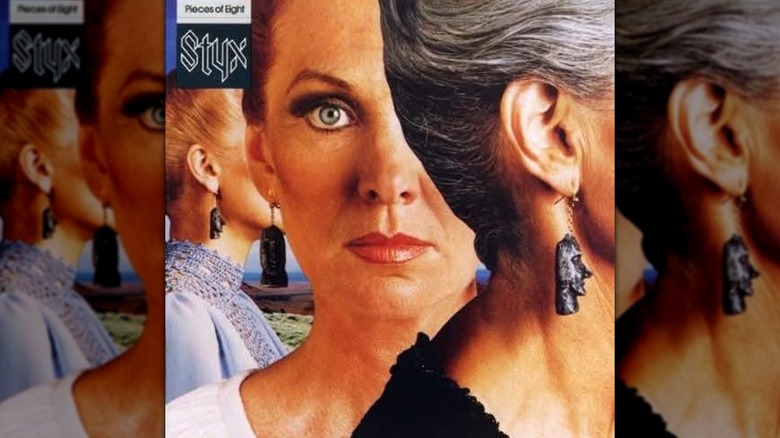
Styx chose a haunting image via well-loved album cover design studio Hipgnosis for their 1978 release, "Pieces of Eight," centering the cover illustration on the unsettling, glassy-eyed stare of a stately woman and her two equally elegant counterparts posed in differing angles. The Easter Island moai figures dangling from each woman's ear hint at the mysterious and the mystical, themes that could be swirling in the sounds we would unleash when the record finally played. It was artful, well composed, and the most alluring album cover image of that year.
1979: Breakfast in America — Supertramp
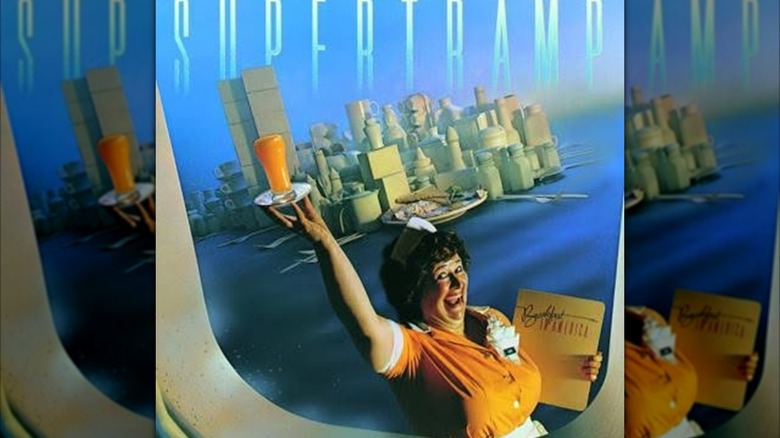
The initial impression of the "Breakfast in America" album cover from Supertramp is obvious: A colossal, smiling waitress who outsizes the NYC cityscape seen from an airplane window carries a menu and a glass of orange juice on a platter. Only when your attention shifts to the buildings in the background do you see that the whole skyline is formed of kitchen appliances and utensils. It's sheer brilliance that made for a stand-out, Grammy-winning cover in the sea of 1979 releases, courtesy of designer Mick Haggerty and photographer Aaron Rapoport.