

Born 76 Years Ago Today In England, He Went From Breeding Lab Animals To Rock Fame
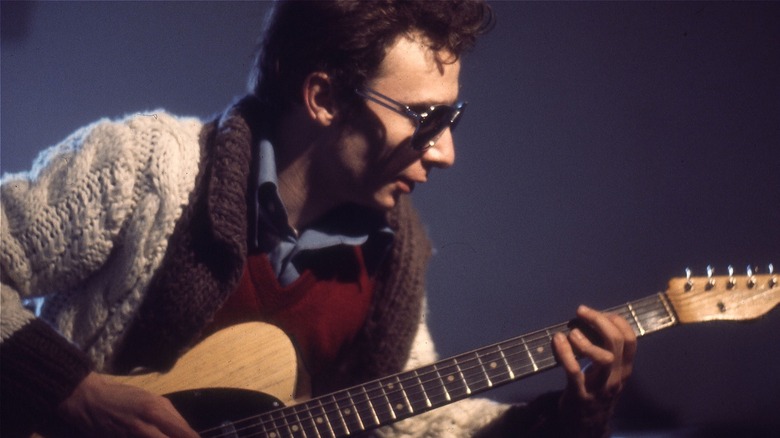
Today marks the birthday of Graham Parker, a main figure in the 1970s pub rock musical movement in the U.K. Prior to his ascendance to rock star fame and influence, Parker, born on November 18, 1950, worked a series of decidedly less glamorous subsistence jobs while he honed his musical chops and climbed his way into the mainstream.
Raised in the Surrey region of England, 15-year-old Parker started a band in 1965, playing American R&B and British rock covers. After two years of that, and convinced that brass-powered soul would supplant rock, Parker quit writing songs, playing guitar, and going to school. Figuring he ought to find something to do, the 17-year-old found an unexpected job before his rock career exploded, taking a position at a local chapter of the Animal Virus Research Institute. The job: breeding the animals to be used as test subjects.
"I think back on it now, and it just seems like a day. It was of no importance really," he told rock magazine ZigZag in 1977. Decades later, to the International Times, Parker characterized the stint differently, calling it "sickening to me and I couldn't see anything good about staying there." So, Parker, still in his late teens, moved to Guernsey in the Channel Islands. There he concentrated on playing guitar, the craft of songwriting, and performance, all of which would benefit him in the mid-1970s and beyond.
Graham Parker helped popularize pub rock in the 1970s
Pub rock was a subgenre that was both precursor to and concurrent with punk, new wave, and post punk. It shared with those variants the idea that rock ought to be as simple, fun, and edgy as it had been back in its early days of the 1950s. Bands largely performed in small, intimate, community-minded U.K. bars, or pubs, and it's in this environment where Graham Parker flourished, developing a style that incorporated folk themes and often caustic and biographical lyrics. Similar to the pub rock supergroup Rockpile, who released a single album and then vanished, Parker assembled luminaries of the scene and sound to form the Rumour, his band on his first, widely praised albums such as 1976's "Howlin' Wind" and 1979's "Squeezing Out Sparks."
In Britain, Parker and the Rumour scored a few moderate hits, including "Hold Back the Night" and "Hey Lord Don't Ask Me Questions." In the U.S., Parker is technically a one-hit wonder who deserved more than 15 minutes of fame, as his 1985 single "Wake Up (Next to You)," recorded with his later backing band the Shot, is his only song to appear in the Top 40.