

5 Disco Singers Whose Voices Were More Famous Than Their Names
When disco ruled the pop music world in the second half of the 1970s and a little into the early 1980s, it gave us dozens of disco songs that still put us in a dancing mood today. Those groovy classics were performed by groups and studio collectives that didn't last all that long due to the ephemeral nature of disco, or because the project was all about the band or the producer. The result? Disco is characterized by singers who took wonderful singles to the top of the charts and who made music history, but who never quite became household names.
It's baffling, and indicative of the messed up history of disco, that some of the genre's biggest stars remained largely unknown even as their singles climbed the charts, pumped from radios, and got the discotheques thumping, and as they performed those songs live and on television. The time of disco was just too brief to create many lasting careers, and so the gifted singers associated with Chic, the Village People, A Taste of Honey, Rose Royce, and the Weather Girls never got proper credit or fame.
Alfa Anderson and Luci Martin
Chic made elegant and crisp disco that brought in elements of soul, funk, and rock, and their instantly recognizable sound employed a precise formula. Nile Rodgers added his propulsive guitar to Bernard Edwards' melodic bass, there were plenty of keyboards and jumpy strings, plus vocals reminiscent of '60s girl groups with their harmonizing and complementary nature.
Whether they were whispering the verses on 1978's "Le Freak" and 1979's "Good Times" or belting out the anthemic, everybody-come-together choruses on those same songs, Alfa Anderson and Luci Martin worked their voices close together to create a rich, stereo effect that put a human touch on Rodgers' complex backing tracks. Along with those dual No. 1 hits and disco all-timers, Anderson and Martin shared singing duties on a few other instructional and encouraging hit singles in the waning days of glitzy disco, like "I Want Your Love" and "Rebels Are We."
Victor Willis
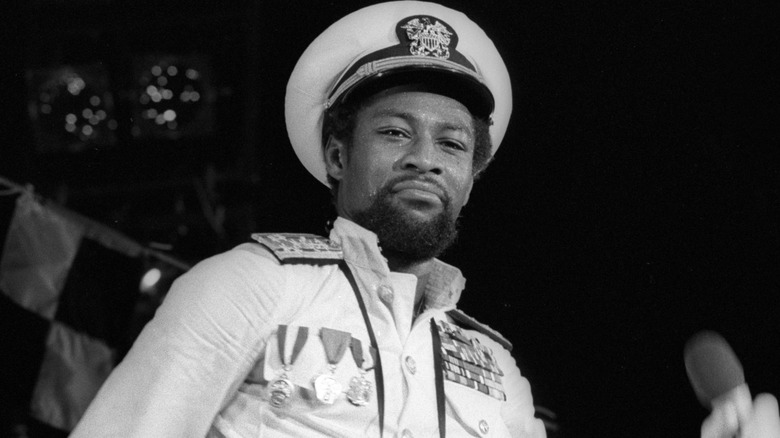
For a musical act, a visual or philosophical gimmick can be a double-edged sword. Presenting each of its members in the garb and persona of a different manly archetype certainly made the Village People stand out from all the other disco vocal groups and helped them become one of the most memorable acts of the 1970s. But if the public is given such a shorthand, it's less likely they'll ever learn the real names of the singers involved. The Village People are associated with massive disco hits like "Y.M.C.A.," "In the Navy," and "Macho Man." Their personnel are the biker, the construction worker, the soldier, the cowboy, the warrior, and the police officer.
In the 1970s, the Village People's leader, who sang with friendliness and enthusiasm as he invited listeners to a community center, the military, and a macho lifestyle, was Victor Willis, aka the one dressed like a cop. His voice has been heard at countless parties and receptions over the past five decades on the Village People's many popular dance floor favorites. Willis first left the group in 1980, while the band made the movie "Can't Stop the Music," but a solo career never materialized, particularly after the imminent demise of '70s-style disco.
Janice-Marie Johnson
In 1971, years before the disco onslaught, A Taste of Honey formed as an R&B group who performed on U.S. military bases around the world. Their recording career began in 1978, by which point A Taste of Honey had embraced disco. Their first hit was a showcase for band co-founder, bassist, and lead singer Janice-Marie Johnson, "Boogie Oogie Oogie." Johnson's performance is smooth, engaging, and gently insistent as she implores any shy listeners to get on the dance floor and do some disco, or rather, to boogie oogie oogie. To bookend her soul-based singing performance, Johnson also turns in a thrilling extended bass solo.
A Taste of Honey's time in the spotlight didn't last long, thus diminishing Johnson's impact. A '70s Grammy winner who fell victim to the best new artist curse, the band only had one more hit, a non-disco cover of the early '60s hit "Sukiyaki" that peaked at No. 3 in 1981.
Gwen Dickey
The name of disco and R&B act Rose Royce sounds like it could belong to one person, perhaps the female vocalist who brought personality and soulful acrobatics to late '70s dance floor fillers and Hot 100 hits like "Do Your Dance – Part 1," and "Car Wash," a 1977 No. 1 single and soundtrack cut from the film of the same name. But Rose Royce wasn't the name of a singer — it was that of a nine-member group. So many people thought the wrong thing that it overwhelmed the individuality of Rose Royce's lead singer, Gwen Dickey. Even more confusingly, during Rose Royce's height of fame, she sang under the name Rose Norwalt.
On Rose Royce's biggest hit, "Car Wash," Dickey leads the proceedings, taking charge of the sprawling band with a series of tasks at hand: Explain the plot of a movie, get people dancing, and express a lot of character through her voice. Dickey does all of that very well, and beyond Rose Royce, she had a moderately successful solo career in the U.K.
Martha Wash
Disco didn't die in the 1980s — it persisted under different names, like dance and club music. Make no mistake: 1982's "It's Raining Men" is a disco song, and the Weather Girls are undeniable disco divas. Back in the 1970s, the Weather Girls were known as Two Tons o' Fun and they were the backing vocalists for disco star Sylvester. After a name change and breaking away to record on their own, the Weather Girls released "It's Raining Men," an extraordinarily randy tune about eligible bachelors falling out of the sky to the delight of the world's loneliest women. Mixing classic R&B with disco beats and instrumentation, the song shows off the gospel-influenced vocals of singer Martha Wash, who passionately sells what a lesser interpreter of songs might make ridiculous.
It's surprising that someone with such a remarkable voice could stay anonymous, but after "It's Raining Men" became the Weather Girls' only Hot 100 charting single (it peaked at No. 46), Wash made a career out of improving other people's dance music. As a session singer, Wash sang on latter-day disco smashes like "Everybody Everybody" by Black Box and "Gonna Make You Sweat (Everybody Dance Now)" by C&C Music Factory.