

The Story Behind Fleetwood Mac's Rumours Album Is Pretty Wild
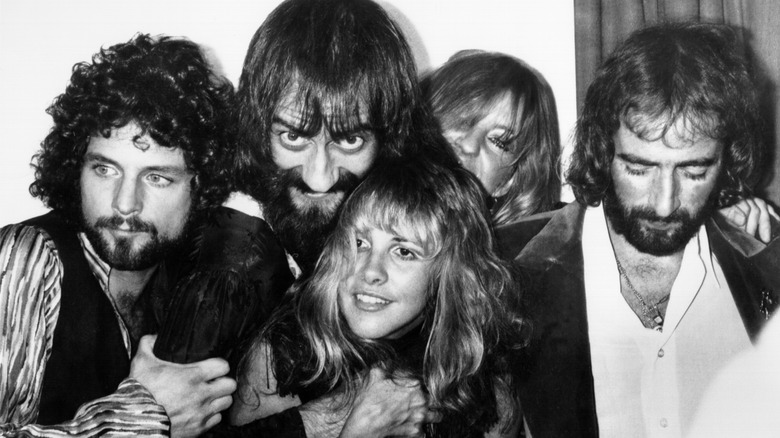
The 1970s is littered with artists we completely forgot about, but it also saw some incredible albums from the likes of Joni Mitchell, David Bowie, the Ramones, and Pink Floyd. Among the assortment of '70s riches is Fleetwood Mac's "Rumours," a record infamous for the pressure-cooker conditions under which it was created. But the cracks in the band's foundation were present long before its band members stepped into Sausalito's Record Plant to start work on "Rumours" in February 1976.
Created in 1967, Fleetwood Mac's original line-up comprised guitarists Peter Green and Jeremy Spencer, along with the only two constants of Fleetwood Mac, bassist John McVie and drummer Mick Fleetwood. They scored a hit a year later with "Albatross," but were dealt a blow by Green's decision to quit in 1970, followed by a revolving door of members coming and going. In 1974, Fleetwood asked self-taught guitarist and singer Lindsey Buckingham to join the band, and his partner, singer-songwriter Stevie Nicks, as long as Christine McVie agreed to the latter.
She did, and the combination of McVie, her husband John, Fleetwood, Buckingham, and Nicks went on to make the 1975 album "Fleetwood Mac" (dubbed "The White Album" by fans). It took its time but eventually became a resounding (and much-needed) hit, while Nicks' single "Dreams" topped the Billboard Hot 100. All they needed to do now was repeat the feat. However, before a note was played, fundamental problems were beginning to surface that would turn the recording of "Rumours" into the stuff of legend.
Stevie Nicks and Christine McVie escaped the Sausalito riot house

By September 1976, when the album "Fleetwood Mac" had started to take off, the band had already started work on the next disc, "Rumours," decamping to the Record Plant recording studio in Sausalito, near San Francisco. The Record Plant offered the bandmates a house to stay in for the duration, but it was far from ideal. Christine McVie had taken to Stevie Nicks during their first meeting at a Mexican restaurant, describing her as "a bright, very humorous, very direct, tough little thing" (via Music Legends), but as the only women in the group, they were unimpressed by their male colleagues' behaviour. Calling it a "riot house," Nicks told Uncut, "There were girls everywhere and everybody was completely drunk the whole time.
After just one night, McVie and Nicks decided they couldn't stay there, and the pair rented their own apartments in Sausalito that were next door to each other. The womens' closeness would later be reflected inside the "Rumours" album, which included a photo of them hugging.
Christine and John McVie's divorce
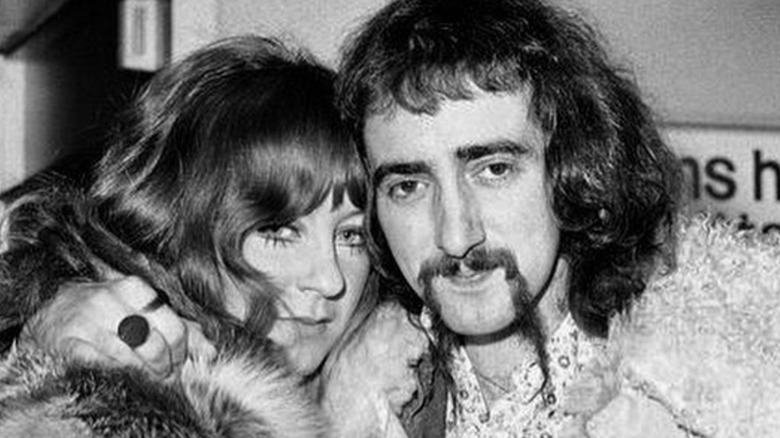
While Christine McVie bonded with Stevie Nicks, her marriage to husband John McVie was in its death throes. The pair tied the knot in 1968 and were initially very happy. But after occasionally working as a session musician with the band, Christine and Fleetwood Mac became more of a permanent gig following Peter Green's departure in 1970, and the McVies' relationship began to change. When the romance of marrying a music star had rubbed off, what lay beneath was uglier than she expected.
Christine told Rolling Stone in a 1977 interview that the band drank heavily, including John, who used it as a coping mechanism. She described him as, "... not the most pleasant of people when he's drunk. Very belligerent. I was seeing more Hyde than Jekyll." She broke up with him during their 1976 tour, and although they tried to continue working together, things became even more strained when Christine began an affair with the band's lighting director, Curry Grant.
The romance inspired her to write "You Make Loving Fun," a song about Grant that made it to the "Rumours" album, which — of course — John had to perform when they toured. In Lesley-Ann Jones' 2024 biography "Songbird: An Intimate Biography of Christine McVie," the musician said: "I disliked my husband intensely for what he'd become, for what he was doing to me and to our marriage." Escape was not an option, as McVie explained the band had become everyone's mistress: "It wasn't going to let us go."
The fracturing of Lindsey Buckingham and Stevie Nicks
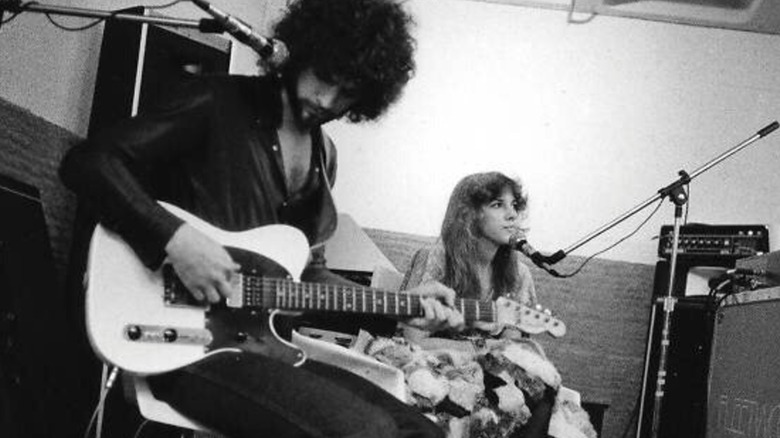
The McVies weren't the only couple among Fleetwood Mac's 1970s line-up when "Rumours" was made. Lindsey Buckingham and Stevie Nicks first met in 1966 in San Francisco, but it would be another couple of years before they started singing together in the band Fritz. The outfit opened for the likes of Jimi Hendrix and Janis Joplin — the latter having a profound influence on Nicks — but success eluded them.
After Fritz disbanded in 1971, Buckingham and Nicks moved to LA, where they released a self-titled album that went nowhere. They scraped by on Nicks' wage as a Beverly Hills waitress, until Mick Fleetwood came into their lives. Buckingham and Nicks' songs like "Rhiannon" helped make the "Fleetwood Mac" album a hit, but the pair's relationship was hanging by the slenderest thread by the time they arrived at the Record Plant in Sausalito to record "Rumours."
At around the same time, Nicks told Buckingham their relationship was over, making it easier for her to find her own place away from the studio. Buckingham admitted in a Mojo interview in 2012 that he and Nicks "had been having problems," but moving out with Christine McVie "was a catalyst to speed up what would have happened to Stevie and I anyway." The implosion of their relationship would leave an indelible mark on the "Rumours" album.
Mick Fleetwood's marriage collapse (and brief affair with Stevie Nicks)
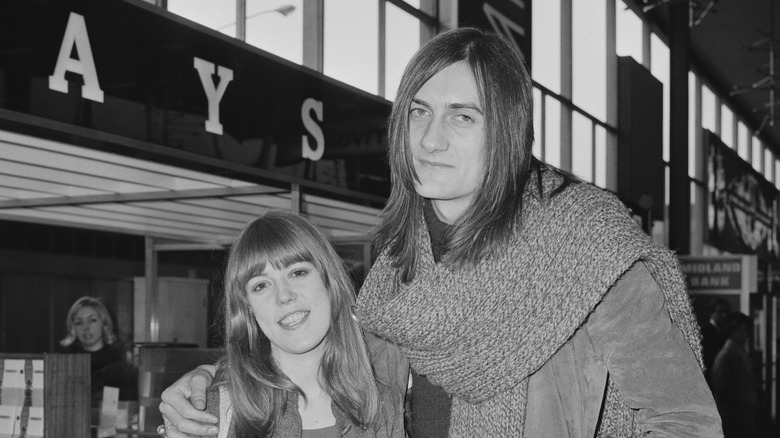
Drummer Mick Fleetwood was one of the founding members of Fleetwood Mac, and while he did his best to keep everyone on track while recording "Rumours," he wasn't blind to their relationship problems – or immune from his own. During the 1960s, he had an on-off romance with Jenny Boyd (sister of Pattie Boyd, who famously wed George Harrison and Eric Clapton).
They married in 1970, at a time when Fleetwood Mac — in its British blues band iteration — was trying to raise its profile in the United States. Fleetwood's focus on keeping the band together after Peter Green quit the band left Boyd increasingly lonely, but what she did at her lowest ebb would help make musical history. She began an affair with then-band guitarist Bob Weston, who had replaced Danny Kerwin. When Fleetwood found out, he fired Weston and cancelled a U.S. tour.
"It was a poignant moment," Fleetwood told The Telegraph in 2013. "It could have exploded and imploded the band right there. We could have got half-way through and everyone tell everyone to f*** off. But because we kept going, we emotionally crippled people, we've carried this with us ever since." The problems didn't end with his cratering marriage. During the recording of "Rumours," Fleetwood went on to have a brief fling with Stevie Nicks, twisting the knife as far as Boyd was concerned. "For years I didn't talk to her," Boyd admitted to The Guardian.
The emotional toll of recording Rumours
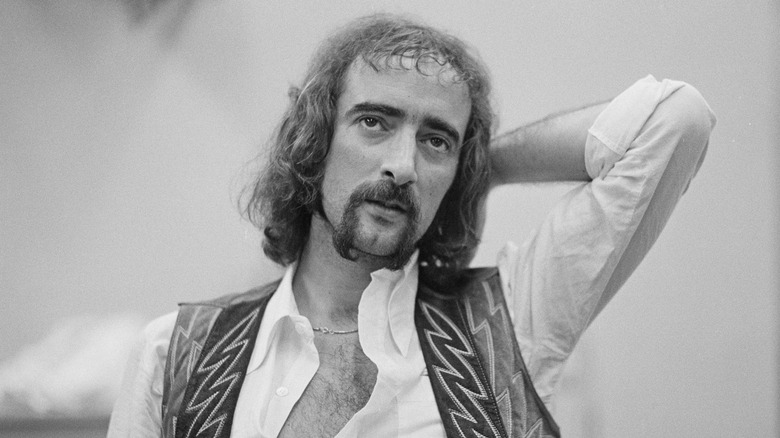
Turning a handful of songs into a great album is hard work, but Fleetwood Mac took that to a whole new level recording "Rumours." At the Sausalito recording studio, producers Ken Caillat and Richard Dashut realized this was going to be no cakewalk. Caillat remembered seeing Christine McVie get angry at John McVie, Lindsey Buckingham and Stevie Nicks bickering, and Mick Fleetwood almost crying after a phone call to his wife. "I started to think it was contagious," he told Mojo.
Instead of being intimidated, Caillat urged everyone to use the album as a way to exorcise their emotional demons. That alone might have produced some exceptional music, but he reckoned without an "obsessed" Fleetwood. He demanded 12-hour work days, no matter how late they finished. Caillat also dismissed the apocryphal tale of Fleetwood throwing out the studio clocks, adding it was so gloomy inside it was impossible to know the time.
The band spent hours focusing on minute details, from tuning a piano to the search for a particular sound from a pair of bass drums tied together. "I used to sit there and read, crochet or draw while all this was going on," Nicks recalled. Against the tense emotional backdrop and the pressure to deliver another hit album, it's no surprise that Fleetwood was said to have described (via The Sydney Morning Herald) the "Rumours" recording as "an emotional holocaust."
Drugs, partying, and the humming signal
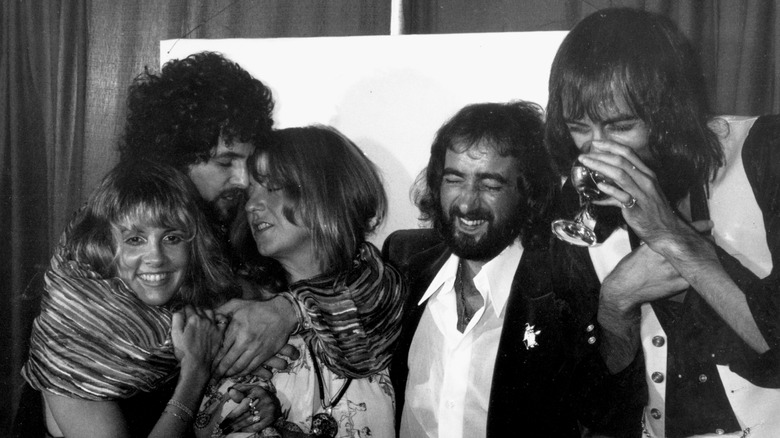
"There were fights, breakups, drinking, drugs ... We all indulged in substances," producer Ken Caillat told Music Radar in a 2012 interview about recording "Rumours." In the years after the album was released, Mick Fleetwood's appetite for cocaine would become legendary, and he was dubbed "The King of Toot." But in 1976, the drug was essential for keeping the fractious members of Fleetwood Mac working.
As well as Fleetwood's demands for long days and the need to block out the emotional stresses and strains, the band also loved to party until the small hours. Cocaine made sure they could continue to make music. A velvet bag for communal use sat at the mixing desk, and Caillat remembered swapping the drug for talcum powder, enraging Fleetwood and John McVie when he poured it all over the floor.
They even worked out a signal for when a hit was needed: someone would start humming a tune, such as the "Chariots of Fire" theme. At the time, none of the team thought the drug-taking was out of the ordinary. Fleetwood told Classic Rock the band members were "lightweights" compared to other artists. "We were just boozers and mounds of cocaine."
If you or anyone you know needs help with addiction issues, help is available. Visit the Substance Abuse and Mental Health Services Administration website or contact SAMHSA's National Helpline at 1-800-662-HELP (4357).
Songwriting as therapy
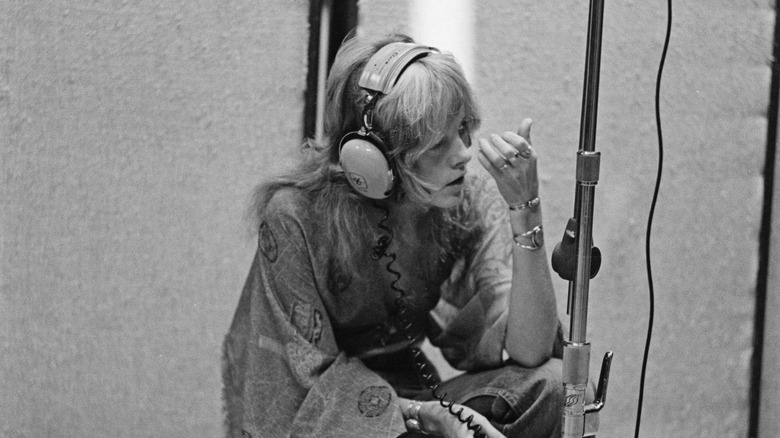
It's impossible to listen to "Rumours" without hearing and responding to the raw emotions that are threaded through the album's lyrics. In 1977, Stevie Nicks told Rolling Stone, "All the songs that I wrote except maybe 'Gold Dust Woman' — and even that comes into it — are definitely about the people in the band." In a later Mojo interview, Nicks admitted the album pulled her and Lindsey Buckingham together when their relationship was in ruins.
Christine McVie also found songwriting inspiration for "Rumours," and not just from her break-up with husband John McVie. She asserted the song "Oh Daddy" was about the collapse of Mick Fleetwood's marriage to Jenny Boyd, though fellow band members thought it was based on her romance with Curry Grant, while her track "Don't Stop" offered an upbeat message amid the carnage of the band's personal lives.
Looking back at that turbulent but artistically productive period, Fleetwood told Dave DiMartino in 1997, "The reality is that we never lost, there's a real underlying love, a true love that is fairly unique, in this band." Nicks, speaking to the same reporter, summed it up even better. "If we'd been a big healthy great group of guys and gals that just were, you know ... Then none of those great songs would've been written."
Lindsey Buckingham's diss track to Stevie Nicks
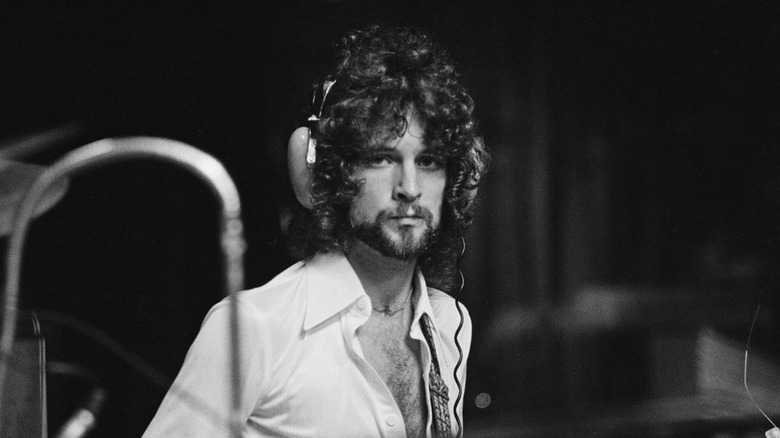
Lindsey Buckingham's feelings about Stevie Nicks didn't so much seep into his song "Go Your Own Way" as scream them from a 50-foot building. "You had to compartmentalize the work and the personal drama so you could get the work done, but the drama seeped into the work," he told Paste in 2021.
In a 2018 episode of the "Song Exploder" podcast, he said the opening line, "Loving you isn't the right thing to do," wasn't thought out, but simply "the raw expression of the emotion behind the song." He lashed out at Nicks with the lyric "Packing up, shacking up's all you wanna do," but it wasn't his only diss track that made it to the "Rumours" album: "Second Hand News" would cause just as many problems. Buckingham kept the lyrics from Nicks as long as possible, but his pain and anger were clear for all to hear, especially in the lines: "One thing I think you should know/ I ain't gonna miss you when you go."
The song prompted a furious Nicks to storm out of the studio. In response, Nicks poured out her heart about the end of her relationship with Buckingham in "Dreams." While he was a wounded animal, she took a longer view that, in the end, everything would work out okay for the band, if not for them as a couple. The song went on to become a huge hit, despite the odds.
Christine McVie wrote about her affair
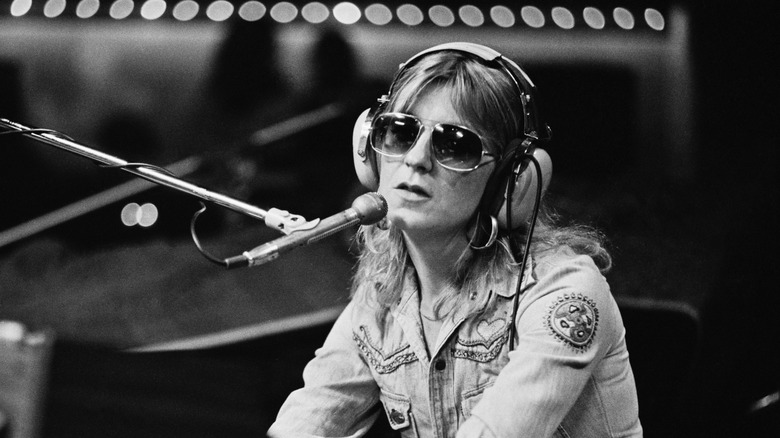
In 1976, when Fleetwood Mac were recording "Rumours," Christine McVie's marriage to John McVie had been on shaky ground for at least three years. She had previously had a fling with sound engineer Martin Birch, but the break-up, when it came, was for the sake of her mental health. "It was either that or me ending up in a lunatic asylum," she told Rolling Stone in 1977. Ironically, in the same interview, she also said, "I don't really write about myself, which puts me in a safe little cocoon."
"Rumours" changed that. One of its most popular songs was "You Make Loving Fun," written about Christine's then-lover, Curry Grant, with whom she lived for a year. He made her laugh at a time when she and John were barely on speaking terms, telling Uncut they were "as cold as ice to each other." According to "Making Rumours," co-written by Ken Caillat, Christine claimed the song was about a dog, rather than Grant, to avoid any ugliness with John.
"Wherever John was, he [Grant] couldn't be. There were some very delicate moments," she admitted to Uncut. In revenge, John spent time with lots of groupies to try to make Christine jealous. Decades later, "You Make Loving Fun" is regarded as one of her and Fleetwood Mac's finest songs.
Lindsey Buckingham got violent with a producer
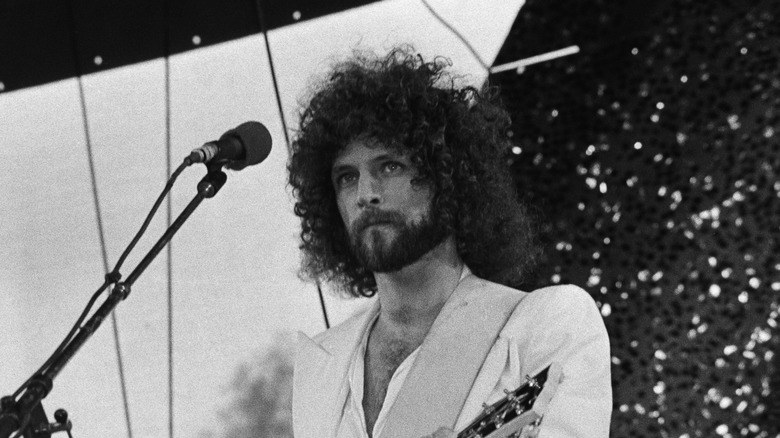
Like all the members of Fleetwood Mac, Lindsey Buckingham has spoken a lot about the emotional turmoil behind the "Rumours" album. But the drama didn't just manifest itself in barbed songs, shouting matches, or the band's excessive drug-taking. Occasionally, it would explode into physical violence, and one of the most memorable incidents involved Buckingham. When it came to recording the tracks the band weren't quite so fond of, the simmering tension would boil over.
One of the most notorious was "You Make Loving Fun," which would always rub Buckingham up the wrong way. In his co-written book, "Making Rumours," Ken Caillat recalled how the guitarist demanded successive takes, each one recorded over the other, and seemed frustrated when Caillat double-checked. When Buckingham said he preferred an erased version and was told it was gone, he flew into a rage. He put his hands around Caillat's neck in what the latter called a "stupid" move, only to be quickly pulled away by other people. Buckingham later apologized.
Caillat wasn't the only person to experience Buckingham's quick temper. While his former girlfriend Stevie Nicks bonded with Christine McVie, there was no such solace between Buckingham and John McVie. Both men squabbled in the recording studio more than once, and in one infamous incident, John threw a vodka bottle at his bandmate.
The tape decay problem
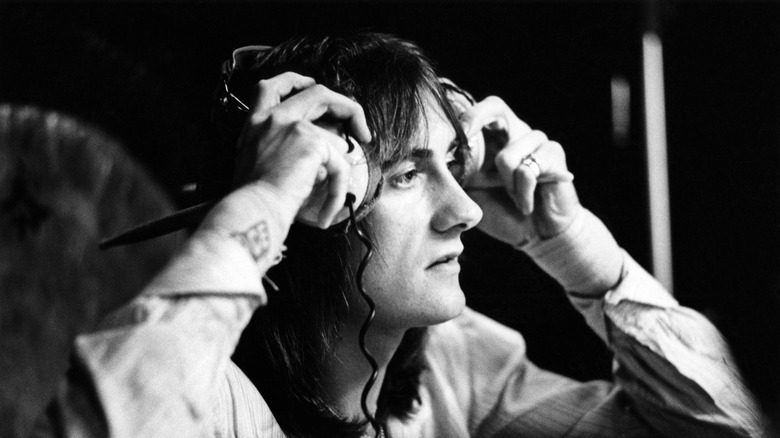
Digital recording wasn't a glimmer in anyone's eye in 1976, when Fleetwood Mac were laying down the tracks for "Rumours." Like all other singles and albums at the time, everything was recorded onto reel-to-reel tapes. Although the band's Sausalito sessions were blighted by plenty of very human problems, technical issues also threw their fair share of spanners in the works, and one of the biggest was tape decay.
Overdubbing or rerecording onto tape was a common practice for many bands, but if done too often, the iron oxide would start to degrade and damage the recording. This was the nightmare that unfolded for Fleetwood Mac's band members after they rewound and reused their master tape too many times. Although they had 24-track back-ups of their basic songs, all the new parts had to be painstakingly woven in.
That came after a machine, dubbed "Jaws," mangled part of the band's masters when it chewed them up, forcing producer Ken Caillat to "dupe up and splice things back in about three times," as Mick Fleetwood told Discoveries in 2004 (via Go Your Own Way). Throw in a piano that refused to be tuned, and the need to restring Lindsey Buckingham's guitar every 20 minutes for "Never Going Back Again" — only to discover he'd played it all in the wrong key — and it's easy to see why "Rumours" was a strained, technical affair.
The enduring legacy of Rumours

Fleetwood Mac were under immense pressure to deliver a successful record, and it knocked it out of the park with "Rumours," which became the fastest-selling album of all time when it hit stores in 1977. It took home the Album of the Year Grammy in 1978, and 25 years later, was inducted into the Grammy Hall of Fame.
"Rumours" has sold over 40 million copies globally and was still on the Billboard 200 in early 2026. Fans weren't the only ones to snap it up. Many critics responded warmly to the album, with The New York Times describing it as "all and all, a delightful disk," and the passage of time has helped to burnish that reputation. In 2012, "Rumours" producer Ken Caillait told CNN it was "the perfect ride for the perfect time."
The cultural impact of "Rumours" is just as impressive. It has inspired generations of musicians and artists, with successive generations finding the album through movies and TV, their parents, or social media. As Lindsey Buckingham told Dan Rather in 2025, because the facts about Fleetwood Mac and what they had lived through while recording "Rumours" were so well-known, there was "an investment in ... not just the music but in the people who made the music."