

12 Wild Things About Barry Manilow You May Not Know
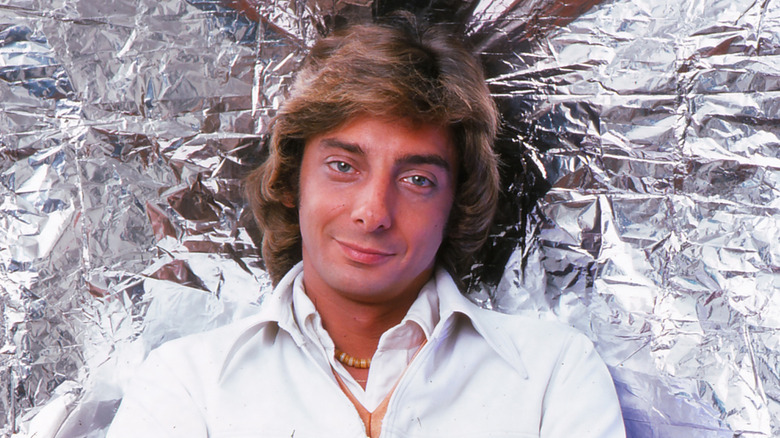
When it comes to smooth, catchy pop songs, few performers can match Barry Manilow's success, yet even this music industry titan has some lesser-known facts. During his 1970s heyday, Manilow charted three No. 1 hits — "Looks Like We Made It," "I Write the Songs," and "Mandy" — carving a unique path that has continued successfully as the decades passed. In fact, Manilow can boast 28 entries on the Billboard Hot 100, including 11 top-10 hits. Meanwhile, he's also become a seasoned performer. A concert veteran, Manilow has enthralled millions of fans — aka "fanilows" — with his live act, and it speaks volumes that he's continued to remain on tour well into his 80s.
One of the best-known entertainers in the world, Manilow has remained a man of many facets. Truly, there's a lot we know about this multi-talented multi-hyphenate, but from his first surprising instrument to a legendary fan and a chance meeting with Bob Dylan, there are still some wild things about Manilow that average folks may not realize.
The first instrument he learned to play was the accordion
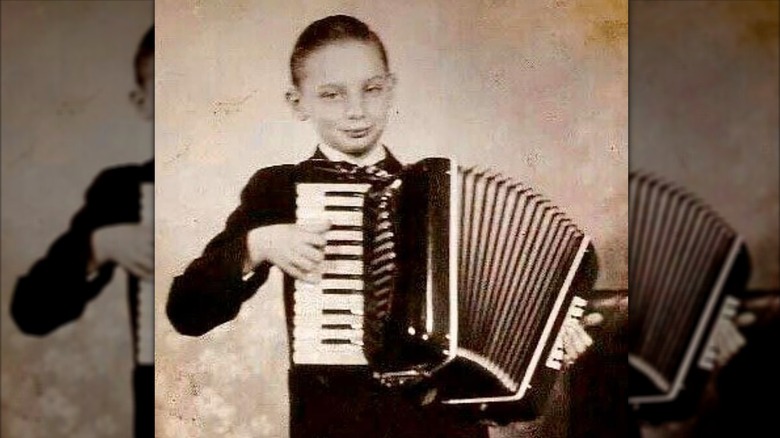
Whenever Barry Manilow takes to the stage, fans are used to seeing him sit down at a grand piano to accompany himself as he regales audiences with a selection of his hits. Piano, however, wasn't the first instrument that he learned how to play. Growing up in Brooklyn, Manilow was just a youngster when he began taking accordion lessons.
For Manilow, learning to play the accordion was a cultural rite of passage. "I was a real musical kid," recalled Manilow in an interview with the Television Academy, explaining that children of Jewish and Italian heritage who demonstrated musical ability were typically steered toward that particular instrument. "So they stuck an accordion in my 11-year-old hands, and I was good at it," he declared. "It's a squeaky, old-fashioned instrument, but I got a lot of good things out of playing that accordion."
While Manilow has been known to occasionally trot out an accordion at one of his shows, he didn't always appreciate the instrument. "I hated the accordion, he told The Canadian Jewish News, while pointing out that it proved to be a gateway to the piano. "But when I played the piano, I knew music would be my passion and my ticket out of Brooklyn," he added.
He got his start backing Bette Midler in a bathhouse
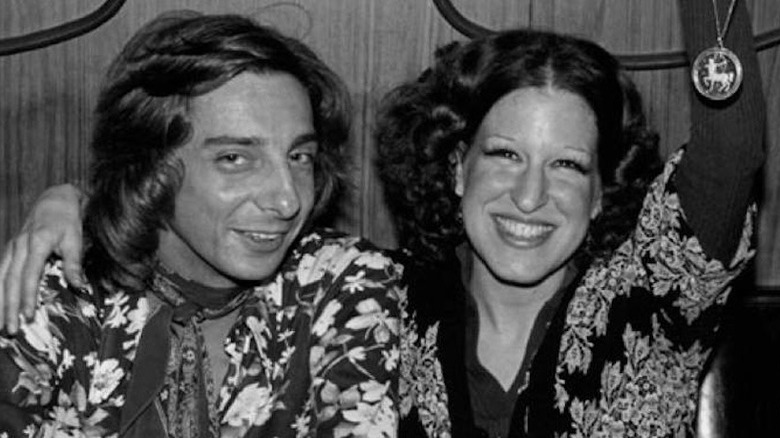
Barry Manilow was in his 20s when he met aspiring singer Bette Midler. He became her musical director, accompanying her at what is arguably one of the more unique venues in musical history: the Continental Baths, a popular bathhouse in New York City where gay men would meet, mix, and often hook up. For Manilow and Midler (who performed under the moniker Bathhouse Betty), the Continental Baths proved to be their version of what Liverpool's Cavern Club had been for The Beatles.
While Midler's act — which included songs from the 1940s and risque jokes — initially proved confusing to the regulars, Midler and Manilow soon garnered a following of A-list fans. "Alfred Hitchcock, Andy Warhol, Mick Jagger, Truman Capote, Liza Minelli, Rita Moreno, Princess Margaret, Valentino, Carol Channing, David Bowie, Lee Radziwill, Bob Fosse and Gwen Vernon, you name it," David Vass, who served as the baths' lighting and technical director, told People. "They loved 'Bathhouse Betty,' and it was THE place to be seen on Saturday nights from 10 p.m. to midnight." That said, the dampness of the baths didn't exactly lend itself to musical precision. "Barry Manilow could never keep the piano tuned because of all the humidity," Vass added.
By the time Midler had completed her three-month contract (initially earning $50 a show before negotiating a raise to $100), she had signed a record deal. Both she and Manilow were poised for bigger and better things.
He earned a measly $500 for his most enduring jingle
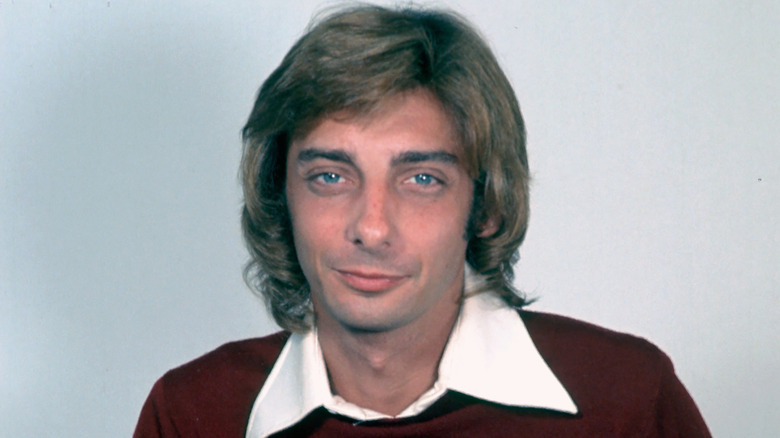
At the start of his musical career, Barry Manilow parlayed his talent for creating catchy melodies into a successful stint as a jingle writer for TV commercials, and wound up writing some of the most memorable jingles of the early 1970s. When ranking Manilow's jingles by catchiness, one must include "You Deserve a Break Today" for McDonald's and "Stuck on Band-Aid" for Band-Aid. However, his most enduring work was Manilow's 1972 jingle featuring one of the most iconic lines in commercial history. Written for the State Farm insurance company, the song's unforgettable lyrics — "Like a good neighbor, State Farm is there" — stood the test of time. "They have been airing 'State Farm is there' for over 40 years," Manilow marveled to People. "It's my greatest hit!"
Despite the jingle's longevity, Manilow was paid a measly $500 for it. "You don't get residuals if you write it, so they just buy you out," he told Windy City Live (via People). "At that point, $500 meant a lot of money — I was grateful to have it."
His signature song about how he writes the songs wasn't written by him
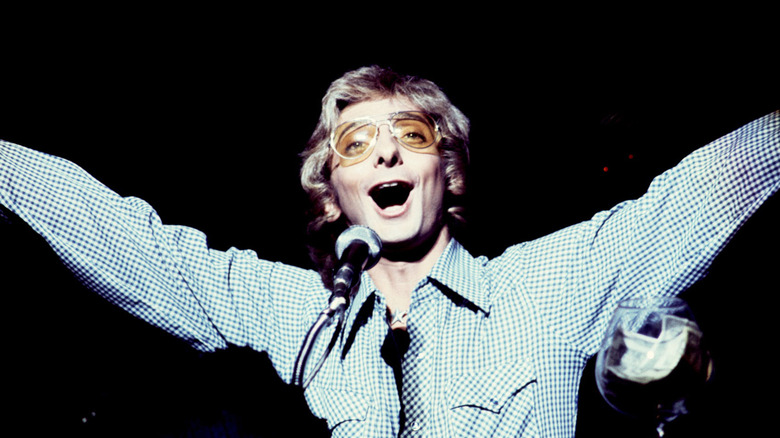
For decades, Barry Manilow has been renowned for writing songs that make the whole world sing — just not a particular, very famous one. In fact, when Manilow sang the 1976 Grammys' song of the year, it was a cover: "I Write the Songs." Arguably, no song has become more associated with the prolific singer-songwriter than "I Write the Songs," but Manilow's hit actually has a little-known Beach Boys connection.
"I Write the Songs" wasn't written by Manilow, but by Beach Boys bassist Bruce Johnston. "Most people actually thought that I was singing about myself," Manilow told NPR's "Fresh Air," acknowledging the confusion many fans have about the origin of "I Write the Songs." Record label executive Clive Davis insisted that Manilow record a few songs written by other artists, in the hope that those tracks would become hits. In the case of "I Write the Songs," Davis' instincts proved to be spot on. In retrospect, Manilow has no regrets that his signature song is one that he didn't write. "I think — over the years, I think people really get a big pleasure out of it," he said.
He never intended to become a performer
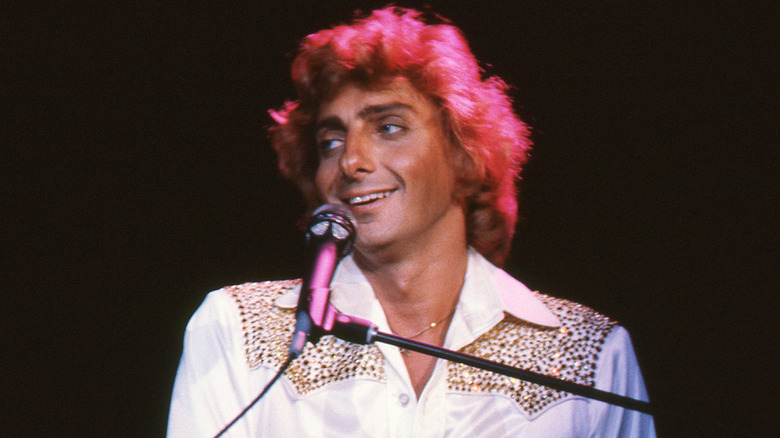
When Barry Manilow first began his early steps toward a career in show business, he initially envisioned himself as a songwriter in the Brill Building tradition, composing tunes that would hopefully become hits for various singers. The notion that he'd take to the stage and sing them himself, however, wasn't really an ambition. As Manilow told NPR's "Morning Edition," performing onstage didn't necessarily come naturally to him. "And I've learned how to do it, because I never started off wanting to be a performer," he recalled. "I always wanted to just be a musician or a songwriter or an arranger."
When the opportunity emerged that thrust him into the spotlight, Manilow seized the moment — albeit not without a significant degree of trepidation, if not outright fear. "I was terrified for so many of the early years, and I didn't know what I was doing on that stage," he admitted. And while he ultimately learned how to hold an audience's attention and embraced his role as a pop star, if push came to shove, he'd actually prefer to be on the sidelines. "But pin me to the wall," he added, "and I would be happy playing in a band."
He secretly married his longtime manager after decades as a closeted couple
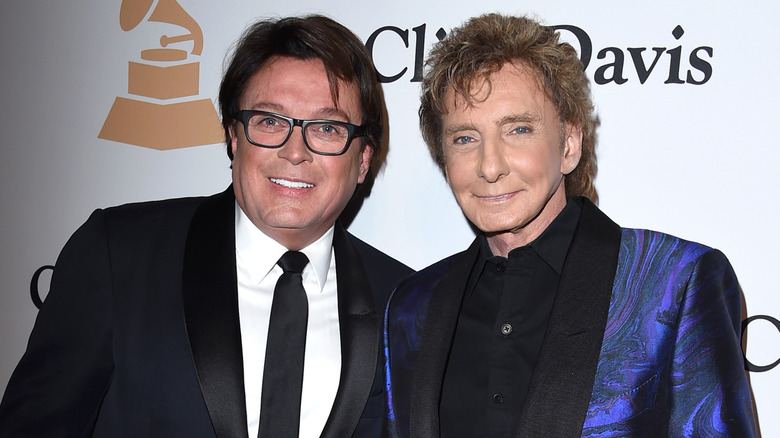
Long before becoming a household name, Barry Manilow married Susan Deixler, who'd been his high school sweetheart. The two wed in 1964, but the marriage was not a long one; it was annulled just two years later. Over the years, Manilow has been romantically linked with a few women, including Lorna Luft (daughter of Hollywood icon Judy Garland) and Linda Allen, with whom he'd had a long-term relationship. However, since the late 1970s, he'd actually been romantically involved with his manager, Garry Kief.
In 2015, reports emerged that Manilow and Kief had gotten married in secret the year before. Manilow subsequently confirmed the news, in the process officially exiting the closet in which he'd hidden for most of his life. Manilow admitted that he'd been fearful to come out as openly gay over concerns that it could destroy the career he'd spent decades building. As he told People, he was worried that fans would turn on him. "I thought I would be disappointing them if they knew I was gay. So I never did anything," he said.
However, he was thrilled to discover that "fanilows" weren't nearly as judgmental as he'd feared. "When they found out that Garry and I were together, they were so happy," he said. "The reaction was so beautiful — strangers commenting, 'Great for you!' I'm just so grateful for it."
A legendary entertainer became his biggest fan
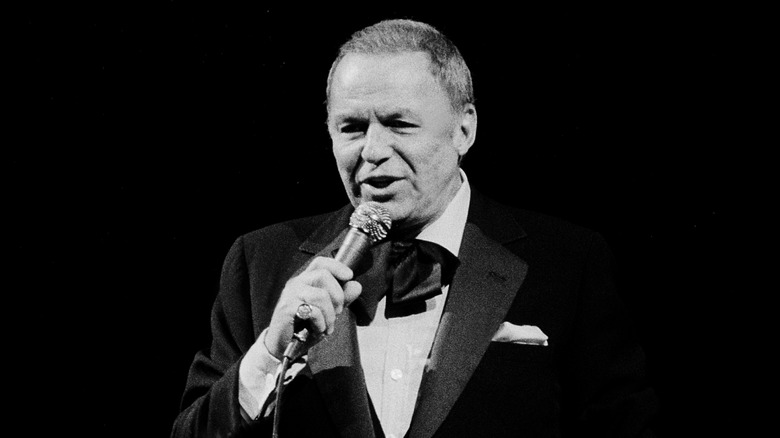
Barry Manilow's early string of hits found him embraced by fans of mellow, adult-oriented pop songs. As it turned out, one of those fans just happened to be one of the most iconic showbiz figures of all time: Frank Sinatra.
Sinatra became so impressed by Manilow that he publicly expressed his admiration. Ol' Blue Eyes literally passed the baton to Manilow when he publicly said (via ABC7), "He's next." When confronted with Sinatra's praise in 2015, Manilow told Palm Springs Life, "Yes! Well, ya know, first, when he said that, I thought, '... what did I do? Am I gonna find a horse head in my bed?'"
Aside from Manilow's joking references to Sinatra's alleged mob connections (purportedly one reason why you wouldn't have wanted to meet Sinatra in real life), Manilow had actually been hopeful for some form of approval from a showbiz luminary at the time. "But, no, seriously, that was the year I really needed somebody to say something like that, because I was getting creamed by the critics," Manilow explained, noting that his popularity at the time had been a double-edged sword, endearing him to listeners while earning the scorn of music critics. "And then, out of nowhere, Mr. Sinatra said that beautiful thing, 'He's next.' And it just ... well, I was very, very grateful that happened ..."
His musical Harmony took over 20 years to make it to Broadway
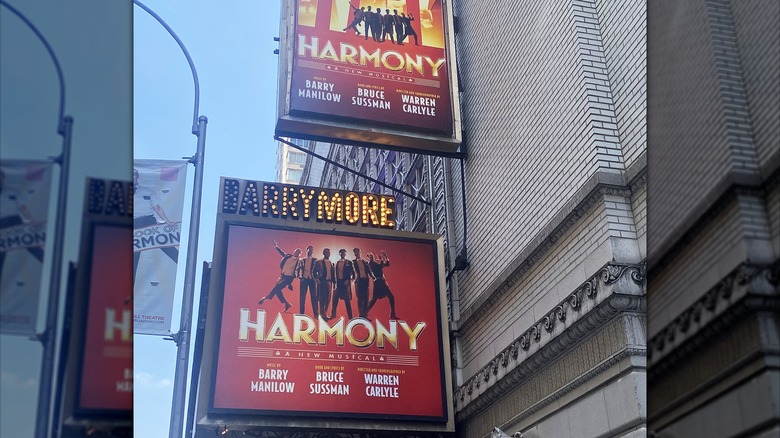
Over the years, the music of several pop acts formed the basis of hit Broadway musicals. For example, "Mamma Mia!" was famously based on the hits of Swedish pop quartet ABBA, while "Jersey Boys" was inspired by the life and music of Frankie Valli and the Four Seasons. Yet long before those now-classic musicals became the toast of the Great White Way, Barry Manilow had been toiling on a Broadway show of his own.
Titled "Harmony," the Manilow-penned musical recounts the actual story of a German singing group in the 1920s, whose rise in popularity unfortunately dovetailed with Adolf Hitler coming to power. Yet the journey of "Harmony" had been a long and winding one. Manilow first mounted a California production in 1997. The project then sat dormant until 2003, when he launched the show in Philadelphia with the aim of taking it to Broadway, until funding ran dry and the show was forced to close. Then there was an Atlanta production staged a decade later, which also wound up closing.
In 2020, "Harmony" made its debut in New York, running for about six weeks at the Museum of Jewish Heritage. Finally, in late 2023, "Harmony" opened on Broadway. While the show was met with an initial burst of interest from fans, attendance eventually dwindled, and "Harmony" closed four months after opening.
He sang the theme for one of television's longest-running shows
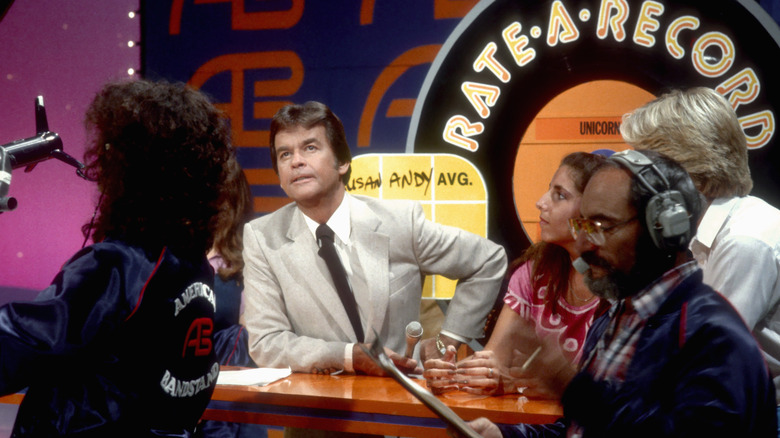
Hit pop songs and commercial jingles weren't the only types of music at which Barry Manilow excelled. He also sang the theme song for one of American television's longest-running and influential music shows, "American Bandstand." In fact, he was also responsible for bringing his version of the theme to the show in 1977.
Initially, "American Bandstand" used the song "Bandstand Boogie" for its theme, a 1950s-era song performed by jazz bandleader Les Elgart and his orchestra. That remained until the latter part of the 1960s, when it was replaced by another song, "Bandstand Theme." Then in 1977, Manilow envisioned reviving the original theme but with a modern-day twist. Partnering with lyricist Bruce Sussman, they added lyrics to the original theme. Sung by Manilow, this new iteration of "Bandstand Boogie" remained the show's theme song for a solid decade, opening each episode from 1977 until 1987.
He joked his way out of being exhibited in the Smithsonian
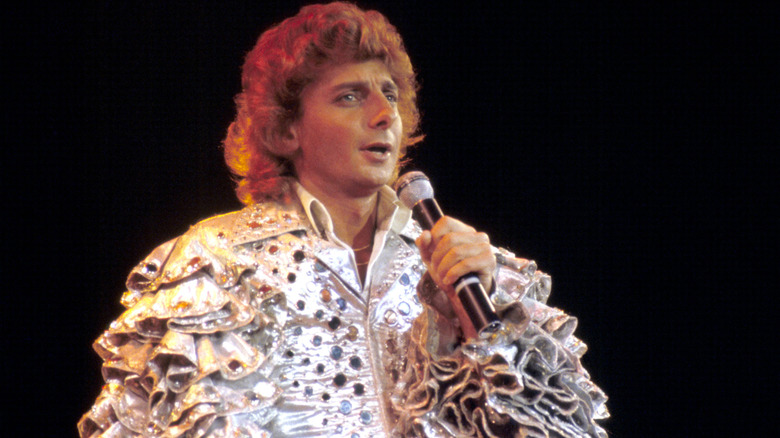
While Barry Manilow may have had serious doubts about his 1978 single "Copacabana," it wound up becoming one of his biggest and most memorable hits. When Manilow performed the song live, he was characteristically attired in a flamboyant frilly shirt. As it happened, Manilow received a request from the Smithsonian Institute, asking for his permission to exhibit that famed article of stage clothing. "I was honored," Manilow recalled when interviewed by the Television Academy. Manilow agreed and sent the shirt to the Smithsonian.
"And then I gave an interview," Manilow continued. As he explained, he'd always found that shirt to be so ridiculous and over-the-top that he couldn't take it seriously, and when posed with a question about the Smithsonian's interest, he decided to crack a joke. "So I said, 'I always knew it would wind up in an institution one day,'" Manilow said. "And they got very insulted and sent it back to me."
Ultimately, Manilow conceded, he'd shot himself in the foot with that joke, and his "Copacabana" shirt never did wind up on display at the Smithsonian. "They got no sense of humor," he observed with a laugh. By the way, if any other collectors of showbiz memorabilia are interested, Manilow revealed that he remains in possession of the shirt.
He once joined Bob Dylan for a Passover Seder at Burt Bacharach's house
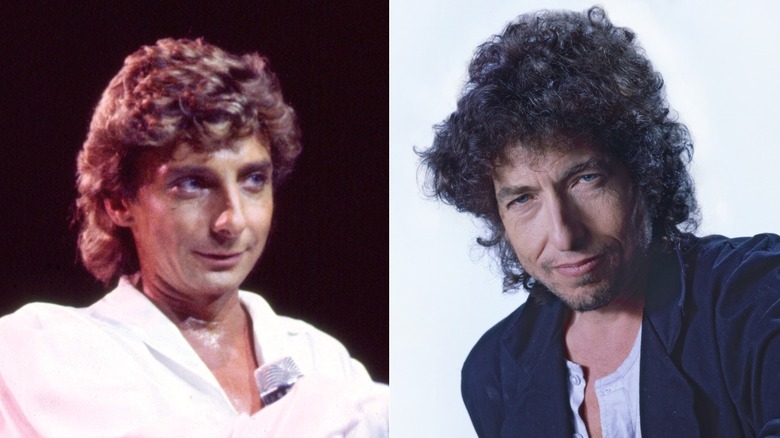
During his decades as a world-famous entertainer, Barry Manilow has crossed paths with all manner of celebrities. One of these was Bob Dylan, with whom Manilow celebrated Passover during a Seder held at the home of famed composer Burt Bacharach.
As Manilow told Vanity Fair, he had an encounter with Dylan that he recalled as somewhat odd. "We were at a Seder at Burt Bacharach's place, and he walked right up to me and hugged me and said, 'Don't stop what you're doing, man. We're all inspired by you.'" According to Manilow, it was during a period when he was being savaged by critics, so Dylan's words of encouragement meant the world to him.
However, when recalling that brief meeting with Dylan for Rolling Stone, Manilow admitted he'd chosen to take that remark as a compliment — even if he remained unsure whether it actually was. "It seems so odd that Bob Dylan would tell me this," Manilow shared. "I wasn't exactly sure what he meant. He may have been laughing out of the other side of his mouth while he said it, but it didn't seem like it. I mean, he looked me dead in the eye. But maybe he says that to everybody who walks by."
He may be Jewish, but he's recorded a lot of Christmas albums
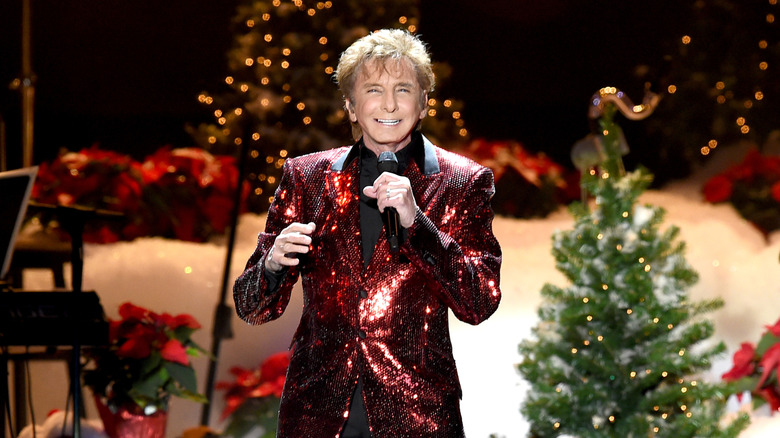
Among Barry Manilow's numerous records are no less than three Christmas albums, along with a television special, "A Very Barry Christmas." And while it certainly isn't unusual for a pop artist to tap into the always-lucrative holiday genre, Manilow's frequent forays into the yuletide season might be considered slightly unusual.
"For a Jewish guy, I've recorded a lot of Christmas albums," Manilow admitted to NPR. However, he also contended that he'd come to appreciate Christmas as a heartwarming time of year that transcended religious affiliation. "I love the time of the season," he said. Pointing out that it's the one time of the year that people try to put their differences aside, he added, "And everybody thinks about giving and receiving, and I love the whole feel of this time of the year."
However, it's his longstanding love for holiday music that really drew him in. "But, musically, the reason I love these Christmas songs is that these songs, most of the standard Christmas songs, were written during the era that we call the Great American Songbook," he explained. Lamenting that he was born after this hallowed era of songwriting, Manilow explained that he loves being able to put his own spin on Christmas classics.