

10 Albums That Nearly Destroyed These Classic Rock Legends
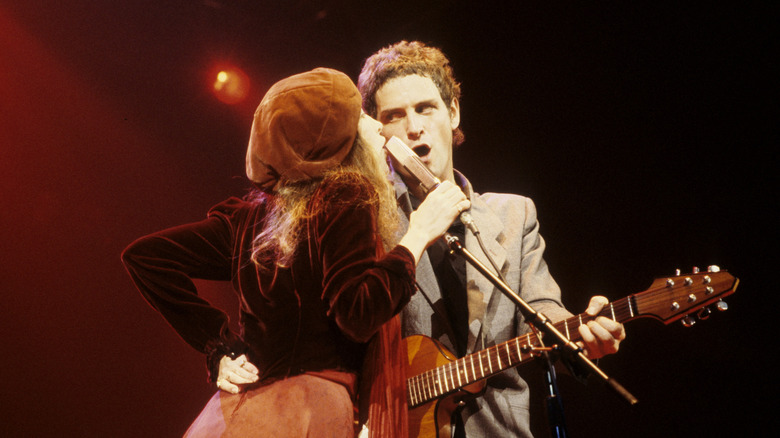
The whole point of being part of a band is to make music and share the result with the world. But perhaps sometimes, those musicians may wish they'd held back an album or skipped out on a few recording sessions. A poorly made or ill-timed album can stand as the embarrassing signpost for a rock group's downfall, taking them from glorious stadium shows packed with adoring fans to ignominious venues and canceled tours.
It's not that all of the albums included here are bad. Sometimes, a commercially successful or artistically sound work can result from a mire of internecine conflict, contract disputes, or general misunderstanding. Even the legendary Pink Floyd couldn't get back on track after its foundational concept album "The Wall," though the band has certainly toured and put out albums since then. Occasionally, an album that was received poorly upon its release is reconsidered years or even decades later, as Neil Young and Lou Reed could have told you. And, yes, sometimes an album is just a real stinker. But any of these can still shake up a band so badly that the group skirts the edge of destruction. Even classic rockers whose reputations stand today have stared into the void of artistic doom after putting out the wrong sort of album.
Calling All Stations was an embarrassment for Genesis
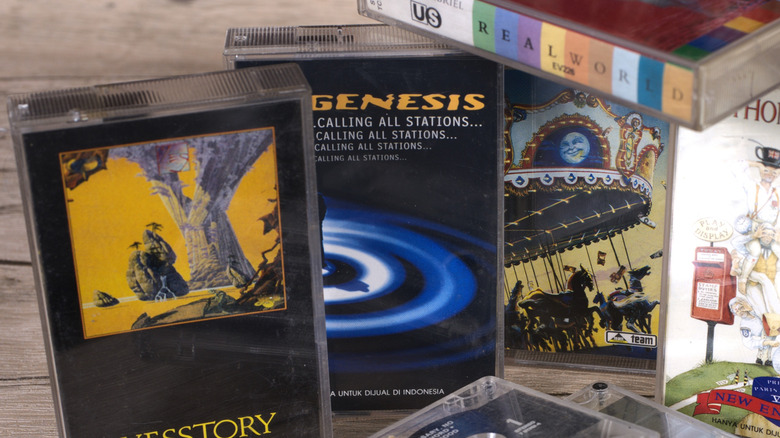
Even once-mighty rock groups can start to topple in a quiet but devastating way. For Genesis, that sort of experience might be epitomized by "Calling All Stations," the 1997 album that was made in the wake of upheaval. Namely, drummer and lead singer Phil Collins had left the band in 1996 (he'd already been doing solo work since the '80s). With Collins gone, vocalist Ray Wilson auditioned for his spot, winning the approval of remaining band members Tony Banks and Mike Rutherford.
But the result of their collaboration, "Calling All Stations," didn't quite live up to the Collins standard and never quite cracked Billboard's top 50 albums. Likewise, sales were disappointing. Perhaps most embarrassingly, an American tour linked to the album was cancelled due to low ticket sales. When it was reinstated, it folded yet again.
In 1998, Genesis itself crumpled, and the band was no more. Yet the former band members have defended themselves, with Wilson saying they just needed more of a chance. "When replacing someone as talented and famous as Phil, it's going to take time and patience," he told Something Else! in 2013. Rutherford has also come to the re-made band's defense, telling Innerviews that, effectively, we should have treated "Calling All Stations" as a first try. "I think had we done three albums with Ray, the first one would have been viewed as a start, but not a great one," he said.
Guns N' Roses deflated expectations with Chinese Democracy

Living up to expectations can be hard, perhaps especially if you're widely considered a rock legend with a long-awaited album in the works. And, when it comes to Guns N' Roses' "Chinese Democracy," the lengthy wait is very much part of the story. The recording period spanned a dizzying and confused 14 years, from 1994 to 2008. Sure, the record company (Interscope) did continually give Rose extensions, perhaps because it was being released as a Guns N' Roses group effort ... though it was very definitely helmed by Rose alone. Guitarist Slash openly criticized Rose for handling Guns N' Roses "like a dictatorship" (via The New York Times). But Rose forged ahead, replacing Slash and other band members to create a record that was only nominally a Guns N' Roses effort.
And how was the effort? While Chuck Klosterman gave it high-minded praise on A.V. Club, others were far less impressed by the dense, self-referential album, which may well contain Guns N' Roses' worst song of all. Some noted that it had seemingly tried to embody every music trend in the intervening decade and a half, while the six different producers who'd worked on it, along with a spate of different musicians and an estimated $13 million budget, hardly spoke to an organized affair. Fans snubbed it, too, leading to the album's disappointing financial turnout at the time. While Guns N' Roses reunited for a highly successful 2016-2019 reunion tour and is indeed still touring as of 2026, the troubled "Chinese Democracy" remains its last studio album.
Trans got Neil Young sued
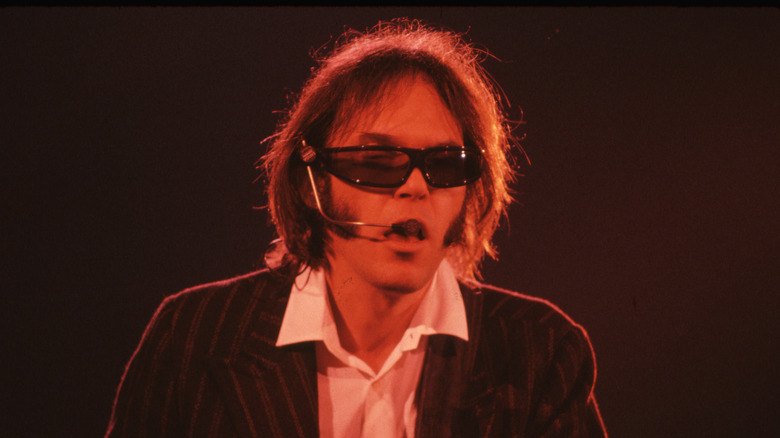
Experimental albums are often part of a musician's oeuvre at one point or another — after all, who wants to play the same stale stuff for the next few decades? Yet fans and record companies don't always want to listen. As Neil Young discovered, that can also mean facing a court date. That's the story of "Trans," the 1983 work that complicated his legacy as a rock pioneer. This was nothing like the albums that brought us "Down by the River" or "After the Gold Rush," or even the ultra-popular "Rockin' in the Free World" that arrived in 1989. This was ... weird.
Young's characteristic guitar riffs were largely replaced by synthesizers and distorted vocals, not to mention an unnerving feeling of a cyberpunk dystopia permeating the proceedings. It wasn't exactly what fans were looking for. Record exec David Geffen wasn't terribly happy either, as he surely wasn't expecting the newly signed Young to take his full creative control outlined in their contract and make this. Geffen went so far as to sue Young, alleging in a 1983 filing that the artist had made something so utterly un-Neil Young-like that it was impossible to sell. The lawsuit, along with Young's countersuit, was soon dropped and the two eventually made up, but it speaks to the intensely confused, even angry reaction that "Trans" produced. While the years and more recent critics have been far kinder to Young's out-there effort, a more determined Geffen or angered fans could have all too easily derailed his career.
Pink Floyd never really recovered from The Wall
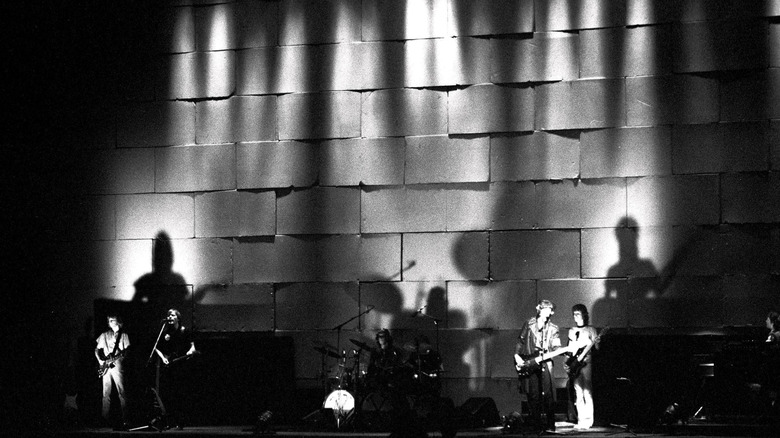
Nowadays, "The Wall" is often brought up as one of the more fan-favored Pink Floyd albums and certainly as a highly-successful concept album. "The Wall" has sold over 30 million copies since its 1979 release, including its chart-topping single, "Another Brick in the Wall, Part 2."
But as far as members of Pink Floyd were concerned, the recording process tore the band apart. Indeed, they had been arguing over album recording sessions for years, ever since 1973's "The Dark Side of the Moon." The bickering led to two members, keyboardist Richard Wright and guitarist and singer David Gilmour, making their own respective solo albums. As before, bassist and singer Roger Waters took control of the process for "The Wall." His name dominates the songwriting credits, while Waters even invited Toto drummer Jeff Porcaro to replace the band's own percussionist, Nick Mason, for the track "Mother" (though Waters claimed even Mason admitted the beat was too difficult for him to manage).
Even if tales of Waters' domination are perhaps biased, it is clear that Pink Floyd was never the same afterward. Wright, Gilmour, Waters, and Mason never again recorded an album together, leaving "Pink Floyd" to remake itself out of a slate of remaining members and fill-ins. After Waters quit in 1985, he even sued Gilmour and Mason to keep them from using the Pink Floyd name, though the case fell apart and three more albums were put out by whatever then passed as "Pink Floyd."
Brian Wilson was an infamous casualty of the Smile sessions
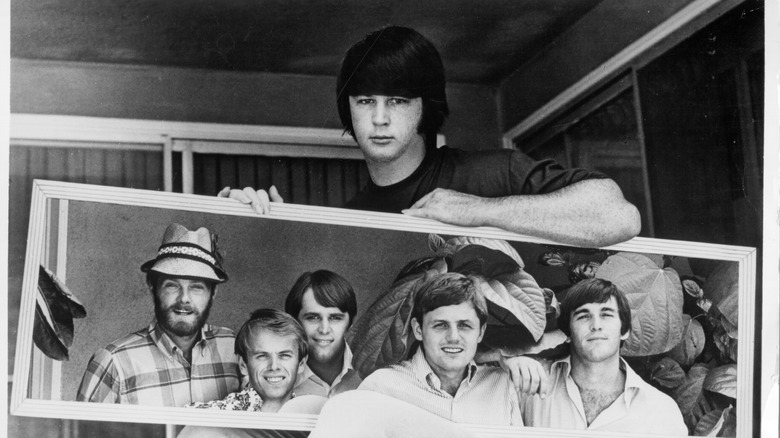
Brian Wilson, lead singer and songwriter of the Beach Boys, had been experiencing mental health issues prior to the 1966 recording sessions for "Smile." To that end, it's hardly fair to blame a single album for his eventual diagnosis of schizoaffective disorder and the years-long process he undertook to regain control of his health. But there's no denying that the "Smile" sessions represented a breaking point for Wilson, who retreated further and further from public life in the aftermath and wouldn't release the finished album for another four decades. It didn't help that Wilson largely hated performing, too. Without a fully functioning Wilson, the Beach Boys simply weren't the same, whether or not Wilson's contract demanded some level of participation.
So, what exactly went awry in the "Smile" sessions? Wilson appears to have become downright obsessive with the creative process, to the point where he had eight truckloads of sand piled up around his home piano to put him in an appropriately beachy mood. There were also rumblings of discontent from the band's Capitol Records, while Wilson's abusive father was hardly a reassuring presence. Wilson himself, growing increasingly reclusive and long experiencing hallucinations, canceled the album's release in 1967. The Beach Boys did put out a halfway-there version entitled "Smiley Smile," while some of Wilson's intensive musical work appeared in other tracks like "Good Vibrations." Still, it just wasn't the same, and the Beach Boys never again reached their earlier heights — though thankfully Wilson survived to make it back to music again in his later life.
Music from the Elder nearly derailed Kiss
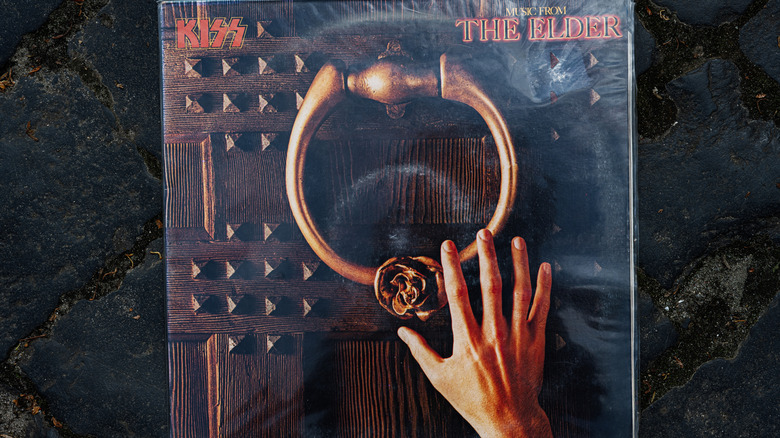
For all the bombast and face paint, few people are really going to describe Kiss as high-minded. But the band did at least go for the intellectual rock concept album back in 1981, leading to an infamously flopped rock reinvention. The guilty party was "Music from 'The Elder,'" an album that had its start with something like good intentions. At the dawn of the '80s, KISS was in trouble. Substance use was creating rifts in the band, while its last two records performed poorly and left Kiss feeling adrift. The band brought back producer Bob Ezrin, who had helped create its definitive hit 1976 album, "Destroyer."
When Ezrin got hold of Gene Simmons' short story, "The Elder," he had an idea — what if they riffed on Pink Floyd's concept album success? If the British rockers could do it, why not Kiss? But, where Pink Floyd crafted a metaphorical double-album based on the complex psychology of its band members, KISS based its album on ... Simmons' basic fantasy tale about the balance of good and evil.
During recording, guitarist Ace Frehley made no secret of his distaste for "Music from 'The Elder,'" all but abandoning the project save for an appearance on a single track. Just as well, because the album was a confusing, jumbled mess that led Pitchfork to call it "the absolute nadir of Kiss' existence." While other critics weren't quite so harsh, it had embarrassingly bad sales, to the point where Kiss had to ashamedly cancel its plans for a supporting tour.
Lou Reed almost did his career in with Metal Machine Music

Like so many other musicians before and after, Lou Reed was perhaps feeling the need to push himself artistically — even when fans really wanted more of the same. But they didn't exactly get that with 1975's "Metal Machine Music," the fifth studio album by the rocker. Instead, fans and critics were confronted with a dense, experimental wave of sound. Many reportedly deemed the album so bad that they began returning it in droves. RCA, Reed's record company, allegedly freaked out at the poor reception and began pulling "Metal Machine Music" from stores and stopped its U.K. release. Ultimately, Reed was playing with fire. He was no longer the frontman for the Velvet Underground and hadn't necessarily proven that he could carry a solo career long-term. Was this really the time for an experimental noise album?
Though people were left wondering if Lou Reed had thrown his own livelihood in the discount bin, Reed himself didn't appear all that worried (but, hey, he was among the rockers famous for having an irascible personality). He went on to have an almost 50-year run, so hindsight shows that "Metal Machine Music" was more of a speedbump than career dumpster. More recent critics have been far kinder to the highly experimental work, saying that Reed put real artistic effort into it and inspired future generations of rockers with its edgy electronic tones. Reed himself sure never apologized. "That was my supreme act," he later recalled. "If I left a legacy, that would be it" (via MAGNET).
Third Stage had Boston very nearly missing its chance
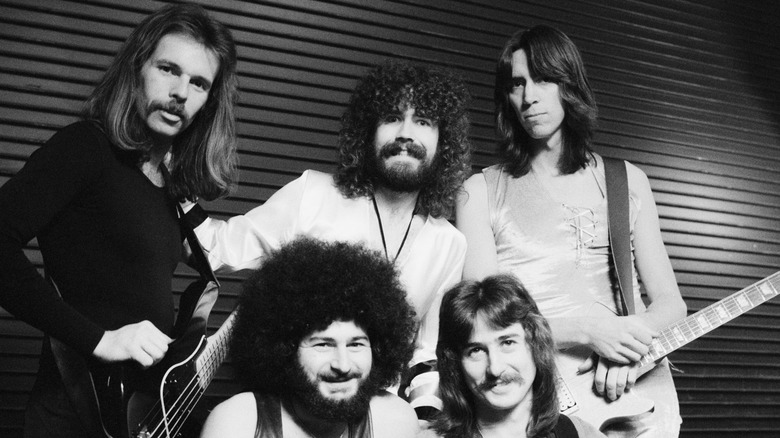
Many artists will tell you that truly great work takes time, but too much time can cost not just money, but also attention and reputation. Bands can simply be forgotten. That's the sort of situation Boston was staring down after its second album, 1978's "Don't Look Back." So why did it take eight years to put out the follow-up, "Third Stage"?
Most of it has to do with founder, guitarist, and lead songwriter Tom Scholz, who was feeling burned out by Boston's success and its grinding tour schedule. Moreover, he started to feel prickly toward all manner of people, including band manager Paul Ahern and lead vocalist Brad Delp. Then again, Delp wasn't too put off by the delay, as he focused on spending time with his young daughter while Scholz tinkered about.
Then their label, Epic Records, started getting testy and even began withholding royalty payments while waiting for the long-promised album. Scholz held fast and managed to get out of both legal trouble and their record contract, moving Boston over to MCA. Still, troubles lay ahead, as the band's guitarist, bassist, and drummer all left and had to be replaced. Some began to wonder if, beyond the personnel shakeup, Boston might also get left behind. But, after all of that, Scholz may have been right. "Third Stage" went platinum and led to a tour in which Scholz believed Boston finally began to find its stride in live performance.
Tusk spoke of turmoil for Fleetwood Mac

When Fleetwood Mac's 12th studio album, "Tusk," came out in 1979, even the least-attentive fans might have started to think something was wrong. Was this really supposed to be the follow-up to the tremendous "Rumours"? Was "Tusk" supposed to be a daring departure, or just a bunch of self-indulgent claptrap? Depends on who you ask, though some might have pointed at guitarist and vocalist Lindsey Buckingham, often cited as taking over the creative process.
To his credit, Buckingham has admitted that he was in a creative funk at the time. Why not shake things up? "My thought was, let's subvert the norm," he said in an interview with Mojo (via Rolling Stone). "Let's slow the tape machine down, or speed it up, or put the mike on the bathroom floor and sing and beat on, uh, a Kleenex box!"
Other band members, like drummer Mick Fleetwood, were aghast at the idea of delivering an experimental album at a time when making a living playing music felt tenuous. Of course, that falls flat when you consider the tales of hedonistic excess involved in the recording, from lobster and Champagne delivered to the studio to substance use that would only escalate in years to come. Then, there was the infamous infighting, which saw tense touring performances and even Fleetwood yanking Buckingham back into the studio to continue late-night recording sessions. Oh, and Stevie Nicks utterly hated the album title. After all that, "Tusk" also saw slow sales, though it's since been reappraised and the band managed to bring itself back together after this decidedly wobbly period.
Van Halen III was a humiliating flop
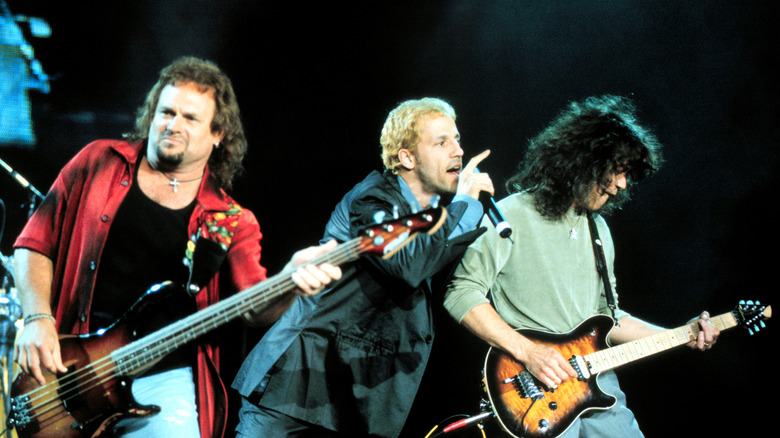
Van Halen has infamously gone through three lead singers in its time, starting with David Lee Roth, followed by Sammy Hagar, and Gary Cherone. Hagar — who inspired bellyaching from Roth fans but helped Van Halen sell many, many records — would eventually return as lead singer. Yet, it's the brief Cherone era that led many to wonder if Van Halen had finally bitten the dust. The single album released during this period, "Van Halen III," was just as uninspired as its name, with some wondering if Cherone was simply plugged into a spot not ready for him. For his part, Cherone has said that the album was basically written on the fly and needed more time and effort. Others have noted that a pre-album tour could have helped the new lineup cohere.
It didn't help that, ahead of the album's 1998 release, the band sort-of teased a reunion with Roth, though their appearance together at the 1996 MTV Video Music Awards was so tense the idea fell apart on stage. Later, the songs of "Van Halen III" weren't quite suited to trends that favored alternative rock rather than the bombastic style that sometimes saw Van Halen go a bit too wild. By 1999, the writing was already on the wall. Cherone told Rolling Stone that, after their first post-album tour together, "things started to get a little dysfunctional. [...] It wasn't bad, but it wasn't going in the right direction." Cherone and the rest of Van Halen agreed to break up, paving the way for Hagar's return.