

'70s Rock Icons Who Walked Away From Their Careers
For many people, the rock 'n' roll lifestyle is the stuff of legend. Creative fulfillment, adoration, wealth, and wanton hedonism — it's a seductive combination that has seen generations of young people pursue their dreams of becoming a rock star, but for some, the reality of that dream proved to be too much to continue. Most of those who found themselves at rock's top table back in the 1970s attempted to stay there with ongoing tours and new releases over decades-long careers. However, there are some icons who walked away from their rock-god lifestyles even when there was still a receptive audience.
Here are 11 examples of rock musicians who turned away from the genre that made them famous. In some cases, these figures have left behind rock careers to explore other, more niche forms of music or other art forms altogether. Others, meanwhile, found themselves abandoning rock for personal reasons that prevented them from continuing to make great music, or meant that maintaining a rock star lifestyle was, believe it or not, no longer a priority.
Cat Stevens
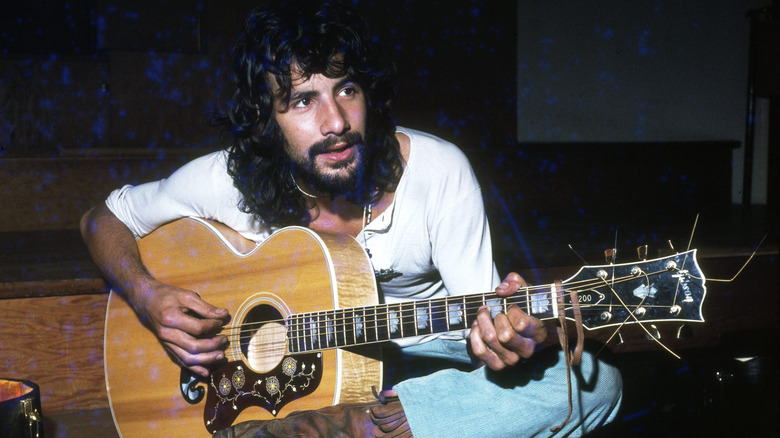
Cat Stevens' songwriting from the 1970s is among the most enduring pop-folk of the era, with his 1970 "Tea for the Tillerman" album making him an international star who enjoyed continued success throughout the rest of the decade. However, his early career was famously difficult, with limited commercial success in the 1960s and a year spent recovering from tuberculosis. So it may seem surprising that Stevens was happy to effectively throw away everything he had worked for in 1978, when he announced he was retiring from the music business.
In 1977, Stevens converted to Islam and changed his name to Yusuf Islam, in a culmination of the spiritual searching that characterized much of his lyrical output in the preceding years. Stevens had been suspicious of the music industry since the tough early days, and with his newfound faith, he decided to abandon his career in pursuit of charity work and other good causes. He eventually returned to recording in the 1990s, releasing albums simply as Yusuf or Yusuf/Cat Stevens, including educational albums for children and a 2020 rerecording of his classic album, called "Tea for the Tillerman 2."
Grace Slick
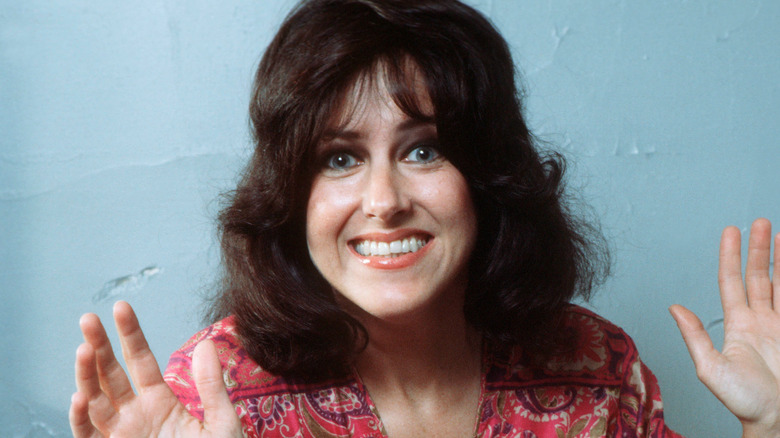
Grace Slick is most closely associated with the psychedelic era of the 1960s; Slick's vocal performances on Jefferson Airplane's hit singles "White Rabbit" and "Somebody to Love" are especially iconic. However, though Jefferson Airplane dissolved at the start of the 1970s, Slick's music career endured throughout the following decade, when she enjoyed huge success as part of Jefferson Starship, and released solo work as well as music with her partner at the time, Paul Kantner. Her post-Airplane career represents millions in record sales, but by the end of the 1980s things were beginning to wrap up. Slick left Jefferson Starship in 1988, and, apart from a reunion tour and album the following year, pretty much brought her career as a vocalist to a close.
Throughout the 1990s, she turned toward another of her passions: visual art. Since then, she has lived a quieter life as a painter in Malibu, California, telling Forbes in 2023: "The way I paint is similar to rock in that you don't stand around the work and say, 'Gee, what are they talking about?' Rock is simple, blunt, colorful. Same with my paintings."
John Deacon
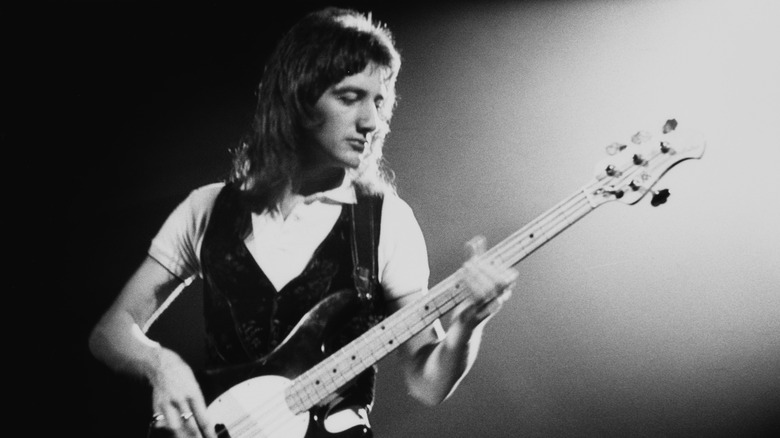
The tragic death of Queen's incendiary frontman Freddie Mercury in 1991 could easily have been an existential blow to the band. Somehow, however, guitarist Brian May managed to pick up the pieces, returning as Queen with a series of guest singers and touring widely in the decades since. But not everyone in Queen decided that carrying on as a band was a good idea. Bassist John Deacon, who is credited as composer of several of the band's biggest hits, including "Another One Bites the Dust," was certain that the band was going to split following its tragic loss. "As far as we are concerned, this is it," Bassist and Bass Techniques reported him saying in 1996 (via Deaky.net). "There is no point carrying on. It is impossible to replace Freddie."
Deacon performed live with Queen just a handful of times after Mercury's death. He contributed to 1995's "Made in Heaven" album, but after a final appearance alongside Queen and Elton John for an AIDS awareness concert, he decided to step back from music entirely and focus on family life. Deacon was so done with his former life by 2001 that he was absent from Queen's induction into the Rock and Roll Hall of Fame.
Peter Green
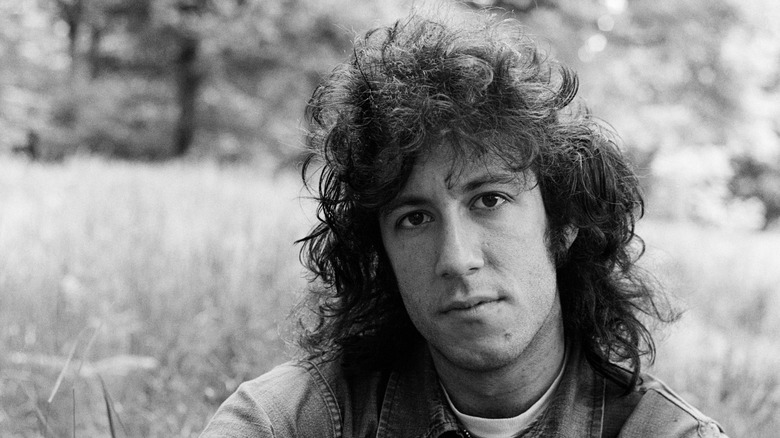
Legendary guitarist Peter Green had everything in place to become an icon during the 1970s. After making his name replacing Eric Clapton as lead guitarist in John Mayall's Bluesbreakers in the late 1960s, he left the group with drummer Mick Fleetwood and bassist John McVie to form Peter Green's Fleetwood Mac, and scored a U.K. No. 1 with his gorgeous instrumental "Albatross." But by the time 1970 rolled around, Green had unfortunately followed the trajectory of other young British rock stars such as Pink Floyd's Syd Barrett, in that his misuse of psychedelic drugs began to affect his ability to maintain his music career. That year, Green sensationally quit Fleetwood Mac amid a wider rejection of commercial success; indeed, he went so far as to try to convince his bandmates to give away their profits from Fleetwood Mac.
In 1970, Green released an unfocused and critically panned solo album fittingly called "The End of the Game" and stepped back into the fold to tour briefly with Fleetwood Mac, but for most of the 1970s he gave up music entirely. Green then became something of a mythical figure as fans traded theories about what he was doing with his time. Though he would stage a solo comeback in 1979, his public life would remain sporadic thereafter.
If you or anyone you know needs help with addiction issues, help is available. Visit the Substance Abuse and Mental Health Services Administration website or contact SAMHSA's National Helpline at 1-800-662-HELP (4357).
Ritchie Blackmore
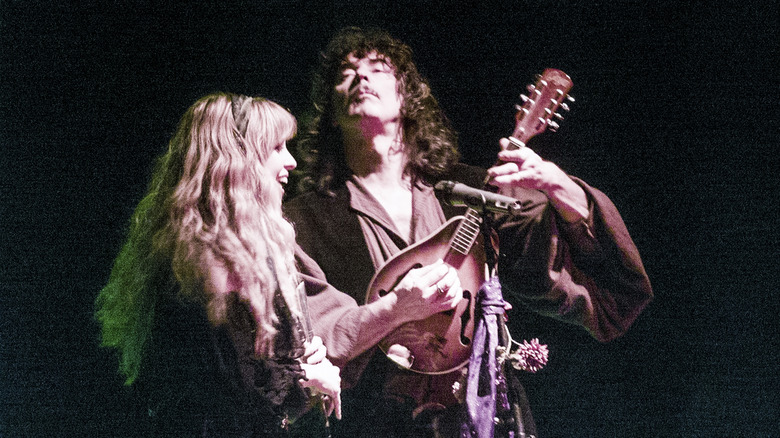
Guitarist Ritchie Blackmore has created some of the most incredible hard rock of all time, but throughout his career has repeatedly shown that he isn't always willing to plow the same furrow in terms of the style of music he creates. After leaving Deep Purple in 1975, he formed the more mainstream-focused Rainbow, and alternated spells between the two bands, recording a prolific number of albums in the process. However, Blackmore's career as a rocker effectively came to an end in the late 1990s, when he walked away from rock music altogether.
Instead of forming another rock group along the lines of Deep Purple or Rainbow, Blackmore made the distinctly non-commercial step of exploring medieval and Renaissance-era music. He shared his passion for the classical genre with his partner, Candice Night, with whom he formed a new act, Blackmore's Night. The new act effectively became Blackmore's main creative outlet from then on, and though both he and Night have performed as a revived Rainbow from 2015 on, it's been obvious since the formation of Blackmore's Night that this is where Blackmore's heart truly is.
Bill Wyman
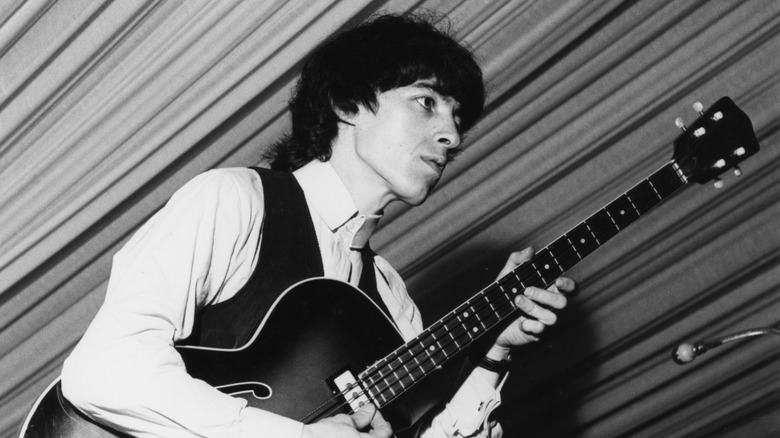
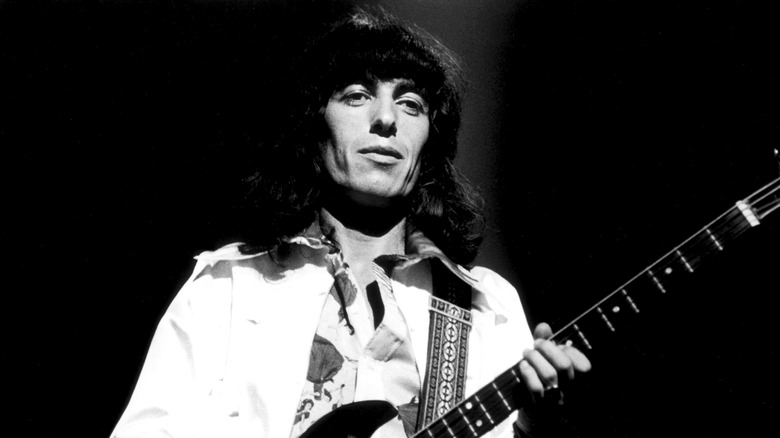
Bill Wyman was a member of the Rolling Stones from the early 1960s onward, performing with the iconic rock band as it entered what some fans consider its peak in the early 1970s, and sticking with it for decades after. But by the time the 1990s rolled around, Wyman had been one of the Stones for some three decades, and, by then firmly middle-aged, he was tired of the rock and roll lifestyle and the level of commitment that membership of one of the biggest touring bands in the world demanded.
Wyman has claimed that he left the Rolling Stones in 1991, but it took Mick Jagger, Keith Richards, et al. a couple more years to realize that he was actually serious. As Wyman explained in an interview with The Mirror in 2024, "They refused to accept I had left. It was not until 1993, when they were starting to get together to tour in 1994, when they said, 'You have actually now left, haven't you?' And I said, 'I left two years ago.'" The bassist didn't leave music behind completely, enjoying a solo career away from the Stones. But the shift meant a much lower public profile than if he had remained in the band, and has given Wyman the chance to record and tour at his own pace ever since.
Jim Morrison
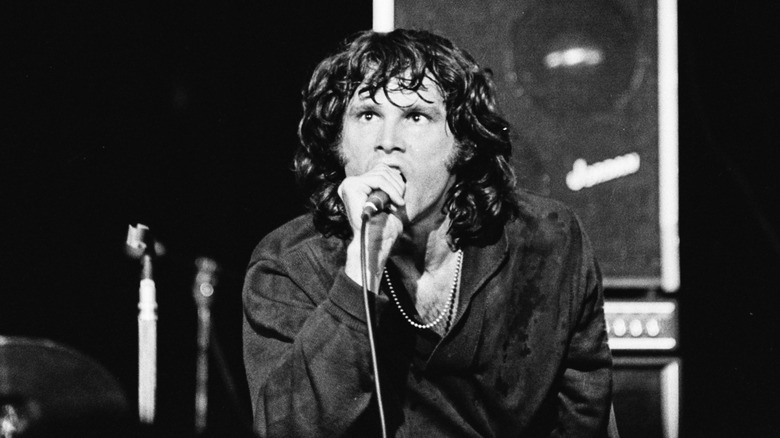
As the frontman of psychedelic rock band the Doors, Jim Morrison was feted as a singularly poetic lyricist and an incandescent performer who helped distinguish the band from other groups of the era, as well as making it a huge critical and commercial success. Morrison's mysterious and tragic death in 1971 at the age of 27 has also added to the band's mystique, with a conspiracy theory even existing that Morrison was still alive years after his demise was reported in the newspapers. Morrison was found dead in his hotel room in Paris, having apparently died of heart failure, and his grave in the French capital became a place of pilgrimage for fans. But Morrison wasn't in Paris simply for a vacation, nor was he on tour. In fact, he had fled America months earlier and relocated to the city with no definite plan to return before his sudden death.
Morrison was dealing with addiction, as well as a prison sentence for indecent exposure, and he had left the U.S. before his final album with the Doors, "L.A. Woman," was completed. He settled into a quieter existence in Paris, focusing on writing literature, and it remains unclear whether he would have returned to the Doors if he had survived.
If you or anyone you know needs help with addiction issues, help is available. Visit the Substance Abuse and Mental Health Services Administration website or contact SAMHSA's National Helpline at 1-800-662-HELP (4357).
Captain Beefheart
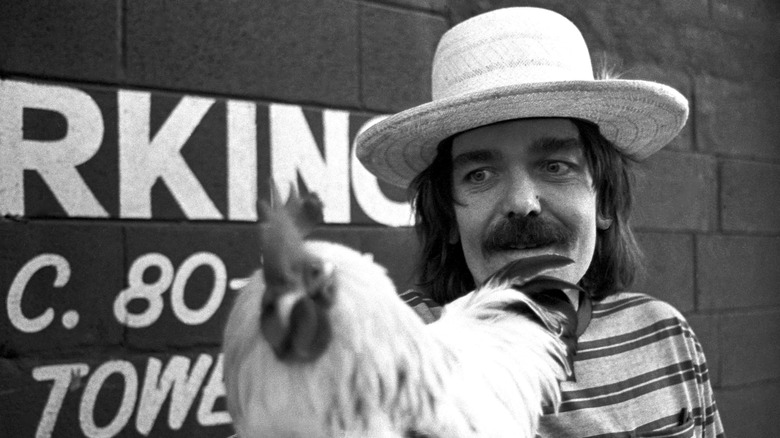
Captain Beefheart was a force of nature. One of rock music's most forward-thinking artists, he had little formal musical training, yet managed to make some of the most boundary-pushing music of the 1960s and 1970s with his group, the Magic Band. His discography made little commercial impact during his career, despite albums like 1969's "Trout Mask Replica" and 1972's "Clear Spot" receiving widespread critical acclaim.
Beefheart persevered in the music industry until 1982, when he released his final album, "Ice Cream for Crow." It was warmly received by fans and critics, but soon Beefheart's patience ran out. A keen visual artist since childhood, his work appears on the covers of several of his albums, including "Ice Cream for Crow" and "Doc at the Radar Station." It was to his first love that Beefheart returned when he was done with music, spending his final years quietly working as a painter until his death in 2010.
Dee Dee Ramone
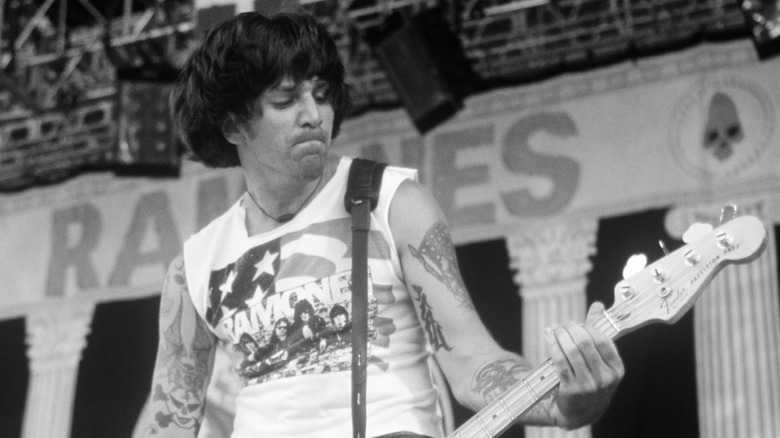
The Ramones was one of the most important bands in American punk rock, and the work of Dee Dee Ramone, the band's bassist and sometimes lead vocalist, was central to its success. With bags of attitude and a checkered, troubled life that matched punk's subversive ethos, he embodied the rebelliousness at the heart of the late-'70s seismic youth movement. But by the late 1980s, he had grown tired of the Ramones and his place in it.
As Dee Dee told his friend Legs McNeil months after leaving the band in 1989, it was beginning to feel inauthentic. "One thing that's always been important to me is to be myself. I don't write music according to a certain style that I'm noted for or familiar with. I write how I feel at the moment. I write current. I don't try to recreate the past, and that was the Ramones' thing. That was hard to deal with" (via Vice).
Age was also a factor, according to Dee Dee. "I was also sick and tired of the little boy look—bowl haircut and the motorcycle jacket. And really, for four middle-aged men trying to be teenage juvenile delinquents is ridiculous." It was bizarre, then, that Dee Dee's next move was to abandon rock altogether and embrace hip-hop, attempting to establish himself as a rapper. Changing his name to Dee Dee King, he styled himself after contemporary hip-hop acts such as Run-DMC to release the 1989 album "Standing in the Spotlight." The album was an overwhelming flop, and Dee Dee later returned to punk rock.
Bill Bruford
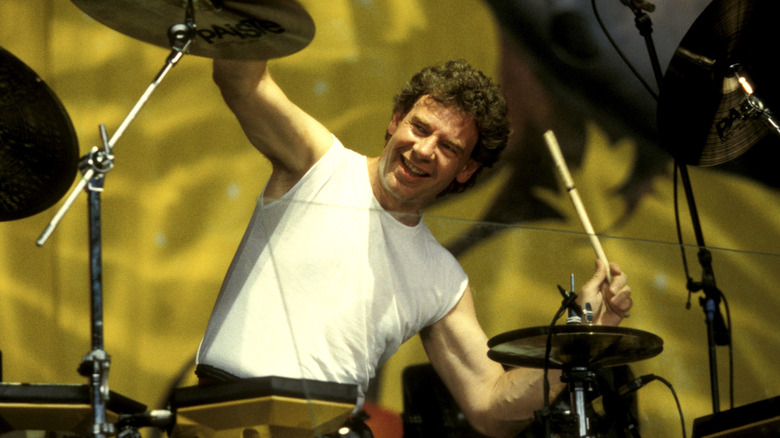
Known as the "Godfather of Progressive Drumming," Bill Bruford has had a long and distinguished career in music, most notably with some of the biggest British prog outfits of the 1970s. He was with the band Yes from its foundation in 1968 to 1972, helping it become a critically acclaimed band and touring sensation, before leaving to join Robert Fripp's King Crimson. Bruford cut several albums with King Crimson but left the band on the eve of a major tour. He later played with Genesis and formed his own jazz group Earthworks, but never let himself get tied down to any particular group for long. "I'm famous for leaving bands," he told Rolling Stone in 2025.
But for a long period, Bruford was absent from the music industry entirely, announcing his retirement in 2009 as he was about to enter his 60s, even going so far as to sell his drums. During retirement, Bruford turned to academia, pursuing a Ph.D., and spent time with his grandchildren. He eventually returned to music in 2025, though on a much smaller scale and now declines heavy touring commitments.
Boz Scaggs
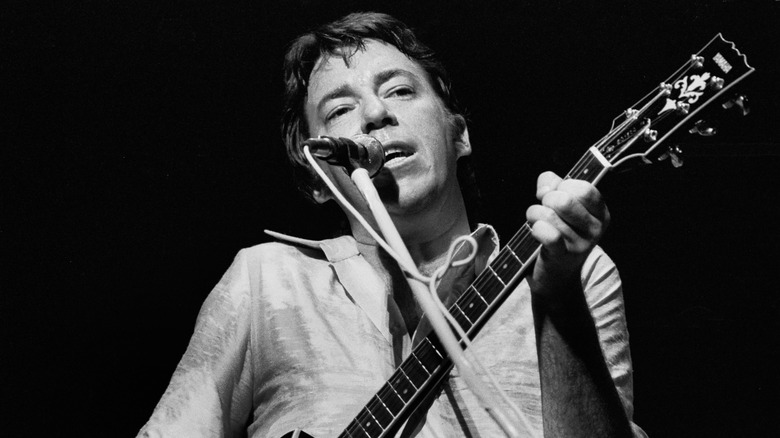
Multi-instrumentalist and vocalist Boz Scaggs had made a name for himself during the 1960s as a member of the Steve Miller Band, in which he also played guitar. But in the mid-1970s, Scaggs became a sensation in his own right. His 1976 album "Silk Degrees" and its smash singles "Lido Shuffle" and "Lowdown" were some of the most popular releases of the era, and suggested that there was just as big an audience for smooth and soulful rock as there was for the harsher-edged punk rock that dawned in the same year. Scaggs remained relatively prolific in the years that followed, with more high-charting albums and singles right up until the start of the 1980s. But he surprised many fans by then turning his back on music for eight years, eschewing both recording and touring altogether.
At the time, Scaggs was going through a divorce and dealing with custody proceedings, and it seemingly made sense for him to step out of the limelight to allow his personal life to settle without the stresses of being a rock star. He returned to music in 1988, and has continued to perform and record into the 2020s.