

Musicians Who Were Kicked Out Of Bands They Helped Create
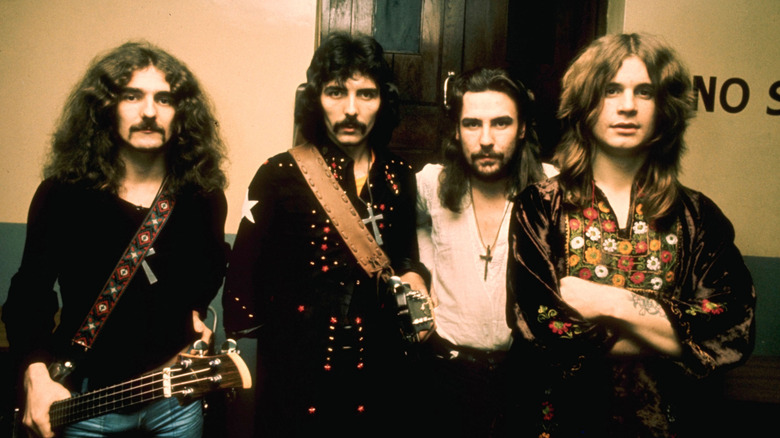
"The Golden Girls" theme song prattled on about sticking together through hardships and thanking everyone for being a friend. Now, imagine if bands had taken this type of message to heart, then maybe there wouldn't be a need for musicians to be kicked out of the very groups they helped to create.
The reality is that most bands don't keep the same lineup from inception all the way to retirement. Life happens, and people's priorities change with it. Although, it's a little sad when founding members receive the boot, such as what happened with Ozzy Osbourne and Black Sabbath, or Joey Jordison and Slipknot.
It's not all bad news, though, as time heals all wounds — and some members receive the opportunity to return to the groups they formed for another round of world domination. The operative word here is "some," since not everyone is fortunate enough to get a second chance. Having said that, let's check out the high-profile bands who kicked out their founding members and made headlines for it.
Dave Mustaine departed Metallica then formed Megadeth
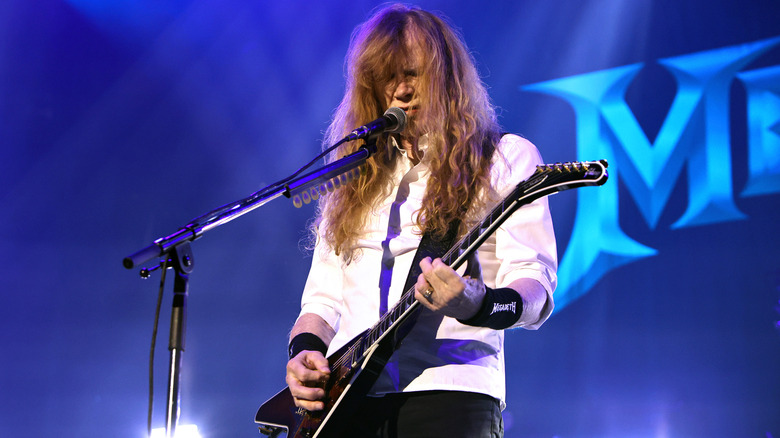
When James Hetfield and Lars Ulrich put together a heavy metal band with the intent to melt faces off, they enlisted the talent of a master shredder by the name of Dave Mustaine. In 1981, Metallica was born, featuring Hetfield, Ulrich, bassist Ron McGovney, and Mustaine. It didn't take too long for the in-house changes to start. First McGovney departed, before Mustaine received the boot in 1983.
So, what was the reason Dave Mustaine left Metallica? There have been various explanations provided over the years; however, the most commonly cited one — and one that Mustaine even agreed with in conversation with Loudwire — is that his drinking could get out of hand and he would become aggressive as a result. There's also the issue of when Hetfield reportedly kicked Mustaine's dog, so Mustaine slugged the Metallica co-founder in retaliation. "I wished things wouldn't have ended the way that they did," Mustaine told Revolver. "It was a dumb thing that I did by taking my dog up to practice, and it was even dumber to punch him."
After one too many incidents, Metallica brought in Kirk Hammett as a replacement for Mustaine and gave the guitarist a bus ticket to head off home. Mustaine would go on to form Megadeth and feud with Metallica for years. While the bands have been on good terms, there have been instances in which they still take digs at each other when the opportunity presents itself.
Kiss said Peter Criss was fired
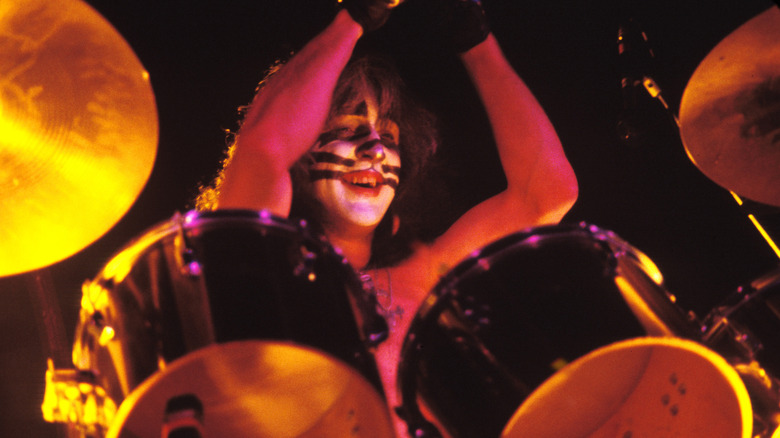
To rock 'n' roll all night and party every day, Kiss needed to assemble an army — both of fans and musicians. In 1973, the band played its first show as a four-piece featuring Gene Simmons, Paul Stanley, Ace Frehley, and Peter Criss. Criss became known as the Catman because of his unique makeup, and he drummed up a storm on classic Kiss songs.
In 1978, the cracks in the relationships started to show as both Frehley and Criss toyed with the idea of quitting the group. They stuck around, but matters escalated through a series of shows toward the tail end of 1979. As per Criss' recollection in his autobiography "Makeup to Breakup," Stanley motioned for Criss to adjust the speed of his drumming during a concert. While the drummer admitted that Stanley was likely right about his drumming being off since he had taken an illegal substance earlier, he didn't appreciate how it was done in a public setting. So he deliberately brought down his speed to the slowest possible level. This resulted in an onstage spat between the pair.
According to Stanley's comments in his autobiography "Face the Music," the rest of Kiss couldn't believe what Criss had done, so they decided to dismiss him. The band played the remaining contracted shows, with even more petty incidents and squabbles, but as soon as it all wrapped up, Criss was gone. The drummer claimed he quit Kiss; his bandmates insisted otherwise.
Ozzy Osbourne received the boot from Black Sabbath
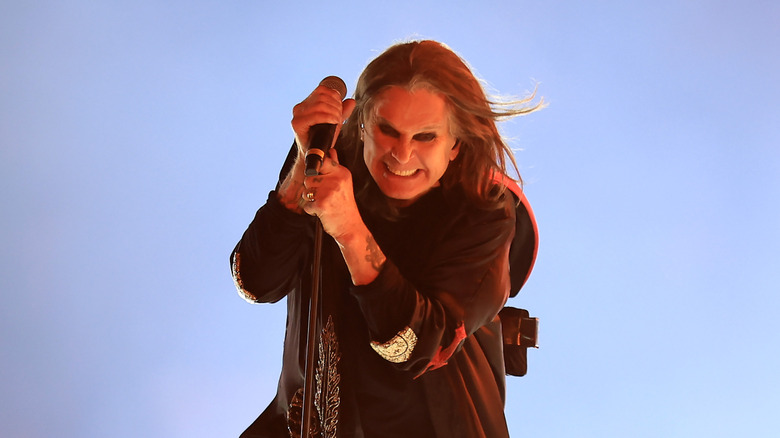
As per Black Sabbath's own admission, Ozzy Osbourne, Tony Iommi, Geezer Butler, and Bill Ward started a band to get away from the boredom of Birmingham, England, in the '60s. Needless to say, they succeeded, since boredom and Sabbath don't go hand-in-hand at any point throughout the group's history. As a frontman, Ozzy always had a reputation as something of a wild man fueled by his notorious partying lifestyle. However, it's this very behavior that resulted in him being kicked out of Black Sabbath in 1979.
As Iommi explained in his memoir "Iron Man: My Journey Through Heaven and Hell With Black Sabbath," it had become difficult to work with a non-sober Ozzy at the time. The record label had been expecting music from the group, but Ozzy wasn't playing ball. "I think Ozzy just lost interest in it all," Iommi wrote. "We had about three ideas down, musically, but we didn't know where to go next without Ozzy's input. We'd write a song and then he'd go: 'I don't want to sing on it.'"
Eventually, a decision was made to have a difficult conversation with Ozzy. Either he got onboard with the rest of his bandmates and focused on making the album, or they would need to find someone else to replace him. In the end, the latter happened. Ozzy did okay, though, as he's one of the musicians whose fame soared after being kicked out of a rock band.
The Rolling Stones fired Brian Jones
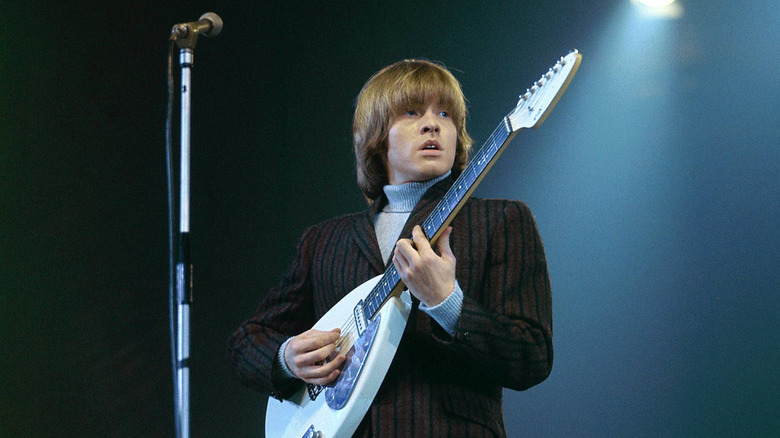
In 1969, the news broke that multi-instrumentalist Brian Jones had departed the Rolling Stones. As per Jones' statement published by Rolling Stone: "The music Mick [Jagger] and Keith [Richards] have been writing has progressed at a tangent, as far as my own taste is concerned." It came as a surprise, since Jones had been one of the co-founders of the group in 1962.
However, the truth was that the rock band had made the decision to fire Jones the day before he issued his statement. Reportedly, the group gave him the option to announce his departure however he chose. In other words, they allowed Jones to write his own narrative here.
The tensions between the Rolling Stones and Jones had mounted due to his drug use that had made him more unreliable and uncertain as a contributor. As Richards and Jagger stated in the 2012 documentary "Crossfire Hurricane," Jones wasn't around enough, or when he was, he failed to contribute anything meaningful to the music because he was too inebriated to play. At the same time, Jones started to find himself in trouble with the law, and this resulted in work visa issues for the Stones' planned tour of America. Once it became clear that Jones wouldn't be able to secure a visa for the impending tour, the band fired him. Less than a month after his departure from the Rolling Stones, Brian Jones tragically died at the age of 27.
Vince Neil says Mötley Crüe fired him
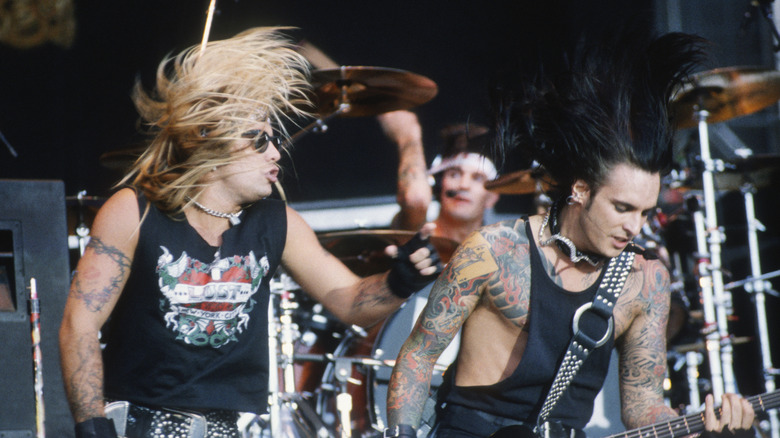
Here's a fun one. Often, bands love nothing more than to tell the press when they fire members; however, in the case of Mötley Crüe, the group disputes it terminated Vince Neil as its singer in 1992. At the time, the Crüe released a statement that Neil decided to quit to focus on racing. But yeah, that doesn't exactly sound like the most plausible reason, now does it? Especially when you're part of one of the biggest rock bands in the world.
It's obvious the band members weren't getting along, and everybody had been burnt out by the pressures of fame. Nikki Sixx confirmed as much in an interview with Rolling Stone in 2019, stating: "When Vince [Neil] quit after 'Dr. Feelgood,' I wish our managers and lawyers had the strength to say, 'Guys, time out. You're one of the biggest bands in the world. Nobody is fired and nobody is quitting.'"
When Neil appeared on "The Dennis Miller Show," he explained that he was blindsided by his bandmates' decision to fire him. "It came as a complete shock to me," he said. "It was actually two days after my birthday. It's like, 'Happy Birthday, Vince.'" Neil explained that all four founding band members possessed equal voting rights in Mötley Crüe, so the other three members — Sixx, Tommy Lee, and Mick Mars — decided that he needed to go.
Def Leppard kicked Pete Willis out of the band
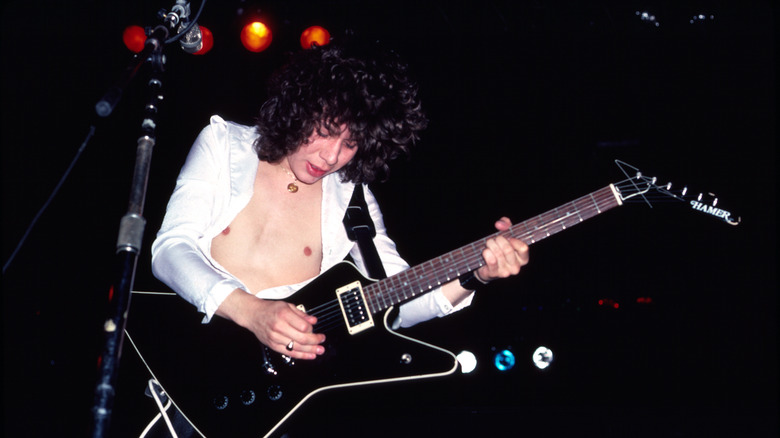
In 1977, guitarist Pete Willis, bassist Rick Savage, drummer Tony Kenning, and vocalist Joe Elliott formed a band that would become known as Def Leppard. Yet, in 1982 — the year before the group released the influential album "Pyromania," which would fire off Def Leppard's journey to superstardom — the band kicked out Willis and replaced him with Phil Collen. It had been some time coming after producer Mutt Lange didn't want to work with Willis due to his inebriation during a recording session for "Pyromania."
In a 2002 interview with Classic Rock (via Def Leppard U.K.), Willis was frank about his firing, admitting that it was justified. "Things were going too fast for me," he said. "I was still enjoying it, but I was using drink as a crutch. It wasn't nice to go that way, but it was something that needed to happen for them and the best thing to happen health-wise for me."
Despite the parting of ways, Elliott remained complimentary of Willis' time in the band and how important he was for Def Leppard's legacy as a whole, especially in its foundation. "He was an integral part of this band," Elliott told Express in 2020. "He was the guy who got me in."
Scott Weiland was let go from Stone Temple Pilots
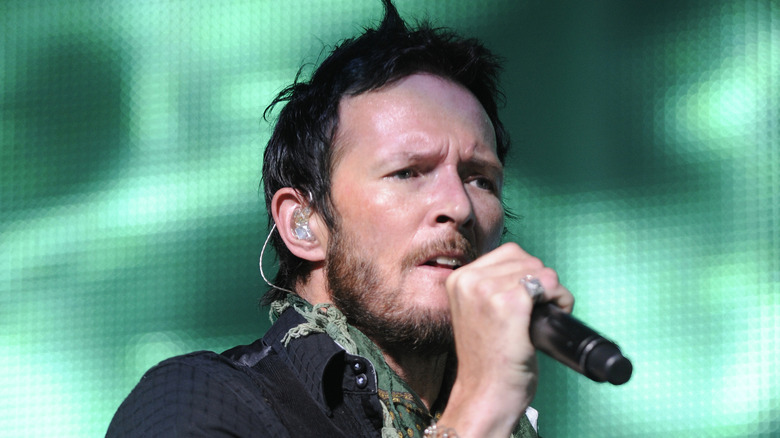
In the early '90s, no one could escape the Stone Temple Pilots. Their moody music popped up everywhere, from the radio to "The Crow" movie soundtrack. A major reason for the band's success was co-founder and vocalist Scott Weiland, who possessed a velvety set of pipes and undeniable stage presence. In the early 2000s, STP broke up, but it would reunite later in the decade.
A few years into the reunion, rumors spread that all wasn't well between Weiland and the rest of the band. In 2013, Weiland denied the rumors and promoted a solo tour in which he announced he would perform classic Stone Temple Pilots songs for the fans. Almost as soon as he said that, the band issued the following statement (via Spin): "Stone Temple Pilots have announced they have officially terminated Scott Weiland."
In an interview with The Oakland Press, bassist Robert DeLeo explained how it just wasn't working between the parties. "I don't think there was any more music to be made there," he said. "I think Scott made that clear. When you're making a record and your singer's somewhere else doing his performance and mailing them over to you, it's not a band at that point, y'know?" Weiland and the band would enter into a legal dispute regarding Stone Temple Pilots before settling the matter out of court. In 2015, Weiland passed away.
The Byrds showed David Crosby the door
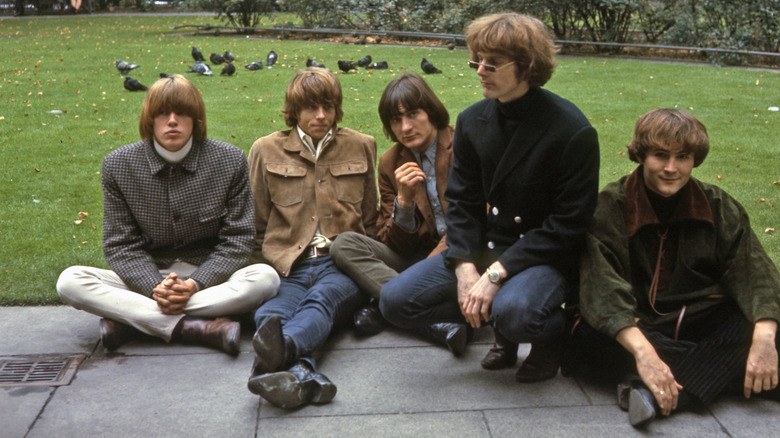
When you look back at the history of the Byrds, it's the very definition of a revolving door of members. Only vocalist Roger McGuinn remained constant in the group, while everybody else drifted in and out over the years. One of the founding members who was shown the door was David Crosby. He would go on to form the folk supergroup Crosby, Stills, Nash & Young.
As is the case with many musicians, egos and personalities started to clash during the recordings for 1968's "The Notorious Byrd Brothers," especially between Crosby and the others, so a decision was made to part ways with him. In an interview with journalist Vincent Flanders in 1970, McGuinn opened up about Crosby's firing. "He just wasn't making it, man. He's a great talent, and a nice cat — I like him — but he was getting a little too big for his britches, trying to rule the machine, getting hard to work with."
Crosby told Uncut that everything worked out for the best. "As for 'Notorious,' it was, for me, obviously much better that I left," he said. Ultimately, this is one of those situations where all parties came out stronger by parting ways rather than continuing to butt heads together. That being said, David Crosby expressed regret over how he left the Byrds later in his life.
The Clash kicked Mick Jones to the curb
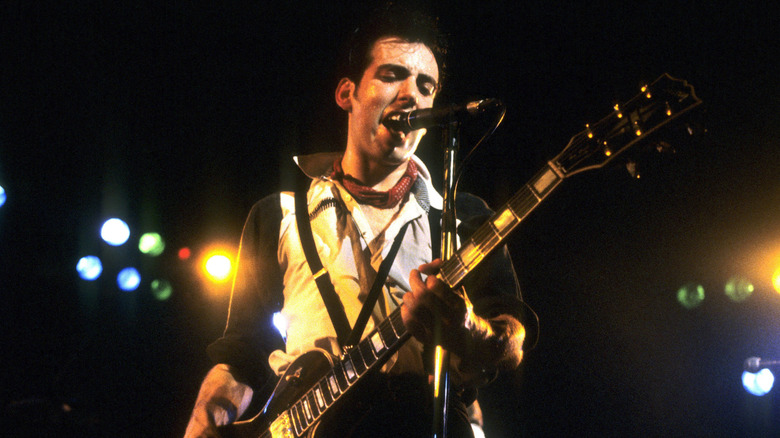
The Clash wrote its name into punk lore by making music on its own terms. In the early '80s, the band rode a major wave of popularity, breaking through all the ceilings and elevating punk rock to another level of significance. The future looked exceptionally bright, but founding guitarist Mick Jones was feeling the squeeze at the time. He wanted a break, and it was impacting his attitude toward the others and anything related to the Clash.
In the documentary "Westway to the World," frontman Joe Strummer spoke about the difficult decision to cut ties with Jones in 1983. "Mick was intolerable to work with by this time," he said. "I mean, no fun at all. He wouldn't show up. When he did show up, it was like Elizabeth Taylor in a filthy mood."
Finding it tough to work with Jones and plan a tour that everyone except Jones wanted to go on, the Clash decided to rock the casbah — without their founding member. Jones, though, acknowledged that his behavior contributed to his removal from the band. "I was just carried away, really," he said in "Westway to the World." "I wish I had a bit more control. You know, you wish you knew what you knew now." Three years after Jones' firing, the Clash disbanded.
Slipknot fired drummer and founding member Joey Jordison
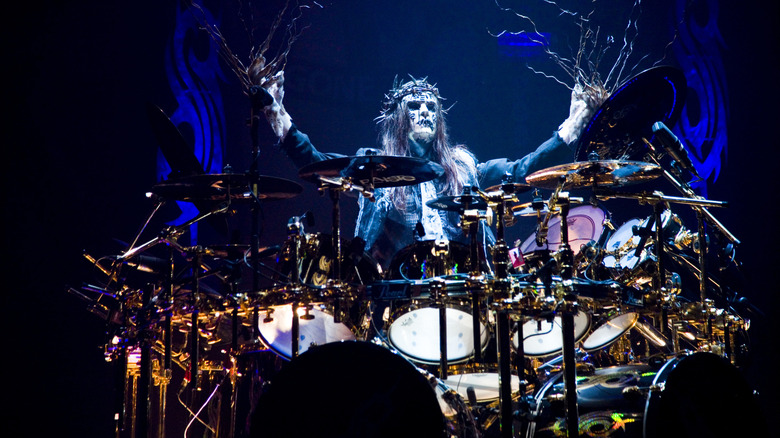
With all those members in Slipknot, one wonders if the audience would notice if someone didn't turn up for a show or appear on an album. Yet, there are key musical figures associated with the Iowan metal band, and if they leave, everyone talks about it. Such was the case with drummer and founding member Joey Jordison in December 2013.
Out of seemingly nowhere, the news broke that Slipknot and Jordison were going their separate ways. In January 2014, Jordison took to his Facebook profile to emphatically state that he hadn't quit the band, confirming that this was a firing on Slipknot's part — not a mutual parting of ways.
The reason for Jordison's firing was never made clear by Slipknot. Years later, Jordison revealed that he had experienced a neurological disorder that impacted the use of his legs. He explained how Slipknot decided to fire him via email instead of hosting a meeting with him to find out what was happening. "They got confused about my health issues and obviously even I didn't know what it was at first," he told Metal Hammer. "They thought I was f***ed up on drugs, which I wasn't at all. I've been through so many things with those guys and I love them very much. What's hurtful is the way it went down." In 2021, Joey Jordison died at the age of 46.
If you or anyone you know needs help with addiction issues, help is available. Visit the Substance Abuse and Mental Health Services Administration website or contact SAMHSA's National Helpline at 1-800-662-HELP (4357).