

Tours That Destroyed Iconic Rock Bands
We may receive a commission on purchases made from links.
Playing live is an essential part of any rock band's career — as a matter of fact, it's the primary way that most artists can make any money nowadays. Yet there have been tours that were responsible for the destruction of many groups. Whether it be due to the internal tensions boiling over, a crucial member finally having enough and tapping out, or a real-life tragedy tearing the band apart, there are several notable examples of touring disasters in rock history.
Sometimes, time heals all wounds, and the parties figure out a way to mend the bridge. Other times, no one is interested in rebuilding anything, because they all know how to swim and would rather let the bridge burn down entirely. So, let's head back in time to find out more about the tours that destroyed iconic rock bands, such as the Sex Pistols, The Beach Boys, and Van Halen.
The Sex Pistols' U.S. tour destroyed the band
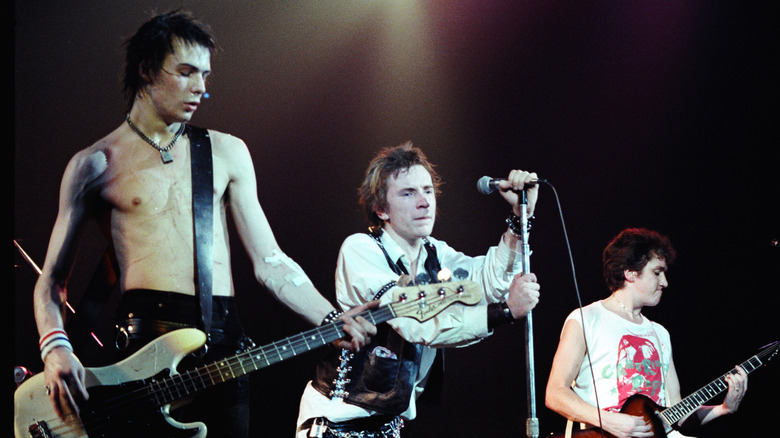
The Sex Pistols spat out aggressive music that was always in-your-face, but it felt like the hostility followed the punk rock band around everywhere like a black cloud. This anger toward the world eventually faced inward and ripped the group apart — and it all unraveled during a tour of the U.S. in 1978, which turned out to be one of the reasons the Sex Pistols broke up. At the time, America didn't exactly embrace the group or punk rock as a genre. Instead, it was a mild precursor to the Satanic Panic, where there was a worry about what this type of music would do to the kids. To avoid some potential drama and generate free publicity, the Sex Pistols' manager Malcolm McLaren chose a tour of towns through the deep South rather than the big cities. Unfortunately, the plan didn't drum up the noise that McLaren anticipated.
At the same time, bassist Sid Vicious' personal problems began to impact the Sex Pistols, as well as his own playing, so this was a powder keg waiting for a match to set it off. Singer Johnny Rotten wasn't a happy camper either, and he really meant every word when the group covered The Stooges' "No Fun" during their final stop. The tour ended and so did the Sex Pistols, but Rotten quit before even stepping onto the plane back to the U.K.
A fistfight on tour broke up Oasis
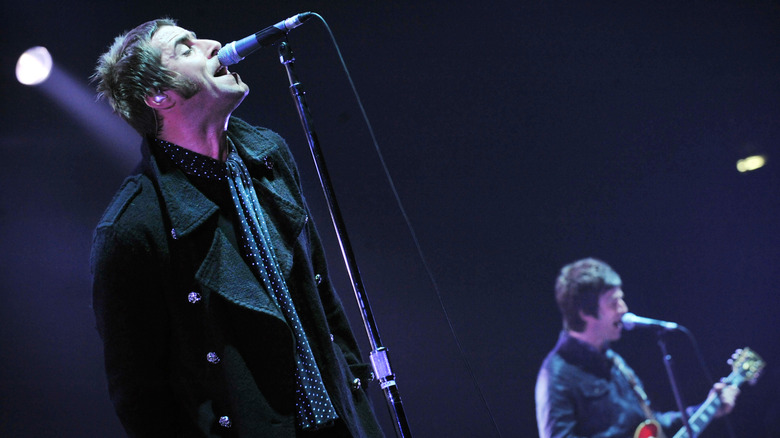
When people talk about the most explosive sibling rivalries in rock history, there should be a feature image of Noel and Liam Gallagher to go along with it. Make no mistake, as part of Oasis, either Gallagher brother could start a fight in an empty room, but put them together and there was always the chance of them throttling each other.
While on tour in 2009, Oasis canceled a scheduled stop at the V Festival. The official reason cited? Liam had laryngitis, which would be an understandable cause for Oasis being unable to perform. However, Noel stated at a press conference that it was because his brother had actually had a hangover. In return, Liam sued Noel and wanted an apology, which Noel issued later on. Eventually, this all culminated in Oasis calling it a day in August 2009.
In an interview with Esquire years later, Noel disclosed a little more about what was happening behind the scenes in 2009. "The last six months were f****** awful, it was excruciating," he said. "Me and Liam had a massive, massive, massive fistfight three weeks before the world tour started, and fights like that in the past would always be easy to rectify but for some reason I wasn't going to let it go this time." Oasis later reunited in 2024.
Mick Jones didn't want to tour, so The Clash booted him
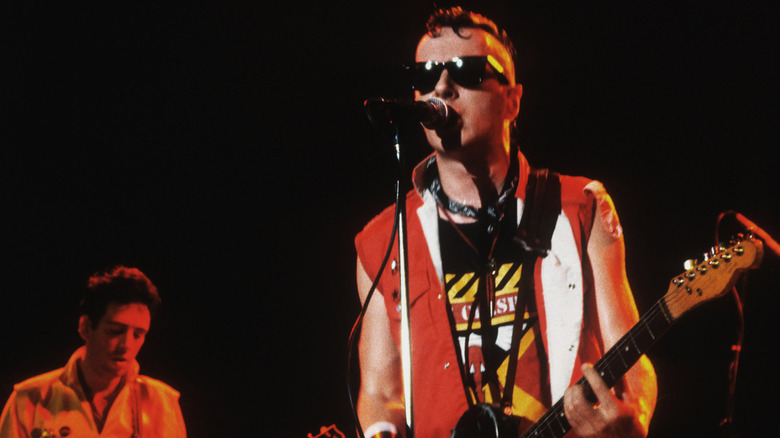
Look, while Joe Strummer remains the voice of The Clash, Mick Jones played a critical role in shaping the Only Band That Matters' sound. Without Jones' guitar licks and creative inspiration, the group might never have soared to the incredible heights it did. Yet with the rising success, the pressure mounted in the early '80s.
Looking to build on the momentum, The Clash wanted to tour more aggressively, but Jones wasn't feeling it, as revealed in the documentary "The Clash: Westway to the World." He wanted a time-out to catch his breath and recompose himself, but his bandmates wanted to push the pedal to the metal and rock harder. Consequently, Jones' lack of desire to embark on the tour and other simmering issues resulted in his firing in 1983. The Clash went on without him, but this was the beginning of the end. It all started to fall apart, and the group broke up a few years after Jones' departure.
"The bigger it got, the more difficult it became," Jones told Rolling Stone. "We battled through constant issues. When you're together all the time you're going to get fed up with people, especially without breaks." Jones added that the split was actually good for the band as individuals, since they repaired their fractured relationships afterward and got on better than they had before.
The Police passed the torch during a 1986 tour
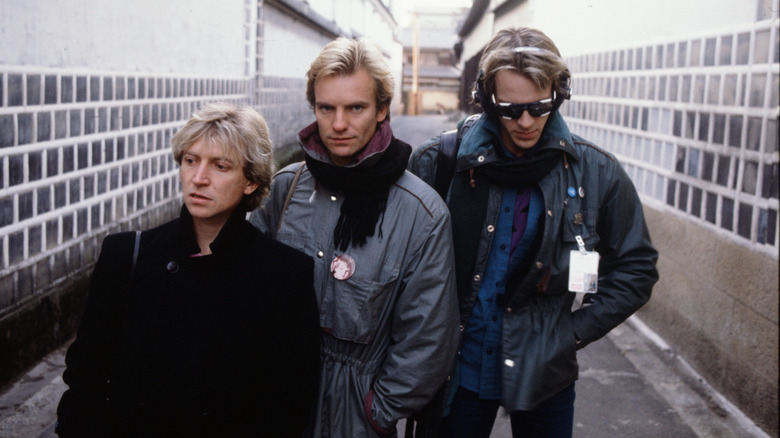
Sometimes, even before a tour, it's obvious that the party is over — such as what occurred with The Police. The rock band had already taken a hiatus so that Sting could pursue his solo ambitions. The fact that this was going well for him would only make it less likely that the band would regroup for any long-term commitments. For many, they didn't need a message in a bottle to figure out that The Police broke up when Sting decided to go solo.
In 1986, though, the band members got together for a few shows on a benefit tour. The Police's last stop occurred at New Jersey's Giants Stadium. During the show, the group called up U2 onto the stage. There, The Police proceeded to hand over its instruments to U2 — a proverbial passing of the guard to the next generation. "It was very emotional for them," Bono told Rolling Stone. "I think it was clear in Sting's eyes that he was not going to be in a band anymore. They had come together for this tour, and that was it." After the tour, The Police toyed with the idea of recording a new album, but this fell apart quickly. While the bandmates reunited years later, the group was never the same again.
Tom DeLonge didn't feel Blink-182's reunion tour
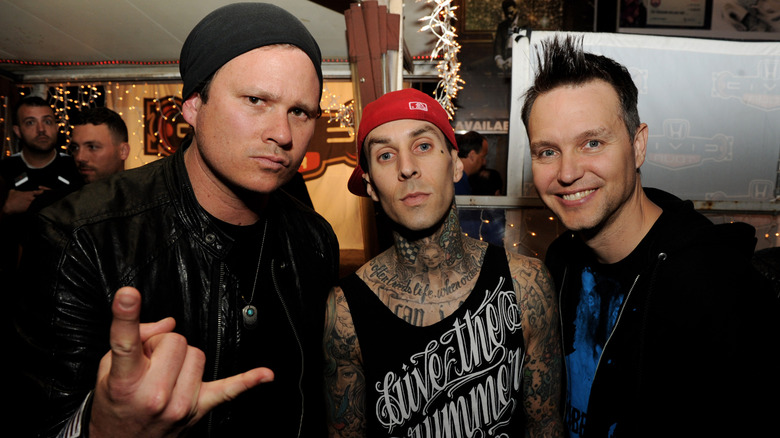
In the '90s and early 2000s, you couldn't escape Blink-182. The infectious pop-punk tunes dominated the airwaves, as no soundtrack was complete without the inclusion of the famous trio: Mark Hoppus, Tom DeLonge, and Travis Barker. In 2005, the band announced a hiatus, while rumors swirled that it was more of a contentious breakup. Regardless, Blink-182 reunited in 2009. A new album, "Neighborhoods," followed, as well as significant global tours to promote the record.
Yet it appeared like all was not well in the Blink-182 camp during this period, as revealed by Barker in his memoir "Can I Say," which he co-wrote with Gavin Edwards. The drummer spoke about how touring felt weird because of DeLonge's behavior. "Tom wasn't going out of his way to make anyone feel like he wanted to be there," Barker wrote. "He'd show up just before the tour started and act introverted. Then, as we started playing shows and money started coming in, he'd get excited about Blink again."
Barker added that there was a point in which DeLonge quit the band via email, only to backtrack the next day and encourage them to have sessions with motivational speaker Tony Robbins. DeLonge would eventually leave Blink-182, being replaced by Matt Skiba of Alkaline Trio fame. One of the reasons that Tom DeLonge left Blink-182 was to chase aliens, but he returned to the band in 2022.
The Sammy Hagar-Van Halen reunion tour didn't end well
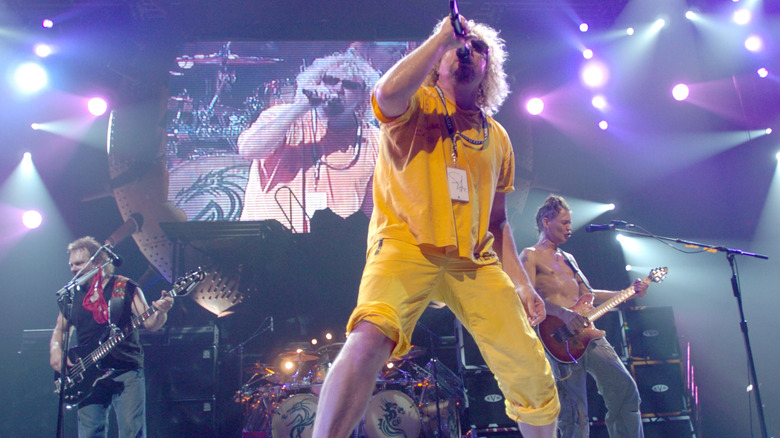
Van Halen has had various eras with different vocalists. However, the two most famous voices to sing for the legendary rock band are David Lee Roth and Sammy Hagar. The latter fronted the band for over a decade between the '80s and '90s before departing over differences. However, Hagar returned to the fray in 2004.
The plan was simple: Van Halen recorded new songs and wanted to go out on an 80-date tour. On paper, it sounded like the perfect opportunity to showcase to the world that the band was back and better than ever. That's not what happened, though, as there was instant animosity because guitarist Eddie Van Halen didn't want to speak to Hagar or bassist Michael Anthony. This resulted in bad vibes from the start, while Hagar pointed to other personal problems that Van Halen was going through at the time. Hagar wanted to quit at a point, but he soldiered on until the end to what's regarded as one of Van Halen's worst shows ever. Expectedly, this marked the end of the line for Hagar and Van Halen.
"What happened on that reunion tour in '04 was some of the most miserable, backstabbing, dark crap I've ever been involved with my whole life," Hagar said of the time when speaking about the tour with reporter Sally Steele. "And I would never go through that again with anybody for any amount of money or any amount of fame and fortune or nothing."
The Black Crowes couldn't get along
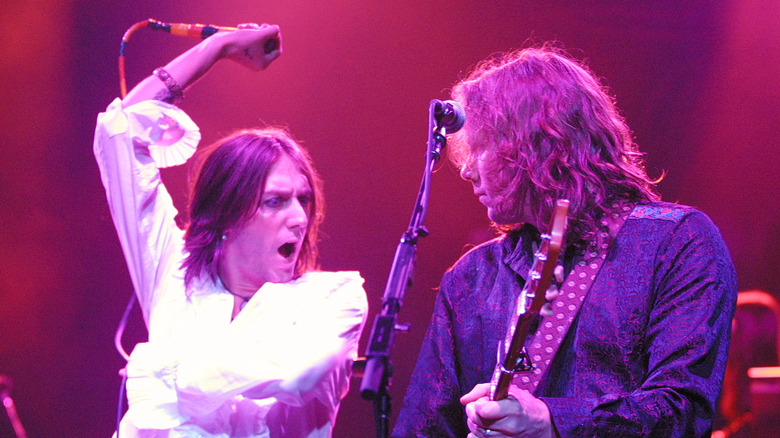
In the case of The Black Crowes, there have been several disputes between brothers Chris and Rich Robinson throughout the years. In 2015, for example, they parted ways over a money dispute after reuniting in 2007. A decade and a half earlier, they had called time on their career out of seemingly nowhere. It all kicked off in 2001, as The Black Crowes embarked on the ironically titled the "Tour of Brotherly Love" with Oasis and Spacehog. Sometimes, the joke writes itself. Funnily enough, all parties involved survived this tour, as The Black Crowes then spent the rest of the year on a U.S. tour, supporting its album, "Lions."
By January 2002, the band announced a breakup. As Chris told Billboard, though, he had made the decision to pull the plug right after the U.S. tour concluded, as he wanted to go solo. "Although Rich and I could be very spontaneous and work, it was always filled with a lot of drama," Chris said. Truer words have never been spoken, as Chris and Rich continuously seem to find each other again and again. The group later reunited in 2021.
The Pixies' cracks showed during a supporting tour of U2
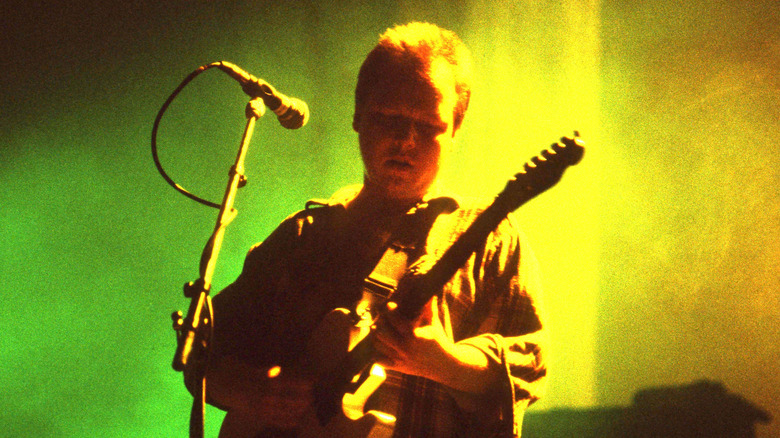
In 1992, The Pixies received a phenomenal opportunity: A U.S. tour in support of U2. Undoubtedly, U2 was one of the biggest acts in the world at the time, and The Pixies sharing the stage with Bono and the boys would only raise its own profile. There was an issue, though: The Pixies hadn't been the first choice for the tour. "It didn't seem to be a secret that U2 had asked Nine Inch Nails and Nirvana to open up for them [first], and I guess those bands passed and Pixies said yes," tour manager Ben Marts told Spin.
The Pixies also failed to connect with U2's audience. It wasn't a case of the fans chucking tomatoes at the band onstage — it was simply indifference. In addition to this, singer-guitarist Black Francis and bassist Kim Deal weren't clicking. Naturally, this combination of issues did nothing to lift the mood around the camp.
After the U2 tour, The Pixies played another show in April 1992, and Francis broached the topic of a hiatus. "Afterwards, [Francis] said something about taking a sabbatical," Deal told Spin. "I was like, 'Oh, for how long?' And he goes, 'I believe a sabbatical is one year.' And that's the last conversation we had, the last time we talked, and the last sentence was, 'I believe a sabbatical is one year.'" The Pixies broke up, but the group reunited in 2004.
Lynyrd Skynyrd experienced the ultimate tragedy on tour
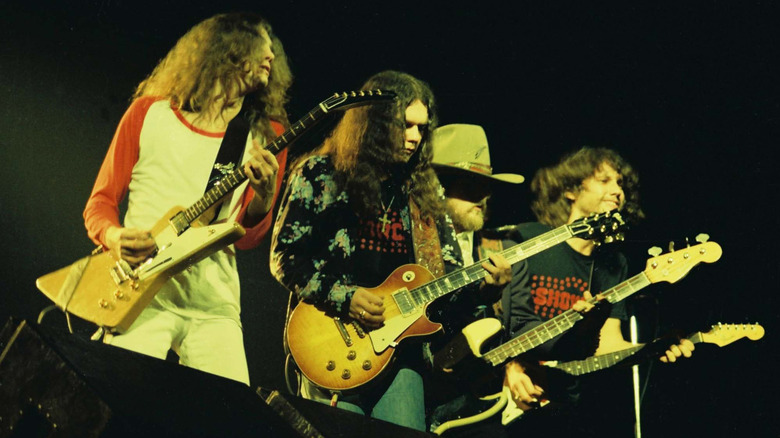
In 1977, Lynyrd Skynyrd was on top of the world. Its album "Street Survivors" turned out to be a hit, while the band's tour was off to a good start. However, this all changed when Lynyrd Skynyrd boarded a plane in Greenville, South Carolina. The hired plane had already raised eyebrows due to a prior mishap, while some members even expressed concern about flying in it again. The show had to go on, though Lynyrd Skynyrd made a conscious decision to get a new plane.
"We had talked about that an hour before we went down," drummer Artimus Pyle told the Orlando Sentinel. "We had decided to get a Learjet for the band, a beautiful bus for the crew. It was ridiculous for us to be on an old plane like that." During the flight, the group was informed that the plane would need to make an emergency landing; however, this culminated in a tragic crash. There were 20 survivors of the accident, but the incident claimed the lives of the two pilots, Lynyrd Skynyrd's assistant road manager, band members Steve Gaines and Ronnie Van Zant, as well as his sister Cassie. Unsurprisingly, after such a tragic event, Lynyrd Skynyrd called it quits, though the band reunited years later.
The Eagles were ready to throw hands by 1980
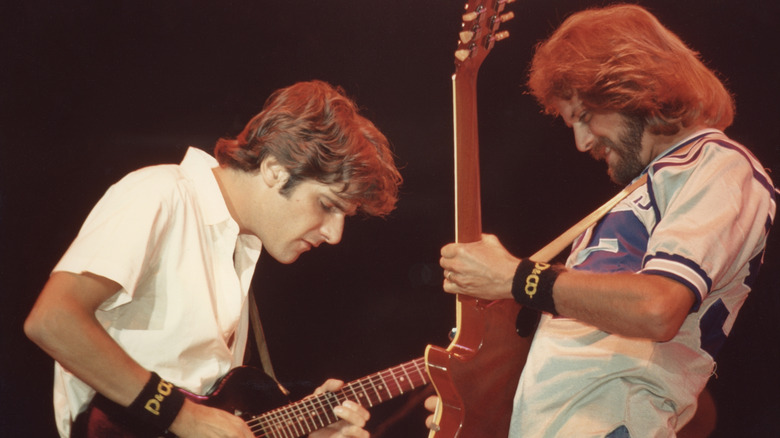
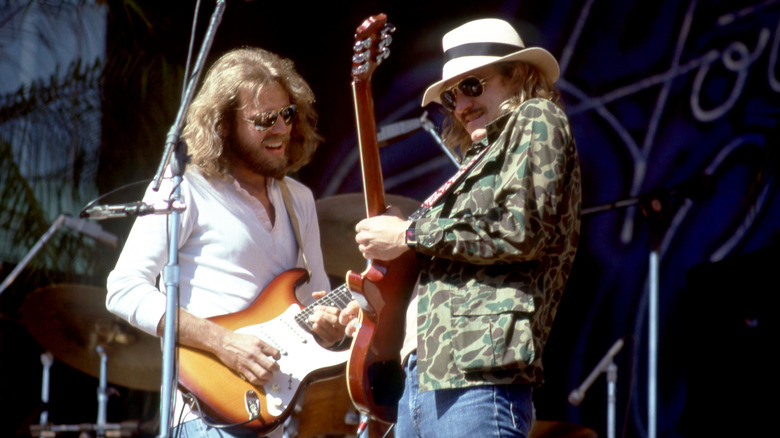
The Eagles was one of the most important rock bands of the 1970s. The group dominated the decade with undeniable hits and stellar tours. However, as Don Felder revealed in his memoir "Heaven and Hell: My Life in the Eagles," which he co-wrote with Wendy Holden, the touring started to take its toll on the band in 1980. It reached a critical turning point in which the group didn't speak to each other unless it was time for a show.
Jaded and tired, Felder took exception with Glenn Frey booking a benefit concert for a politician. This resulted in a harsh exchange of words at the event between the two bandmates. However, it wasn't left in the dressing room, as the animosity carried onto the stage. Felder wrote: "We walked onstage, and he came over while we were playing 'The Best of My Love' and said: 'F*** you. I'm gonna kick your ass when we get off the stage.' Neither of us really wanted to be there that night, and for me it was one gig too many." The tension lingered throughout the event, but the threats of physical violence didn't manifest into a reality.
In the end, everybody in the Eagles hopped into their respective vehicles and left the venue. As Felder revealed, this would be the last time they played together for a long time.
The Beach Boys' 50th anniversary wasn't a ball in the end
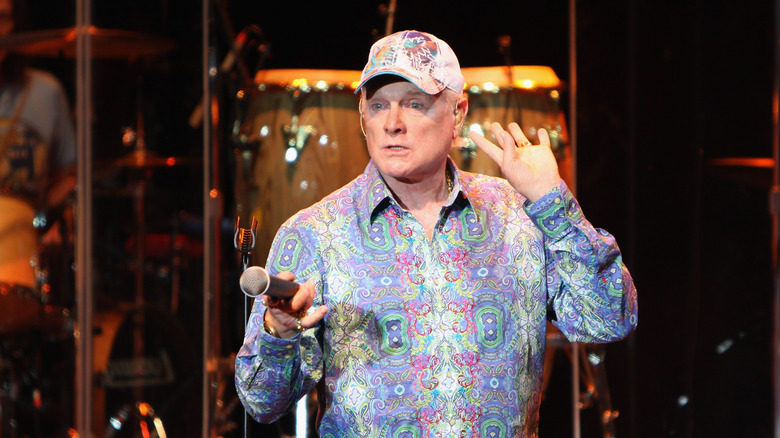
The Beach Boys remains one of the most seminal groups in all rock 'n' roll history. The band has been unique in the sense that various members have stepped back from touring and then come back at a later stage. In December 2011, the news broke that original members — Al Jardine, David Marks, Brian Wilson, and Mike Love — would team up, along with Bruce Johnston, for a 50-date tour and new album in celebration of the group's 50-year anniversary.
Everything appeared to be going great until there was an announcement made that Love and Johnston would continue some shows as The Beach Boys without the others. Naturally, this led to fans wondering if the others had been unceremoniously fired — something that Love denied. However, Wilson released his own statement to the Los Angeles Times, arguing differently. "As far as I know I can't be fired — that wouldn't be cool," Wilson stated. "The negativity surrounding all the comments bummed me out. What's confusing is that by Mike not wanting or letting Al, David and me tour with the band, it sort of feels like we're being fired." Ultimately, Love and Johnston continued as planned, while Wilson, Marks, and Jardine played as a trio.