

Bands Whose Reunions Were Total Flops
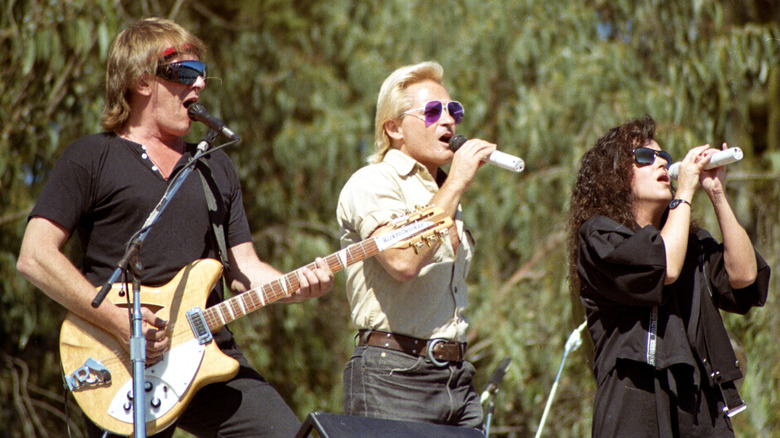
Even once-major groups like The Who, Velvet Underground, and Van Halen haven't been immune from the terrifying specter of a hopeful reunion flopping. It's happened to plenty of bands, and the experience for fans is depressingly familiar: your favorite band is getting back together. They broke up years ago, but the passage of time has seemingly smoothed over old problems and now they're back in the game. You start listening to their latest album, only to experience a sinking feeling as the tracks follow one after the other. Or perhaps you read about the disastrous unfolding of their reunion tour. Are they ... flopping?
Of course, a flop can be defined in multiple ways. A band's reunion might be a commercial dud, with disappointing album sales and half-filled venues. Or it might be an artistic stumble, whereupon critics and fans greet new music with a collective shrug or even suggestions that the musicians are over the hill. Then, there are the interpersonal issues. A band might have everything else going for it — fan enthusiasm, artistic drive, and promising sales — but old arguments that originally drove them apart once again rear their ugly heads. If a triumphant return is thwarted by squabbles and unfortunate personalities, then there's little else to do but call it a flop.
Jefferson Airplane
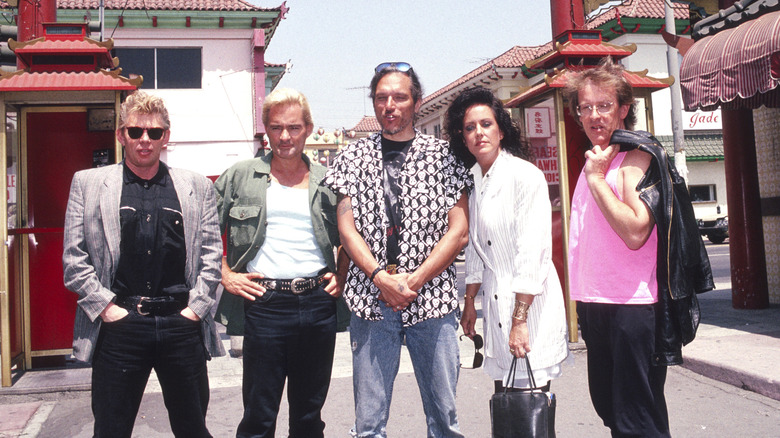
To many, Jefferson Airplane is a quintessential band of the 1960s counterculture, with its bleeding-edge psychedelic rock and iconic 1969 Woodstock performance. So why did they come back in the '80s? The original lineup had crumbled by 1972, though lead singer Grace Slick sort of stuck around at the forefront of Jefferson Airplane's successor, Jefferson Starship, first formed in 1974. However, she was fired after a disastrous 1978 performance in which she antagonized the audience at a show in Hamburg, Germany (Slick would eventually return in the '80s). With some further personnel and artistic shakeups, Starship, as it became known, morphed into an arena rock band.
Following all this, Jefferson Airplane attempted a comeback in 1989, yet old arguments remained. As singer and co-founder Marty Balin told the Chicago Tribune that year, "Let's face it, every time I read about them, they're always suing each other." Meanwhile, Slick admitted to The New York Times that "It started out as a joke on Paul," referring to guitarist and Jefferson Airplane co-founder Paul Kantner. It's worth mentioning that, not only did Kantner and Slick have a child together, but by the '80s they were also suing each other over band matters, making the reunion all the more puzzling.
The resulting album and singles never charted all that well, while some members complained that the old creative fire was gone. After the reunion tour, the band once again folded — for real, this time.
The Stooges
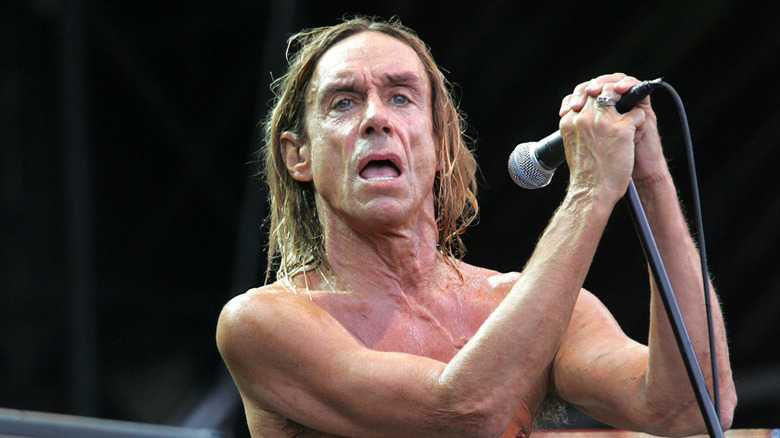
Once upon a time, the Stooges could not be ignored. Sure, if you were a snob back in the '70s, you might have tried, but nowadays there's no denying it had raw punk power. Was it always recognized as such at the time? Well, no. And it's painfully obvious that its energy also encouraged many members to engage in a substance-heavy lifestyle that dented its commercial chances and very nearly ruined lead singer Iggy Pop. By 1974, it was seemingly all over; the Stooges broke up after the release and commercial flop of its 1973 album "Raw Power." In fact, all its earlier albums were technically commercial flops.
So, it was heartening to see the Stooges reunite in the early 2000s, if only because it meant that most of the members had survived. Pop told reporters that he'd first thought of getting the old band back together while recording his 2003 album, "Skull Ring," on which Stooges guitarist Ron Asheton and drummer Scott Asheton appeared as guest musicians.
Pop was successful at reassembling the Stooges, which then produced 2007's "The Weirdness" and took it on tour. But "The Weirdness" and its 2013 follow-up, "Ready to Die," were both critical flops, even if the rockers reportedly still put on a good live show. Ultimately, the fact that the members of the Stooges survived the tumultuous '70s showed they had grown past the chaos that infused their earlier work, disappointing many listeners who had hoped to hear that old punk magic again.
Creedence Clearwater Revisited
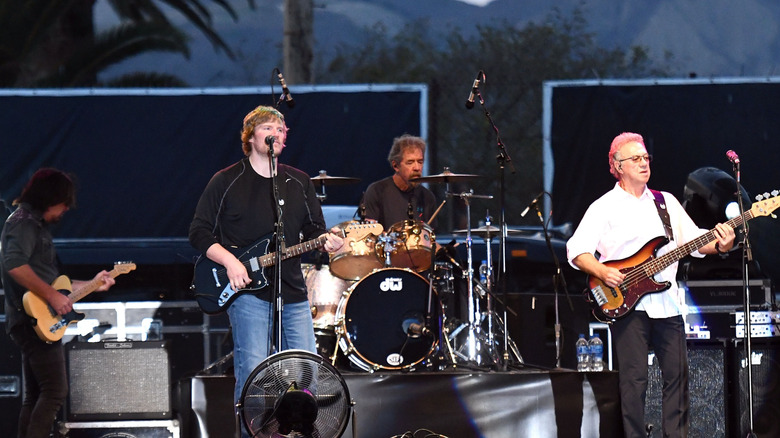
While Creedence Clearwater Revisited successfully leveraged nostalgia into successful tours, it arguably flopped when it came to artistic integrity. At least, that's what John Fogerty thought. Fogerty, the lead singer, guitarist, and songwriter of Creedence Clearwater Revival, formed the band in the '60s with his younger brother, Tom, a guitarist and singer, along with bassist Stu Cook and drummer Doug Clifford. But personnel shakeups and creative disputes spoke of real trouble within the group. As a result, the band's 1972 effort, "Mardi Gras," simply flopped, and just a few months later, CCR had fallen apart and was, by all accounts, no more.
Then, Clifford and Cook brought the band back together, forming Creedence Clearwater Revisited in 1995, but without Fogerty. The relationship between Fogerty and the remaining members of CCR (Tom had died in 1990) was already rocky, with John Fogerty even performing with other musicians at the band's 1993 induction into the Rock and Roll Hall of Fame. Fogerty reportedly became such a thorn in their side that, in 2014, Clifford and Cook sued him for improperly using the trademarked Creedence Clearwater Revival name. Fogerty responded by filing a civil suit.
But, as combative as Fogerty may or may not be, many had to admit that the new CCR just wasn't the same. Even if you call a half-original band a reunion, it could never approach the spirit of the group's earlier work. Sure, plenty of people bought tickets and likely enjoyed the performance, but without Fogerty's creativity, it could never be what it once was.
The Velvet Underground
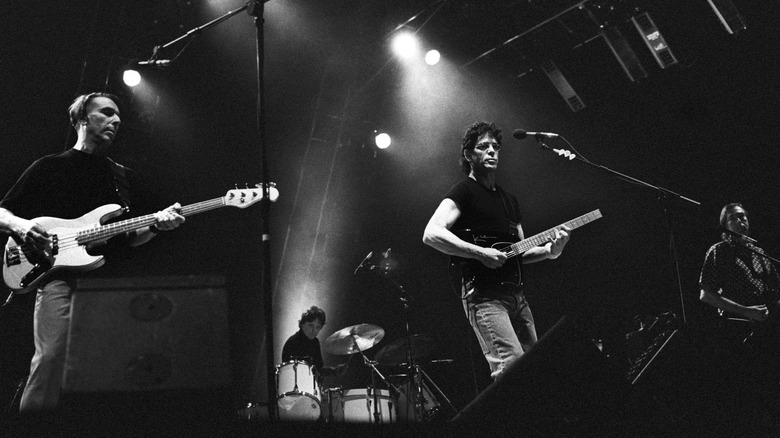
All the critical acclaim and commercial success in existence can't save a band if its members won't get along. Consider the case of the Velvet Underground, which attempted a reunion back in the '90s, long after the band sputtered to a halt after releasing 1973's "Squeeze." It's a particularly interesting case, given the rock cred of the Velvet Underground, which never precisely made it in a commercial sense but did find artistic respect. It didn't help that co-founder and vocalist Lou Reed fired other co-founder and frequent argument partner John Cale in 1968, leading to personnel shakeups and a rather shaky few years before Lou Reed left the Velvet Underground, and the group finally folded.
Then, pop artist Andy Warhol, who was once the Velvet Underground's mentor and producer, died. After seeing each other at Warhol's memorial, Reed and Cale patched things up and began occasionally working together again. Then, with the addition of other original band members, the Velvet Underground kind of, sort of reformed in the early '90s. Initially, Reed told reporters that touring simply wasn't on the table. But, by 1993, it suddenly was — helped along, some have speculated, by the prospect of nostalgia-fueled ticket sales.
The Velvet Underground started with a promising series of European shows, but by the time they made it to America, those old interpersonal tensions had begun to crop up again. The U.S. tour fizzled, while a prospective appearance on "MTV Unplugged" likewise never materialized. The culprit? Reed and Cale had been fighting again, having resurrected their old head-butting along with the old band.
The Sex Pistols
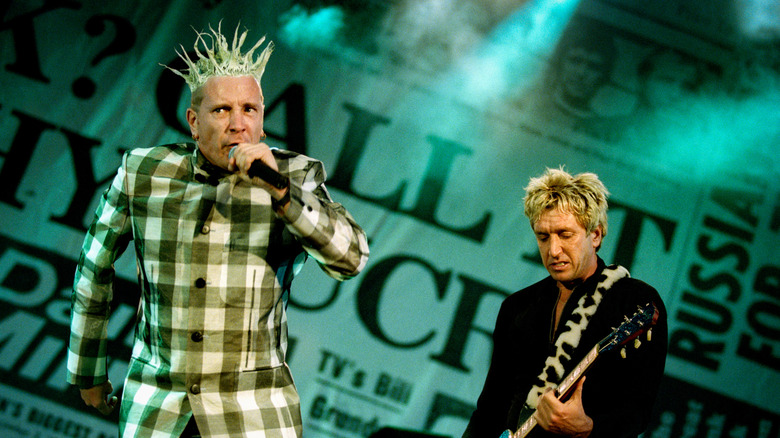
Can a band be too commercially successful? That may be an argument best left to pretentious college undergrads at a house party, but you have to admit that the Sex Pistols reunion might just qualify. It might sound mean-spirited, but when the reunited Sex Pistols came back together in 1996 for the "Filthy Lucre" tour, Johnny Rotten (aka John Lydon) himself said at a press conference that, despite their reservations, "we found a common cause and that's your money" (via Rolling Stone).
While you almost admire the band for being up front about it, the result of the 1996 reunion was hardly groundbreaking. Bassist Glen Matlock later admitted that they hadn't even begun rehearsing when Rotten made his reunion announcement. Still, the Sex Pistols' subsequent tour was packed full of fans and was a clear commercial success, netting the group somewhere in the neighborhood of $20 million.
Yet it turned out that the remaining members of the band still hated each other. After their tour — which routinely involved separate travel plans and accommodations — the Sex Pistols very occasionally performed together, but didn't bother to tour again. Perhaps most pointedly, they performed in 2024 and 2025 without inviting Lydon. The remaining members issued vague statements saying their relationship with Lydon had simply fizzled out and they wished him well, but the interpersonal flop of their previous reunion was uncomfortably still present.
Jane's Addiction
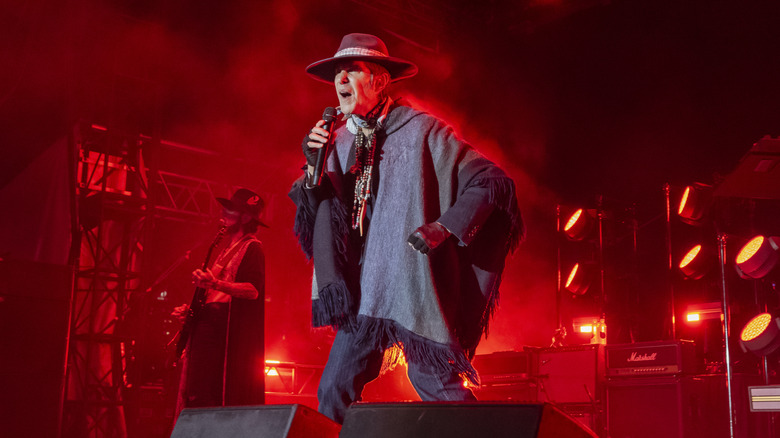
Jane's Addiction rose to prominence in the '80s, but broke up in 1991 after years of fighting and substance misuse. Each musician went their own way — guitarist Dave Navarro even became a fixture of the rock world, playing with other bands like the Red Hot Chili Peppers — and Jane's Addiction would occasionally get back together for one-off performances and a couple of tours in 2001 and 2009, respectively. With previous collaborations in pocket and continuing rock cred, things would have been all set for another reunion in 2024, right? Not exactly.
Singer Perry Farrell, Navarro, drummer Stephen Perkins, and bassist Eric Avery hadn't fully played together since 2010. Then, at a Boston show in September 2024, they proved why Jane's Addiction could be a total nightmare on tour, as Farrell physically attacked Navarro. Band members filed two lawsuits, with Navarro, Perkins, and Avery first suing Farrell for $10 million over his alleged erratic behavior and failure to show up for rehearsals. Farrell's countersuit alleged that the other members of Jane's Addiction had been bullying him for years and that Navarro had been playing overly loud that night to antagonize him.
Navarro later told Guitar Player of the night, "I have to say that's my least favorite gig, without throwing animosity around, and without naming names and pointing fingers," he said, noting that it stung all the more because previous performances suggested they were finally getting along again. With the physical altercation, he said, "it all came to a screeching halt and forever destroyed the band's life."
Mötley Crüe
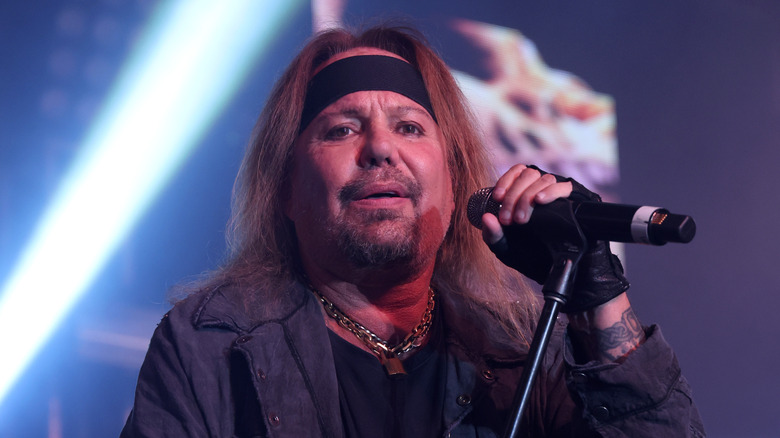
Fans of heavy metal band Mötley Crüe might have been excited for the group's 2020 reunion if it weren't for a couple of key factors. For one, there was the tricky matter of its last tour, which the band members capped with a 2014 press conference where they signed a so-called "Cessation of Touring Agreement." Their "Final Tour" was supposed to be, well, final. So what business did Mötley Crüe have performing again when fans dropped good money on what was billed as their last chance to hear the group live?
Technically, that agreement was never a truly ironclad contract, so Mötley Crüe was legally in the clear. But its reunion — postponed due to the COVID-19 pandemic — still left some fans in a sour mood, though given how its 2022 joint stadium tour with Def Leppard earned over $173 million, many weren't that put out. Still, reuniting in pursuit of sales brings a distinct whiff of the sellout.
Then, there's Vince Neil's voice. In Mötley Crüe's heyday, he was a vocalist with a unique falsetto. However, many fans have long noted a decline in Neil's vocals, which they say lack both energy and enunciation. As some have counter-argued, it's unfair to expect Neil to hit the same notes he did back in the '80s. However, Neil himself has admitted that it's not always easy going, telling a crowd at a 2021 performance that "I'm sorry, you guys. It's been a long time playin'. My f***in' voice is gone" (via Loudwire). Neil, who had just sung 14 songs, then abruptly left the stage.
Emerson, Lake & Palmer
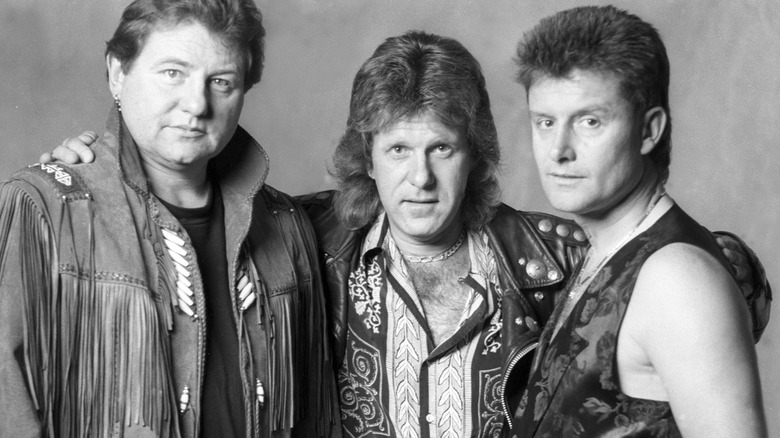
If you're going to bring up 1970s prog rock, then of course you're going to eventually mention Emerson, Lake & Palmer, the trio that often defined the subgenre with its elaborate performances. These included bringing a miniature orchestra on tour, as well as continual nitpicky arguments over seemingly everything, and while it proved fairly successful, things nevertheless fizzled out by the '80s.
Given all that back and forth, perhaps their reunion in the 1990s wasn't all that surprising. Yet it proved to be disappointing, in part because they were all aging. It wasn't just that their now old-school prog rock wasn't cutting-edge anymore; they also seemed to stumble when playing the music, as band members were clearly navigating the universal but troublesome experience of getting older — and onstage, at that.
Though the trio played at a 2010 music festival, they once again realized that the old magic wasn't there anymore. Drummer Carl Palmer himself told Classic Rock Revisited, "Unless it's as good as what it can be, then I can't do it. I would have carried on if it had been as good as it was. I don't believe it was and I don't believe it would have ever gotten back to that standard." Given that both Emerson and Lake died in 2016, the possibility of a reunion is now definitively closed.
The Byrds
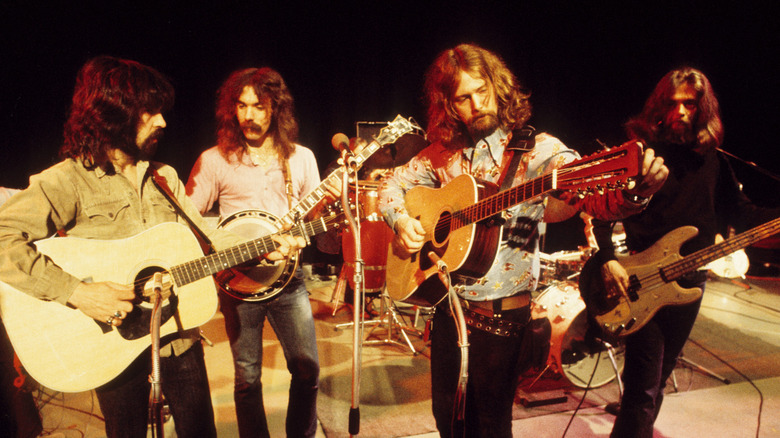
Sure, The Byrds were a big deal in the 1960s, with hits such as "Mr. Tambourine Man" and "Turn! Turn! Turn!" epitomizing its folk rock sound, but was there really a call for it to reform years later? Remembering the band's heyday, some might have looked forward with hope to a 1973 reunion album. After all, the original group was getting back together, namely Roger McGuinn, David Crosby, Chris Hillman, Gene Clark, and Michael Clarke.
They'd been toying with the idea for a while, but it took a hearty financial offer from record exec David Geffen for them to finally make the plunge. The result, simply titled "Byrds," offered up inconsistent results, perhaps because the band's members recorded at least some parts solo, undermining what had once been a cohesive group.
Yes, the album sold just fine, but it wasn't a mind-blowing success either, and music critics were largely unimpressed. In the face of such a lukewarm reception, the band's enthusiasm for a supporting tour waned. It attempted another reunion in 1989 with a tour of just three cities, but it was another critical flop. At that point, Crosby agreed with the skeptics, reserving particular ire for singer Gene Clark, who "went around with a very, very bad band, calling it the Byrds," and drummer Michael Clarke, who Crosby said was "going out there with an even worse band, and claiming to be the Byrds ... and they can't play the stuff" (via Far Out).
Van Halen and Sammy Hagar
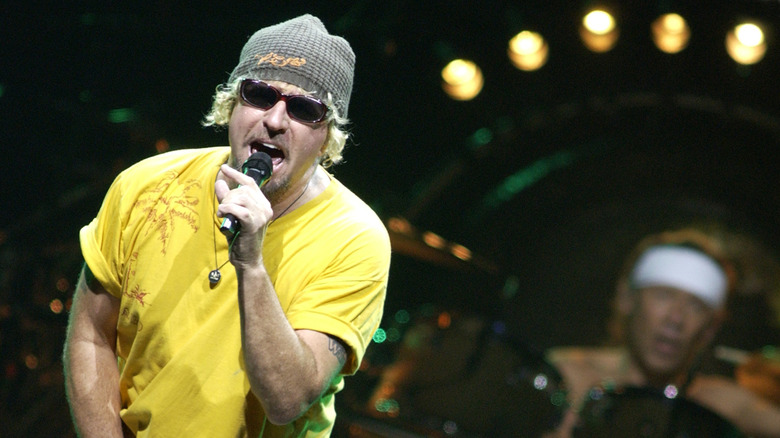
Van Halen is no stranger to messy band breakups, though you may first think of David Lee Roth's prickly exit in 1985 when considering its awkward history. Roth clashed with brother Alex and Eddie Van Halen, with Alex claiming in his memoir, "Brothers," that a fame-hungry Roth "couldn't handle the fact that Eddie was getting more attention than he was" and asked Eddie to play fewer of his virtuoso guitar solos (via Guitar World). But his replacement, Sammy Hagar, wasn't exactly a happy camper himself, leaving the band in 1996 after a long-simmering conflict, then rejoining during Van Halen's 2004 reunion.
At that point, Hagar hadn't sung with Van Halen for years, yet he and the Van Halens reconnected; eventually, they were recording again, then setting off on tour. Though the tour generated more than $54 million in revenue, things quickly deteriorated behind the scenes, with Eddie's substance misuse becoming ever more serious and tensions between him and Hagar ratcheting up yet again. Hagar considered quitting mid-tour but was held back by a contractual agreement that would have him pay up for any unfulfilled shows.
In an interview with AXS TV, Hagar baldly stated that "It was the worst experience of my life. ... Eddie was completely whacked out, off the charts on drugs and alcohol. ... I thought he was going to die." Yet he expressed measured respect for Van Halen, who died in 2020, noting, "When we got along good, he was one of the best friends I've ever had."
If you or anyone you know needs help with addiction issues, help is available. Visit the Substance Abuse and Mental Health Services Administration website or contact SAMHSA's National Helpline at 1-800-662-HELP (4357).
The Who
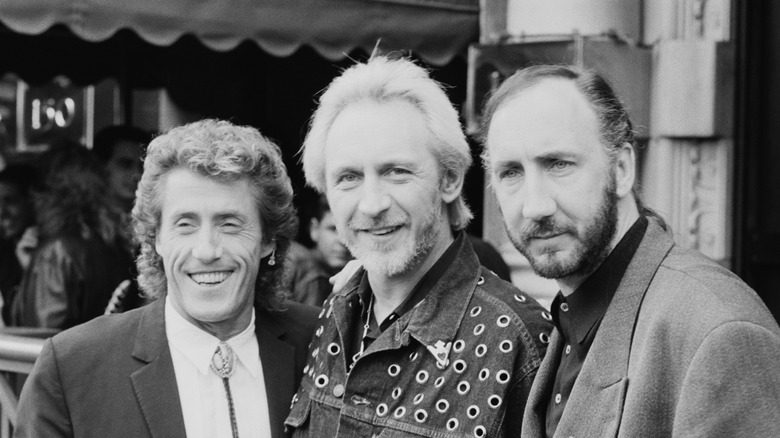
When should a band finally call it in? Answering that proved especially confusing in 1989, when The Who co-founder and leader Pete Townshend noted many odd things about his band's newly minted reunion. Not only had they just had a farewell tour seven years earlier, but Townshend told Rolling Stone that his hearing was shot, "the Who are a spent force creatively," they were old, and that "music does not belong in stadiums." At a press conference ahead of the tour, he outlined even more drawbacks, like the fact that The Who hadn't been together, much less toured, since 1982.
So, what was the point? Townshend referenced the band's 25th anniversary, but many also suggested that bank accounts were in consideration. John Entwistle was especially focused on the money, given that he reportedly blew most of his cash in the years since The Who's breakup. "There's no way I'm broke," he protested to Rolling Stone, before almost immediately admitting, "So yeah, I need the money from this tour very much."
The Who at least put in a serious effort, with three-hour-long concerts in many cities. Yet Townshend often played acoustic to minimize further hearing damage and managed to seriously injure himself at a Tacoma, Washington, show, where he was hustled offstage to receive stitches while the band was left to play without him. What's more, critics routinely claimed that the members of The Who seemed more suited to oldies stations than anything else, though they've continued touring and even performed at the 2010 Super Bowl (to decidedly muted acclaim).