

Music Icon Managers Who Made Damaging Missteps
Throughout the history of rock music, it's been demonstrated time and time again that a manager can make or break a career. Sure, there have certainly been rock bands that booted their managers once they became mega-successful, but on the flip side, bad management has crushed the dreams of many an up-and-coming rocker. When that happens, the ramifications can be serious and even last for decades. Whether it results in new artists stalling just when they should be taking off or a promising band forced into a bitter breakup, stories of mismanagement within the music industry are legion.
These stories often start the same way: Talented and ambitious musicians, desperate for a shot at stardom, eagerly sign on the dotted line in order to land a record deal — only realizing after the fact that the contract they thought would propel them to the big time instead sold them into indentured servitude. Those managers then go on to become obscenely wealthy, while the musicians are left fighting for scraps, wondering where all the money has gone. Then, of course, there are a few well-meaning managers who made calamitous mistakes.
Sometimes, those musicians are able to recover — although for some, it took decades. In other cases, the damage done by a shady manager has sidelined once-promising acts to the trash heap of history, including some that were once considered hotter than hot. Either way, the missteps made by these managers of musical icons led to lasting damage and even tragic consequences.
Col. Tom Parker — Elvis Presley
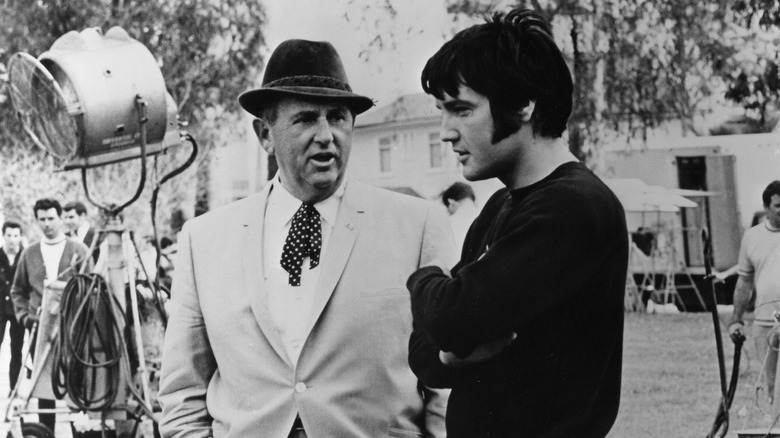
It's true that Col. Tom Parker was responsible for making Elvis Presley a superstar and fulfilled the singer's dream of becoming a movie star by negotiating a deal that brought Presley to Hollywood with his film debut in "Love Me Tender." Yet it's also true that Parker took a big cut, up to half of every dollar Presley earned (a standard management fee is 15% to 20%).
What should have been a promising movie career sent Presley onto a Hollywood hamster wheel; figuring his cash cow would become a flash in the pan, Parker encouraged Presley to churn out one forgettable movie after another to make as much quick cash as possible. Meanwhile, Parker also demanded 50% of the songwriting royalties on anything Presley recorded. As a result, only desperate and mediocre songwriters would work with him, denying Presley some potential hits that could have taken him back to the top of the charts. Dolly Parton, for example, refused Parker's demand for songwriting credit, and Presley never got the chance to record "I Will Always Love You," which later became a mega-hit for Whitney Houston.
Toward the end of Presley's life, Parker advised him to turn down an offer to star opposite Barbra Streisand in "A Star Is Born," which could have provided a major career comeback. In hindsight, it's clear that Parker was the reason why Presley never demanded better projects as his career was declining, and a better manager could have put him back on top.
Allen Klein — The Rolling Stones and The Beatles
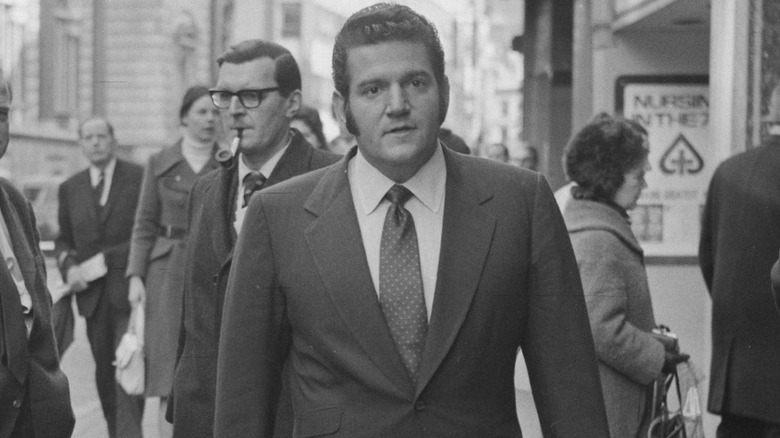
Brian Epstein may have steered the Beatles to superstardom — without him, the Fab Four may never have delivered their career-defining performance on "The Ed Sullivan Show," one of the iconic moments that changed rock history forever – but after Epstein's 1967 death, The Beatles' financial situation grew messy. By 1969, the band's record label and holding company, Apple Corps, was bleeding money. Enter Allen Klein, who'd previously managed The Rolling Stones from 1965 until 1970.
He engineered a meeting with John Lennon, who encouraged the others to hire him as their new manager. Meanwhile, his relationship with the Stones ended badly, and lawsuits between Klein and the band dragged on for years. It wasn't until 1975 that a settlement was reached, with the Stones agreeing to let Klein issue an album of unreleased material they'd recorded while he'd been their manager. "I just wanted to get rid of him," Mick Jagger told Rolling Stone. "He's just living off us and what we did five, 10 years ago, you know? It's pretty pathetic."
Paul McCartney didn't trust Klein, and so when he was outvoted three-to-one and Klein was hired, a growing rift between McCartney and Lennon deepened and ultimately contributed to The Beatles' bitter breakup. Lennon later admitted that McCartney had been right, and he, Ringo Starr, and George Harrison grew disenchanted. When they refused to renew their management contract in 1973, Klein sued for $19 million. The former Beatles ultimately paid $5 million to rid themselves of Klein once and for all.
Stan Polley — Badfinger
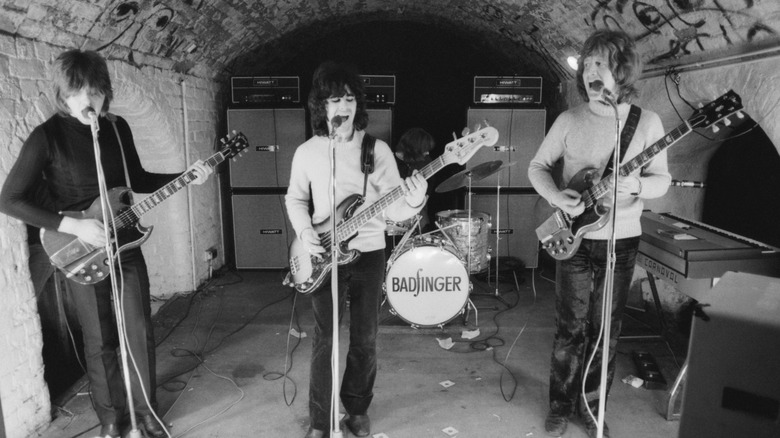
When Badfinger was signed to The Beatles' Apple label, the band was instantly granted next-big-thing status. And why not? Its first single, "Come and Get It," written and produced by Paul McCartney, cracked Billboard's Top 10. Yet one key factor prevented the band from becoming as big as it should have: its manager, Stan Polley. The management contract they'd signed granted him "irrefutable power of attorney throughout the world." That gave Polley — who'd been publicly identified as an intermediary bag man for the mob during a Senate hearing — carte blanche to handle the band's money.
As the band's singles climbed the charts, stardom was in sight. Yet the more Badfinger recorded and toured, the more indebted the members became; the more albums they sold, the poorer they were. A few months before signing a lucrative deal with Warner Bros., they received a stark warning from Polley's assistant, Stan Poses, who told them, "You guys will never see a goddamn penny the ways he's structured your contracts. He has control of everything," as recounted in Dan Matovina's "Without You: The Tragic Story of Badfinger."
Eventually, Warner Bros. declined to release any more Badfinger albums and canceled the recording contract. The band was destitute and split up in 1975. Shortly after, band member Pete Ham — who'd lost his home, had no income, and was staring at bankruptcy — died by suicide. In 1983, Badfinger's Tom Evans died under similar circumstances. Ultimately, Badfinger's members were among the rock stars from 1970 who should still be famous today had it not been for their manager.
If you or someone you know is struggling or in crisis, help is available. Call or text 988 or chat 988lifeline.org
Matthew Katz — Moby Grape
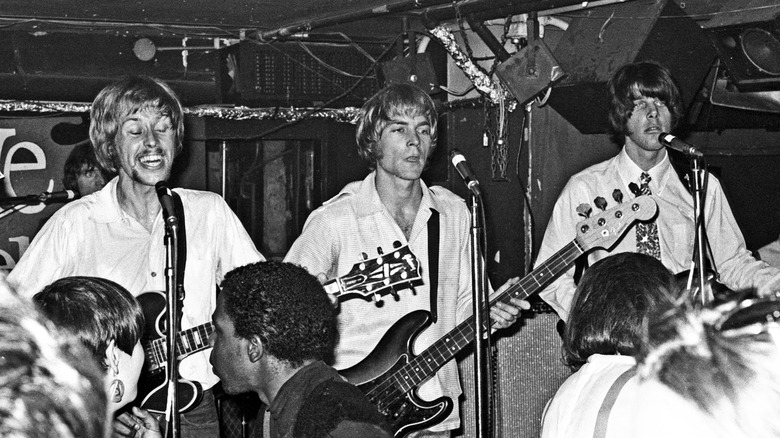
Emerging from the same San Francisco psychedelic music scene that had produced the Grateful Dead and Jefferson Airplane, Moby Grape had become so hot that by late 1966, several major labels attempted to woo it. The band signed with manager Matthew Katz at around the time Columbia was offering a record deal. "We were just stupid young guys," bassist Bob Mosley told Classic Rock, adding, "So Katz told [Columbia] that if we didn't sign contracts giving up the name and management and rights to publishing, he'd stop the contract from happening."
A series of setbacks, including backlash to the label's relentless hype and several members of the band getting arrested, stalled Moby Grape's career. Katz was fired in 1967, but he soon re-emerged with a vengeance. Claiming the contracts the members had signed gave him full ownership of the Moby Grape name, he legally prohibited them from using it. This landed the band in legal limbo while fighting it out in court. It took until 2005 for the band to regain the rights to its name, but it was too late by then. Moby Grape had become a minor footnote in rock history.
"Katz was just an ***hole to begin with," Mosley declared, claiming Katz made a fortune by releasing the band's material on his own label without paying them a dime. "He's made a lot of money off that and all the fake versions of the Grape he's been putting together over the years. We never made any money from Moby Grape."
Kit Lambert and Chris Stamp — The Who
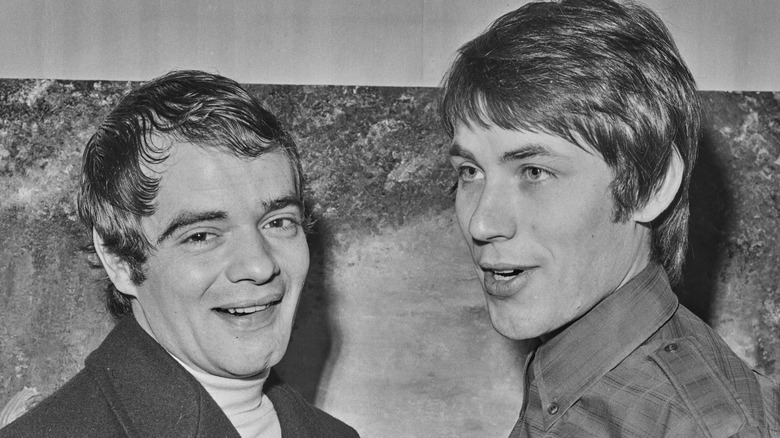
Wannabe filmmakers Kit Lambert and Chris Stamp had no experience in management when they became co-managers of The Who. Nevertheless, their savvy skills at marketing and media manipulation put the quartet on the map. And, to their credit, they were responsible for convincing guitarist Pete Townshend to start writing material for the band, making them at least partly responsible for the emergence of one of rock's greatest songwriters. Yet the duo's brilliance at attention-getting PR stunts didn't carry over into their business dealings.
When big money started coming in, they began spending it to fund their lavish lifestyles, leaving the band's finances in a complete mess. "We don't get deals because we're the best negotiators. We're probably the worst," Stamp once confessed (via The Guardian). As The Who's popularity increased, the band's members began to notice that Stamp and Lambert were living far larger than they were. Front man Roger Daltrey became fed up and ordered an audit, which led to the discovery that 40% of The Who's earnings were being pocketed by Lambert and Stamp before the band members got their share.
That was the final straw, and The Who gave Lambert and Stamp the boot. "They lived like rock stars," Townshend told Billboard of Lambert and Stamp, "... and they really stopped functioning as managers — or the type of managers they had been, and that we still needed."
Kim Fowley — The Runaways
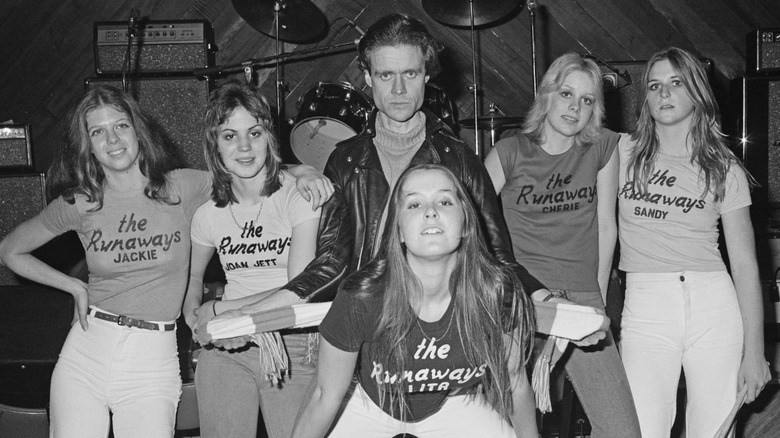
A failed rock star, Kim Fowley was a fixture on Hollywood's Sunset Strip when he met 14-year-old Kari Krome, who shared her idea of forming an all-girl band. Fowley saw the potential and enlisted her to round up teenage girls that he could mold into a band. The result was The Runaways, featuring Joan Jett and Lita Ford on guitar and Cherie Currie singing lead vocals.
While the band began gaining traction with its single "Cherry Bomb," Fowley had allegedly been using psychological manipulation to maintain Svengali-like control over the teens. "I don't know what he did to Joan and Sandy, but he would set us off against each other, so we could never gang up, figure out what he was doing and replace him," Jackie Fox (aka Jackie Fuchs) told NPR. "It was the abuse from Kim Fowley and our roadies that was so hard to take," Currie told The Guardian. "We got such abuse on a daily basis."
That abuse contributed to The Runaways flaming out, and it split up in 1979. Joan Jett later revealed the real reason the Runaways broke up was musical differences, and she launched a solo career that was far more successful than The Runaways ever were, sans Fowley. "You know he wanted to be Colonel Tom Parker and he wanted an Elvis," Evelyn McDonnell, author of "Queens of Noise: The Real Story of The Runaways," told NPR. "I think he found her, but he lost her."
Terry Knight — Grand Funk Railroad
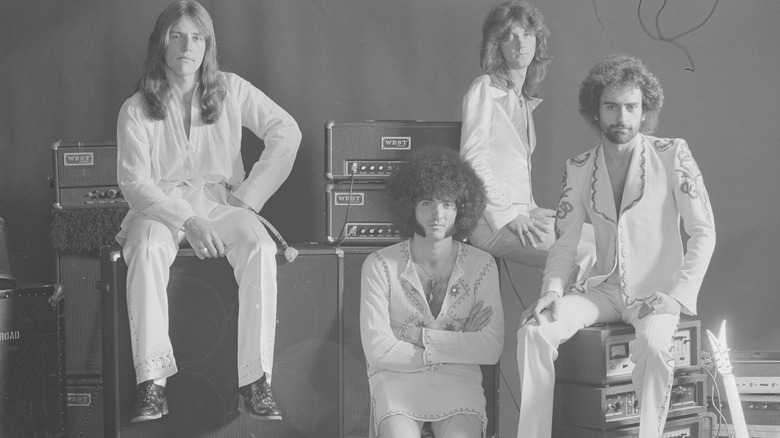
Terry Knight transformed Grand Funk Railroad from garage band to rock stars. Knight's clever promotional ideas propelled the rock trio, led by singer and guitarist Mark Farner, to massive success, as popular with fans as they were despised by critics. At first, the band was thrilled with Knight's efforts. "He got us gigs, a record label — things were good. We let our guard down, we were stupid," drummer Don Brewer told Classic Rock. As the band's success grew mightily, Farner and his bandmates began to wonder why they weren't making more money and confronted Knight. "We wanted to hear what was happening with the money and Terry didn't give us the right answers. He gave us the runaround," said Brewer.
Knight was fired, and the courts became the new battleground. The band members sued Knight for $8 million they alleged he'd stolen from them, while Knight sued the musicians for breach of contract, seeking $57 million. Claiming he retained ownership of the band's name, Knight once attempted to impound all the band's equipment right before a show at Madison Square Garden. The lawsuits were eventually settled, with the band paying Knight $15 million.
All that hassle contributed to the group breaking up in 1976, far less wealthy than they should have been. Years later, Farner met with Knight in hopes of convincing him to give him back the publishing rights he'd unwittingly signed away. "I was wanting him to man up and give my publishing back to me," Farner told Rock History Music, "but that didn't happen."
Frank Weber — Billy Joel
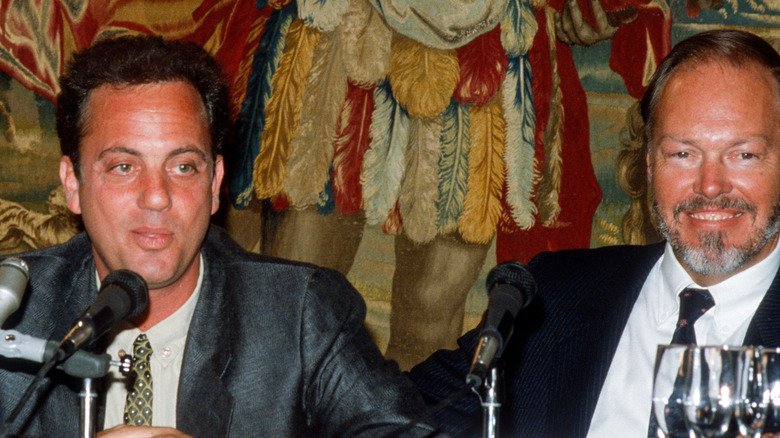
Wanting to focus on music and leave his business affairs to someone he trusted, Billy Joel turned to his ex-wife's brother, Frank Weber. That arrangement seemed to work, with Joel becoming one of rock's most successful artists. As time went by, his then-wife, supermodel Christie Brinkley, couldn't help but notice Weber's highfalutin lifestyle. "I thought, 'Wow, he's flying everywhere on, like, a private jet. He's buying racehorses galore ... Something's not right here.' I said to Billy, 'Frank Weber's ripping you off.' And he did not want to hear that," Brinkley recalled in the documentary "Billy Joel: And So It Goes" (via People).
Joel asked for an audit, and the results were beyond eye-opening. "I found out I didn't have any of the money I should have," said Joel in the documentary, revealing Weber also hadn't paid Joel's taxes and that he owed the IRS $5 million. "It hit me like a ton of bricks," Joel admitted. In 1989, after grasping the extent of the financial mismanagement, Joel sued Weber for a staggering $90 million.
That lawsuit was eventually settled, although details were never made public. And while the events took a heavy toll on Joel, forcing him to recoup his losses with a burst of activity, he learned an important lesson; ever since, he's kept a far closer eye on the business aspects of his career. "So I took over my management and I never looked back," he said.
Mike Appel — Bruce Springsteen

In 1972, Bruce Springsteen signed a deal with manager Mike Appel, who then shrewdly built his career, culminating in the week when the musician simultaneously appeared on the cover of both Time and Newsweek. When "Born to Run" became his breakthrough hit, Springsteen began to realize his contract with Appel only left him with half his publishing and paid him less than a tenth of what he should have been earning.
He sued Appel and hired Jon Landau, who'd helped produce "Born to Run," as his new manager. Appel countersued and was granted an injunction that barred Springsteen from entering a recording studio with Landau without Appel's approval. That, Springsteen reflected in the documentary "The Promise: The Making of Darkness on the Edge of Town," effectively kept him out of the studio. "I was kind of his property in that area, you know," Springsteen recalled.
The legal exchanges also resulted in a bizarre situation that found one of rock's hottest up-and-coming stars legally prohibited from recording a follow-up to what had been his most pivotal work to date. As the case wound through the courts, Springsteen wasted an entire year before eventually winning the case. Only then was he finally permitted to enter the studio to record his next album, "Darkness on the Edge of Town," with the E Street Band. "It wasn't a lawsuit about money," Springsteen explained. "It was a lawsuit about control."
John Fogerty — Creedence Clearwater Revival
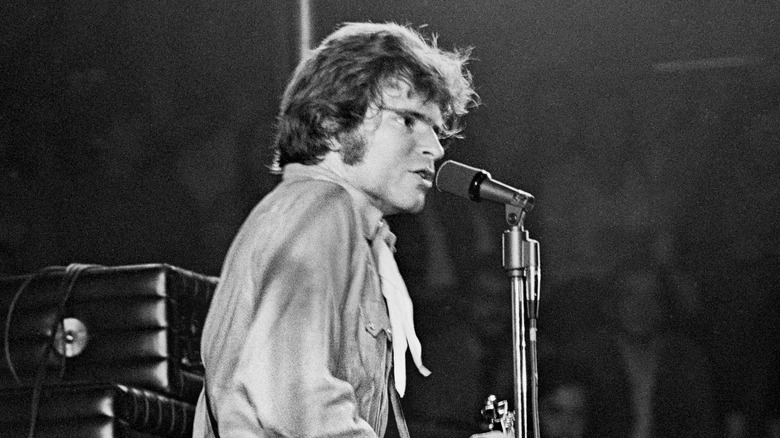
As singer, guitarist, and chief songwriter for Creedence Clearwater Revival (CCR), John Fogerty led the band to an impressive run of success — and not just as its frontman. "John was our manager," CCR drummer Doug Clifford told Uncut. "Bad idea. He had no concept of the business side. Zero. None. Nada." In his capacity as manager, Fogerty and the others signed a record deal with Fantasy Records, owned by Saul Zaentz. Led to believe they were signing a standard recording contract, they'd actually entered a draconian deal that gave Zaentz ownership of all publishing, and contractually obligated the band to pump out 180 new songs.
Burned out and frustrated with stalled efforts to renegotiate their awful contract, CCR broke up in 1972. Fogerty wanted to launch himself as a solo artist, but remained contractually bound to Fantasy. "I felt like I was their little prisoner in their dungeon, their little mouse in a cage that they played with," Fogerty told The Guardian.
Fogerty sued Zaentz, who retaliated in kind. The following decades saw the men engaged in numerous lawsuits, including Zaentz suing Fogerty for defamation over lyrics in his song "Zanz Kant Danz." Most egregiously, Zaentz sued the singer over claims that Fogerty had plagiarized himself, claiming the 1984 track "Old Man Down the Road" was a knock-off of CCR's hit "Run Through the Jungle," the latter of which Zaentz owned the copyright to. It took 50 years of legal battles, but Fogerty finally regained control of his CCR songs in 2023.
Tony Secunda — The Move
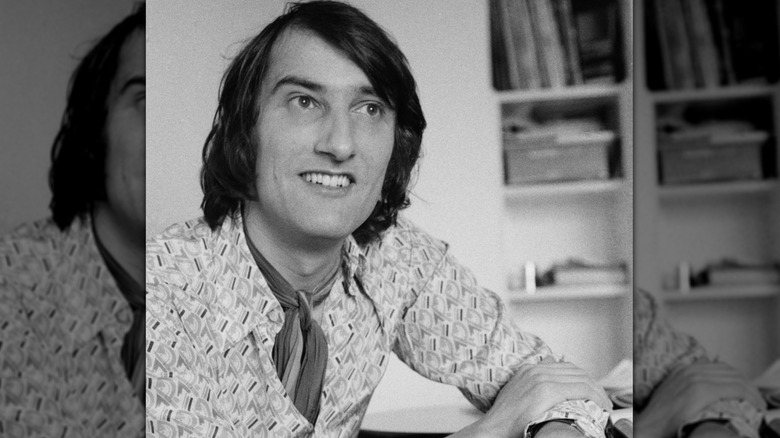
While serving as manager of up-and-coming British band The Move, Tony Secunda came up with what he believed was a brilliant way to market the band's 1967 single "Flowers in the Rain." He figured the band would garner attention by issuing a postcard that featured a cartoon of British Prime Minister Harold Wilson naked in bed with a masked woman.
The gimmick did indeed stir up the controversy Secunda was seeking, but with a pretty significant unintended consequence: Wilson sued, alleging libel, and perhaps unsurprisingly, the politician won. Thanks to Secunda, what should have been the Move's breakout single became a financial boondoggle that cost him the trust of the band; instead of enjoying the financial windfall of the single, which peaked at No. 2 on the U.K. charts, the royalties were ordered to be donated to charity.
Secunda was fired shortly after the postcard debacle, yet The Move never recovered. The silver lining, of course, was that drummer Bev Bevan and guitarist Roy Wood hooked up with Jeff Lynne, with The Move eventually evolving into a far more successful group: Electric Light Orchestra.