

The Most Eye-Watering Sums Musicians Have Ever Been Paid For Their Catalogs
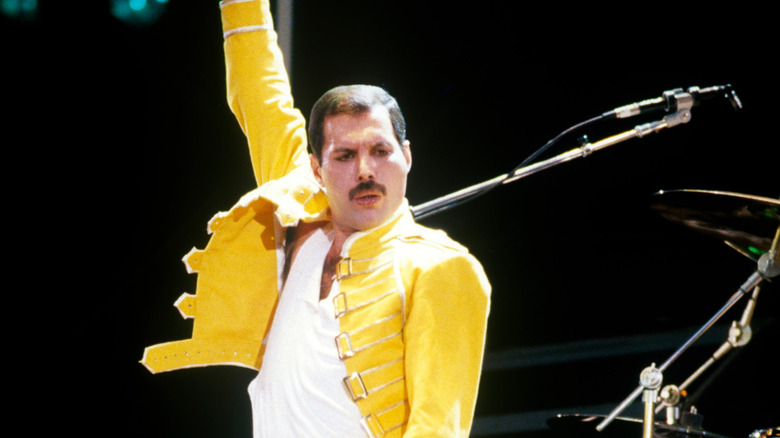
Perhaps the most startling 2020s music trend: Rock stars collecting almost inconceivable amounts of cash for their back catalogs. Historically, bands and singers made a sizable piece of their fortunes from their songs getting played on the radio and in movies and TV shows, sold as singles or on albums, and later, via downloads and streaming plays. But the staggering amounts of money go to whoever owns the artist's catalog of compositions — i.e., the person or company that has publishing rights.
Several wealthy music rights agencies have snapped up the potentially income-generating catalogs for a number of rock and pop stars. The going rate: Tens or even hundreds of millions, depending on the stature and appeal of the artist selling away their life's work. They've gotten huge paydays, and some have gone ahead and sold not only the rights to their songs but also their famous recordings of them — the masters. Here are the biggest amounts of money ever paid to lock down the rights to the catalogs of music's most dominant stars, from the $200 million range up to more than $1 billion.
Daddy Yankee
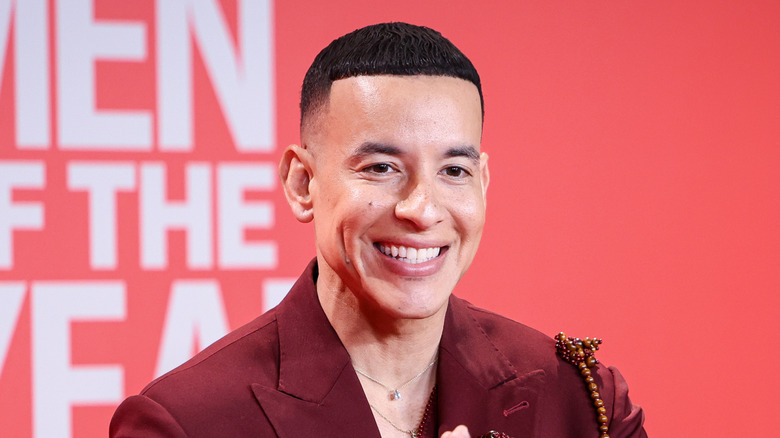
One emergent sector of the American music industry in the 21st century: Latin music, or Spanish-language genres, including the propulsive, hip-hop-flavored reggaeton. One of its biggest stars, who helped popularize reggaeton in general, is Puerto Rican musician Daddy Yankee. He has taken five songs into the Top 40 of the Billboard Hot 100, including "Gasolina" and "Despacito," which spent 16 weeks at No. 1 in the summer of 2017. With six songs topping the 1-billion-plays milestone on Spotify alone, Daddy Yankee is one of the most-streamed artists of the digital era, and he's got enduring international appeal.
That all translates to an extremely valuable catalog of familiar, party-starting songs, and in 2024, music management company Concord extended an offer to Daddy Yankee. The group now holds the publishing and recording rights to Daddy Yankee's work from 2002 and 2019, which includes numerous standalone singles. The reggaeton legend took home a package worth a reported $217 million for the transaction.
Katy Perry
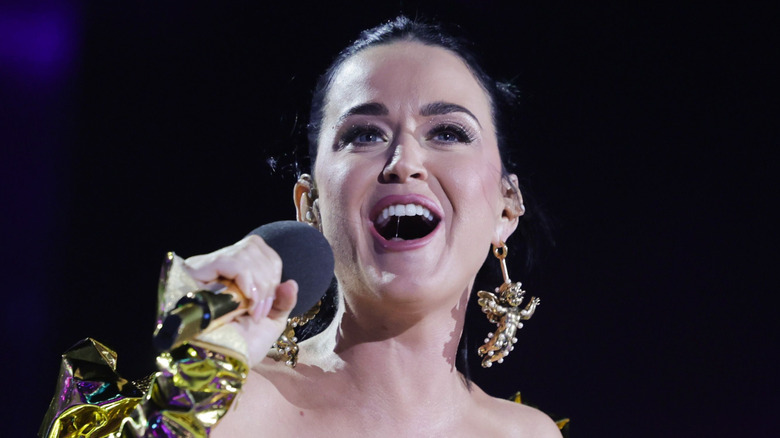
Katy Perry started as a backup singer before launching a mega-successful solo career in the mainstream, secular music industry. Within the span of about two decades, she established herself as one of the most consistent and prolific hit-makers of the new millennium. Perry has reached No. 1 on the Billboard Hot 100 pop chart 11 times, and many of those singles sold at least 10 million copies. She also released multi-platinum albums like "Teenage Dream," which went diamond after selling 10 million units.
That's the very definition of pop music, but Perry eventually experienced a career downturn, struggling to sell records and connect with fans in recent years, so she cashed in while her catalog was still worth a fortune. One of the first major purchases by Litmus Music, formed in 2022 as a music rights management firm and funded by investment firm the Carlyle Group, was Perry's stake in publishing rights and masters for her albums from 2008 to 2020. The pop star earned $225 million on the transaction.
Jason Aldean
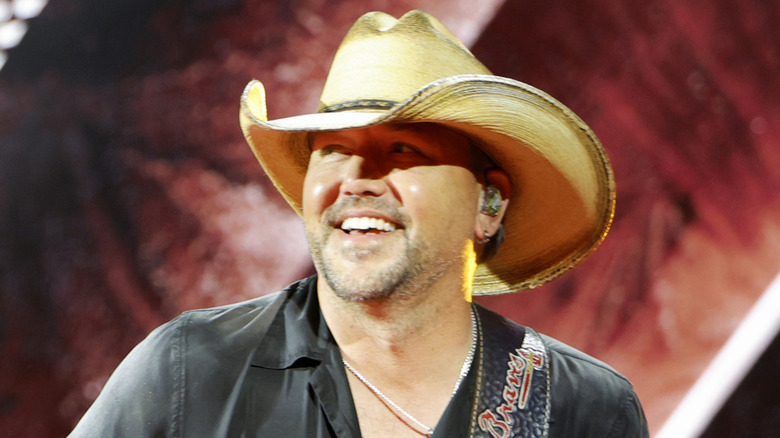
One of country music's standard bearers in the new millennium, Jason Aldean has been a consistent presence on that genre's chart since 2005. The musician has landed more than 40 songs in the Top 40 of the Hot Country chart, including 10 No. 1 hits. Aldean has also been a leader of the country-to-pop crossover movement, rating highly on the all-genre Hot 100, with "Dirt Road Anthem" making the Top 10 in 2011 and "Try That in a Small Town" going all the way to No. 1 in 2023.
Country music is big business in the 2020s, not just in the United States, its nation of origin, but increasingly around the world. In 2021, Bertelsmann's music publishing division, BMG, created Boost, a drive to acquire and invest in artists' catalogs. Within four years, BMG spent $1.5 billion on securing the rights to about two dozen musicians' works. In 2025, specifically, it spent $250 million on several catalogs — the largest deal of its kind in the company's history — including recording and publishing rights for Aldean's nine albums' worth of material first recorded between 2005 and 2019.
David Bowie
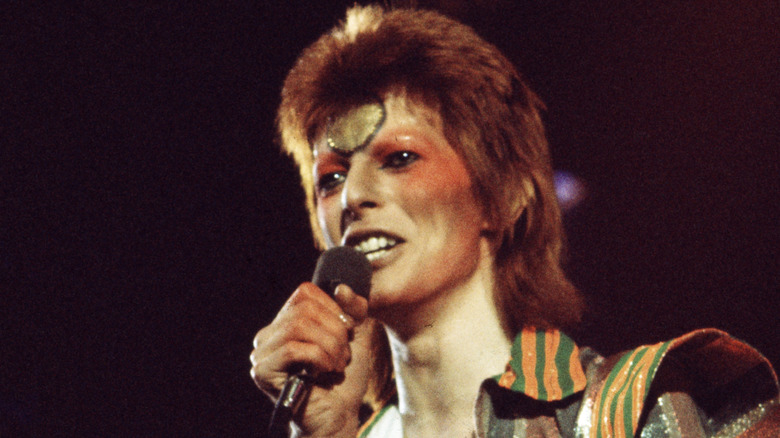
More than a mere rock star or pop singer, David Bowie was regarded as a performance artist without peer. He remained relevant and commercially successful from the 1960s until the release of "Blackstar," a farewell statement issued just before his death in 2016. Through it all, Bowie rarely stayed the same for long, adopting an array of styles and personas that served the music and vice versa. That resulted in a catalog rich in quantity and quality, with record sales topping 70 million units.
In January 2022, the managers of Bowie's estate completed the paperwork to transfer the artist's publishing rights to Warner Chappell Music. The firm gained the publishing rights to all 26 albums Bowie recorded during his lifetime, plus the unreleased album "Toy." With Warner having already purchased Bowie's output in two separate transactions for an amount not publicly disclosed, the catalog sale provided over $250 million to Bowie's heirs.
Sting
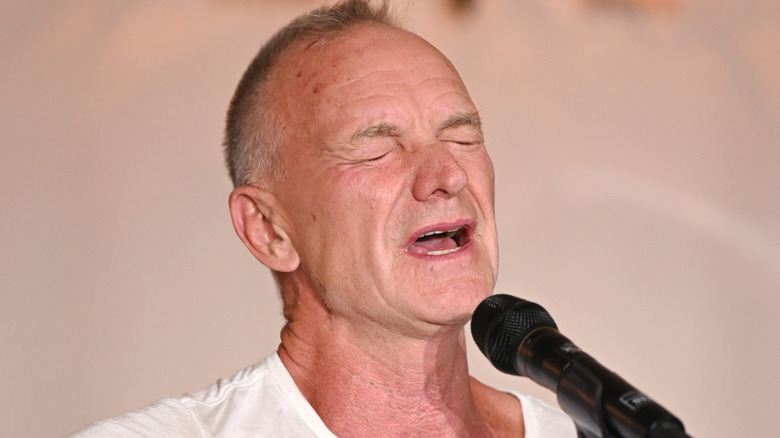
In two separate eras, one with a band and one as a solo artist, Sting created some of the most indelible and sophisticated rock and pop music. In the late 1970s and early 1980s, he headed up the Police, which merged punk, reggae, new wave, and classic rock to create a sound all its own. Among its string of cash-generating, radio-dominating hits at the time: "Every Little Thing She Does Is Magic," "Don't Stand So Close to Me," and the biggest song of 1983, "Every Breath You Take," a classic rock song from the '80s worth a head-turning amount of money. The primary songwriter and singer in the Police, Sting struck out on his own in the mid-'80s and scored plenty of smash pop singles and albums into the 21st century.
The Universal Music Publishing Group wanted it all — the Police and solo stuff alike, both publising rights and masters — and forked out a lot of money for it. In 2022, the New York Times reported that Sting stood to earn $300 million from the sale of his catalog to the music curation and distribution firm, a corporate sibling of Sting's regular record label.
Genesis
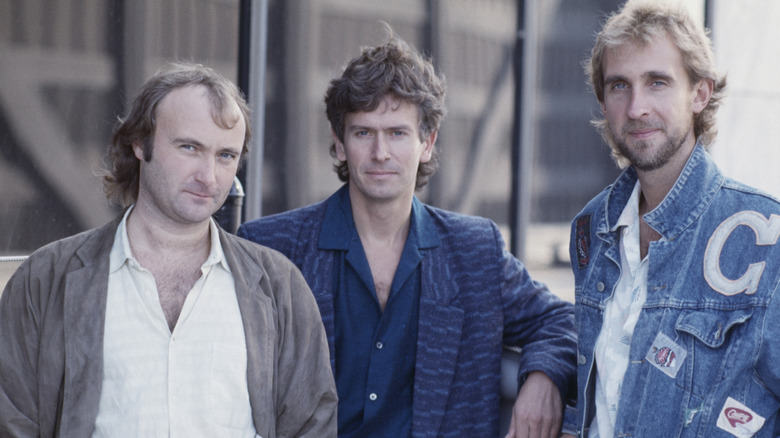
Genesis began its run as an artsy progressive rock band fronted by Peter Gabriel in the late 1960s and closed up shop after some goodbye shows in 2022. Along the way, Gabriel departed, drummer Phil Collins stepped up to the microphone, and Genesis became a thoughtful, straightforward rock band with an ear for radio-friendly hits. It also spawned a network of music, which included Collins' concurrent sterling career as a soft rock singer and Mike Rutherford's spinoff Mike + the Mechanics.
Collins essentially retired for health reasons after Genesis' last stand — not long before the band sold its catalog. After an attempt to sell just Collins' work, full of '80s and '90s smashes like "Another Day in Paradise" and "One More Night," handlers packaged it in the post-Gabriel Genesis collection. With Tony Banks' solo stuff and Mike + the Mechanics' work in play, recording and publishing rights for the mega-catalog fetched more than $300 million from Concord Music Group.
KISS
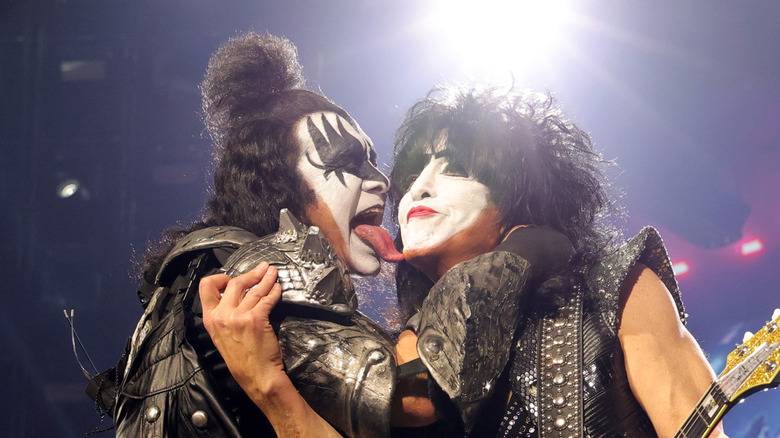
While both bands favored flashy stage costumes, all-caps names, and singalong anthems, '70s superstar groups ABBA and KISS stood at opposite ends of the musical spectrum. The former wrote disco and ballads about love and romance, while the latter was into mostly hard-rocking numbers about partying and carnality. But as of 2024, ABBA and KISS are under the same corporate umbrella, as one of the Swedish dance foursome is now a co-owner of the entire KISS universe.
Björn Ulvaeus started ABBA in the 1970s and Pophouse Entertainment in the 2010s. In 2024, his firm paid a non-disclosed amount — reported to be in the range of $300 million — for everything to do with KISS. The band planned to retire from actively touring, and it handed the rights and reins to Pophouse. Not only will Pophouse oversee KISS' extensive catalog of songs, but it will also control the group's name, likeness, and image, which includes the makeup designs worn by its members onstage for decades.
Zach Bryan
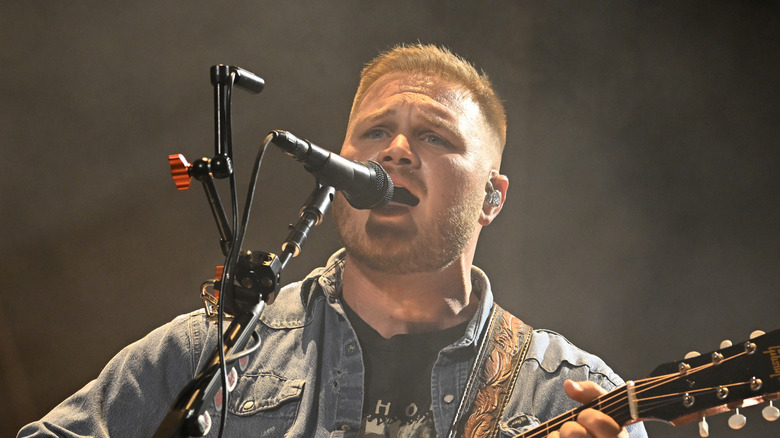
One of the more luminous names in contemporary country music, Zach Bryan is a late-breaking megastar. Following two independently released albums, he contracted with Warner Records, which issued the 2022 LP "American Heartbreak" and all subsequent projects. His singles regularly notch high positions on the Hot 100, too, with "Something in the Orange" and "Pink Skies" making the Top 10 and "I Remember Everything," a collaboration with Kacey Musgraves, hitting No. 1 on the pop, rock, and country charts.
Having sold a ton of music in less than a decade, Bryan has both a wide and intense appeal to music buyers. Unsurprisingly, Warner Records had a keen and powerful interest in keeping the musician on its roster, and the company was prepared to shell out as much money as it would take. In 2025, the label beat out a bid from Universal and secured his services for a minimum of two more albums as well as a publishing deal. The contract extension plus the purchase of Bryan's catalog netted the singer a combined $350 million.
Red Hot Chili Peppers
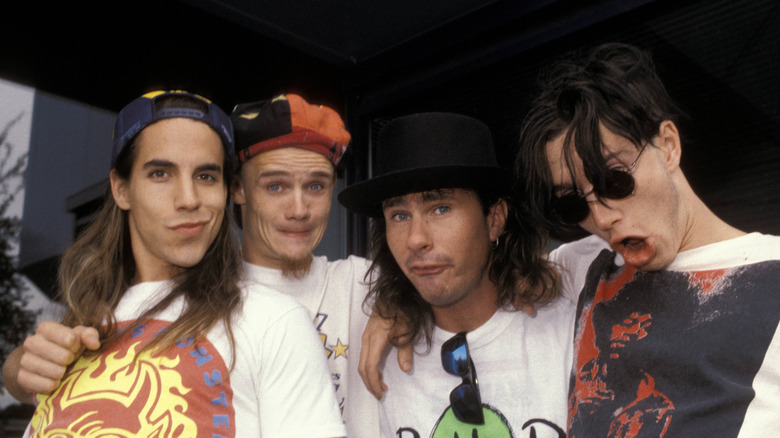
Once perceived as one of the wildest and raunchiest bands going, the Red Hot Chili Peppers survived the 1980s and 1990s and became elder statesmen of alternative rock. The formerly punk-funk group switched to mid-tempo and innocuous radio-friendly rock, and the decision paid off: It's gone to the top of Billboard's alternative rock chart with 15 singles that have cumulatively spent 91 weeks at No. 1. Clearly, lots of people love to listen to the Red Hot Chili Peppers, and its music is subsequently very valuable.
In 2021, the band sold its catalog to the Hipgnosis Songs Fund for a figure reported to be somewhere between $140 million and $150 million — but just the publishing rights. The Red Hot Chili Peppers still controlled its library of masters, or it did until 2026. Warner Music Group, in connection with financial company Bain Capital, spent $650 million in less than one year on musicians' catalogs. A big chunk of that sum was the $300 million handed over to the Red Hot Chili Peppers for the group's recording rights. Altogether, that's about $450 million for the band.
Bruce Springsteen
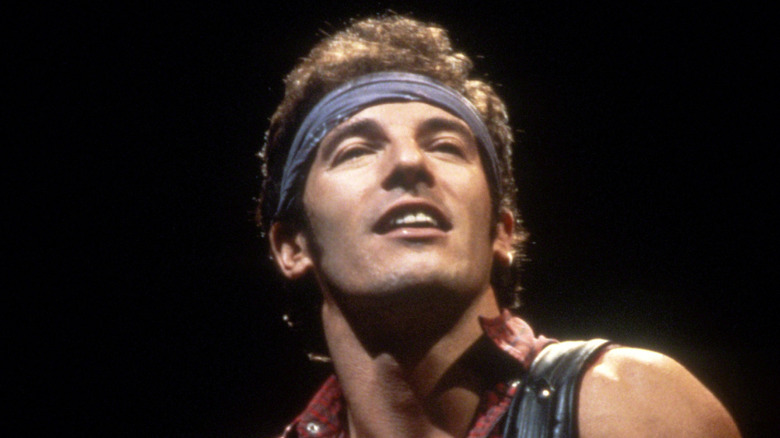
There aren't many figures that tower over the rest of rock 'n' roll the way Bruce Springsteen has for the last five decades. Both with and without the E Street Band, Springsteen has made his home at Columbia Records. Since the 1970s, he's made that imprint a lot of money, selling over 65 million albums. That includes the quintuple-platinum "The River" and the 15-million-selling "Born in the U.S.A." While Springsteen hasn't placed a single in the Hot 100's Top 40 since 1995, he could still debut an album in the Top 5 of the LP chart in the 2020s, when interest in the artist nicknamed "The Boss" still contributed around $15 million each year to Columbia's coffers.
Such staying power was a major reason why Columbia Records' parent company, Sony, wanted to expand its relationship with Springsteen. In 2021, the Boss is now virtually an employee of Sony Music. After months of bids and negotiations with various publishers, Springsteen opted to offload both his publishing rights and his masters to different branches of the Sony apparatus. Sony Music Publishing gets the former, and Sony Music the latter, all for a grand total of approximately $500 million.
Bob Dylan
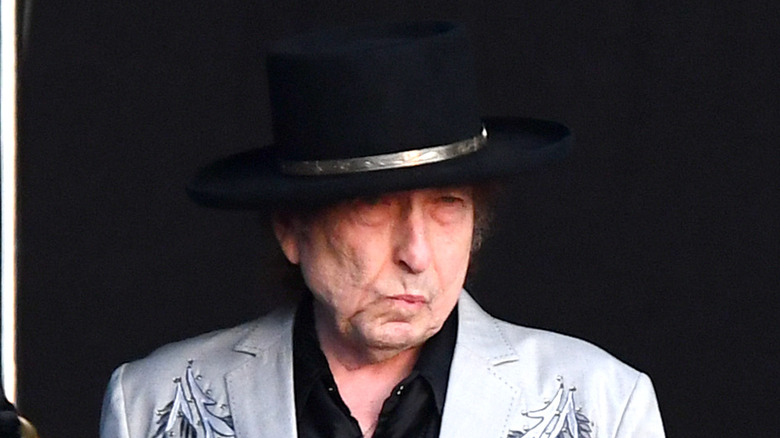
Hailed as one of the greatest songwriters of the boomer era, if not of all time, Bob Dylan mixed folk, pop, rock, and poetry to make himself an icon of American music. He's the rare artist who has sold millions of albums and sent a dozen songs to the Hot 100's Top 40 across multiple decades while also enjoying a near-spotless reputation with critics. He even received the Nobel Prize in literature.
The musician wrote more No. 1 hits than he ever scored himself, and the Dylan songbook, which includes classics like "Don't Think Twice, It's All Right," "Like a Rolling Stone," "Tangled Up in Blue," and "Forever Young," is artistically priceless. But that doesn't mean somebody can't put a price tag on it. And it would have to be one with a very large number written on it. In 2020, Dylan sold his songwriting and publishing rights to Universal Music Publishing Group for what was at the time the largest figure ever paid for one artist's work: A figure north of $300 million, for 600-plus songs. About two years later, Dylan sold the master recordings of his output to Sony Music, adding another $200 million or so to his fortune.
Michael Jackson
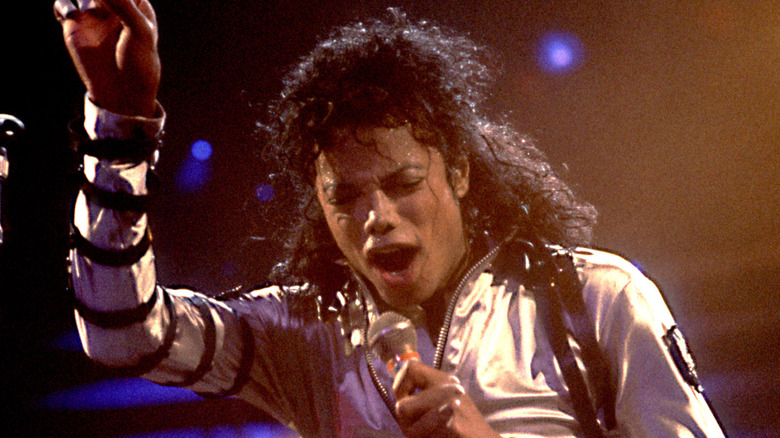
Unequivocally one of the most monumental pop culture figures of the late 20th century, Michael Jackson was known around the world as the King of Pop, a preferred marketing term that was nonetheless deserved. Notably, he scored the most No. 1 hits of the 1980s with chart-toppers including "Billie Jean," "Say Say Say," "Man in the Mirror," and "I Just Can't Stop Loving You." But he reached similar peaks with his family bands, the Jackson 5 and the Jacksons, in the '70s and kept releasing massive hits well into the '90s. Jackson sold 34 million copies of his 1982 album "Thriller" in the U.S. alone, making it the top-selling studio album ever. Even well after his 2009 death, the King of Pop can still draw a crowd — the 2026 biopic "Michael" took in more than $800 million at the global box office.
The Jackson catalog doesn't seem to be losing value or favor anytime soon, so much so that show business powerhouse Sony bought its way into the franchise. In 2024, Jackson's musical estate, including both his master recordings and publishing rights, was valued somewhere between $1.2 billion and $1.5 billion. Sony claimed about a 50% share, spending around $600 million on the acquisition.
Queen
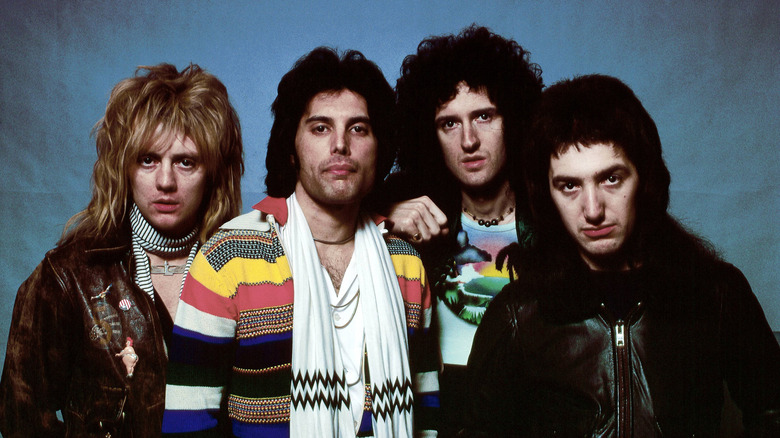
One could argue that Queen is as popular in the 2020s as it was in its 1970s heyday. Perhaps even more so, because the theatrical hard rock band's songs still get plenty of attention on classic radio, on streaming services, and in film and TV. Of the classic rock songs from the '70s worth a head-turning amount of money, Queen is responsible for many, with endlessly played hits like "Bohemian Rhapsody," "Don't Stop Me Now," and "Somebody to Love" becoming global favorites. The adoration of Queen's music and a fascination with the group, particularly its supernaturally gifted and tragically deceased singer Freddie Mercury, propelled the global box office of the 2018 biopic "Bohemian Rhapsody" to upwards of $900 million.
In 2024, the members of Queen became the beneficiaries of the most monied catalog rights deal ever. The arrangement gave Sony Music the masters and publishing rights to Queen's massive and smash-laden catalog as well as its brand name and image. A stunning £1 billion changed hands — the equivalent of $1.27 billion at the time of the sale.
Some rockers didn't get as much as the others
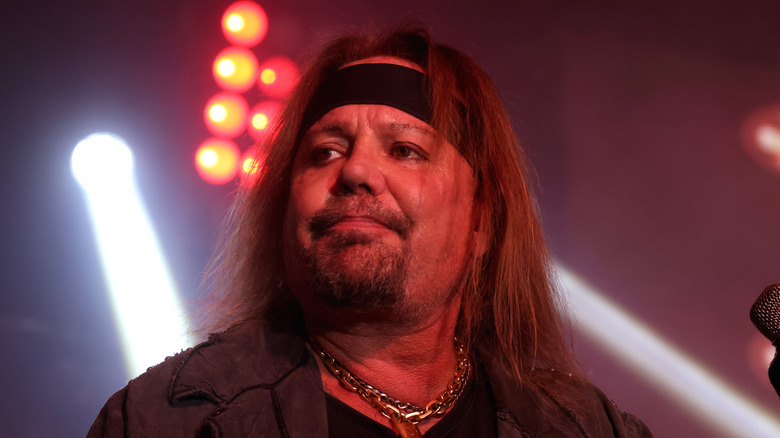
Some classic rock musicians aren't as rich as you might think. While they sold millions of albums, charted numerous hit singles, and played to packed arenas and stadiums for decades, the deals they signed to transfer ownership of their catalogs to music publishers simply weren't as astronomically lucrative as the ones signed by their peers. Nevertheless, they're still financially set for a few lifetimes. Neil Young, a member of Crosby, Stills, Nash & Young and a solo folk-rocker who made a series of seminal albums in the 1970s, sold off a 50% piece of his publishing copyrights on the 1,180 tunes he'd written to the Hipgnosis Songs Fund in 2021 for $150 million.
Stevie Nicks wrote many hits for herself and for Fleetwood Mac, and in 2020, she let go of an 80% share of her publishing stake to Primary Wave. Motley Crüe, a relic of the '80s hair metal phenomenon, was still able to garner an estimated $90 million from BMG for its song masters in 2021. That same year, Tina Turner sold her stakes of recordings and publishing, as well as the right to use her likeness and name, to that same firm for about $50 million.