

Before They Climbed The Charts, These Hit Songs Were Commercial Jingles
Inspiration for a song can come from anywhere, and a select few hits originated in television commercials — otherwise known in the advertising industry as "jingles." It stands to reason that far more of these pieces of jaunty, often-played music should've gone on to be major hit singles. If the biggest pop songs are the ones with the catchiest melodies and most undeniable hooks, ad songs fit the bill, as they're designed to lodge in the brains of as many potential consumers as possible to drive purchases.
The agencies that have historically put together TV commercials seem to know who to hire to generate the best ad songs. While classic artists have written terrible jingles, it's a viable chops-honing experience for songwriters on the rise — just look at pop craftsman Barry Manilow, who wrote and performed a number of catchy jingles. Sometimes those songs are just too good to go to waste as a 30-second or 60-second snippet. Once in a while, and throughout the previous decades, tunes initially written to sell products go on to sell countless copies of records. Here are some familiar and popular hits with a forgotten past as jingles.
Jeans On
For much of the 1970s, David Dundas had toiled around the fringes of the entertainment industry but with little success. He'd landed a few small roles on television, in movies, and in the theater before he decided to give commercial music writing a try. Dundas composed many jingles before he wrote — and sang — one piece that was so well done that it transcended its origin point as part of a TV spot for Brutus-brand jeans. A laid-back and languid rock 'n' roll tune with some blues bits, a repeating guitar riff, and Dundas's strained vocals, "Jeans On" was a get-up-and-go anthem and an ode to the reliability and versatility of a well-made pair of denim pants.
In the summer of 1976, "Jeans On" spent four weeks in the Top 5 of the U.K.'s main music chart. Later that year, "Jeans On" entered the U.S. market and ultimately peaked at No. 17 on the pop chart. The song is couched in so much nostalgia that Wrangler later commissioned a new version of "Jeans On" — for American television, without the Brutus reference and with one to its pants.
Old Home Filler-Up an' Keep On-a-Truckin' Cafe
Only in 1974 could a song like "Old Home Filler-Up an' Keep On-a-Truckin' Cafe" get recorded, released, and win over a wide audience. Trucker culture and the C.B. radios that long-haul drivers used to communicate with one another were two parts of a mainstream fascination and fad. In Omaha, the Bozell and Jacobs advertising firm produced a narrative musical commercial for breadmaker Mertz Baking Company, about a trucker named C.W. McCall trying to reach his favorite roadside restaurant. The effective and award-winning commercial prompted the ad executive who portrayed and provided the voice of C.W. McCall, Bill Fries, to independently issue a single of the song he'd used, "Old Home Filler-Up an' Keep On-a-Truckin' Cafe." It sold 30,000 copies in the Midwest in less than a month, and MGM Records bought the national rights. By the end of the summer of 1974, the tune had reached No. 54 on the national Hot 100 pop chart and No. 19 on the country chart.
Fries, as C.W. McCall, didn't stop with the thematic, in-character hits. In 1975, he released his mostly spoken, C.B. radio lingo-loaded trucker story song "Convoy." It hit No. 1 on both the pop and country lists.
We've Only Just Begun
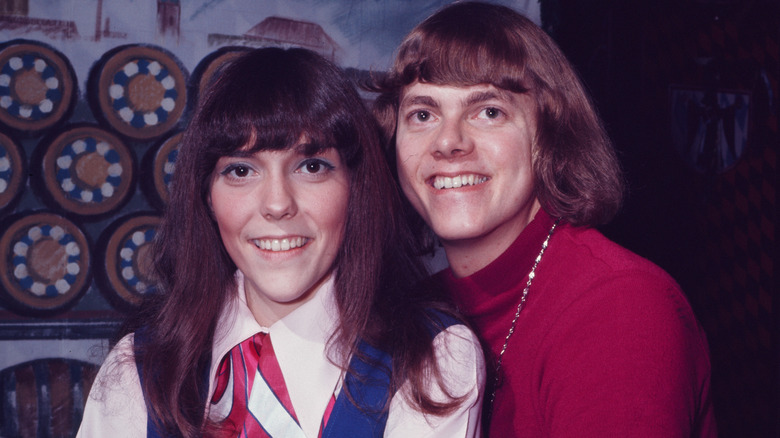
Paul Williams is a massive pop star you've probably never heard of, but he was monumentally successful in the 1970s. He wrote the theme song to "The Love Boat" and "Rainbow Connection" from "The Muppet Movie," and was a '70s one-hit wonder himself for 1972's "Waking Up Alone" and a supporting actor in notable films of the era like "Battle for the Planet of the Apes" and "Smokey and the Bandit." Williams' first major success as a musician was the earnest, optimistic love ballad "We've Only Just Begun." The Carpenters — the soft rock duo consisting of siblings Karen and Richard Carpenter — narrowly missed the No. 1 spot many times, including with "We've Only Just Begun." It reached No. 2 on the pop chart in 1970.
In the late 1960s, Williams and songwriting partner Roger Nichols were known throughout the music industry as reliable content creators, generating many flip sides of singles but no actual hits. Approached with an offer to write a song for California-based Crocker-Citizens National Bank, Williams bristled, but since it paid well, the duo wrote a sweet and tender song to score the ad about a couple starting out their lives together and needing a bank to help them reach their goals. Richard Carpenter was so plugged into the music industry that he recognized Williams' voice when he saw the commercial, and he asked if he could record a full-length version of the jingle.
Times of Your Life
Paul Williams' frequent songwriting and ad jingle collaborator, Roger Nichols, paired up with a different vocalist, Billy Lane, for a piece called "Times of Your Life." Openly, unabashedly, and extremely sentimental, Nichols and Lane wrote the song for use in mid-1970s commercials by Kodak, which wanted to tug on television viewers' heartstrings by urging them to use its cameras and film to capture fleeting memories. Kodak and its advertising partners landed a big star for the campaign: pop star and balladeer Paul Anka. "'Times of Your Life' was the only commercial I ever did,'" Anka told Deadline in 2016 of the ad in which he didn't just tenderly lay down vocals but also starred in with his real-life family.
Too emotionally affecting for the masses to just let it slip by unnoticed after a TV commercial break, "Times of Your Life" burrowed its way into viewers' brains. They wanted to relive the sentiment of the ad. Anka titled his 1975 album "Times of Your Life" and included the ad tune on the track list. Early in 1976, the single "Times of Your Life" moved up to No. 7 on the Hot 100.
I'd Like to Teach the World to Sing (In Perfect Harmony)
The tropes and vibes of the folk music scene and the counterculture hippie movement became so entrenched in the collective consciousness by the late 1960s that, early in the next decade, Coca-Cola capitalized on them to craft one of the most memorable commercials ever and launch a latter-day standard, too. In early 1971, McCann Erickson advertising company rep Bill Backer convened with commercial music organizer Billy Davis to write jingles to be performed by the pop-minded U.K. folk act the New Seekers. During a flight delay, Backer witnessed strangers drinking Coke together, which gave him the idea to compose a jingle about the aching desire for harmony and understanding. That song became "I'd Like to Teach the World to Sing (In Perfect Harmony)," although it was more commonly known by the casual reference to the product in one lyric: "I'd like to buy the world a Coke, and keep it company."
The song was used in "Hilltop," as in the picturesque Italian hilltop where the ad was filmed, with young people earnestly and solemnly delivering the musical message. Not only did an official release by the New Seekers go to No. 7 on the Hot 100, but a similar version by another act with the ad-evoking name called the Hillside Singers also soared into the Top 20.
No Matter What Shape (Your Stomach's In)
In the 1940s and 1950s, the stomachache reliever Alka-Seltzer became a familiar product thanks to a cute humanoid animated mascot named Speedy. Alka-Seltzer retired the character for a spell in the 1960s, replacing Speedy to embrace a more direct approach: a cartoon stomach that could talk. The organ chastised its owner for overeating before the ad segued into rapid-fire footage of different stomachs. A narrator intoned, "No matter what shape your stomach is in, when it gets out of shape, take Alka-Seltzer." Along with the clips of real stomachs from around the world, the minute-long commercial included a brassy instrumental jingle.
In the 1960s, a studio-concocted band called the T-Bones was created by Dave Pell with the intention of recording and issuing songs based on well-known melodies heard on television advertisements. In 1965, the T-Bones came out with a 45 of "No Matter What Shape (Your Stomach's In)," pairing the music from the Alka-Seltzer commercial with the same ad's tagline. The tune almost went all the way to the top, too, resting at No. 3 on the pop chart.
Music to Watch Girls By
After briefly hitting stores under the name Patio, Diet Pepsi became the first nationally available sugar-free name-brand spinoff of a major cola brand in 1964. Into the 1960s, the drink was marketed as a calorie-reduction tool, specifically to women who wished to slim down in order to attract positive attention from men. Central to this approach and advertising campaign, along with the slogan "The girls girl-watchers watch drink Diet Pepsi," was a TV commercial called "Girlwatchers." In the clip, a young woman in a short dress strolls through parks and landmarks of Washington, D.C., while men of all ages aggressively ogle her. Along with some narration about how women who wish to keep trim ought to drink Diet Pepsi, the footage is soundtracked by a smooth, jazzy lounge music instrumental.
While the ads helped Diet Pepsi establish a toehold in the market, the music used was re-recorded 200 times and became a notable hit for two different artists. An easy listening combo called the Bob Crewe Generation took its cover of the instrumental, titled "Music to Watch Girls By," to No. 15 on the pop chart in early 1967. A few months later, crooner Andy Williams propelled a version of "Music to Watch Girls By" with lyrics added to No. 34.
The Dis-Advantages of You
Led by top-selling acts like Herb Alpert and the Tijuana Brass, instrumental brass pop bands were a major fad in the mid 1960s. Advertising agencies and their clients incorporated that mature and inoffensive sound into television commercials that sold all kinds of products, including cigarettes. In 1966, a particularly bright, sweeping, and lyrics-free composition was utilized in an ad for Benson & Hedges cigarettes. The public response to the commercial, and the song featured therein, was such that Phil Bodner, a clarinet player in swing and jazz bands in the 1950s and 1960s and a studio musician who specialized on the saxophone, created a group whose most interesting move would be a lengthening of that very jingle.
Presented as the Brass Ring featuring Phil Bodner — a little confusion with Herb Alpert and the Tijuana Brass certainly wouldn't hurt prospects — the act hit the charts in 1967 with a single that had a melody known to the public but not necessarily its name. Called "The Dis-Advantages of You," the track peaked at No. 36 on the pop chart.
Forever
Pop and R&B singer Chris Brown was one of the biggest new singing sensations of the 2000s. Between 2005 and 2008, he hit the Top 10 of the pop chart nine times, starting with the hard-edged and danceable No. 1 "Run It!" and ending with the uptempo dreamy ballad of romance and devotion, "Forever," which made it all the way to No. 2. As the song climbed the Hot 100 in the summer of 2008, listeners may have noticed or even been suspicious of a familiar couplet in the chorus of "Forever": "double your pleasure, double your fun." It's part of the vernacular, but it originated as the tagline for Wrigley's Doublemint Gum.
In July 2008, Wrigley began airing TV commercials that prominently featured "Forever," and then the truth was revealed. The full-length "Forever" had been released first, but it was actually composed as an extension of what was originally a 30-second ad jingle to move gum. Wrigley's advertising agency approached Brown to compose and sing the song, which he claims to have penned in about half an hour before recording a short version and then the single-length take.
Renegades
While some pieces of advertising music are written and recorded specifically for a particular commercial, others are previously released works licensed for use. When the radio-friendly alt-rock band X Ambassadors got the call to contribute a song to a car commercial, it rode the proverbial line, concocting an original song while it put together its first full-length studio album.
Following some EPs, indie releases, and the 2014 rock hit "Jungle," X Ambassadors entertained a pitch from the makers of Jeep sport utility vehicles for a collaboration. As X Ambassadors prepared the album "VHS," they also created "Renegades" to help sell the new Jeep Renegade. That song, outfitted with hooks like an acoustic guitar riff, a percussive stomp, and a singalong chorus, hit TV in Jeep ads months before "VHS" went on sale. "Renegades," essentially an advance single, benefited from the exposure. It peaked at No. 17 on the Hot 100 in November 2015 and also hit No. 1 on the alternative rock chart, a spot it occupied for 11 weeks.
After Midnight
"After Midnight" is a banger of a rock song that got a second life via a commercial. On his first fully solo album, a 1970 self-titled LP, Eric Clapton included "After Midnight," a cover of a song originally written by J.J. Cale in 1966. It wasn't a smash for Cale, but it was for Clapton, making it up to No. 18 on the pop chart in late 1970. That created newfound interest in Cale, who remade "After Midnight" in 1971. It was just a minor hit for Cale, and so it remained closely associated with Clapton, loathed by other musicians but still held up as a peerless guitarist.
Clapton was so famous, popular, and musically respected that in 1987 Michelob asked the icon to star in a multimedia advertising campaign. In addition to his image gracing liquor store displays, Clapton starred in a TV commercial, performing in a bar a newly recorded and slickly produced version of "After Midnight." Unfortunately for Michelob, the ads for alcoholic beverages hit the airwaves around the time that Clapton checked into a rehab center to address his alcoholism. Michelob's parent company, Anheuser-Busch, called off the ad campaign, but the '80s version of "After Midnight" resonated with audiences. Tucked away on Clapton's 1988 boxed set "Crossroads," the full-length version of the song, of which only a snippet was played in the beer ads, shot up to No. 4 on the rock chart.
Inside
In 1994, Levi's ran a jeans commercial in the U.K. so captivating that the once generic rock music playing over the footage became a chart-topper. Combining Levi's history with some very 1990s stylized sensual imagery, the black-and-white commercial takes place in the Old West and centers on a family traveling by covered wagon until they come across a hunky stranger bathing in a stream. The female members of the party can't look away but are a little put off when they realize he's not nude, with captions explaining that, back in the 1870s, soaking jeans in water was the method used to make them fit the body better.
And despite all that, the element that captured the public's attention the most was the music. Written by and performed almost entirely by advertising music writer Peter Lawlor, hired freelance singer Ray Wilson provided vocals. After the ad hit the airwaves in the U.K., demand for the song, which Lawlor called "Inside," necessitated that he and Wilson create a full band, Stiltskin, and make the tune a single. "Inside" spent a week at No. 1 on the U.K. pop chart.