

4 Rock Album Dedications That Hit Even Harder Today
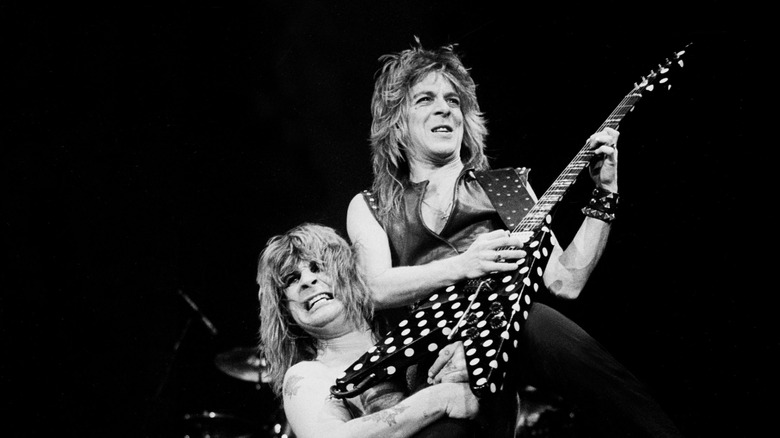
Most of us probably won't ever know what it's like to live the life of a famous rock band, with the stereotypical hard-living, freewheeling lifestyles that sometimes end badly. But we do understand the pain of losing someone we love. That's why it's easy to appreciate why these groups channeled their grief into songs and dedicated albums to the people they lost. Whether from untimely death or severe mental health issues, the musicians we look at here lost someone they once chased dreams alongside. With the benefit of hindsight, the music they created in honor of their friends and bandmates hits even harder today.
Bands like AC/DC and Pink Floyd continued on after losing members, but they never forgot them, and some of their subsequent music paid homage to their respective members, Bon Scott and Syd Barrett. They weren't the only ones. Here are a few rock albums that were dedicated to lost friends, including one by a band that came together because of a mutual friend's death and another that was created from a fallen guitarist's live shows.
Temple of the Dog — Temple of the Dog
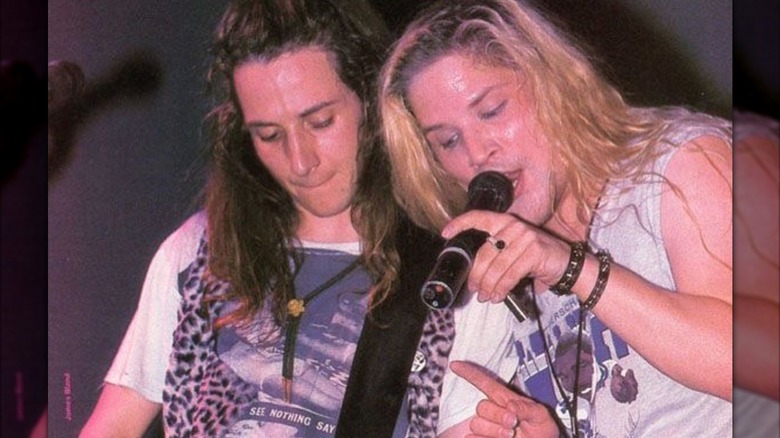
Temple of the Dog formed out of grief to make an album dedicated to Seattle musician Andrew Wood. He died of an overdose in 1990, and he had close ties to people who went on to become grunge rock legends. At the time of his death, he was roommates with the late Chris Cornell, who was already playing in Soundgarden. Wood was also the frontman of Mother Love Bone with guitarist Stone Gossard and bassist Jeff Ament. Shortly after Wood's death, they formed Temple of the Dog and brought in guitarist Mike McCready and singer Eddie Vedder to the recording sessions (this lineup eventually formed Pearl Jam around the same time).
Cornell, who was close to Wood, initially channeled his grief into songwriting and brought together members of his friend's band, along with Vedder and McCready, to record a couple of songs. That effort grew into a 10-song self-titled album released in April 1991. One track, "Times of Trouble," seemed to speak to Wood directly: "Don't try to do it, don't try to kill your time, oh / Yeah, you might do it, then you can't change your mind ... / You gotta hold onto your time 'til you break through these / Times of trouble." Knowing how far Wood's peers ended up going in their music careers and how Cornell later died by suicide, the song is even more poignant today.
The project was spontaneous, and it wasn't a commercial venture. "We learned to just live in the moment and become open to the idea of collaboration," he explained (via Temple of the Dog). "At the end of the day that was the enormous gift that Andy left us and I've thought about it in every situation I've been in since then when it comes to writing and performing."
Tribute — Ozzy Osbourne
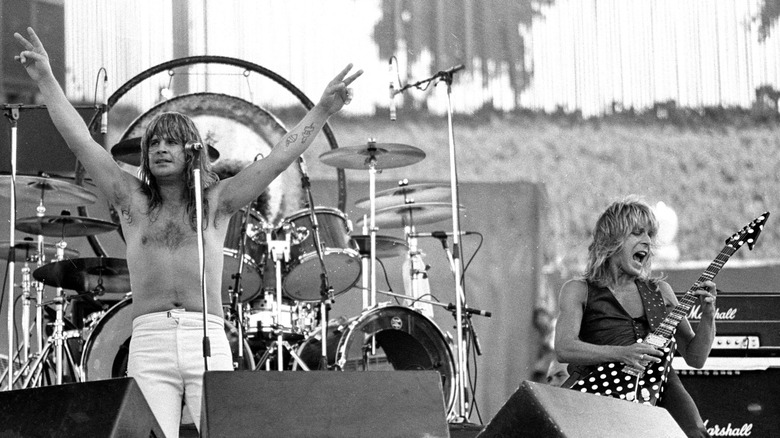
In 1987, Ozzy Osbourne released "Tribute" in honor of his deceased bandmate and friend, Randy Rhoads. The album highlighted some of the guitarist's best live shows, largely during the "Blizzard of Ozz" tour, and though Rhoads had only been with Osbourne for about three years by the time he died in 1982, the musicians hit it off right from the start.
In 1979, Rhoads, then a 22-year-old former guitarist for Quiet Riot, went to an audition for Osbourne's new band after he left Black Sabbath and was hired on the spot. "I loved him in an instant," Osbourne recalled to Guitar Player in 1982. "I fell in love with him as a player, and I fell in love with him as a person." Rhoads quickly made a name for himself playing on 1980's "Blizzard of Ozz" and 1981's "Diary of a Madman," but he died suddenly in a plane crash on March 19, 1982, while the band was on tour in Florida. Osbourne was understandably devastated by the loss. "We loved each other very dearly," he told Guitar Player. "I swear to God, the tragedy of my life is the day he died."
"Tribute" was released on March 19, 1987, the five-year anniversary of Rhoads' tragic death, giving fans a tangible way to always hear him play live. "I think it was helpful/healing to the fans of Ozzy/Randy at the time," one Reddit user wrote.
Back in Black — AC/DC
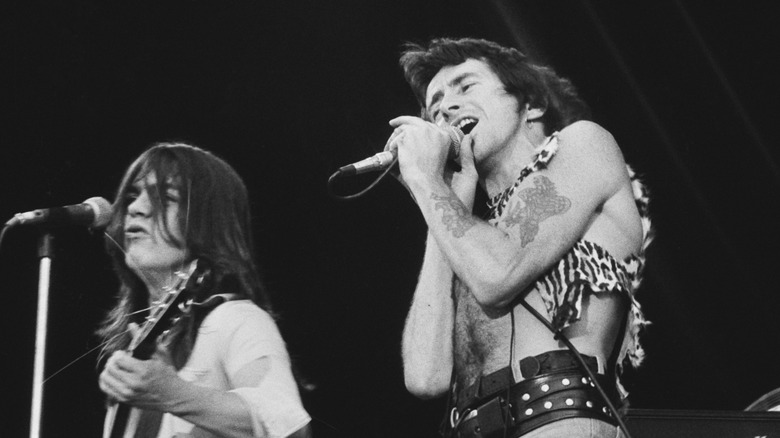
Bon Scott spent six years as the heavy-rocking AC/DC frontman before his death in 1980 from acute alcohol poisoning. By then, the Scottish-Australian band had already released six albums between 1975 and 1979, with their latest LP at the time and its titular song "Highway to Hell" gaining traction in the U.S. Just as the group was finding a wider audience, Scott died, but their new life with frontman Brian Johnson was just beginning.
As the group mourned Scott, they knew they wanted to dedicate their next album to him, and when it came time to write a song for him, they didn't want it to be sad or melancholy. In Scott's honor, and as was AC/DC's way, it had to have swagger. "The guys wanted it to be a good rock record in memory of Bon but without the slather, without all the mulch and the crap that usually goes with that," Brian Johnson explained on the band's YouTube channel. The primary song about Scott on the album is "Back in Black," and Johnson said he wrote some of those lyrics to reflect how Scott "lived on the edge." "It was pretty tough, but I think we managed it pretty good," Johnson said.
Two of the LP's songs, "You Shook Me All Night Long" and "Back in Black," broke the Top 40 in 1980 and 1981, respectively. Today it's one of the best-selling albums of all time.
Wish You Were Here — Pink Floyd
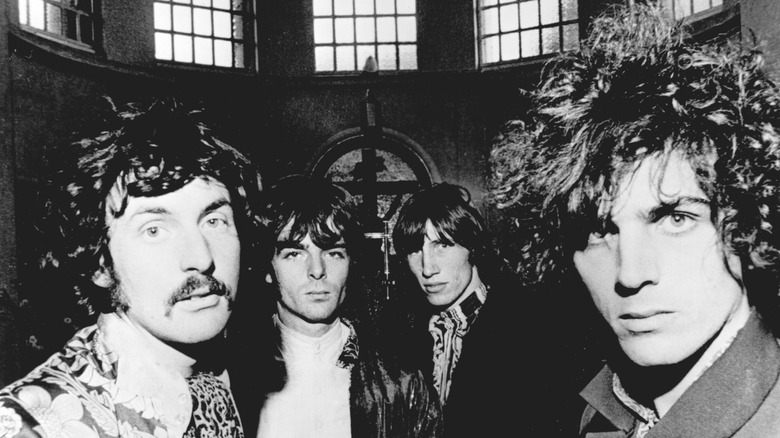
In the case of Pink Floyd's album "Wish You Were Here," the band didn't lose a member to death but to mental illness. Two songs in particular on the 1975 LP wrestle with the emotions of losing someone who is physically here, yet still unreachable. Syd Barrett was a founding member of Pink Floyd in 1965 and was the band's primary songwriter early on, but over the next couple of years, Barrett began changing. As co-founding bassist Roger Waters told Joe Rogan via tribuune/YouTube, "... It was very sad what happened, but he was just not making very much connection with anything that you and I would consider to be real." It was an unraveling and despondency that was impossible to ignore as it progressed, and the band made the difficult decision to fire him.
David Gilmour replaced Barrett, but by 1975, Barrett's descent into severe mental illness still haunted the band, particularly Waters, who had fond memories of him. In "Shine On You Crazy Diamond," a multi-part song that bookends the "Wish You Were Here" album, he wrote, "Remember when you were young / You shone like the sun ... Now there's a look in your eyes / Like black holes in the sky."
The record's titular song was also written for Barrett. While Gilmour came up with the initial notes and sequence for "Wish You Were Here," he told Uncut, "Waters came up with this tribute to Syd. They're beautiful words and it's a heartfelt tribute that speaks for us all. ... I think it was all tied up with our feelings of regret and possibly guilt." Today, this album still resonates for anyone who has felt helpless as they watched someone they care about experience mental health issues.
If you or someone you know needs help with mental health, please contact the Crisis Text Line by texting HOME to 741741, call the National Alliance on Mental Illness helpline at 1-800-950-NAMI (6264), or visit the National Institute of Mental Health website.
If you or anyone you know needs help with addiction issues, help is available. Visit the Substance Abuse and Mental Health Services Administration website or contact SAMHSA's National Helpline at 1-800-662-HELP (4357).