

Every Baby Boomer Remembers These Rock Performances On The Midnight Special
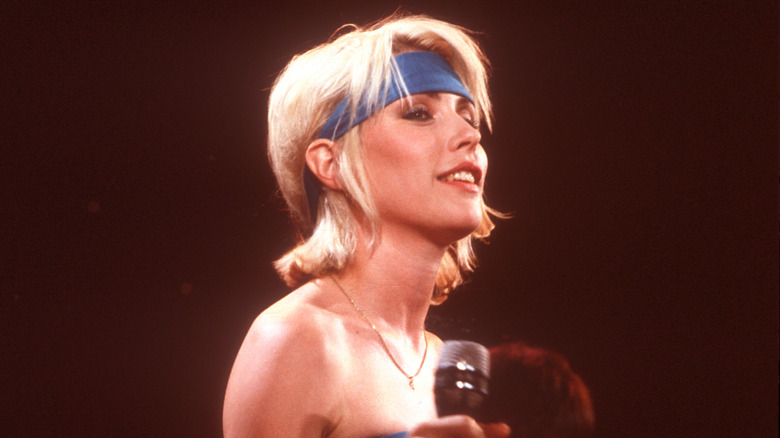
Once upon a time, there was a singular show known as "The Midnight Special." With a pilot episode debuting in 1972 and the regularly broadcast show picking up the reins in 1973, the program first aired in the wee hours of Saturday morning. NBC's "The Midnight Special" was a rarity of late-night programming in a time when many networks simply signed off at that hour. It included all manner of artists tapped to host the night's episode, from disco legends like ABBA to comedians such as a banjo-wielding Steve Martin. But, with respect to other genres (and Martin's considerable skill with the banjo), the performances that have lingered for decades in the mind of boomers have to be the rock ones. The best of these dazzled all the young viewers with serious charisma, cool outfits, and, of course, songs that were impossible to forget.
There's also a certain thrill to look back at these performances, many of which are easily accessible online nowadays, and get a glimpse of legends before they entered the rock Pantheon. That doesn't mean they weren't good, of course, as a pre-"Rumours" Fleetwood Mac and Stevie Nicks easily demonstrated when they metaphorically blew the roof off the studio during a 1976 appearance. And, of course, one simply does not forget David Bowie's final appearance as Ziggy Stardust, whose last hurrah aired on "The Midnight Special" in unforgettable glam rock fashion.
Fleetwood Mac
There's really nothing like Stevie Nicks at her height, and Fleetwood Mac's appearance on a February 27, 1976 episode of "The Midnight Special" surely qualifies as an example of just that. Actually, this is more Nicks on a career upswing, as she and guitarist Lindsey Buckingham had only joined the band a couple of years before. "Rumours," the wild album that turned Fleetwood Mac into legends, would not be released for another year yet. However, if you happened to catch this showing, you would have recognized the blazing star power that kept Stevie Nicks at the forefront of rock for decades to come.
Here were all of the wonderfully witchy, powerful vibes that came to define her stage presence, not to mention that legendarily beautiful rock voice, starting with the introduction to "Rhiannon" in which she claimed "This is a song about an old Welsh witch." Nicks kicked off her part with eyes closed, a bold move that spoke to the invocation-like quality of the performance. And, of course, there was the look, with the dark fabrics and a sheer, flowy scarf that became a trademark of Nicks' stage fashion.
Every band member got their moment, including an especially groovy 360-degree camera turn focusing on Buckingham, his kimono-style top, and his fluffy afro — well, it was the '70s, after all. Christine McVie gets a nice feature on the keyboard, too, before Nicks begins a chant-esque section that makes you think they're maybe summoning something for real.
Ike and Tina Turner
If anyone knew how to put on a show, it was Tina Turner. Her February 1973 performance on "The Midnight Special" was electric and full of the sort of explosive singing and dancing that would leave many others feeling exhausted just watching. Yet, Turner didn't only pull off a single acrobatic performance here. She was known for her leave-it-all-onstage shows for decades, and her final 2009 tour at the age of 69 remains legendary for that very fact. Well, and of course, there's her stunning voice, with its musicality and deep character carried along by pure power. Just looking at her appearances on the show, which began with the second-ever episode of "The Midnight Special" in February 1973 and ended in March 1975, there's no pretending that she was anything other than a legend.
It's hard to pick just one performance out of that lineup, but no one could miss the joyful energy of "Proud Mary" on her first appearance. Really, did Turner even need a microphone? Even if she did, this cover of a Creedence Clearwater Revival track became a defining song as she forged an incredible solo career. In this instance, though, she's backed by musician, producer, and then-husband Ike Turner. Even if he deserves credit for helping Tina Turner get her initial start, Ike also subjected her to domestic abuse. They split in 1976, after which she embarked on a rise to the even bigger stardom that was previewed on "The Midnight Special."
David Bowie
Some "Midnight Special" acts might bring their own sets, like Tina Turner's massive illuminated backdrop featuring her and Ike Turner's names, but David Bowie took it to another level. His episode even got its own name: "The 1980 Floor Show," a futuristic, minding-bending affair that aired in November 1973. Filmed a month earlier at the Marquee Club in London, this was the very last appearance of Bowie sporting one of his most famous looks, the glam alien Ziggy Stardust persona. Earlier that year, he'd caused confusion at a July performance where he said, "It's the last show we'll ever do" (via Rolling Stone). Some took that to mean Bowie was actually retiring, but really he meant he was just sick of the Ziggy Stardust character and wanted to take a new artistic direction.
Except there was one last event on the Ziggy Stardust schedule: his appearance on "The Midnight Special." It was partially a push to get more attention in the United States, and one imagines that anyone who caught this episode had a hard time flipping the channel. Bowie appeared in some eyebrow-raising outfits — that is, if he'd had any eyebrows to raise. He had shaved them off during a recent tour, and the hair didn't have time to grow back, making his aesthetic all the more otherworldly. He also brought in guest performers, including Marianne Faithfull in a nun-inspired outfit for a truly surreal duet of "I've Got You, Babe," and a flamenco group, because why not?
Redbone
In more recent times, you might have heard Redbone's revived '70s one-hit wonder, "Come and Get Your Love," gain new life in "Guardians of the Galaxy," but savvy late-night television viewers were already in the know decades earlier. Redbone's February 1974 performance on "The Midnight Special" was nothing short of joyful, starting with a fancy dance that puts indigenous culture at the very center of the performance. Modern fancy dance as seen at powwows is widely considered the invention of Gus McDonald, a Ponca tribal member in Oklahoma, though the notion of putting on one's finest for an intertribal dance dates back even further. On the show, the dance was performed by guitarist Tony Bellamy (the stage name of Robert Anthony Avila), who was of Yaqui and Mexican descent.
Brothers Pat and Lolly Vegas, themselves of Yaqui, Shoshone, and Mexican heritage, had intentionally put together a band of indigenous and Chicano musicians, including both Bellamy and original drummer Peter DePoe, of the Siletz tribe. Their appearance on "The Midnight Special" was all the more engaging for viewers because they didn't attempt to hide their heritage. However, it wasn't always so; the brothers were actually Pat and Lolly Vasquez, who took on the stage names of Pat and Lolly Vegas in their earlier pre-Redbone careers. "Come and Get Your Love," off the 1973 album "Wovoka," proved to be their biggest hit, reaching No. 5 on the Billboard charts. Judging by their energetic, fun, and just plain cool performance on "The Midnight Special," it's easy to see why.
Blondie
Blondie made two appearances on "The Midnight Special" in 1979. The first, in January, was obviously cool, with a wonderfully menacing snarl delivered by Debbie Harry while the band performed "One Way or Another," the hit that established them as rock legends. But the really memorable Blondie moment on "The Midnight Special" has got to be their October 1979 show, featuring "Heart of Glass." Even live, Harry had a wonderfully pure tone, with clean, clear high notes that almost never wobbled. This performance in particular showcased a weird and wonderful mix of aloof cool and earnest artistry, with Debbie Harry's aesthetic looking like a blend of a high school art teacher, a Jane Fonda aerobics video, and a bit of Andy Warhol.
It all came together when Harry took a mid-performance moment to speak out against nuclear armament. "The use of nuclear power is merely a symptom of our troubled times," she said as the band continued playing. "The race for nuclear superiority can only end with the destruction of civilization," she concluded, before sliding into the rest of the song. The Three Mile Island nuclear power plant accident had just occurred that March. Though no immediate fatalities resulted, radioactive particles were released into the nearby area. It remains a notorious point in U.S. nuclear history and was more than relevant to viewers.