

The Tragic Real-Life Story Of Bruce Willis
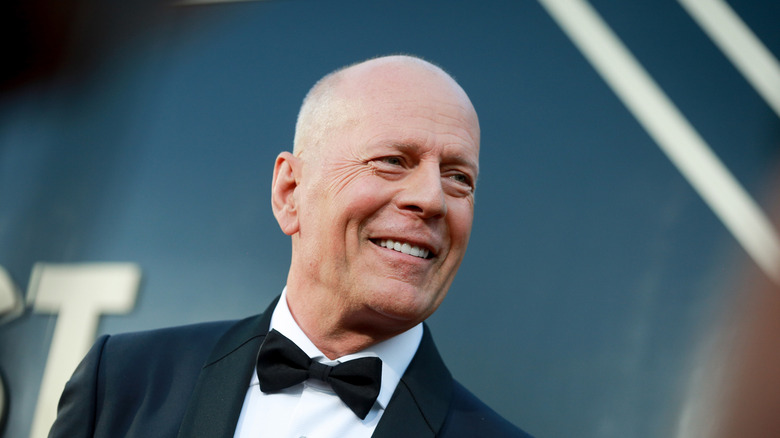
It's hard to believe that Bruce Willis was once an unlikely action hero. Pint-sized compared to Sylvester Stallone's Rambo and gentler than Arnold Schwarzenegger's Terminator, Willis was everyone's last choice to play John McClane in "Die Hard." But he bought his place in history by fusing his everyman energy with wit and charm, winning over just about everyone in America.
With the announcement of his retirement in March of 2022, his career seemed to have been unfairly cut short, even at the age of 67. Perhaps it's because he had far grander expectations for the end of his career than what he was dealt. In a 2013 interview with GQ, he voiced a desire to retire with "the same grace" as did Cary Grant. He also said his goal late in his career was to keep his acting "looking lifelike," despite any troubles in his personal life.
Even though he called it quits on his own career, his hand was forced due to what at the time was his diagnosis of aphasia, a disorder of the brain that affects speech, language, and communication. By February 2023, however, his family announced that his diagnosis was even more dire: frontotemporal dementia (FTD), which causes specific areas of the brain to atrophy, and often causes personality changes. Like aphasia, it can also make a person lose their grasp on language.
The devastating diagnosis is a sad end to the life and career of a man whose charisma and subtle humor made him a box-office draw. Fortunately for Willis, his legacy is cemented as legendary, but there have been various rough patches during his journey before his diagnosis. Let's take a look at a few of his life's tragic moments.
Bruce Willis suffered from a stutter
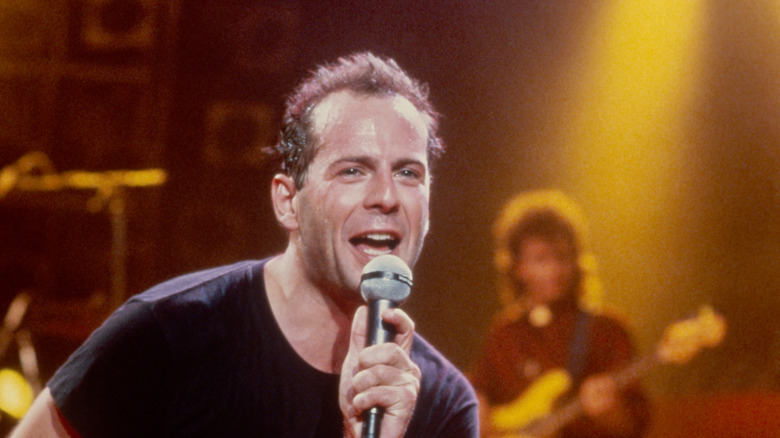
Action movies aren't generally known for their dialogue, but Bruce Willis can make any line memorable. So when he revealed his childhood struggle with stuttering, his story was both surprising and poignant. At the American Institute for Stuttering's fundraising gala — where he was being honored — Willis gave a tearful speech about learning to speak through acting and the bullying he had to endure as a child.
His stutter began when he was 6 years old, and unable to communicate to family and friends, he said he would have to resort to "just flailing wildly," per The Hollywood Reporter. According to John Parker's "Bruce Willis: The Unauthorized Biography," it took Willis three minutes to form a sentence (via The Stuttering Foundation). In high school, Willis was laughed at during speeches, and he positioned himself as the class joker in order to fit in.
In a story fit for Hollywood, Willis began to conquer his speech impediment once he discovered acting. He tested out acting at his school and his local YMCA and realized that he could control his stutter when he embodied a character on stage. He finally sought professional help when a drama professor at Montclair State College, where Willis attended after high school, encouraged him to see a speech therapist. According to Sandy Asirvatham's "Bruce Willis: Overcoming Adversity," Willis has been reluctant to discuss his speech impediment with the media because his experiences were too painful to recall (via The Stuttering Foundation).
He's dealt with alcohol abuse
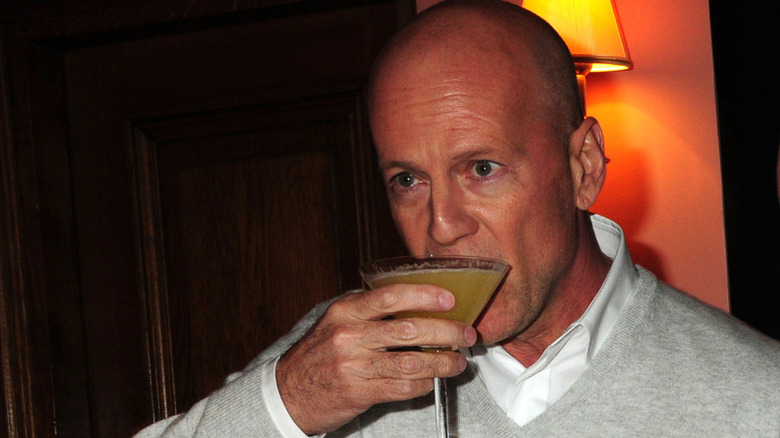
In 1986, Willis was a spokesperson for Seagram's wine coolers. It was early in his career, and Willis was mainly known for his role on the show "Moonlighting," and "Die Hard" was months away from being released. The the Seagram's commercials featured him flaunting his singing talent, but it came to an end when he was arrested for a DUI. He was fired from Seagram after the company discovered that he sought out treatment for alcohol abuse, according to the book "The Advertising Age: Encyclopedia of Advertising."
During a 2013 interview with GQ, Willis revealed that he was comfortable drinking again once he realized he wasn't going to run himself "off the pier of life with alcohol," in his own words. Although not a wine cooler, he admits to having a glass of wine with meals, which he said was an improvement from his days of "drinking vodka out of the bottle every day."
This wasn't Willis' first brush with the law, however. On May 26, 1987, he was arrested at his home and charged with battery on a police officer. Neighbors called the police with a noise complaint as Willis was having a party at his home, according to The LA Times. The charges were dropped when he agreed to apologize to his neighbors.
His brother died from cancer
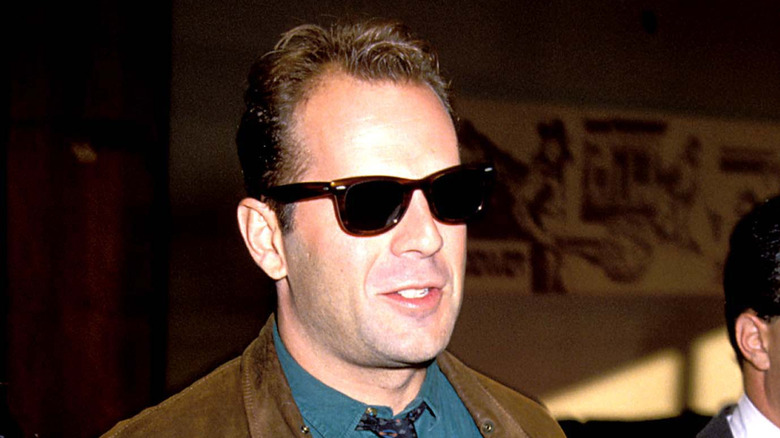
In 2001, Willis was rehearsing Sam Shepard's play "True West" in Idaho when he learned of his younger brother's pancreatic cancer diagnosis. He then took trips between Idaho and Robert Willis' home in Massachusetts. At the time, People Magazine reported that Willis took a break from acting in order to take care of his brother and purchased him a home. Prior to his death, Robert urged loved ones to not "grieve too hard," according to Willis (via The New York Times). Robert passed away only six weeks later, and the national telecast of "True West" was dedicated to his memory.
Willis didn't take his brother's warning to heart. According to the Irish Examiner, Willis used a medium a year later to contact his brother in the afterlife. Willis said that the medium began speaking in his brother's voice and cursing in his manner. The experience made Willis cry, and his views on the afterlife changed. "Tears rolled down my face and now I know the switch is not turned off, that there is life after death. I don't know how it works, but I believe it," he said (via the Irish Examiner).
On-set injuries left Willis with lifelong loss of hearing
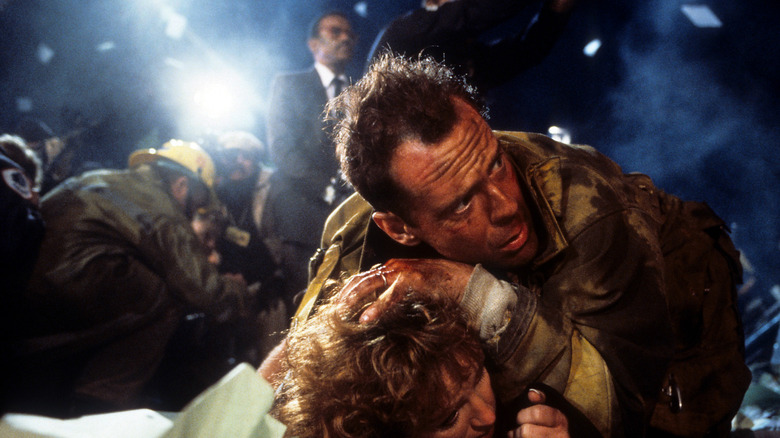
When Bruce Willis landed the role of John McClane in "Die Hard," he negotiated a hefty $5 million for the role — a high fee at the time that changed Hollywood pay forever. While it was arguably the biggest role of his career, it left him with a permanent injury. In an interview with The Guardian, Willis revealed that an accident on the set of "Die Hard" left him partially deaf in his left ear. As he jokingly described it, he developed a "tendency to say, 'Whaa?'" when speaking to others.
In 2013, Rumer Willis, Willis' eldest daughter with actress Demi Moore, elaborated on his father's condition, saying his hearing loss is due to a scene when "he shot a gun off next to his ear," she said (per the Toronto Sun). She also said it affected his ability to cooperate in interviews. Years later, his youngest daughter with Moore, Tallulah Willis, wrote in an essay for Vogue in which she said in hindsight, it seems that hearing loss was blamed for Willis's inexplicable behaviors. "I've known that something was wrong for a long time," she wrote. "It started out with a kind of vague unresponsiveness, which the family chalked up to Hollywood hearing loss: "Speak up! 'Die Hard' messed with Dad's ears."
But after "Die Hard," Willis would experience worse on-set conditions while filming 2003's "Tears of the Sun." He was struck on the head during a pyrotechnics explosion, which led him to sue the production studio and a special effects worker a year later, according to The Guardian. The lawsuit claimed that he suffered "extreme mental, physical, and emotional pain," required medical attention on set, and would require further treatment in the future.
Bruce Willis divorced Demi Moore
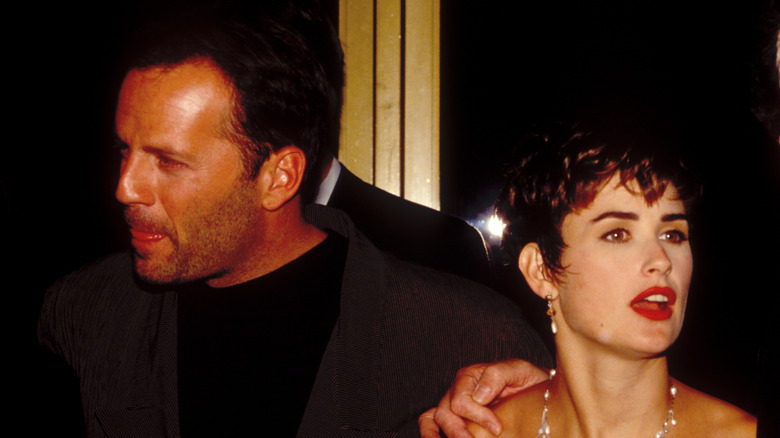
Bruce Willis and Demi Moore were once one of Hollywood's most prominent power couples. They met at a movie premiere in 1987, and Bruce made his interest known. They tied the knot that same year in a wedding that was officiated by singer Little Richard, per People. It was the start of a romance that carried them for 20 years together and yielded three children, but the pair officially divorced in 2000.
Moore wrote in her 2019 autobiography "Inside Out" and that their marriage became strained due to philosophical differences. Moore was a working mother with a successful career, and Willis longed for a more traditional dynamic. Their views clashed, and Willis told her he wasn't sure he wanted to stay married (via The New York Times).
Willis had a more simplistic answer for their split: "Things change." In an interview with Rolling Stone in 2000, Willis explained that their public-facing marriage was also difficult to maintain and "was under a huge magnifying glass all the time." Still, he admitted he still loved her, and the pair was committed to their children. "Our friendship continues," he said. "The institution has been set aside."
His daughter, Rumer, also dealt with alcohol abuse
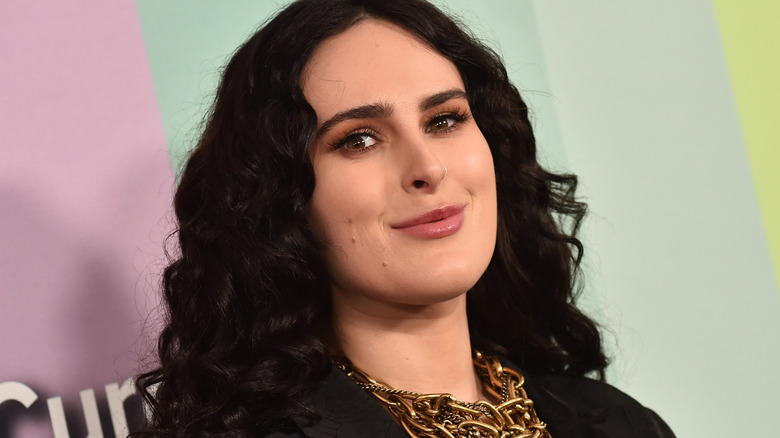
Bruce Willis' daughter has had her own issues with alcohol, which is difficult for any parent to witness. In a 2021 Instagram live interview with American Addiction Centers, actress Rumer Willis said she used alcohol "as a tool" to become what she thought was the best version of herself (via Yahoo! News). She challenged herself to use "Sober January" as a time to stave off her drinking habit, which led to a her ongoing sobriety. Also known as "Dry January," this public health campaign was formed in 2013 by the U.K. nonprofit Alcohol for Change to encourage people to abstain from alcohol for a month.
Rumer doesn't blame her upbringing or her parents' fame for her struggles, but both Bruce and Demi Moore have had issues with sobriety. In her book "Inside Out," Moore wrote about an incident in which she had a seizure after using nitrous and synthetic cannabis at a party, frightening Rumer, per Today. Rumer and her sisters cut off communication with their mother for three years after the incident. Watching her mother relapse into drug abuse was harrowing for Rumer, partly because it reminded her of her own issues.
If you or anyone you know is struggling with addiction issues, help is available. Visit the Substance Abuse and Mental Health Services Administration website or contact SAMHSA's National Helpline at 1-800-662-HELP (4357).
He was involved in a lawsuit with a childhood friend

Regardless of weather one is being sued or the party filing the papers, a lawsuit can be a stressful and harrowing episode. A suit can even turn tragic when it destroys long and important relationships. That's unfortunately what happened with Bruce Willis and Bruce DiMattia, a college psychology professor who once considered the actor, whom he had known since they were both teenagers, to be his closest friend. In 2002, DiMattia says, Willis asked him to relocate for a well-paying job to assess and sell off some of the performer's valuable possessions and filmmaking memorabilia. After a few months, DiMattia alleged, Willis reneged on the plan and refused to pay him.
But Willis is the one who brought in lawyers. In August 2006, he filed suit against DiMattia, accusing extortion. Driven by jealousy and greed, according to Willis' filing, he reportedly told Willis that he'd publicly reveal potentially damaging information about him if the actor failed to give him $100,000 and buy him a car. A mutually agreeable settlement was reached in January 2007, before the case went to trial. "The filing of the lawsuit by Bruce Willis against Bruce DiMattia was based on a regrettable misunderstanding and was based on misinformation," the actor's publicist said in a statement to the media, including CBS News.
Willis hasn't won a major award for his movies
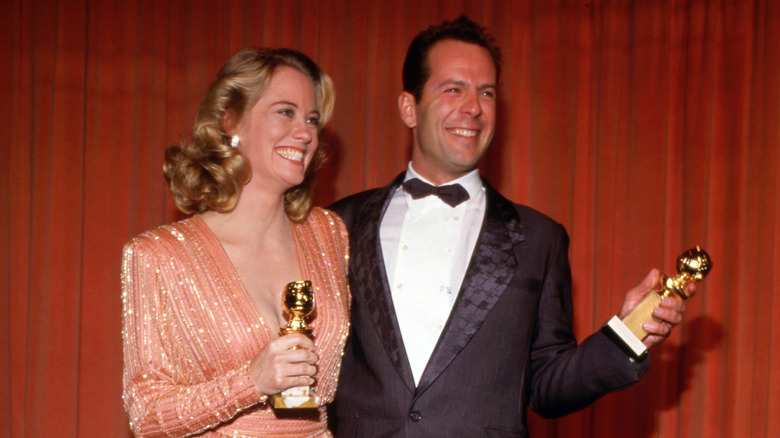
It may be surprising that a name like "Bruce Willis" hasn't harvested an Oscar, let alone a Golden Globe for one of his movies, but that's certainly the case for the actor. The most prominent awards he's received are two Primetime Emmys for his early career role in the show "Moonlighting" and for his guest star role on "Friends." He's received a Golden Globe — and a nomination — but they were also mostly for "Moonlighting."
The state of his trophy case is surprising, mostly because of his resume. He played a small but memorable role in "Pulp Fiction," which was nominated for the Academy Award for Best Picture and won the Palm D'Or at Cannes. He earned his most famous role outside of action flicks in M. Night Shyamalan's "The Sixth Sense," which garnered six Oscar nominations. That's not to mention his appearances in the critically acclaimed movies "12 Monkeys" and "Moonrise Kingdom."
In an interview with GQ, Willis said he never expected an Oscar and didn't pay much attention to the lack of recognition. Calling an Oscar nomination "whimsical," he said, "You don't get an Oscar for comedy, and you don't get it for shooting people."
His only story credit was widely panned
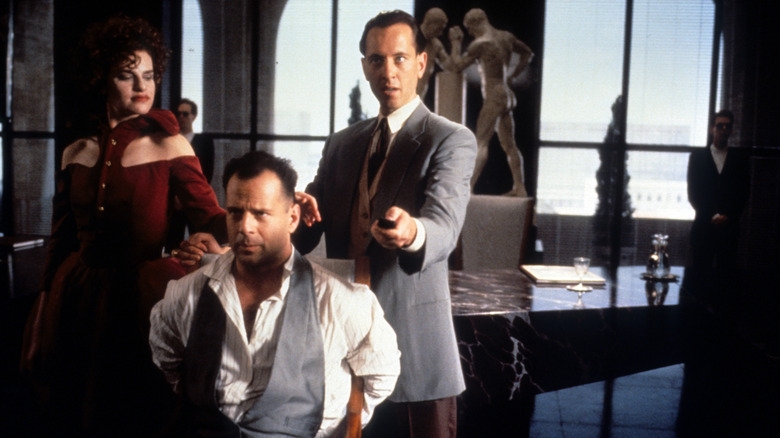
The 1991 box-office bomb "Hudson Hawk" was quite the departure from what made Bruce Willis a megastar. Willis had invested much of himself into the production — the film boasts his only writing credit, according to The Independent. In an interview, the film's screenwriter, Steven E. de Souza, said that Willis "took over the whole movie" and started rewriting the script. It was also based on an idea that Willis kept for 12 years, according to The New York Times. In the media, Willis was portrayed as a large personality who made the production effort difficult. According to an anonymous crew member, Willis commanded the set, leading to disagreements between him and the director, Michael Lehmann.
The movie combined screwball comedy and action to form something that didn't jive well with a lot of viewers; it made only $17 million despite a $70 million budget. In one outrageous scene, Willis' character Hudson Hawk rides through Brooklyn Bridge on a hospital bed while yelling out the memorable line, "1-800-I'm-gonna-f***ing-die!" (via The Independent). Willis had a lot riding on the movie's success — namely, his reputation as an entertainer. He used the film to prove his comedy chops, which until then were largely limited to his hit TV show "Moonlighting." According to The Independent, the film's failure may have dampened Willis' ego and caused him to limit himself later to paint-by-the-numbers action flicks.
Bruce Willis starred in a series of flops

It's widely considered that "Hudson Hawk" was the start of Bruce Willis' career nosedive. Most of his latest films have been direct-to-video productions in which Willis appears in — what are essentially — glorified cameos so that his name can be used in press releases and on the film poster, according to Yahoo News. It's called the "geezer teaser" genre — a marketing ploy by obscure movie productions that hire film stars past their prime but whose names still hold lucrative weight, and Willis has been the frontman during the 2010s. Stars used in this formula are compensated considerably, but are never used substantially in those films.
In those movies, Willis's scenes are placed at the beginning so that audiences are duped into thinking he's a primary character, only to discover that he was hardly invested. Willis only has seven minutes of screen time in "Hard Kill" (2020), nine minutes in "Extraction" (2015), and 10 minutes in "Survive the Night" (2020). Following a trend Steven Seagal once trailblazed, Willis' last several movies have been deliberately awful, but they've earned him a huge payday, since producers use his name and image to make a buck in international markets. Willis was usually paid $2 million for two days of work, according to The LA Times.
The Razzies were really hard on Bruce Willis
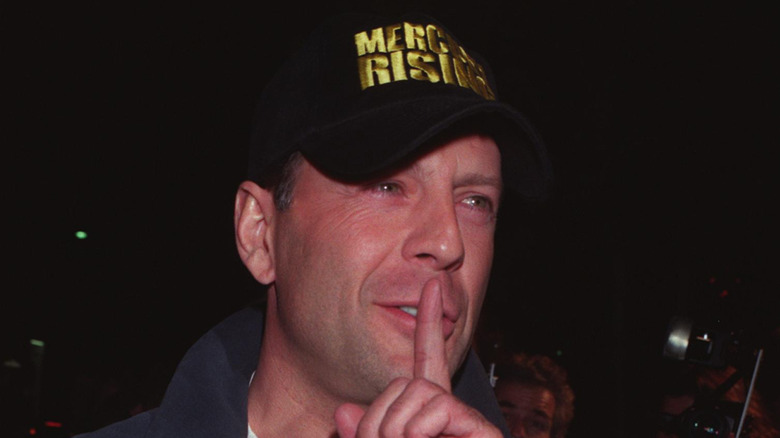
Bruce Willis was never so much as nominated for an Academy Award, but he received plenty of attention from the Golden Raspberry Awards. Also known as the Razzies, it's an alternate Oscars where voters hand out prizes to the film performances deemed the worst of the year. The organization nominated Willis for non-honors seven times between 1992 and 2021, and he won twice: Worst Screenplay ("Hudson Hawk") and Worst Actor of 1998 ("Mercury Rising," "Armageddon," and "The Siege"). By the early 2020s, Willis was churning out so many non-theatrical and critically-avoided action movies that the Razzies created a new and savage category: Worst Performance by Bruce Willis in a 2021 Movie. The actor's work in "American Siege," "Apex," "Cosmic Sin," and "Survive the Game" was singled out, among others.
Less than two months later, Willis' family disclosed that the actor would retire from acting after being diagnosed with aphasia, a condition that had been negatively impacting his health for some time, including his ability to understand and interact with the world. The next day, the Razzies called off the Willis hate. "After much thought and consideration, the Razzies have made the decision to rescind the Razzie Award given to Bruce Willis, due to his recently disclosed diagnosis," the organization said in a statement (via CNN). "If someone's medical condition is a factor in their decision making and/or their performance, we acknowledge that it is not appropriate to give them a Razzie."
He was at odds with his Moonlighting co-star, Cybill Shepherd
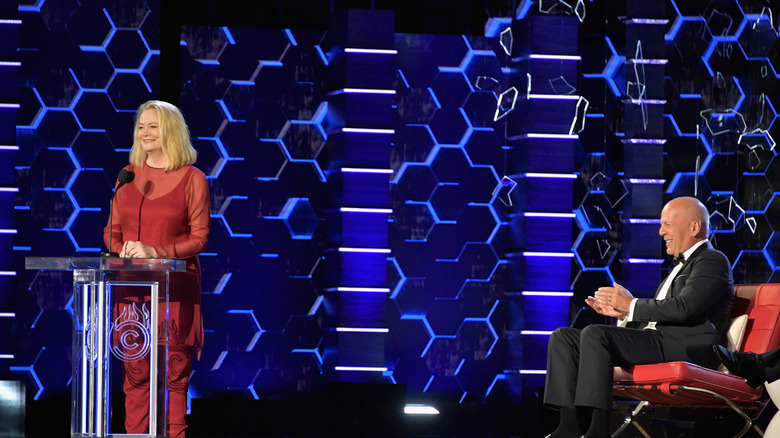
Bruce Willis first came on the scene when he played David Addison in the popular 1980s TV series "Moonlighting." Opposite him was Cybill Shepherd, who played his love interest Maddie Hayes. Their on-screen sexual tension had fans rooting for them to get together, making them an early purveyor of the popular "will-they-won't-they" romance trope, according to Nine Network. But their offscreen chemistry was a different story, and according to co-star Curtis Armstrong, the two actors couldn't stand each other. Body doubles were used so they wouldn't have to be near each other, and they couldn't bear to make eye contact.
Shepherd's pregnancy made tensions worse, since the schedule was shifted to accommodate her, and Willis was forced to work longer hours. When the pair had to film a scene that featured an argument between their characters, it devolved into an actual argument.
The cause of their feud remains a mystery. Armstrong said in his book "Revenge of the Nerd" that Willis once divulged a mistake in his early relationship with Shepherd, which Armstrong interpreted as a sexual liaison. Additionally, Willis' fame ballooned four seasons into the series with the release of "Die Hard," which may have hampered his relationship with Shepherd. The co-stars eventually got over it, and Shepherd would later joke about their strained relationship in Willis' "Comedy Central Roast," noting that the two hadn't spoken to each other in 30 years.
Bruce Willis's Broadway debut bombed
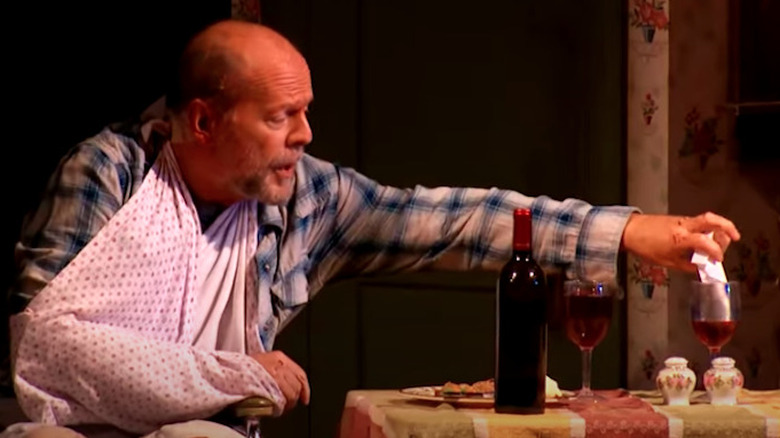
In 2015, Bruce Willis made his debut on Broadway. He already had stage experience during the early years of his career and a few productions throughout — including "True West" — but this marked his first time on the Great White Way. Unfortunately for Willis, the reviews were dismal.
He played the lead role of author Paul Sheldon in the stage adaptation of Stephen King's "Misery." The play was meant to be a thriller, as Sheldon is held captive by a rabid fan and must rewrite his book in order to save his own life. But to critics, Willis lacked the intensity and energy required for a character writing against time. Entertainment Weekly wrote that Willis played the role "with a flatness and passivity that feels too inert;" the Hollywood Reporter described him as "disengaged;" and The New York Times labeled him "vacant." He was also criticized for using an earpiece to feed him lines when the play was in previews. This came shortly after he was reportedly fired from Woody Allen's "Cafe Society" because he couldn't memorize his lines.
Bruce Willis's condition is declining
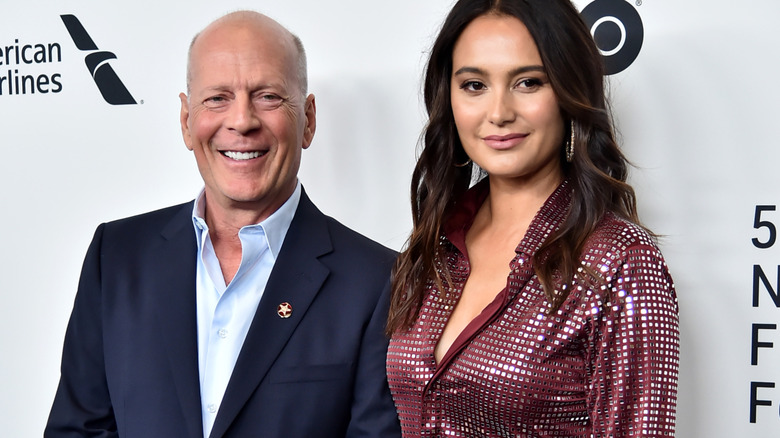
All at once in early 2022, Bruce Willis stopped acting and adopted a more private life owing to a diagnosis of the degenerative cognitive condition of aphasia. In February 2023, the actor's family released a statement announcing that aphasia was no longer the appropriate descriptor for the suite of health issues he faced. His diagnosis was updated and specified as frontotemporal dementia, a relatively rare sort of dementia most often diagnosed in patients under the age of 60, for which there is no known treatment, characterized by how it eliminates the ability to verbally communicate.
By August 2025, Willis had continued to decline. "Bruce is in really great health overall, you know. It's just his brain that is failing him," the actor's wife, Emma Hemming Willis, told ABC News, adding that she wasn't entirely sure if her husband recognized her or their two daughters anymore. It was around that time that the family moved Willis into a separate residence where he could receive around-the-clock medical care and not interrupt the lives of his children. "I knew, first and foremost, Bruce would want that for our daughters," Hemming Willis said. "He would want them to be in a home that was more tailored to their needs, not his needs."