

These '70s Dance Songs Will Get Every Gen Xer Out Of Their Seats
One minute you're doing the dishes, the next you're gripping a spatula like a mic and attempting the electric slide across the kitchen floor in your slippers. But it takes the right song to make that happen. And while we all have our own musical tastes, a rare group of songs seems to bypass personal preference entirely. Somehow, these songs work universally to get everyone dancing — even Gen Xers.
Making broad claims about Gen X is always a little tricky. The resistance to being defined is actually baked into how Generation X got its name. So, creating a list of '70s dance songs guaranteed to get every Gen Xer moving? We're aware of the risk. For a song to make this list, the music had to have legs that strutted well beyond the '70s. Gen X includes anyone born between 1965 and 1980-ish, which means many of them spent the disco decade more familiar with "Rubber Duckie" than "Le Freak." For a '70s song to truly move Gen X (both emotionally and onto a dance floor), it had to still matter into the '80s and beyond.
Every track on this list (or the full album it appeared on) has been inducted into the Library of Congress' National Recording Registry, home to "works of enduring importance to American culture." In other words, these aren't just '70s hits — they're all-time cultural hits. And now that we've cued up those lofty expectations, let's get that disco ball spinning and get ready to dance.
Bee Gees — Stayin' Alive
Before it became the unofficial soundtrack to not dying, "Stayin' Alive" was a gritty disco strut down the sidewalk of late-1970s New York. Written for the movie "Saturday Night Fever," it plays for the eight-minute opening sequence as John Travolta powerwalks through Brooklyn in platform shoes. With a beat that doesn't let up and a falsetto that keeps going up, "Stayin' Alive" held the number one spot on the Billboard Hot 100 for four weeks in 1978.
The song didn't just stay alive on the charts, either — it also became a go-to song for CPR training. According to the American Red Cross, "Stayin' Alive" grooves with the right beats per minute to match the ideal speed for compressions during cardiac arrest. So, Gen Xers grew up hearing the Bee Gees not only on dance floors but also while staring intensely at the ever-patient CPR dummy, Resusci Anne.
But there's a catch. "Stayin' Alive" has a habit of making people want to dance, which is not ideal when someone's life is on the line. The scenario plays out during a first-aid training on the sitcom "The Office." Michael Scott learns CPR to the tune of the song and promptly leads the staff into a disco inferno. Nobody bothers to call 911, the drill is a failure, and the dummy does not stay alive, all because the song got everyone out of their seats and dancing.
Sister Sledge — We Are Family
The lyrics are simple and affirming, the production is bright and clean, and the tempo hits that sweet spot between "I'm definitely moving" and "I won't pull a hamstring." In other words, when "We Are Family" comes on, how can you resist the urge to smile and dance? With those repeated "We are family" chants, Sister Sledge somehow creates a group project where everyone actually wants to participate. If there's a crowd and a sound system, the song is ready — weddings, roller rinks, sporting events. The song became the theme song of the 1979 Pittsburgh Pirates, who benched "Take Me Out to the Ballgame" in favor of a seventh-inning stretch with 50,000 fans joyfully shouting, "We Are Family." The team danced its way to a World Series championship that year, and the Pittsburgh Pirates helped cement Sister Sledge into sports history.
That stadium-sized singalong reveals how the song stretches far beyond four sisters celebrating their shared last name — it redefines what family can mean. By verse two, you're emotionally related to everyone dancing with you. From found families dancing to it as an unofficial anthem at Pride celebrations to inspiring the We Are Family Foundation and its vision of a global family, the song has a way of getting everyone dancing together.
Village People — YMCA
A clipped, marching beat kicks in. Then comes a bright brass fanfare that jumps upward, takes a breath, and does it again. No lyrics yet, but everyone already knows what time it is. The song doesn't ask for your participation — it demands it.
Gen X grew up expecting to hear this song at every school dance. It didn't matter if you were a jock, a theater kid, or in the marching band. When that chorus hit, you were the Village People, at least for four letters' worth of choreography. Even the wall-huggers, those shy students who treated the dance floor like it was lava, couldn't fully resist. They might have been standing along the edges, but their arms were still flailing about to spell "Y"-"M"-"C"-"A."
The actual Young Men's Christian Association had some mixed feelings about the Village People's "YMCA" song. But eventually, the organization embraced it, seeing the song as a net positive. After all, it's hard to argue with free publicity when a track gets played everywhere. And by everywhere, we mean everywhere. Eventually, the tune even made its way to outer space: NASA played "YMCA" as a wakeup call on the STS-106 space shuttle mission in September 2000. It's proof that the song literally gets people up and moving.
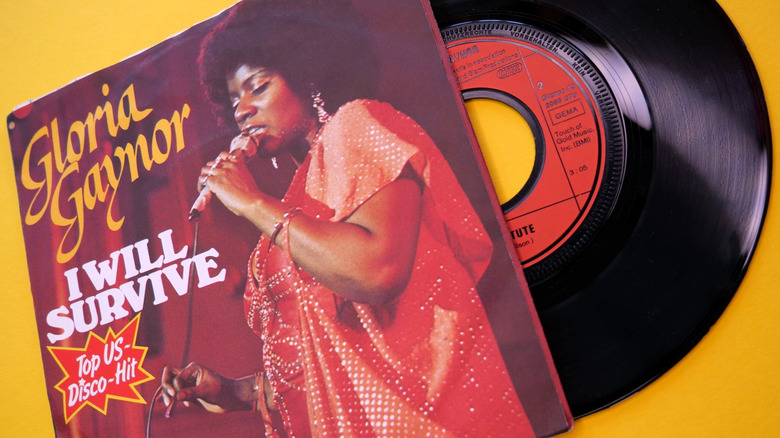
Gloria Gaynor — I Will Survive
Gen X doesn't just know this song: They've seen it meme-ified, remixed, and covered by everyone from Miss Piggy to the Memphis Symphony. It's basically the national anthem of bouncing back. Even the most disco-averse listener can't help but root for Gloria Gaynor as she belts, "I Will Survive."
When the song kicks off with that dramatic arpeggiated piano flourish, you know it's time to slip on your dancing shoes. But you have more than a few beats to do so, because the opening is subdued and confessional. She's afraid. Petrified. Still processing. The tension builds until finally, it explodes into that triumphant, fist-pumping chorus. When the beat finally drops, you get a massive hit of dopamine. By then, your shoes should be laced. The four-on-the-floor disco pulse is so intuitive that even the rhythm-challenged can find their groove. Your lips will be moving, too. With conversational lyrics and rhymes that land right on the beat, suddenly you're yell-singing lines you didn't even realize you knew.
Though it's forever canonized as the ultimate breakup song, its origin story comes from corporate revenge. One of the song's writers, Dino Fekaris, penned it after being fired from Motown Records. Over time, "I Will Survive" has become an anthem of resilience, embraced by survivors of all kinds and countless causes. When this song is blaring, you feel like you can dance your way through anything.