

Strange Cold Cases From The 1970s That Remain Unsolved

In today's world, advanced forensic techniques and innovative investigative methods have helped solve many cold cases. That, along with the fact that people typically carry location trackers in their cell phones, offers many more clues for investigators when people go missing or die in mysterious ways. Still, numerous cases of people dying or vanishing under mind-boggling circumstances persist, and many from the 1970s — long before the digital age — are still unsolved. In some instances, bodies were found with neither a hint of foul play nor a plausible suspect; in others, individuals simply disappeared, without warning, seemingly from the face of the planet.
The D.B. Cooper plane hijacking and Jimmy Hoffa's disappearance are among the most high-profile cold cases from the '70s, but they're far from the only ones. And a half-century later, we haven't given up on these cold cases; law enforcement, mainstream media outlets, and independent watchdog groups continue to raise awareness about them. After all, there are many examples of decades-long unexplained deaths solved with DNA testing or people who went missing and were found years later. And, admit it or not, the public always has its eye on such mysteries, no matter how old — or seemingly unsolvable — they may be.
What really happened to the Yuba County Five in 1978?

The unexplained deaths of four of the Yuba County Five — and the ultimate fate of the fifth man — continue to puzzle authorities and cold case enthusiasts alike. On February 24, 1978, five friends – Jack Huett, 24, Jack Madruga, 30, Gary Mathias, 25, Bill Sterling, 29, and Ted Weiher, 32 — drove roughly 50 miles from their homes in Yuba City to California State University in Chico to watch a college basketball game. Huett, Madruga, Sterling, and Weiher had cognitive impairments, having met through a now-defunct program for adults with developmental disabilities. Mathias, on the other hand, had been diagnosed with schizophrenia five years earlier.
Tragically, that was the last day they were seen alive. Four days later, Madruga's car turned up on a mountain road 70 miles from their destination, with a quarter-full gas tank, snack wrappers on the seats, and zero trace of its passengers.
It took over three months of searching before the next significant developments in the case. On June 4, motorcyclists discovered Weiher's body, wrapped in sheets inside a deserted trailer 19 miles from the car. He sported a beard, implying he survived for some time after their disappearance. Within the next two days, the remains of Huett, Madruga, and Sterling were also found. Notably, none of the bodies showed any overt evidence of murder. Up to now, no one knows what happened to Mathias, whose was never found.
Robin Graham went missing in 1970 after being stuck on the side of the road

On November 14, 1970, Robin Graham, then 18, was alone and driving her boyfriend's car on the LA freeway when she reportedly ran out of gas at around 2 a.m. near the Santa Monica Boulevard offramp. According to the National Missing and Unidentified Persons System (NamUs), Graham was able to access a phone to call her parents for help; shortly after, a California Highway Patrol officer stopped by and offered to assist her, but she declined, saying that she was already expecting someone to pick her up.
Before leaving, the patrolman noticed a light blue Corvette parked beside Graham's car. A man then approached Graham, and the officer assumed it was the help she'd been expecting. Later, when her parents arrived at the scene, the car was locked and parked by the side of the place where Graham stalled, their daughter nowhere to be found. After the Los Angeles Times published a story about her disappearance, Graham's parents received a letter from a woman who said she'd had a similar experience when she was stranded on the freeway, and a man driving a light blue Corvette and claiming to be a police officer offered her a ride, which she declined. The woman identified Bruce Davis, a man suspected of being the infamous Zodiac Killer, as the last person to approach Graham; nothing conclusive came out of this, though.
In 2025 — 55 years later — Graham's classmates at John Marshall High School reached out to NBC's Dateline about her and started a discussion about her on social media, reviving interest in her case.
The Fort Worth trio disappeared after a mall outing in 1973
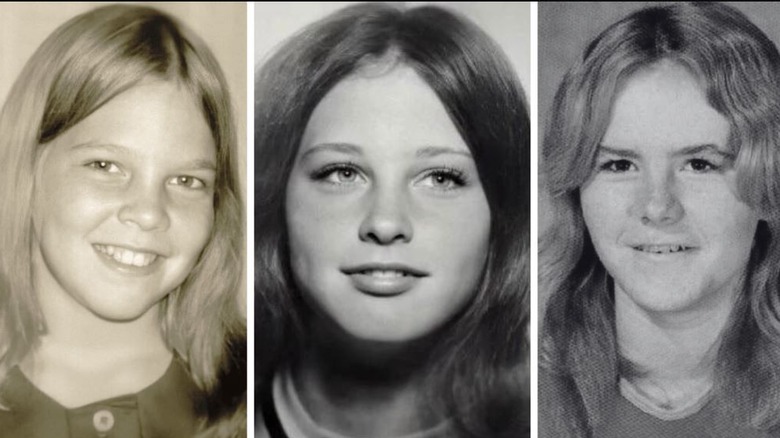
Two days before Christmas in 1973, Julie Ann Moseley, 9, Mary Rachel Trlica, 17, and Lisa Renee Wilson, 14, went out for some last-minute holiday shopping at Seminary South Shopping Center in Fort Worth, Texas. Wilson was dating Moseley's brother, Terry, who chose not to accompany her that day. Trlica was Wilson's friend and was the driver for the trip. In an interview with Fox 7 Austin, Terry shared that his sister Julie wasn't originally supposed to go with Wilson and Trlica, and begged their mother repeatedly for permission.
The trio first headed to a surplus store, after which they went to the mall. When the girls failed to return that evening, Wilson's father, Richard, tried to look for them. He and a neighbor found Trlica's 1972 Oldsmobile 98 parked at Seminary South, with the gifts they had purchased. The next day, Trlica's husband allegedly received a note from Rachel, stating that she, Moseley, and Wilson went to Houston and would be back in a week. That raised suspicions since it was just before Christmas and the girls were looking forward to the holiday. Local authorities started investigating their disappearance, but couldn't find any concrete leads after a week. Four months later, an anonymous informant relayed grim news: Moseley, Trlica, and Wilson were already dead, the bodies buried under a bridge in Port Lavica. However, a subsequent coordinated search yielded nothing.
To this day, there are no solid leads or suspects. Though some of the family members are convinced that the three are deceased, their search for answers continues.
The mystery of the Isdal Woman found in 1970

The story of the unidentified woman in Norway raised more questions than answers — and even with modern technology making it possible to reopen the cold case decades later, authorities are still searching for the truth behind this mysterious person's death.
On November 29, 1970, the remains of the so-called "Isdal Woman" were discovered in Isdalen Valley. Her charred clothes had no labels, and the front of her body was burned beyond recognition. Objects such as bottles, jewelry, and a broken umbrella seemed purposely placed around her, akin to a ritual. A forensic examination revealed that the 5-foot-4-inch woman was likely still alive when she sustained her serious burns, and many sleeping pills were found in her stomach. Days later, authorities found two suitcases at the Bergen train station containing cosmetics, wigs, money, a pair of spectacles with the woman's fingerprints, a plastic bag from a shoe store where she may have bought a pair of rubber boots, and a coded message that seemingly listed the woman's recent itinerary. With the limited clues and accounts from eyewitnesses who claimed to have seen her at various Norwegian hotels, the police speculated that she was a spy.
In 2016, advancements in DNA and dental analysis meant another shot at identifying the Isdal Woman. The evidence suggests that she was European, born between 1926 and 1934. Her body is sealed in a zinc coffin to slow its deterioration and make it possible to locate her living relatives, if any.
Lynne Schulze seemed to vanish in 1971

On December 10, 1971, 18-year-old Lynne Schulze, a student at Middlebury College in Vermont, was set to take her English Drama exam at 1 p.m. According to the "Murder She Told" Podcast, half an hour before her test, she was spotted eating dried prunes outside All Good Things, a health food store approximately a mile away from her dormitory. She and a classmate walked back to Middlebury College; she went back to her dorm room, reportedly looking for her pen. The last confirmed sighting of Schulze was at 2:15 p.m.; she was standing across the street from the health food store. Five days later, after Schulze's family and her classmates realized that she'd been missing her classes, they alerted the authorities.
In the weeks leading up to her disappearance, Schulze exhibited a lack of interest in her academic life. Schulze confided in a fellow student that she was planning to leave Middlebury soon; she also told her friends that she was mulling over the prospect of faking her own death and starting over elsewhere.
In the years that followed, Schulze's family and the police received numerous tips of alleged sightings. Four decades later, in 2011, Schulze's sister, Anne, spoke to the press, sharing that her family no longer believed that Lynne was still alive and just wanted confirmation of her passing. In 2015, convicted murderer Robert Durst, who owned All Good Things when Schulze disappeared, was linked to the case; nothing conclusive came out of it, and Durst died in 2022.
Margaret Ellen Fox was lured by a fake babysitting job in 1974

In June 1974, 14-year-old Margaret Ellen Fox of Burlington, New Jersey, was contacted by a man who introduced himself as John Marshall. Fox had posted an advertisement offering babysitting services; Marshall responded, saying he was looking for a weekend babysitter for his son. After multiple failed attempts, their meetup pushed through on June 24. Fox boarded a bus from Burlington to Mount Holly (an approximately 7-mile trip) to meet Marshall, who said he'd be driving a red Volkswagen Beetle, for a face-to-face interview. Later on, when authorities looked into Fox's case, they determined that Marshall had actually called Fox from a phone booth in Lumberton. Around the time of Fox's last confirmed sighting, there were a number of reports of young girls receiving suspicious job offers in a similar vein.
Working with law enforcement, Fox's family recorded the influx of calls to their home after her disappearance. Notably, one of these was from a man who claimed that the girl was with him, demanding payment for her safety. According to the FBI, the man said, "$10,000 might be a lot of bread, but your daughter's life is the buttered topping." Two years later, someone falsely claimed that they knew Fox's whereabouts; not much information has come out since then.
In 2019, the FBI released an enhanced audio clip of the aforementioned ransom call, along with digitally constructed images of what Fox might look like in the present day. The agency also announced a $25,000 reward.
Peter Jonathan Winston's went missing in 1978

At the tender age of 6, Peter Jonathan Winston displayed remarkable intelligence, enough for the Saturday Evening Post to call him a "boy genius." As a child, it became clear that chess was his passion; he almost always won the inter-class chess tournaments he joined at his school, Sands Point Academy. His chess prowess earned him recognition, leading to him competing in tournaments and even a book deal (which never materialized). At the peak of his career, the 1974 U.S. Junior Championships in Philadelphia, he tied for first.
As he grew older, Winston's enthusiasm for chess waned. He also lost interest in academics, struggled with substance misuse, and expressed feelings of alienation. In 1976, he was hospitalized following a severe mental breakdown; he was prescribed Thorazine for schizophrenia and, later on, lithium for manic depression. He also spent time in rehab. Winston was vocal about how the medications negatively affected his chess-playing skills; in 1977, he played nine games in a tournament and lost all of them, which administrators believed was a statistical impossibility for a player of his caliber.
On January 26, 1978, a day after he lost money gambling at the racetrack, Winston stormed out of his sister's apartment after the latter told him to seek medical help. The 19-year-old then had lunch at an unnamed friend's house; he walked out and was never seen again. Eerily, Winston disappeared just hours before the Blizzard of 1978, one of the worst winter storms in U.S. history.
Mona Blades disappeared while hitchhiking in 1975
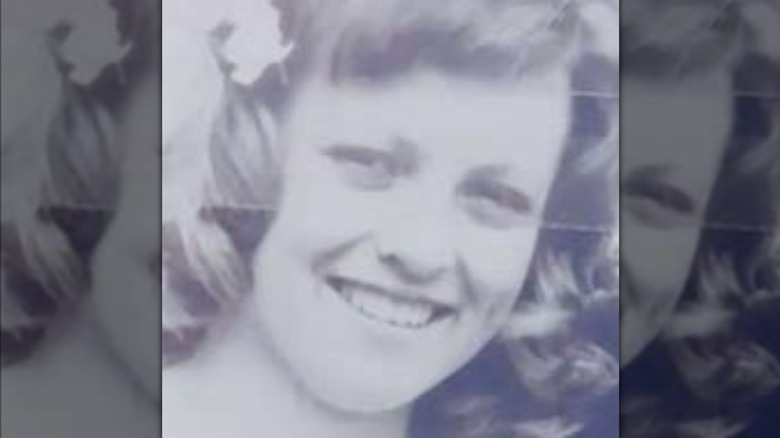
Despite the fact that New Zealand authorities had identified a few "persons of interest" and conducted hundreds of interviews related to the case, the disappearance of 18-year-old Mona Elizabeth Blades remains unsolved, more than half a century later.
Last seen alive on May 31, 1975, Blades reportedly hitchhiked from Cambridge Road to their family's residence in Hastings, meaning to attend her nephew's first birthday. Eyewitnesses claimed that, at around 10 a.m., she got into an orange Datsun station wagon. That same morning, someone reported seeing Blades with the driver, a middle-aged man, parked along a dirt road near the Napier-Taupō highway; when the witness, a fencing contractor, drove by a second time, the wagon had seemingly been abandoned. When Blades' disappearance was reported, authorities underwent a massive manhunt, conducting more than 500 interviews with people who had either driven or owned the type of vehicle in question. There were other sightings of hitchhikers during that weekend (a long holiday in New Zealand) that may have matched Blades' description, but according to the New Zealand Police, those were "never fully investigated" for unspecified reasons.
Over the course of the investigation, law enforcement pinpointed individuals who may have had something to do with Blades' disappearance. These include Charlie Hughes (the suspected driver of the orange Datsun); John Freeman (who later shot a student in Auckland, and then himself); and Derrick Hinton, a former traffic officer whose family has steadfastly maintained his innocence.
Eileen Hynson vanished with few clues in 1976
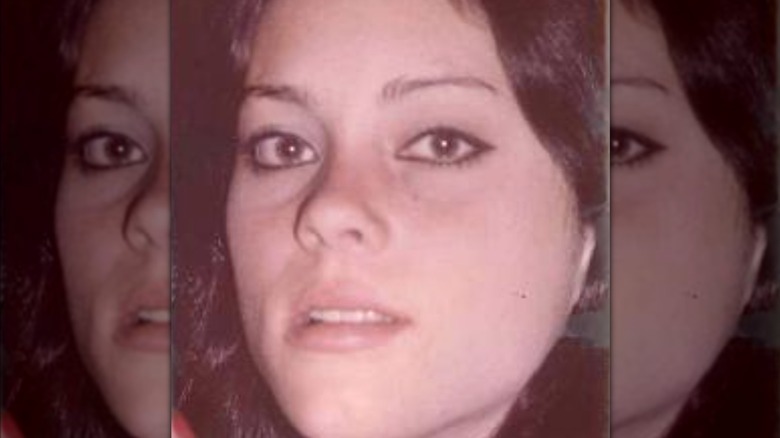
Among all the people who went missing during the 1970s, Eileen Francis Hynson's case is one of the real head-scratchers. Not only is there so little verifiable information about it, but some of what's there is also inconsistent.
What is certain is that Hynson was last seen on June 1, 1976. According to the Napa, California Patch, Hynson went missing in a resort area located near Napa County's Lake Berryessa. In this version of the story, according to her father, Hynson was slated to attend a bridal party dress fitting session in Benicia, Solano County, California, but never reached her destination. The Charlie Project wrote that Hynson went missing after leaving her home, where she lived with her father and her brother. In that version, she was also said to be heading to a bridal gown fitting in Benicia, only a roughly 30-minute drive from Napa. In a hastily written version of the story via the National Missing and Unidentified Persons System (NamUs) it's said that Hynson actually left to attend a wedding in a different county. In all narratives, she left her luggage behind; thus, it's reasonable to assume that Hynson didn't intend to vanish without a trace, but there are a lot of holes in the available information.
An eerie coincidence is the fact that Hynson disappeared in an area where the infamous Zodiac Killer struck almost seven years earlier. Others have noted online that Girl No. 40 in serial killer William Richard Bradford's photograph collection bears a strong resemblance to Hynson.
Though confirmed evidence is scant, in 2012, Napa County's cold case investigation unit added Hynson's name to a list of missing persons cases that could possibly be solved thanks to modern-day forensic techniques. As of 2026, it's unknown what happened to Eileen Hynson.
Teresa Gibson disappeared during a school field trip in 1976
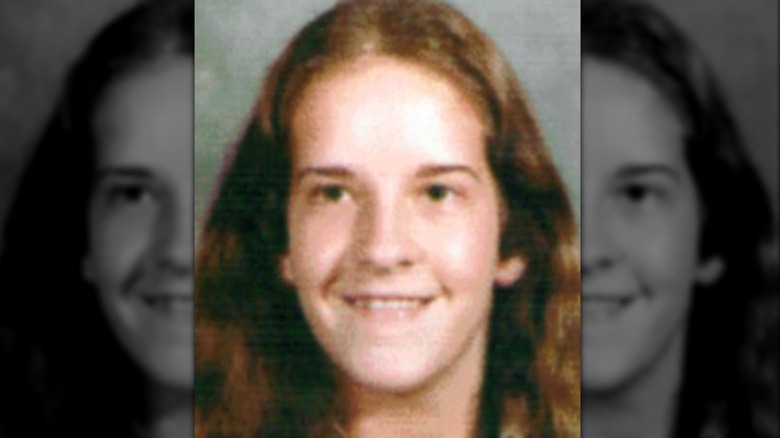
For the students of Bearden High School, October 8, 1976, was supposed to be etched into their memories as a pleasant visit to the Great Smoky Mountains National Park in Tennessee. Instead, it became the last day they would ever see their classmate, 16-year-old Teresa "Trenny" Lynn Gibson.
An aspiring landscape architect, Gibson excitedly went on the horticulture trip supervised by their teacher, Wayne Dunlap. Upon reaching their destination, the class divided itself into smaller groups; Gibson partnered with her bus seatmate, Robert Simpson. The pair hiked along the Forney Creek Trail to a grassy area called Andrews Bald; after having lunch there, Gibson walked back to the bus on her own. Along the way, she joined other groups of students, but at around 2:50 p.m., Gibson took a right turn alone, seemingly in a hurry. Hours later, Gibson was reported missing.
The next day, teams of search hounds scoured the park grounds to no avail. Efforts continued for almost a month; due to a lack of physical evidence that she might still be there, rescuers stopped. Nearby hospitals were also checked, but authorities found no verifiable trace of Gibson. Half a year later, Gibson's father returned with a team of over 200 people, but found nothing in the park and the surrounding areas after weeks of searching. At least two schoolmates — Simpson and Kelvin Bowman, who was suspected to be Gibson's boyfriend — became persons of interest, but neither was conclusively linked to her disappearance.
Five women working as social escorts went missing in 1978

In early August 1978, a Singaporean social escort named Diana Ng Kum Yim, 24, met up with three men who claimed to be sailors from Hong Kong and Japan. She subsequently introduced the men to four other women, all from Malaysia: Yeng Yoke Fun, 22, Yap Me Leng, 22, Seetoh Tai Thim, 19, and Margaret Ong Guat Choo, 19. After seemingly hitting it off, the sailors invited the five girls to attend a party with them aboard a cargo ship, set to take place on August 20; each woman was reportedly promised a diamond ring and a per-hour rate of $100 as payment. According to a 1978 news article from The Straits Times, the women went on a shopping spree on August 19 in preparation for the event.
However, when the five did not return a day after the party, their friend, beautician Helen Tan, became alarmed. Despite successfully figuring out where the group went, Tan was unable to find her friends nor the cargo ship where the party supposedly took place.
To this day, the whereabouts of the five women and the three sailors remain a mystery. At least one theory is that human traffickers from Hong Kong were responsible for their abduction; another surmises that the sailors were actually North Korean spies, acting at the behest of their government.