

Rock Stars Who Left Their Successful Bands For Flop Solo Projects
Sometimes, when established and successful rock stars take a chance on themselves and leave their bands behind in pursuit of a solo career — they totally fail. It seems like breaking away from a popular group just might be the next logical step for a major musician — they could feel like they've done everything they can do within the limitations of the band they started years earlier, whose sound they're no longer interested in pursuing. Perhaps a rock star just wants to do something different, or they don't want to have to get permission from the rest of the band to take a creative risk. But a bit of ego probably comes into play more often than not — rock stars theoretically go solo because they're tired of sharing the spotlight with other musicians they view as their lesser.
Going at it alone has worked out well for enough rockers that it must provide encouragement to those musicians on the fence about the decision. But while a solo stand worked out for the likes of Sting, Paul Simon, and Stevie Nicks, it was a disastrously poor calculation for so many others. Here are some rock stars who left their bands for a solo thing that quickly and spectacularly bombed.
Patrick Stump — Fall Out Boy
In 2009, after a slew of top-selling albums as the standard-bearer for millennium-era emo rock, Fall Out Boy announced that due to a creative impasse, the band was taking a hiatus of indefinite length. More of a split than a rest period, it allowed its members to pursue their own pressing musical muses full-time. For lead singer Patrick Stump, that meant less rock and more pop — akin to that of one of his heroes, Michael Jackson, and burying the punk-adjacent ethos of Fall Out Boy.
Nevertheless, Stump titled his album-to-be "Soul Punk" and announced its existence in February 2010. Because of his pursuit of crafting the exact album he wanted to make, the release was delayed, and it finally hit stores in October 2011. It was a true solo album, too — Stump played every instrument on "Soul Punk" himself, an expensive and time-intensive endeavor which he also entirely self-funded. It was very far away from Fall Out Boy. The first single, "This City," sounded like adult contemporary meets Top 40 dance-pop, with Stump styled in the video to look like a teen idol. And when "Soul Punk" finally became available for purchase, a shockingly low number of people bought it. The Fall Out Boy fans didn't bring their support, as Stump's solo effort debuted and peaked at No. 48 on the album chart with 9,000 copies sold. By 2013, Fall Out Boy's hiatus was over.
Tom Fogerty — Creedence Clearwater Revival
As lead singer and primary songwriter, John Fogerty propelled Creedence Clearwater Revival to remarkable commercial heights in the late 1960s and early 1970s. But it was the frontman's older brother, Tom Fogerty, who had gotten into music first. His high school band, Spider Webb and the Insects, merged with John's Blue Velvets to become the swamp-rock hitmakers, eventually renamed Creedence Clearwater Revival. By that time, John Fogerty had taken the creative and performative reins of the operation.
In February 1971, CCR issued a press release, informing fans that Tom Fogerty had left the band, which would continue on as a three-man act. At the time, the schism was presented as amiable, with Tom saying he needed to spend more time with his young children. But in several interviews in the months that followed, Tom owned up to musical frustration suffered in the shadow of his brother. "After we were into our sixth platinum album, I thought maybe I could do a little singing. But John was not going to change things, so I split," he later explained to Rolling Stone (via "Bad Moon Rising"). Free to write and sing exactly what he wanted, Fogerty released a single in 1971, "Goodbye Media Man." In 1972, an eponymous LP arrived. The former didn't make the Hot 100, and the latter sputtered out at No. 78 on Billboard's album chart. None of his other six albums sold well before Tom Fogerty's tragic death in 1990 at age 48.
Dee Dee Ramone — The Ramones
Inspired by anarchic hard rock bands like the New York Dolls, Douglas Colvin formed the Ramones. He played bass in the influential American punk band under the stage name of Dee Dee Ramone. The Ramones remained a unit throughout the 1970s and 1980s, selling a moderate amount of records, but in the latter part of the decade, Colvin, tiring of his bandmates' bickering and coping with physical and mental health difficulties, decided to mix things up. Sporting hip-hop fashions of the day, he told the other Ramones that he'd gotten really into rap, and that he wanted to record an album in that style.
And so, in 1989, Colvin, adapting his stage name further to Dee Dee King, both departed the Ramones and delivered the rap LP "Standing in the Spotlight." The first single: "Mashed Potato Time," a hip-hop cover/interpolation of a 1962 hit by a different Dee Dee — Dee Dee Sharp. If Colvin/Ramone/King had the hip-hop skills to match his supposed passion for the form, he didn't prove it on that track, in which he unconfidently tries to stay on rhythm as he half-heartedly boasts about his wealth and prowess with women. Savaged by critics, the album sold poorly. Colvin recorded some more little-noticed music and returned to the Ramones in an unofficial capacity, writing songs for his old band until it broke up in 1996.
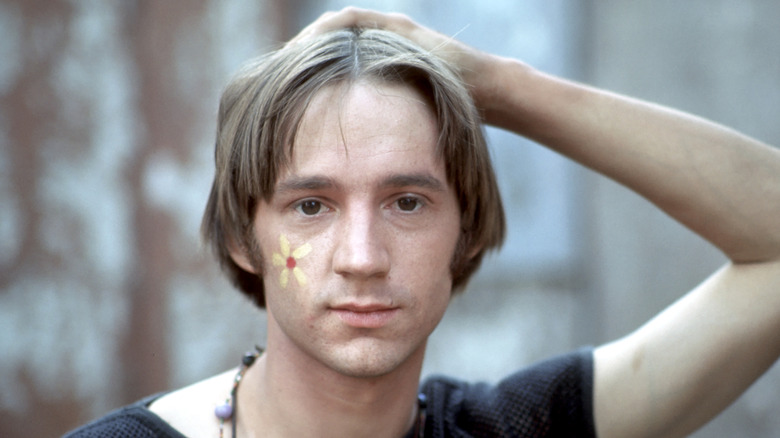
Peter Tork —The Monkees
The history of the Monkees was as tumultuous as it was brief. Riding high on the success of its hit, zany TV sitcom, the Monkees scored four No. 1 albums in 1967. The Monkees were never an organic band — producers plucked four musician-actors from an open audition and had them sing along to tracks written and recorded by industry professionals. The four guys portraying the Monkees, including Peter Tork, were allowed to start writing and playing their own music after hostile negotiations with their handlers, but Tork remained creatively unhappy. After failing to follow through on threats to leave the band, Tork quit in December 1968. According to "Monkeemania: The True Story of the Monkeys," because this was a business venture more than a real rock group, he had to pay $160,000 to get himself out of his contract with Monkees handlers.
At a press conference, Tork cited not enjoying the work and too much pressure and stress as his reasons for leaving. He seemingly yearned to be back in the Greenwich Village folk scene where he'd come up as a banjo player in the early 1960s. No longer a Monkee, Tork quickly returned to that kind of music, forming a band with his partner Reine Stewart called Peter Tork And/Or Release. Despite Tork's stature and proven popularity, the new group couldn't secure a recording contract. Completely broke by the mid-1970s, Tork taught private school in Los Angeles, fronted a couple of indie bands in the 1980s, and signed on for a Monkees reunion in 1986.