

5 History-Making Pianists Every Classic Rock Fan Should Already Know
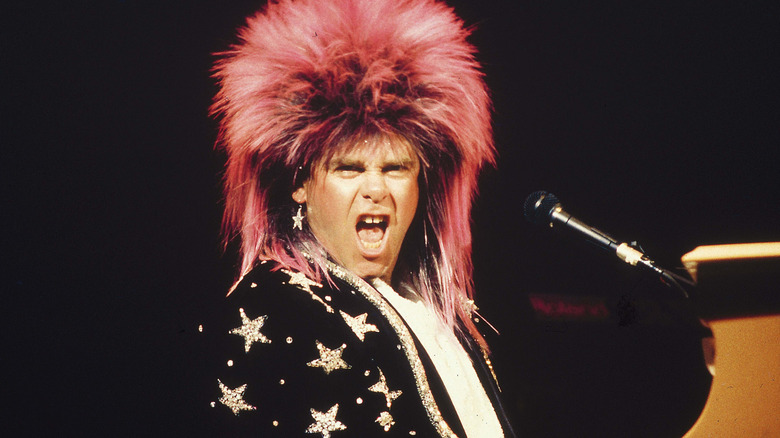
They are the unsung heroes of the classic rock world. While audiences swoon over the frontwoman or man, air-guitar the stylings of the lead axeman or woman, or get the chills from a classic rock drum solo, many a keyboardist has languished on the sidelines, overshadowed by their bandmates. Plenty of big names have found fame while tickling the ivories: Freddie Mercury, Joni Mitchell, and Ray Manzarek, who died in 2013, all spring to mind. However, some artists' piano skills are so dazzling that they propel them into another league entirely.
Even among the cream of the classic rock keyboarding crop, there is an embarrassment of riches to be enjoyed. Our choices include classically trained musicians and child prodigies who reaped the rewards of their talent. It also sheds light on a pianist whose back catalogue of songs reaches into the hundreds, but whose name was largely erased from music history, until recently. Each one of these pianists demonstrated breathtaking ability as they broke down musical barriers to create astonishing sounds in the classic rock genre and inspire generations.
Keith Emerson
Where else could we begin but with one of the founding members of Emerson, Lake & Palmer, one of the best supergroups in history. Keith Emerson caused as much mayhem on stage as inspired awe in all who heard him yet, as Jonathan Edwards recalled to Prog: "For all his showmanship, Keith was first and foremost a composer and a musician, making music for the head and the heart." We couldn't agree more.
Emerson taught himself to play piano, combining Beethoven with jazz and the blues. His exuberant performances originated at one '60s gig when he climbed atop his organ to distract from a fight in the crowd. It also produced some interesting sounds, and with his band The Nice he experimented further, discovering: "You got a great sustain from sticking knives between the keys," he said in an interview with Prog.
Emerson was an early adopter of the Moog synthesiser, initially calling it a "bl**dy nightmare," but with help from the inventor, it became a key part of his music. And what music it was. With The Nice, he laid the foundations for prog rock, and after forming Emerson, Lake & Palmer (ELP), he ran with it. He continued to fuse classical music with jazz, blues, and rock to create ambitious, delicious combinations that we think would have been a mess in the hands of a lesser pianist. Pair them with the aforementioned infectious stage performances and it's easy to see why Emerson broke the mold. After ELP split, he moved on to solo work and film scoring, among other projects, but his work remains a glorious musical legacy that has outlived him.
Billy Preston
It takes an accomplished musician to be able to escape the gravitational force that is The Beatles, but pianist Billy Preston did. The Houston-born prodigy started playing piano at three years old, and mastered the Hammond B3 organ by the age of 10. By the time he turned 21, Preston had worked with luminaries such as Mahalia Jackson, Nat King Cole, Little Richard, Sam Cooke, and Ray Charles, and that was just the start.
Touring Europe with Little Richard in 1962 brought him into The Beatles' orbit, when they opened for the star in Hamburg. Seven years later, Preston's work on the "Get Back" sessions led to one of the best keyboard solos in history, and was one of several collaborations between the pianist and the band. His free-form style blended soul, funk, and rock, and he also brought it to the Rolling Stones in the 1970s, but Preston enjoyed success as a solo artist, too. He landed a Grammy for the 1972 instrumental piece "Outa-Space" and topped the charts the following year with "Will It Go Round in Circles."
Throughout the '80s and '90s, Preston continued to work with more of music's big names, despite experiencing drug and alcohol addiction, possibly linked to his hiding the fact he was gay for all but the last few months of his life. Billy Preston died in 2006 at the age of 59, and while stars mourned the loss of a friend and an undoubted great, his effortless, infectious contributions to rock music mean his name will never fade into obscurity.
Nicky Hopkins
Throw a stone in any direction in the rock world and it will bounce off an ego. While many think a larger-than-life personality is a must-have for success in the music biz, those who worked with Nicky Hopkins knew better. He died in 1994 at just 50 years old, having been plagued for most of his life by inflammatory bowel disease Crohn's. Although it stymied his ability to tour, it allowed Hopkins to lend his incredible skills – sometimes uncredited — to a Who's Who of rock bands on both sides of the Atlantic.
British-born Hopkins' piano talent emerged at an early age. As a teenager, he studied classical music at London's Royal Academy of Music and played in his own band, belting out sounds that wouldn't have been out of place in Memphis or Chicago. By 19, his physical health ruled out performing on stage, so he embraced studio work, bringing his unique skills — and absence of ego — to records by the Kinks, the Who, the Rolling Stones, Jefferson Airplane, Peter Frampton, and (of course) The Beatles. He was so good, both the Who and Led Zeppelin asked him to join their ranks, but he declined.
The piano solo at the core of "Revolution?" That's Nicky Hopkins. As are the nerve-jangling keyboards in "Sympathy for the Devil," and the gorgeous melody on Joe Cocker's "You Are So Beautiful." We could go on and on, but you'll find Hopkins' incredible musical dexterity on more than 250 albums, according to Michael Treen, director of the 2023 documentary profile "The Session Man," which profiled the pianist's glittering career.
Richard Wright
"Pink Floyd wouldn't have been Pink Floyd if [we] hadn't had Rick," the band's drummer Nick Mason told Entertainment Weekly following the death of keyboardist Richard Wright. He discovered his muse comparatively late, switching from architecture to study at the London College of Music, after having co-founded the prog rock band with Roger Waters and Nick Mason. Wright's influence on Pink Floyd's unmistakable sound was a key component in their success, from combining classical, jazz, and blues to create something psychedelic and unique, to his discerning use of a precise, single sonic theme. A prime example is "Echoes," the 23-minute track from the 1971 album "Meddle."
Wright wasn't the flashiest showman who ever took to a prog rock stage, but he didn't need to be: His keyboard compositions did all that for him, drawing listeners into his incredibly layered, almost hypnotic worlds. As Pink Floyd's line-up evolved, he took more of a central role, particularly in 1973's "Dark Side of the Moon" — an album littered with dark truths — but before the decade's end, Roger Waters effectively forced Wright out of the band. He focused on solo projects with mixed success, before rejoining Pink Floyd in 1987 and working on 1994's "The Division Bell," alongside his second solo album, "Broken China." Wright's final live performance was in September 2007, and he died, aged 65, the following year.
Elton John
So much of what made Elton John a superstar is visual (those garish glasses, the outrageous costumes), but strip all that away and you're still left with a consummate musician. "I had a great year and I could pick up any tune, really that was played on the radio," John told Classic FM's Tim Lihoreau in 2019. That innate talent took him all the way to the Royal Academy of Music in 1958 at the age of 11, which he credits with giving him the training he needed to write the music for Bernie Taupin's lyrics.
Although his flamboyant performing style initially attracted audiences' attention, millions stuck with him for decades, thanks to Taupin's eloquent songwriting and John's wicked ways with a piano. Stick a pin in any part of his extensive catalog of works or live shows, and you'd be hard pressed not to find evidence of his virtuosic skills on full display, even in the album John said was his worst.
Anyone who saw the 1998 Tokyo performance of "Take Me To The Pilot," or was pierced by the agony beaten out on the piano keys in "Someone Saved My Life Tonight," or witnessed a live performance of "Don't Let the Sun Go Down on Me," could hear it for themselves. And despite his sound's complexity, Elton John makes it look so easy. He delighted a crowd in 2016 by playing a piano in London's St Pancras that he'd given to the train station. While his fingers danced up and down the keyboard and the music flowed, John looked as comfortable as someone tinkling the ivories in the comfort of their own home.