

Musicians Severely Mistreated By Their Record Labels
It appears that a music industry contract is one of the worst business deals one can ever make, as they trap artists in highly exploitative relationships, refusing to either pay them fairly or let them go. The standard contract between an artist and a record label is unique to the music industry, as the conditions are much tougher than in any other industry, with contracts often lasting for a lifetime. And since all the major record labels act the same, artists have no other option than to sign a deal with the devil.
Numerous musicians have spoken out against the music industry over the years, including Moby, who declared (via The Hollywood Reporter), "Major labels should just die," when speaking at a music conference in 2011. Many artists decided to fight back and filed lawsuits, declared bankruptcy, or even re-recorded already-released albums. However, the legal framework is firmly on the side of corporations, further enabling them to monopolize the market and exploit artists, and adding massive streaming platforms to the mix only complicates things.
On top of that, women in the industry, especially Black female artists, have a much lower success rate when it comes to legal battles with major companies. Plus, quite a few women aren't just fighting against financial abuse, but against sexual abuse as well. These are just a few of the many musicians severely mistreated by their record labels.
Prince
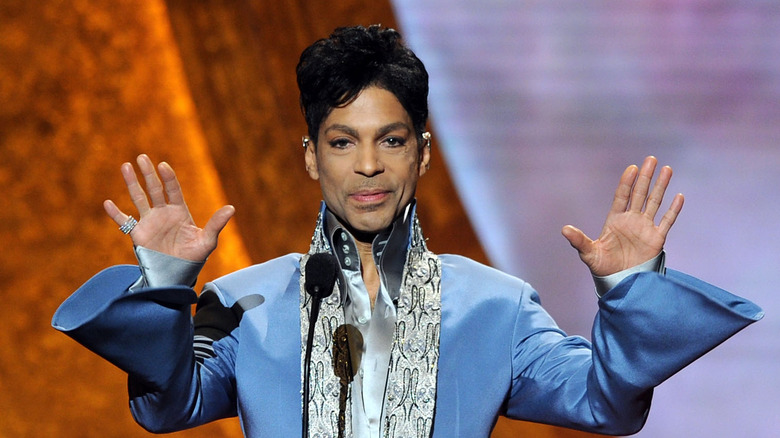
Prince's very public fight with the music industry brought interesting results, especially regarding his public image and media coverage. His crusade against Warner Bros. began in 1992 and lasted until his death, but it wasn't entirely selfish. During that time, he took lengthy measures to educate the public — and especially young talents — on the reality behind the glamorous image of the music industry, exposing the power the labels have, not just financially, but also through control of artistic expression.
Warner Bros. wouldn't allow Prince to release his new music as often as he wanted, saying he would oversaturate the market and limiting him to one album per year. Prince wanted to own his music, which was impossible under the typical deal he signed when he was only 19, preventing him from ever owning the rights to his masters. To defy the label, Prince changed his name to an incomprehensible symbol in 1993, but that didn't work. He objected to the court of public opinion and often wrote "slave" on his face during public appearances, including the 1995 BRIT Award celebration. "Prince. In concert: perfectly free. On record: slave," he said (via Billboard). He then re-recorded all his albums and approached other artists, asking them to join in a collective fight.
Prince managed to leave Warner Bros. in 1996, but finally got ownership of his masters in 2014, after agreeing to release two more albums for the label.
Taylor Swift
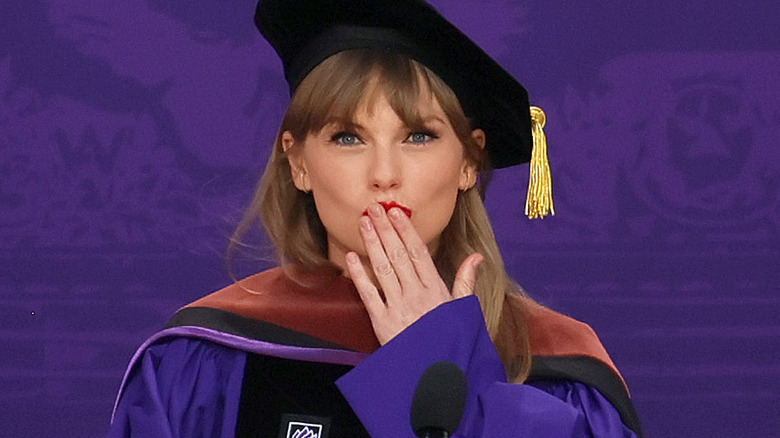
Taylor Swift signed a Faustian bargain in 2004, when she signed a contract with Big Machine Label Group, giving away ownership of the master recordings for her first six albums in exchange for money to start her career, before becoming one of the best-selling musicians of all time. The problems started when Swift changed her label to Universal Music, and Big Machine denied her request to use her music at the AMA music event and for projects with Netflix in 2019. And that's not to mention allegedly owing her almost $8 million in royalties, though Big Machine disagreed, claiming it was Swift who owed it money.
When Swift started to discuss the situation in public, Scooter Braun, the main music manager behind the label, pleaded with her to stop talking about the situation, claiming she was causing confusion and he and his family were receiving death threats. He also complained over social media that she was unavailable for a meeting, saying, "[she had] no interest in ever resolving the conflict" (via CNN).
A year later, Braun sold the rights to her music to an investment fund for $300 million, without Swift's prior knowledge. While still fighting her legal battles, Swift decided to re-record her albums, which further angered Braun. Between 2021 and 2023, Swift re-released four of her albums, and in 2025, she announced that she had finally reached a deal to acquire the master recording rights for an undisclosed — though likely enormous — sum.
Courtney Love

Courtney Love was one of the first artists who challenged the status quo in the music industry. Love, successful in her acting career and the director of Kurt Cobain's legacy, had the means to counteract Vivendi Universal in 2001, asserting to the Los Angeles Times, "I could end up being the music industry's worst nightmare: a smart gal with a fat bank account who is unafraid to go down in flames fighting for a principle." She decided to do something when the label — one of the biggest record corporations in the world — sued her for five undelivered records, claiming she'd refused to record new music under the given conditions and that her countersuit against it was created to gain media attention.
Love, with the help of lawyer A. Barry Cappello and a private detective, filed a request for contract termination, stating that the company coerced her into signing away rights and ownership of her music. She also disputed the part where her contract could be sold to a third party, as her music was resold to many different companies that weren't part of the music industry, like the liquor giant Seagram Co. and Vivendi itself, a French utilities corporation.
A settlement was reached one year later, allowing Love to keep the rights to any future music, along with unreleased content from her band, Hole. Vivendi Universal Music Group got the rights to Kurt Cobain's legacy instead, including any unreleased material.
Johnny Cash

Johnny Cash was dropped by Columbia Records in 1986 for not being successful and profitable enough anymore. He'd signed the contract with the label in 1958, positioning himself at the top of the charts with his first singles. At the peak of his success in the 1960s, Cash managed to reach first place on the charts with eight albums in eight years, creating success after success. Columbia Records made millions on Cash, but when country music's popularity diminished in the 1980s, the company didn't think twice before dropping him for good. It took Cash until 1994 to find himself again, when he began producing music with Rick Rubin under American Recordings. This took him in another direction creatively, finding new flair and critical acclaim, as well as several awards, including a Grammy in 1998.
But a little-known fact is that Cash dreamed of making a record to honor the struggle of Native Americans since he started his career in the mid-'50s. Growing up among the Native people in Arkansas, he was deeply hurt by how the U.S. authorities treated them. He finally released the desired record in 1964, but Columbia Records was hesitant to support the record during that turbulent political period; instead, it executed a form of soft censorship and did no promotion at all, which was echoed by the silence of radio stations. Cash fought back, but this hurt him deeply, so he played a few songs from the album at every concert for the rest of his life.
Kesha
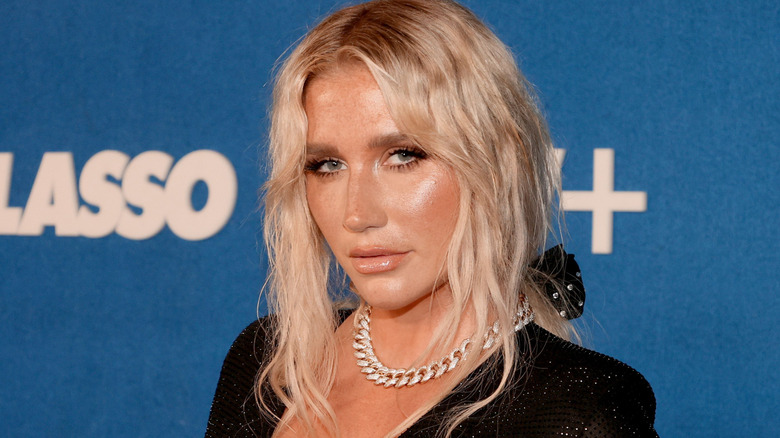
Kesha Rose Sebert began trying to free herself from her contract with producer Lukasz Sebastian Gottwald in 2014, claiming he abused her financially, emotionally, and even sexually for over 10 years, causing her to almost lose her life due to an eating disorder and drug misuse. Kesha's fans organized a petition — called "Free Kesha" — a year before the lawsuit, on the basis that Gottwald was pushing her too hard, leading to her admittance to a rehab center for an eating disorder. Her mother also revealed that he allegedly pressured her into losing weight. There was even a GoFundMe campaign to pay Kesha's dues and let her be.
A Los Angeles Superior Court froze the lawsuit, though, claiming it should be taken to a New York court. Gottwald also denied the accusations, claiming she made it all up, and he filed another suit against Kesha and her management team from Vector Management, alleging she refused to record new music and so failed to fulfill her part of the contract. A New York Supreme Court Justice ruled in his favor, denying an injunction allowing Kesha to release new material.
Kesha lost the case and Gottwald walked out unharmed, while the suit filed by Gottwald against Kesha for defamation dragged on for years until 2023, when both parties reached a confidential settlement. Later that year, Kesha was finally freed from her contract with Gottman's label following the release of her last contractually obligated album, "Gag Order."
If you or anyone you know has been a victim of sexual assault, help is available. Visit the Rape, Abuse & Incest National Network website or contact RAINN's National Helpline at 1-800-656-HOPE (4673).
If you are struggling with an eating disorder, or know someone who is, help is available. Visit the National Eating Disorders Association website or contact NEDA's Live Helpline at 1-800-931-2237. You can also receive 24/7 Crisis Support via text (send NEDA to 741-741).
The Chicks

The Chicks (formerly known as Dixie Chicks) tried to terminate its contract with Sony in 2001, but Sony, of course, pushed back. The company sued the group for $100 million, claiming the artists should pay the lost profits for five undelivered records. The Chicks accused the record label of poor accounting, such as lowering the official sales numbers and overcharging for just about everything, which the group claimed cost it $4 million in royalties.
While Sony Music Entertainment dismissed the claims as a sham, the Chicks were serious, issuing a statement (via the Houston Press): "We refuse to sit back and silently endorse this behavior simply because this is a 'standard' practice at Sony." The artists even went to Sacramento to try to convince legislators to look into typical music industry practices, albeit unsuccessfully. The Chicks also sought a deal with other, more accommodating music labels, but that didn't work either.
The group settled with Sony in 2002, 11 months after the conflict erupted. The Chicks got a $20 million bonus, while the company got $15 million to cover marketing costs, before the Chicks' royalties, bumped up to 20% after the settlement, could be collected.
TLC
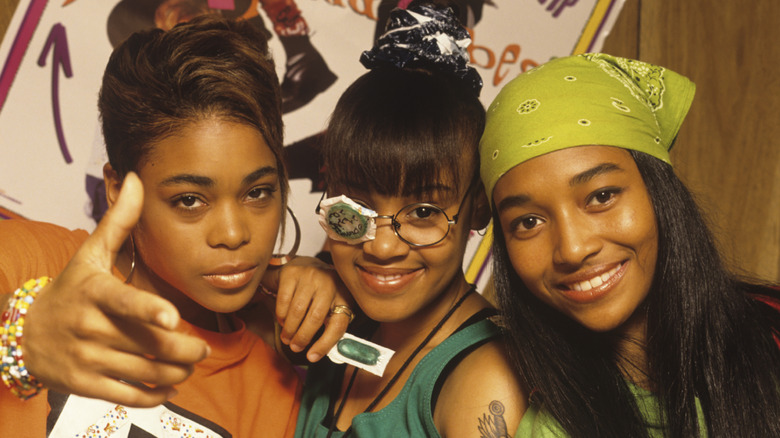
Despite the award-winning group earning millions, the members of TLC went bankrupt in 1995, declaring a debt worth nearly $4 million. Their bankruptcy was a consequence of a pretty standard — for the music industry — contract with LaFace Records and Arista Records, along with manager Perri "Pebbles" Reid.
Reid and the management of the record company spent money on their own medical bills and insurance payments, while charging the group for the whole production. After the invoices were settled, the artists were left with annual earnings of less than $50,000, or 56 cents per album, despite their best-selling records selling millions of copies. After some court battles, the group managed to renegotiate its contract. With Lisa "Left Eye" Lopes passing away in a car accident in Honduras in 2002, the band lived on, and Tionne "T-Boz" Watkins and Rozonda "Chilli" Thomas released their final album in 2017, collecting funds for the record with a Kickstarter campaign.
Tom Petty
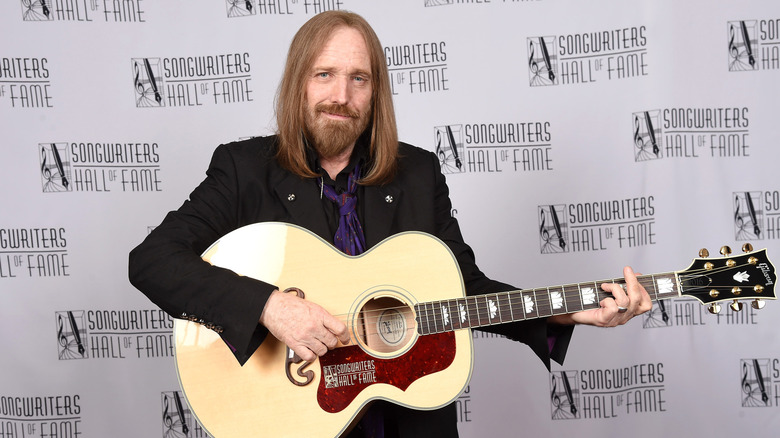
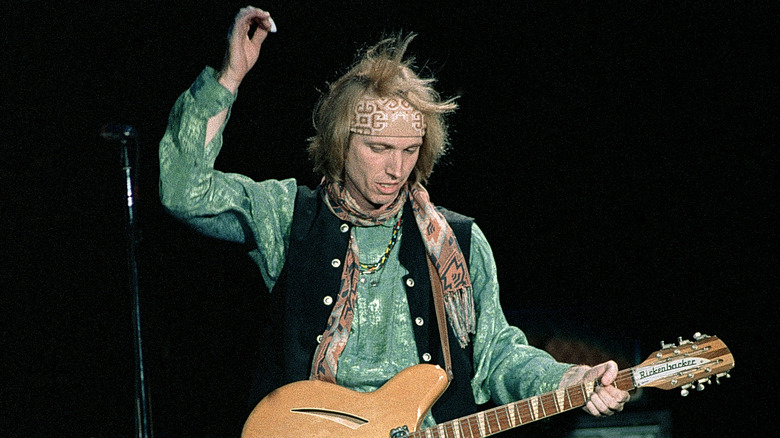
Tom Petty was the artist who "invented" the way out of a bad contract through bankruptcy in 1979. Despite releasing two successful albums in 1976 and 1978, he wasn't earning much, due to the deal he made with Shelter Records years earlier.
But when ABC wanted to sell Shelter Records to MCA, Petty snatched the opportunity and declared himself a free agent, saying (via History), "[He wouldn't be] bought and sold like a piece of meat." He withheld the release of his already-finished next album, financing the project himself and acquiring a debt of around $500,000. This way, by going bankrupt, the contract with the record label would be nullified, releasing him from the perpetually low royalties. The plan worked, and MCA agreed to rip up the old contract and replace it with a new one worth $3 million, which Petty accepted. Petty finally released the withheld album, "Damn The Torpedoes," which quickly went platinum (and ultimately triple-platinum).
However, Petty resisted the release of an album once more in 1981, when MCA tried to raise the price of his album from $8.98 to $9.98. He won again, and the album "Hard Promises" was sold for the lower price.
Aaliyah

Groomed by Jive Records and Robert Sylvester Kelly (aka R. Kelly, music producer, writer, and notorious sex predator), Aaliyah Dana Haughton entered the music business while she was only 12. It was her uncle Barry Hankerson who introduced her to R. Kelly, who produced her first successful album, "Age Ain't Nothing But A Number," in 1994. Soon rumors appeared that they were actually married, which was never confirmed by anyone associated with them, but Aaliyah did end her professional relationship with Kelly soon after. She changed record labels in 1996, evolving into an actress and music producer as well. She died at 22 in a plane crash after filming a music video in the Bahamas; the plane was too heavy to fly, and the pilot was under the influence of cocaine.
Aaliyah's music was unavailable on digital platforms for years, and none of the unreleased material was ever published. In 2013 and 2017, her music appeared on streaming platforms but was removed; it turned out that Craze Productions published it illegally. And fittingly, many questioned the motives of Hankerson, who remained in charge of her legacy.
It was Aaliyah's estate, headed by her mother, Diane Haughton, that allegedly came to oppose Hankerson, claiming (via CNN), "For 20 years we have battled behind the scenes, enduring shadowy tactics of deception with unauthorized projects targeted to tarnish." The fight eventually came to a head, and in 2021, several of Aaliyah's albums were finally released on digital platforms, though the hostilities didn't necessarily end.
Linkin Park

It took a long time for the Linkin Park band members to sign a deal with a record label, and they thought they'd struck gold when they signed a deal with Warner Bros. Music Group Corp. But it wasn't as dreamy as they'd imagined, with problems starting during the recording of their first album, "Hybrid Theory." The musicians were exceptionally focused on work, dedicating their time and effort to the music, but their vision was restricted by the label continually trying to change their unique sound. The label even tried to separate Mike Shinoda, founding Linkin Park member and songwriter, from the rest of the band, creating conflict between the group and its label.
The band tried to terminate its contract with Warner Music Group in 2005, arguing that it saw the record label as unreliable with promoting the band as it deserved. It cited the company's "diminished resources" and claimed it had brought in at least 10% of the label's album sales, ultimately deciding it would focus more on tours and merchandise instead of releasing a new album.
The two parties reached a settlement later that year, with Linkin Park getting a new deal, earning a $15 million advance for their new record (with the option of extending that same deal to the next five albums) and a 20% royalty rate.
Summer Walker
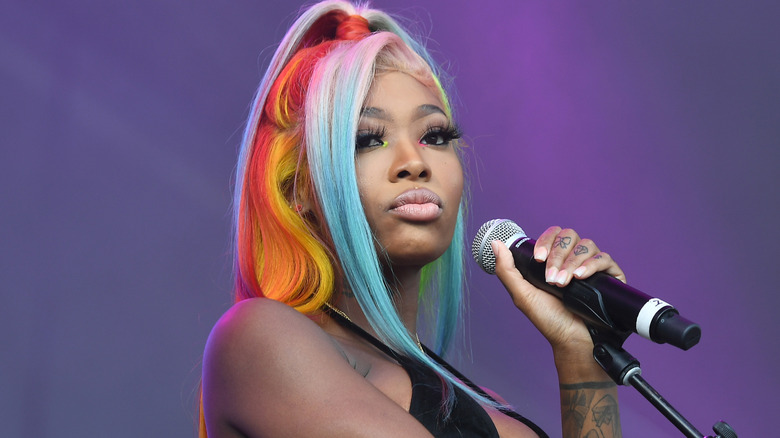
After Summer Walker released her first single in 2019, she made immediate success with her album "Over It." Walker was a fresh face in R&B waters, inspired by the '90s sound of Destiny's Child and Usher, but according to Rolling Stone, her contract with the labels Love Renaissance (LVRN) and Interscope was far from generous.
The singer's 2017 contract allegedly not only included a low advance payment ($110,000) and a low royalty rate (16%), but also demanded that she pay the labels a percentage of all her non-music-related earnings. All the while, the labels were not obligated to invest nearly as much in her. Several music lawyers and managers declared the contract was very ambiguous; some of them even called it "brutal." LVRN responded to Rolling Stone's investigation by accusing the publication of "conspiring with crooks." A few days later, Walkers responded to the rumors by stating on Instagram that this was her previous deal (via Vibe), which was since replaced. She also stated that she was fully satisfied with the company, saying, "I've always had my own representation and full support from LVRN."
Neil Young
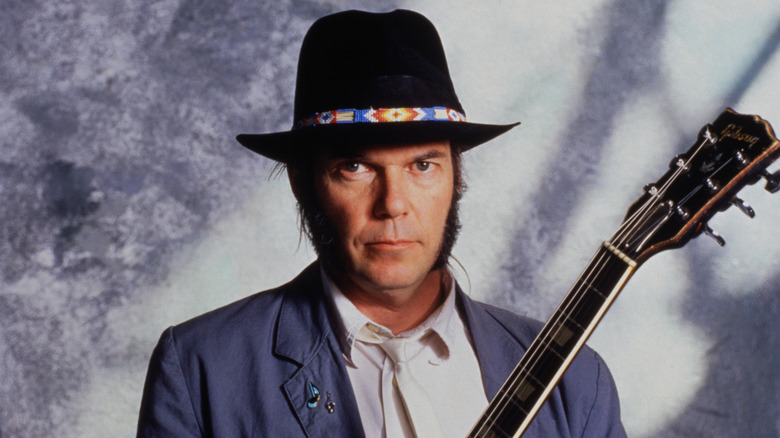
Neil Young demonstrated throughout the 1960s and 1970s that he could generate hit songs and sell lots of albums. After his career-spanning relationship with Reprise Records ended in 1981, Young signed a deal with new label Geffen Records that stood to earn him $1 million per album and allowed him to make whatever kind of music he wanted. Geffen Records assumed that Young would continue to record thoughtful folk rock and slightly harder rock. Instead, Young's first LP for Geffen, "Trans," explored the synth-pop and electronic sounds that were very much in vogue in the early 1980s. Young was driven to make the LP that way to connect with his nonverbal son, Ben.
Geffen Records was so livid that it sued Young. Seeking $3.3 million in damages, the company claimed that Young had set out to make music that was unmarketable and unpalatable to the masses. That constituted a breach of contract, Geffen claimed, because "Trans" didn't sound like the Young of yore. "'Unrepresentative and uncharacteristic' was the phrase they used in the suit," Young quipped on his blog. The courts threw out the case, but Young had to stick with Geffen until 1988, at which point he returned to Reprise.
Tommy James and the Shondells
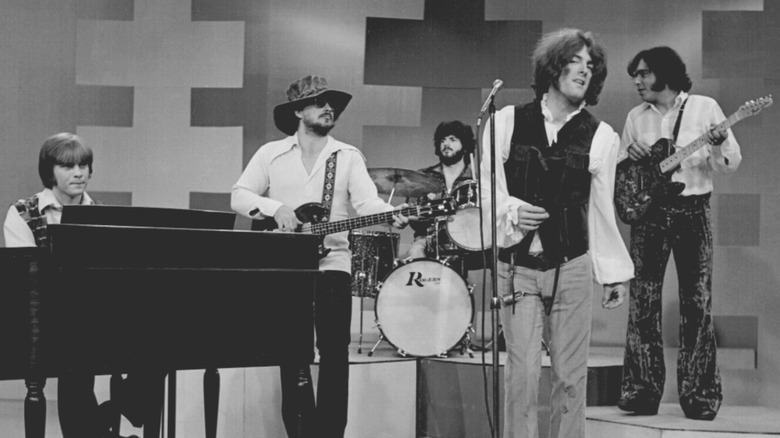
Tommy James and the Shondells found itself at the middle of a major-label bidding war in 1966, following the blockbuster success of its raunchy pop-rock single "Hanky Panky" in the Pittsburgh area. But neither Epic, RCA, Atlantic, nor Columbia could sign the band that would go on to sell more albums than the Beatles did in 1968 or record classic hits like "Crimson and Clover" and "Mony Mony." Morris Levy, head of Roulette Records and a notoriously cutthroat figure in New York's organized crime underworld, had intimidated the other labels into backing off so that his company could give the Shondells a contract.
Roulette let the band record whatever it wanted, and it dutifully and aggressively distributed and marketed its hit records, too. But when it came time to pay the musicians, that's when things got sketchy. Instead of accurate royalty payments, James and his associates received bags of cash. Tiring of this system but too scared to do anything about it until the 1970s, James and his accountant audited its documents at a record pressing plant. "I was owed between $30 and $40 million," James told Classic Rock. When James asked to be paid in full, Levy allegedly threatened to kill the rock star. It wasn't until just before Levy's death in 1990, when he sold off Roulette to Warner Bros. Records, that James was able to get back a small chunk of the royalties he was owed.
Little Richard
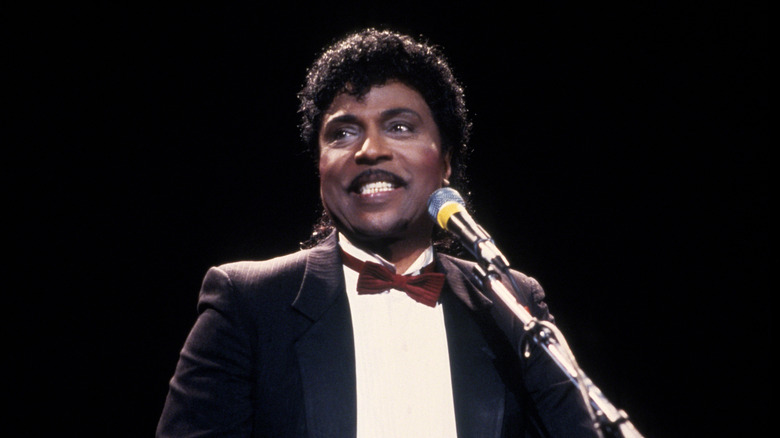
Both singing and playing piano in an exuberant and commanding manner, Little Richard was a true original, so much so that he's regarded as one of the creators of rock 'n' roll. He landed his first real hit in 1955 with what would endure as his most famous song: "Tutti Frutti." That standard was released by Specialty Records, with whom Little Richard was under contract.
"Tutti Frutti" generated a fortune over the decades, both Little Richard's original version and covers by artists like Pat Boone. Yet Little Richard didn't get to see very much of that. According to his contract, the musician signed over to Specialty Records the rights to "Tutti Frutti" and other songs for $50 each. But instead of a percentage cut of the royalties, Specialty allegedly paid him half a cent for every copy of his recording sold, far lower than what white artists of the era commanded. As for when "Tutti Frutti" was covered or used on a soundtrack, Little Richard got nothing.
In 1959, the artist sued Specialty Records because it hadn't even paid him that relative pittance, which was settled with Little Richard receiving $11,000 to walk away from any royalty claims. Nevertheless, Little Richard once again took his label and two related music publishers to court again in 1984, seeking $115 million he believed he was owed from "Tutti Frutti" and other songs, including "Lucille" and "Long Tall Sally." That case was settled out of court for an unknown amount.
Big Star
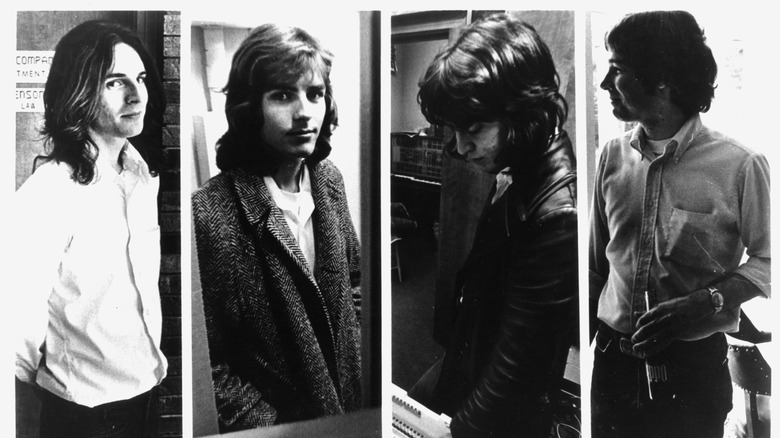
The soulful, world-weary voice on "The Letter," a No. 1 hit in 1967 for the Box Tops, belonged to 16-year-old Alex Chilton. After that band dissolved, Chilton went back home to Memphis and, with his friend Chris Bell, formed Big Star, a band that earned praise for its jangly guitars, soaring harmonies, and for virtually creating the effervescent genre of power pop. Critics in 1972 and forever after praised Big Star's first album, "#1 Record," although interested listeners at the time probably had a hard time tracking it down.
The band was signed to Ardent Records, a brand new division of Stax Records. It didn't have the tools or know-how to market or distribute a modern rock album, and it had devoted most of its resources to promoting Isaac Hayes' "Hot Buttered Soul." The company couldn't or wouldn't get "#1 Record" into very many stores, and so very few people bought copies of it. Citing Ardent's actions as responsible for destroying the band's will, Bell left Big Star before recording began on the next album, after which bassist Andy Hummel left, too.
Billy Joel
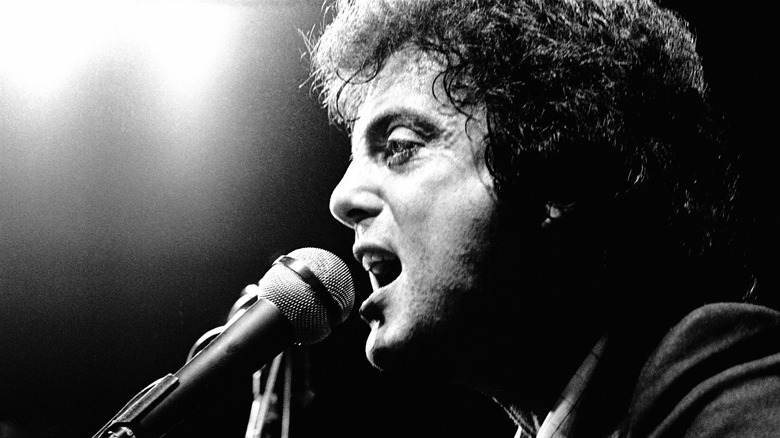
After the end of his heavy-metal band Attila, Billy Joel pursued a career as a pop singer-songwriter and pianist. Joel became the first signee to Family Productions Records, a small label founded by longtime music industry player Artie Ripp. Joel recorded what would be his first studio album under his own name, "Cold Spring Harbor," with Ripp appointing himself the 1971 LP's producer, mixer, engineer, arranger, and conductor.
But Ripp screwed it all up: He recorded the entirety of "Cold Spring Harbor" incorrectly, blaming a faulty 16-track machine. "When we mixed the final master, Billy sounded like a chipmunk," Ripp told Rolling Stone. When Joel heard the final cut of the album, he was so livid that he reportedly threw the acetates out a window. Ripp refused to alter the record, which was distributed to record stores in its comically incorrect iteration; "Cold Spring Harbor" flopped, only charting briefly in 1984 as a curiosity after Joel eventually found fame elsewhere.
Joel recovered from the debacle, eventually. "On top of that, the deal I was signed was so onerous, it was so terrible, it was so bad," Joel said in The Billy Joel Lost Tapes. Columbia Records signed Joel in 1973 and got him out of his deal with Ripp's companies. However, under that deal and into the 1980s at least, Ripp still earned 28 cents from every album Joel sold.
Van Morrison
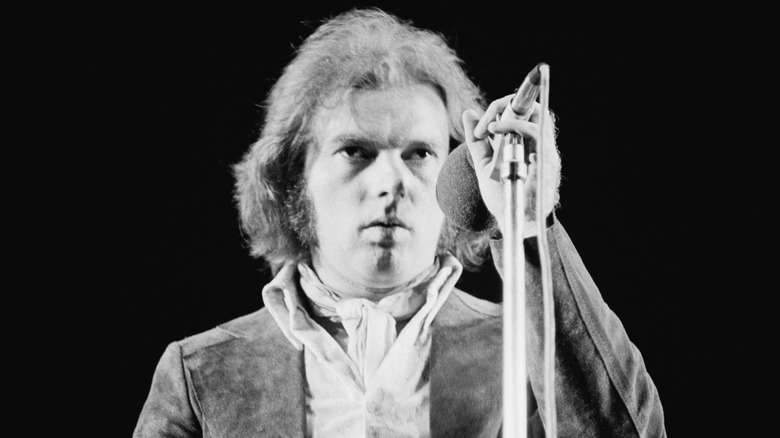
After quitting his band Them in 1966, Van Morrison went all in on a solo career. He immediately signed a deal with Bang Records, eager to work with label head and producer Bert Berns, songwriter of classics like "Piece of My Heart" and "Twist and Shout," and who had produced Them's "Here Comes the Night." For Bang and Berns, Morrison recorded the 1967 top-10 hit "Brown Eyed Girl." Following that success, Berns cobbled together a bunch of rough Morrison recordings and, without the singer-songwriter's approval, put them out as the LP "Blowin' Your Mind!" Then, in late 1967, Berns died of a heart attack.
An unhappy Morrison tried to get out of his Bang Records contract, but Berns' spouse and estate manager, Ilene Berns, wouldn't allow it. Certain that Morrison's difficult temperament had triggered the heart attack, Berns attempted to exact revenge, reporting the Irish musician to immigration authorities on a claim he didn't have a proper work visa. Morrison married an American to stay in the U.S., but he remained attached to Bang. To end the contract meant fulfilling it, and Morrison was on the hook to record more than 30 songs.
For what would eventually be a frequently bootlegged collection called "Contractual Obligation Session," Morrison quickly and carelessly banged out 30-plus sloppy, lazy, and purposely terrible songs and fragments. Among the half-cooked recordings are "Blow in Your Nose," "Nose in Your Blow," "Goodbye George," "Dum Dum George," and "The Big Royalty Check."