

5 Songs From 1975 That Define Rock History
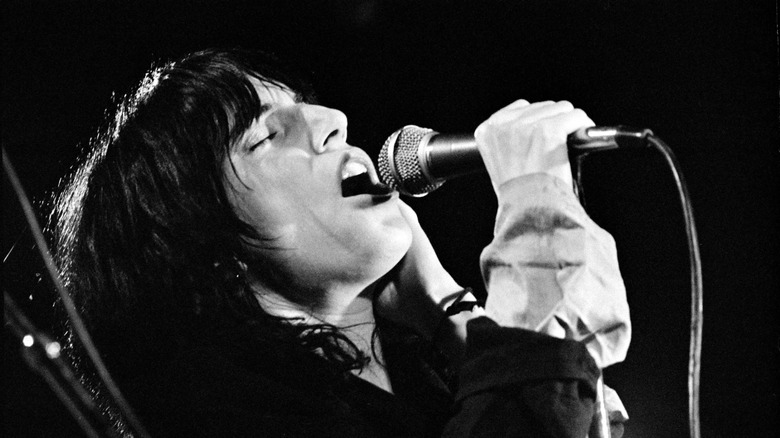
The year 1975 was a pivotal moment in rock history that reshaped the landscape in many ways. There was the ascension of proto-punk acts like Patti Smith, who would help launch a coming musical storm in punk and new wave. At the same time, more established bands like Queen were pushing rock's sonic possibilities to new heights with their fourth album, "A Night at the Opera."
Then there was Bob Dylan, a one-man musical change-agent, who released his masterpiece "Blood on the Tracks" that year. He re-emerged as a continued force to be reckoned with in songs like "Tangled Up in Blue," whose dense storytelling and raw emotion redefined what rock could be. That year also saw Fleetwood Mac introduce female-centered mythology into mainstream rock with "Rhiannon," and War's "Low Rider" masterfully combined funk, rock, and Latin and pushed Chicano culture to the fore. There were a long list of other musicians and bands who released landmark albums that year, but we've tried to include a broad range in our list that impacted rock music in wide-ranging ways, inspired later acts, and that sound even cooler today than when they came out 50 years ago.
Queen goes deep
In the summer of 1975, in a rural recording studio in Wales, Freddie Mercury was putting the finishing touches to a song that would change rock forever. It was three songs, actually, that he eventually combined into one six-minute masterpiece integrating progressive rock, opera, glam, and hard rock. The song's origins stretched back a decade with a lyric — "Mama, just killed a man" — before it burst into life during a three week recording stretch in August 1975. It wasn't just the fusing of musical genres that made this song so unique. The intense recording process included more than 180 overdubs with analog equipment that kicked the door down to what was possible to achieve in the studio at the time.
The band released the song on October 31, and it was an immediate sensation in the U.K., shooting to the top of the charts where it stayed for nine weeks. While it only went to No. 9 in the U.S. at the time, the song's influence only grew, and grew, and grew. The innovative song (and accompanying video) inspired covers ranging from Elton John and Axl Rose's 1992 live version to Panic! At the Disco's 2016 take. The song returned to the U.S. charts in 1992 when it was featured in the film "Wayne's World." "Bohemian Rhapsody" would eventually make it into the Grammy Hall of Fame, and in 2018, it became the most-streamed song of the 20th century, and it continues to inspire.
Rock gets witchy with Fleetwood Mac
In July 1975, Fleetwood Mac released its self-titled album which was the first to include Stevie Nicks and Lindsey Buckingham. The young couple joined Christine McVie, Mick Fleetwood, and John McVie in their already established band. This solidified the version of the band that would soon become a massive chart-topping success story. The album's second single, "Rhiannon," written by Nicks, introduced Welsh mythology and Nick's witchy persona into the mix. While Led Zeppelin had already been incorporating mythology into mainstream rock, Nick's song about a mystical and mysterious female figure introduced a feminine perspective.
The song reached No. 11 on the charts and pushed the album to No. 1. "Rhiannon" became one of Nick's signature songs and a perennial part of Fleetwood Mac's live performances. Nicks has said the song was intense to sing, but that she felt it touched people. "Rhiannon" has gone on to inspire artists including Taylor Swift and Harry Styles, and has been covered by everyone from country star Waylon Jennings to indie rock duo Best Coast.
Bob Dylan gets tangled up in love and memory
By the mid-1970s, some critics believed Bob Dylan's best music was behind him, but in January 1975, he released his 15th studio album, "Blood on the Tracks," leading the charge with the single "Tangled Up in Blue." Dylan once again changed the face of popular music with work that was lyrically denser and more personal than ever before. The album has been widely hailed as a masterpiece and continues to top best-of lists (In 2023, Rolling Stone listed it as No. 9 in the 500 Greatest Albums of All Time). Like many of the songs on the album, Dylan wrote "Tangled Up in Blue" amid the breakdown of his marriage to Sara Lowndes.
The song suffuses heartache into a song full of history, Dylan's mythmaking, memory, and vivid imagery. Dylan has denied that the song is autobiographical, but belied this by introducing "Tangled Up in Blue" on stage by saying the song took "10 years to live and two years to write" (via "Encyclopedia of Great Popular Song Recordings"). The tune made it to No. 31 on the Hot 100 chart and helped push the album to the No. 1 spot that year. "Tangled Up in Blue" inspired a range of artists who have covered the song, including the Indigo Girls, KT Tunstall, and The War on Drugs, among others.
The Godmother of Punk arrives
In November 1975, Patti Smith's debut album "Horses" introduced the world to a brand new sound that melded Beat-style poetry with raw garage rock and would soon help inspire a musical revolution. The first single, "Gloria: In Excelsis Deo," was a cover of a 1964 song by Van Morrison's band Them, but it could hardly be called a cover. Smith's version begins with a line from her poem "Oath" — "Jesus died for somebody's sins, but not mine" — announcing just how different this version was to be. She added lyrics, changed others, but kept the male perspective giving the song a new gender fluidity that turns the original with its macho swagger on its head.
At the time, the single didn't do that well, and "Horses" wasn't a hit record, but it and the album's impact would be felt in other, more important ways. Smith's "Horses" and specifically her version of "Gloria" has inspired untold other artists, including U2's Bono, who was blown away when he first heard Smith's take on Gloria, which he's described as a "punk prayer" (via The New York Times). It also influenced Courtney Love, Johnny Marr of the Smiths and The The, as well as Florence Welch of Florence and The Machine.
War's groove for the ages
The California band War fused funk, rock, psychedelia, Latin, and jazz into a rollicking sound with socially conscious lyrics that connected with a diverse audience to become a chart-topping success. What began as a backing band for Eric Burdon of the Animals would eventually become a vital street-oriented musical cauldron where jamming was central to its creative output. From the distinctive cowbell opening of "Low Rider" from the band's 1975 album "Why Can't We Be Friends?" to its lyrics that celebrated Chicano lowrider culture, this song proclaimed its originality. "Low Rider" not only made it to No. 7 on the Billboard Hot 100 when it came out, it would go on to influence musicians from The Beastie Boys, who sampled it on "Slow Ride," to Korn, with its 1999 rap-rock cover.
The year 1975 was an important one for rock history. It helped transform music, from the dynamic lyrical exploration of Bob Dylan on "Tangled Up in Blue" to what could be achieved in the studio as demonstrated by Queen's "Bohemian Rhapsody." Unlike the song that topped the charts that year, Captain and Tennille's "Love Will Keep Us Together," these songs helped define rock history and have continued to remain important.