

These '80s Bands Changed Their Fate With One Massive Hit
It's really the rock n' roll dream, and one well established by the 1980s: A band forms and slowly rises up from its humble beginnings and earns a following. Maybe the group even sells a modest amount of records or racks up a bunch of big hits on the pop chart. That story isn't shaped like a forever upward-moving arrow, however. It may take a band years of just putting in the work — touring, writing, recording, promoting — before it reaches a new plateau of success. And even then, the group might fall off, then maybe stage a comeback to reclaim its status at the top of the rock band heap. Often, these boosts are the result of one special song — an undeniable, blockbuster smash of a hit single.
All of this seemed to happen quite a lot in the '80s. Many bands that toiled throughout the decade got to the next level because of the attention brought to them by one particular tune. Here are five bands who enjoyed a breakthrough, new relevance, or an unlikely second act — along with fame, fortune, and accolades — in the '80s.
Men at Work
With plenty of flute and saxophone, along with driving guitar riffs and the yelping vocals of lead singer Colin Hay, no other band from the 1980s sounded like Men at Work. Formed in Australia in the late 1970s, the band built its reputation and fanbase in its home country by extensive touring. Eventually, it landed a major hit there with the catchy paranoia anthem "Who Can It Be Now?" — the first single off its first album, "Business as Usual," which was also a success.
That music was released into the U.S. in 1982, and it got very little response at first. Columbia Records initially printed only 7,700 copies of "Business as Usual." But then MTV, barely a year old at the time, started playing the low-budget music video for "Who Can It Be Now?" With very little radio airplay, "Who Can It Be Now?" drove sales of "Business as Usual" simply because it was played a lot on MTV. And in October 1982, the single hit No. 1 on the American pop chart. The follow-up, "Down Under," a song about Australian pride, also topped the Hot 100. Subsequent singles also stormed up the U.S. pop chart, including "Overkill," "It's a Mistake," and "Dr. Heckyll and Mr. Jive." All three of the band's studio albums went on to be certified at least gold in the U.S.
Heart
Renowned for its classic rock staples "Crazy on You," "Magic Man," and "Dreamboat Annie," Heart's initial period of influence and commercial viability only lasted four years, from 1976 until 1980, when it landed one of its last Top 10 hits, "Tell It Like It Is." Then for about five years, Heart — co-fronted by sisters Ann Wilson and Nancy Wilson — faded from prominence.
To get back into the realm of arena-filling, radio-saturating, blockbuster bands again, Heart introduced synthesizers, heavy production, outside songwriters, and melodramatic power ballads, converting itself fully from a hard rock band into a soft rock act. One of its first attempts under the new style: 1985's "What About Love?" It was a cover of a song created for the Canadian band Toronto, and it hit the Top 10. Then Heart spent the rest of the '80s hitting big with songs that sounded a lot like "What About Love?" Among them: "Never," "These Dreams," and "Alone," with the latter two hitting No. 1.
Starship
The story of Jefferson Starship is one of adaptation. In the '60s, the band was known as Jefferson Airplane, and it was one of the most aggressive and trippy groups in the psychedelic rock scene. By the mid-1970s, the blues-rock side project Hot Tuna was so successful that it precluded Jack Casady and Jorma Kaukonen from flying with Jefferson Airplane anymore, leaving those who remained to pursue a direction in line with Paul Kantner's sci-fi, prog-rock solo album "Blows Against the Empire," and a name change to Jefferson Starship. That band became poppier and more mainstream as the '70s and '80s progressed, to the point where Kantner left and sued to prevent his ex-bandmates from using "Jefferson" in their group's name.
In 1985, Starship was essentially born, and rather than reel any more from the loss of Kantner and the sting of lawsuits, the group embraced its poppy, overproduced, as-far-away-from-the-'60s-as-possible sound. Its debut album, "Knee Deep in the Hoopla," generated its first major hit single: "We Built This City," a self-congratulatory slog and the worst song of the '80s that nevertheless ushered in a new era for the band members. Not long after, the generic ballad "Sara" became the second. As bad as they were, they accomplished for Starship what Jefferson Airplane and Jefferson Starship never had: Both songs went to No. 1 on the pop chart. By the time the '80s ended and Starship had split up, the group had hit the Top 40 four more times, including with the chart-topper "Nothing's Gonna Stop Us Now."
The Cure
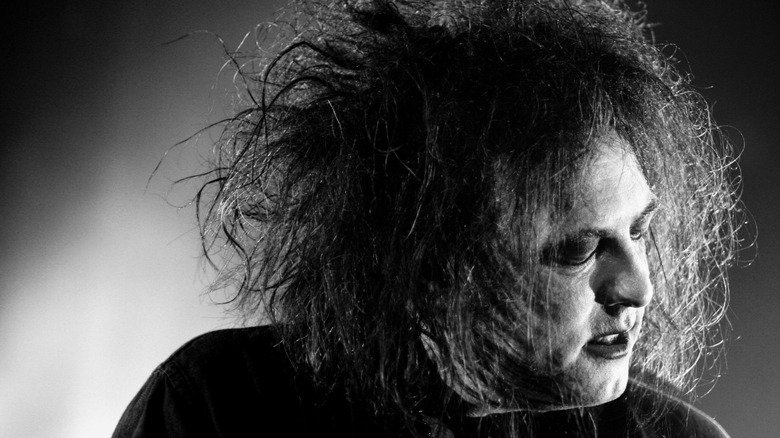
The Cure had been an active act — albeit an indie and college rock act — for more than a decade before it registered its first real hit in the United States. Formed in 1976 by the emotive singer-songwriter and guitarist Robert Smith with drummer/keyboardist Lol Tolhurst and guitarist Porl Thompson, the Cure was at first a sparse, post-punk outfit. Eventually, the group developed a lush, synth-driven sound that explored deep emotions in great detail, particularly the dark and complicated ones. That made the band heroes of the emerging gothic subculture.
The band's music could be playful, too, as it was on the giddy and joyful 1987 love song "Just Like Heaven," written by Smith for and about his wife. Without alienating its hardcore fanbase, the Cure headed into the mainstream. Goth but poppy, "Just Like Heaven" peaked at No. 40 on the Hot 100. After that, the Cure was as popular as it was highly regarded, and the combination made it one of the most definitive alternative rock bands of the 1980s and early 1990s. Less than two years after the peak of "Just Like Heaven," the moodier, enchanting "Love Song" went all the way to No. 2.
The Grateful Dead
The Grateful Dead is among the most important rock bands of the 1960s. The group is also one of the most famous musical acts ever, as much for its devoted subculture of "Deadhead" fans and near-constant touring for decades as it is for its music, equal parts psychedelic rock and jam band music. By the 1980s, the Grateful Dead had been reduced to a '60s counterculture relic, enjoyed primarily by Baby Boomers and aging hippies. Known more for its albums and long, free-form jam sessions, the Grateful Dead was never a "singles" act — it never landed a song in the pop Top 40, until 1987, that is.
MTV, bastion of youth culture and new music, picked up the humorous clip for the Grateful Dead's "Touch of Grey," which depicted the 40-something band members as skeleton marionettes playing on a stage. Not only did it lead to robust sales for the album "In the Dark," but it also sent "Touch of Grey" into the Top 10, peaking at No. 9 in September 1987. The song and video exposed the Grateful Dead to a new generation of fans, minting countless brand-new Deadheads who followed the band, on tour and in general, into the next decade.