

'50s Flop Songs That Turned Into Smash Hits
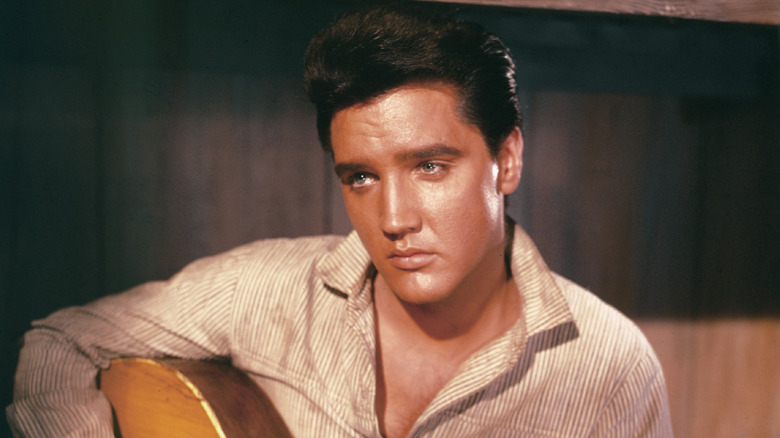
In the 1950s, so many different kinds of music were exploding creatively and commercially, jockeying for position with record buyers and radio programmers, that a great many terrific songs fell through the proverbial cracks. The decade was among the most important ever in pop music, with crooners and old-fashioned performers continuing to sell millions of records in spite of the cultural and financial encroachment of mainstream country music stars, emergent pop singers, and most of all, early rock 'n' roll superstars. And while they notched hit after hit on the pop charts of the day — determined by sales, radio play, and jukebox selections — some undeniable and now-beloved songs weren't received as such at the time.
Here are five songs that originated in the 1950s and are closely associated with that era, but only retroactively. These tunes, all of them recorded by notable names, weren't hits right away, but instead took years or even decades to become entrenched as '50s classics.
Come On, Let's Go
Tragically, Ritchie Valens just didn't get very much time to make much music. Along with other rising early rock 'n' roll stars Buddy Holly and The Big Bopper, Valens died in a small plane crash on February 3, 1959, otherwise known as "The Day the Music Died." The fatal accident generated interest in Valens' music, and the public clamored to hear the scant amount of recordings that had been left behind. The first single that Valens had recorded and released, the classic '50s-style rave-up "Come On, Let's Go," had missed the Top 40 entirely on its first run, but it became accepted quickly into the canon of the musician's best works.
Just 17 years old at the time of his death, Valens had been a featured act on a package tour after his second and third singles proved extremely successful. The ballad "Donna" hit the charts in 1958 (and made it to No. 2 after Valens died), and then the B-side became a hit, too: Valens' rapid-fire, rock version of the traditional Mexican folk song "La Bamba" peaked in the Top 30 just days before the musician's death. But it wouldn't be until decades later that "Come On, Let's Go" would have its turn at chart success, when it featured prominently in the 1987 Valens biopic "La Bamba," which had a soundtrack of covers recorded by Los Lobos. That band, heavily influenced by Valens, took its faithful version of "Come On, Let's Go" to No. 21 on the pop chart in late 1987.
Mystery Train
Most associated with Elvis Presley, the moody, dreamy, and gritty "Mystery Train" is one of the most critically acclaimed songs recorded by the so-called King of Rock 'n' Roll, but it was never one of his 114 Top 40 hits. Presley recorded and released the tune in 1955 along with "I Forgot to Remember to Forget" — and the latter is the one that topped Billboard's country chart, just before the singer started scoring crossover rock hits on the pop chart. Presley took a shot at "Mystery Train," aided by producer Sam Phillips of Sun Records, who had a co-writing credit on the song after overseeing the first recording of it two years earlier for blues musician Herman "Junior" Parker. That earlier version missed the charts entirely.
Presley had a bit more luck with the song on the second try, and the third attempt overall to market "Mystery Train." Issued as the A-side of a single in 1955, it made it to No. 11 on the country chart. More than a decade later, The Band covered "Mystery Train" for its 1973 album "Moondog Matinee" and performed it in "The Last Waltz," the 1976 concert documentary of its final show.
Folsom Prison Blues
Although Johnny Cash had a dark side that many like to ignore, one harrowing life experience he couldn't claim was incarceration. Closely linked with American prisons, Cash played around 30 concerts for inmates over the course of his career, and live captures of two of those shows formed two of the musician's most famous albums: "At San Quentin" and "At Folsom Prison." In 1968, Cash recorded the latter at the foreboding Northern California prison in what was something of an artistic homecoming. In the early 1950s, Cash viewed the documentary "Inside the Walls of Folsom Prison" and in response wrote "Folsom Prison Blues." Created from the point of view of a man imprisoned at Folsom, Cash's character rues his lack of freedom and demonstrates deep remorse whenever he hears the whistle of a passing long-distance train. "Folsom Prison Blues" was included on a hit country chart single for Cash in 1955, but only as the B-side — "So Doggone Lonesome" was the main track.
The musician believed in the song enough to reissue it again in 1957 as a track on his first LP, "With His Hot and Blue Guitar," but it only really became a smash hit on its own as a live version. The boisterous take of "Folsom Prison Blues," caught on tape at the actual Folsom Prison, with scores of appreciative crowd noise, spent four weeks atop Billboard's country chart in the summer of 1968.
Walk, Don't Run
In 1954, jazz musician Johnny Smith wrote "Walk, Don't Run," an exploratory jazz odyssey inspired by the old chestnut "Softly, As In A Morning Sunrise." Dominated by Smith's warm and complicated guitar work, it was reflective of the lush, melodic jazz of the era. That time generated lots of unforgettable and innovative music, but Billboard didn't start tracking album sales until 1956, and jazz singles have never fared well on the pop charts. In other words, Smith didn't earn much commercial recognition for "Walk, Don't Run."
But then along came the Ventures, a 1960s rock band that performed almost exclusively instrumental songs and which became closely linked to the surf rock movement. With songs evocative of beach life and the sound of surfing under and between waves and water tunnels, bands like the Ventures found popularity with sped-up, guitar-showcasing tunes, particularly covers of instrumentals both familiar and obscure. "Walk, Don't Run" fell in the latter camp when the Ventures recorded and released it as the band's second single in 1960. Utterly transformed by the rock band — sped up and given a propulsive drumbeat, with a guitar part that adheres close to the rhythm — it would become the Ventures' biggest hit and its signature song, hitting No. 2 on the pop chart.
Run Rudolph Run
A number of Christmas songs from the 1950s quickly became holiday standards that are widely broadcast and streamed today, but it took many years for Chuck Berry's "Run Rudolph Run" to join that vaunted collection of seasonal favorites. Berry was one of the first ever rock 'n' roll stars, and so his take on a holiday tune was one of the first ever rock 'n' roll Christmas songs. "Run Rudolph Run" is a re-imagining of the Rudolph the Red-Nosed Reindeer story, but with blistering guitar licks and hot piano telling it in a hipper and cooler way than Gene Autry's original 1949 song, "Rudolph the Red-Nosed Reindeer."
Berry only had a handful of certified hits to his name when he unleashed "Run Rudolph Run" in 1958. Perhaps it was too much of a novelty song in a genre that was still trying to gain mainstream acceptance, because the tune failed to excite, peaking at a lowly No. 69 on the Billboard pop chart. It slowly made its way into the Christmas canon, enjoying a major resurgence in the 21st century. In 2021, it re-entered the pop chart and peaked at No. 10.