

This Upbeat Hit Was The No. 1 Love Song Of 1978
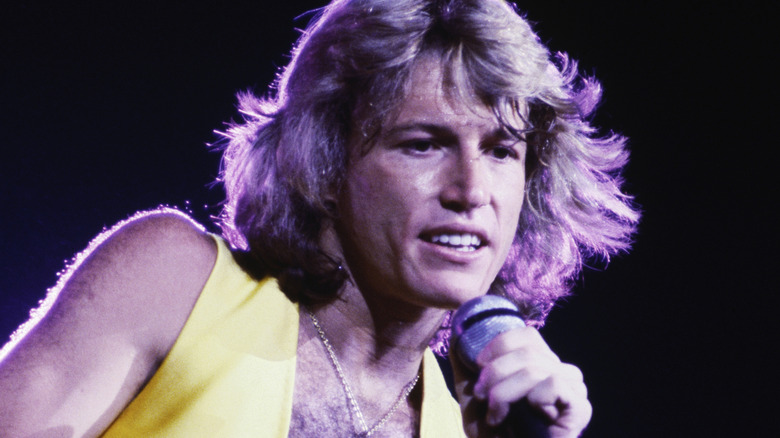
"Shadow Dancing" wasn't only a massive hit of a love song that solidified Andy Gibb — a '70s musician we completely forgot about – as a major new star of the late 1970s, it arrived at a time when the Gibb family could do no wrong. Siblings Barry, Robin, and Maurice, via their band the Bee Gees, headed up the soundtrack to the late 1977 disco drama smash "Saturday Night Fever," and their contributions just kept reaching No. 1. So, too, did the songs of younger brother Andy, which spent some time atop the Hot 100. "Shadow Dancing" spent seven weeks at No. 1 on the Billboard Hot 100 in 1978, more than any other love song that year.
Benefiting from the massive popularity of the Bee Gees in its disco era, Andy Gibb enjoyed one of the most successful career launches in music history. With vocals virtually indistinguishable from Barry Gibb and a widely appealing soft rock-meets-dance sound, Andy Gibb's first three singles all hit No. 1. After "I Just Want to Be Your Everything" and "(Love Is) Thicker Than Water" came the biggest one of all. Let's dance into the shadows with Andy Gibb's "Shadow Dancing."
Andy Gibb's star burned bright and quickly
One of many false things you might believe about the Bee Gees is that Andy Gibb was a member. He was a protegé of his older brothers, and they all wrote "Shadow Dancing" together. It took the foursome all of 10 minutes, Gibb later claimed. In 1978, the public couldn't get enough of the Bee Gees' sound, and "Shadow Dancing" fulfilled that wish. With a vocal performance, alternately breathy and throaty, heard over a boisterous string section and a bouncy but unobtrusive disco beat, "Shadow Dancing" adheres very closely to the Bee Gees' playbook.
As churned out and as written to a formula as it was, "Shadow Dancing" remains a love song, and it's got a strong emotional point of view. Gibb's song is an expression of frustrated adoration for his beloved. Comparing ephemeral things like tricks of light and rhythmic movement to romantic feelings, Gibb pines for someone with whom he's overwhelmingly in love, and maybe even obsessed. The target of his love, however, doesn't seem to know he exists, or at least the extent of his emotions.
Sadly, Gibb's career would never reach those peaks again. He had three more top-10 hits before his death from a heart issue in 1988.